

NGC 2244 and Sh2-275 (Rosette Nebula) from my backyard and remote
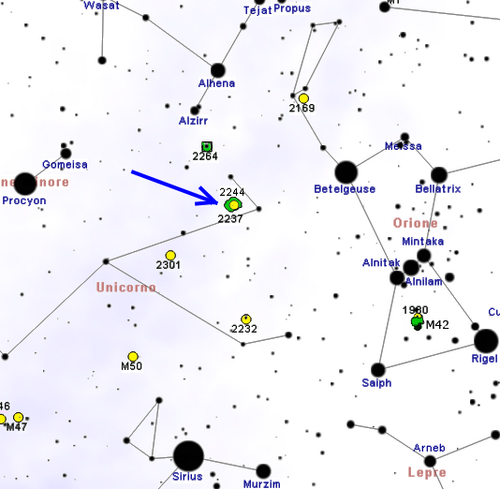
From time to time, I obtain data sets from remote observatories around the world. One of my favorite providers is the Insight Observatory, which operates telescopes in locations such as Chile, Namibia, and New Mexico. One of the datasets I received in 2021 featured the large H II region Sh2-275, associated with the open cluster NGC 2244, located in the constellation Monoceros. Long before working with this professional dataset, I had already imaged the same region in 2007 from my own backyard using my DSLR equipment.
Scientifically, Sh2-275 is better known as the Rosette Nebula, one of the largest and most prominent emission nebulae in the winter Milky Way. Located at a distance of approximately 5,000 light-years, it spans nearly 130 light-years in diameter and represents a vast region of ongoing star formation. At its center lies the young open cluster NGC 2244, whose hot O-type and B-type stars emit enormous amounts of ultraviolet radiation. This radiation ionizes the surrounding hydrogen gas, causing the nebula to glow intensely in Hα emission.
The powerful stellar winds from the young stars have also carved out a large central cavity within the nebula, creating the characteristic ring-like appearance visible in deep images. Along the outer regions of the nebula, dense molecular clouds and dark globules can be seen—sites where new stars may still be forming. Narrowband imaging reveals intricate shock fronts, filamentary structures, and subtle variations in ionization across the nebula, highlighting the dynamic interaction between massive stars and the surrounding interstellar medium.
Comparing my early DSLR image from 2007 with the high-quality Insight Observatory dataset from 2021 clearly illustrates the progress in both imaging technology and processing techniques over the years. While the backyard DSLR image already captured the broad beauty of the Rosette Nebula, the remote observatory data revealed far finer structural details and much fainter outer extensions of this enormous stellar nursery.
Data calibration and registration and the final processing of the 2021 datawas done with PixInsight.
The result was as follows:
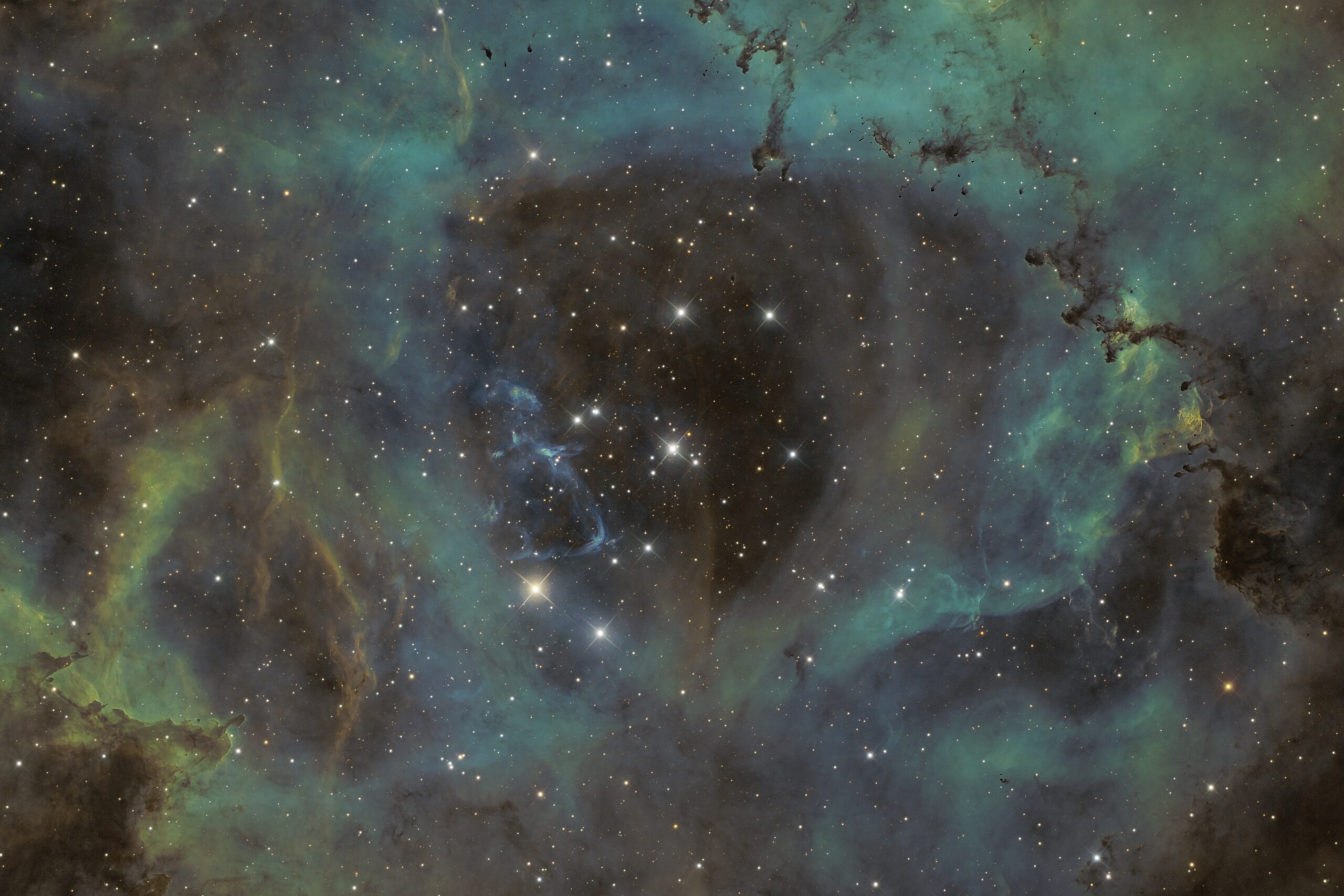
The images were taken with the following equipment (AFIL-1, Insight Observatory):
- Date: 2021
- Location: Lijiang, China
- Telescope/Lens: AG 10CDK
- Focal length [mm]: 1665
- Focal ratio: 6.7
- Mount: SkyWatcher EQ8RH
- Camera: FLI Proline 6303
- Filter: Hα:[OIII]:[SII]:R:G:B
- Exposure time [min]: 315:555:675:30:30:30
- Resolution: 1.11″/px
For the 2007 data the calibration and registration was done with DeepSkyStacker, while the final processing was performed with PixInsight. The result was as follows:
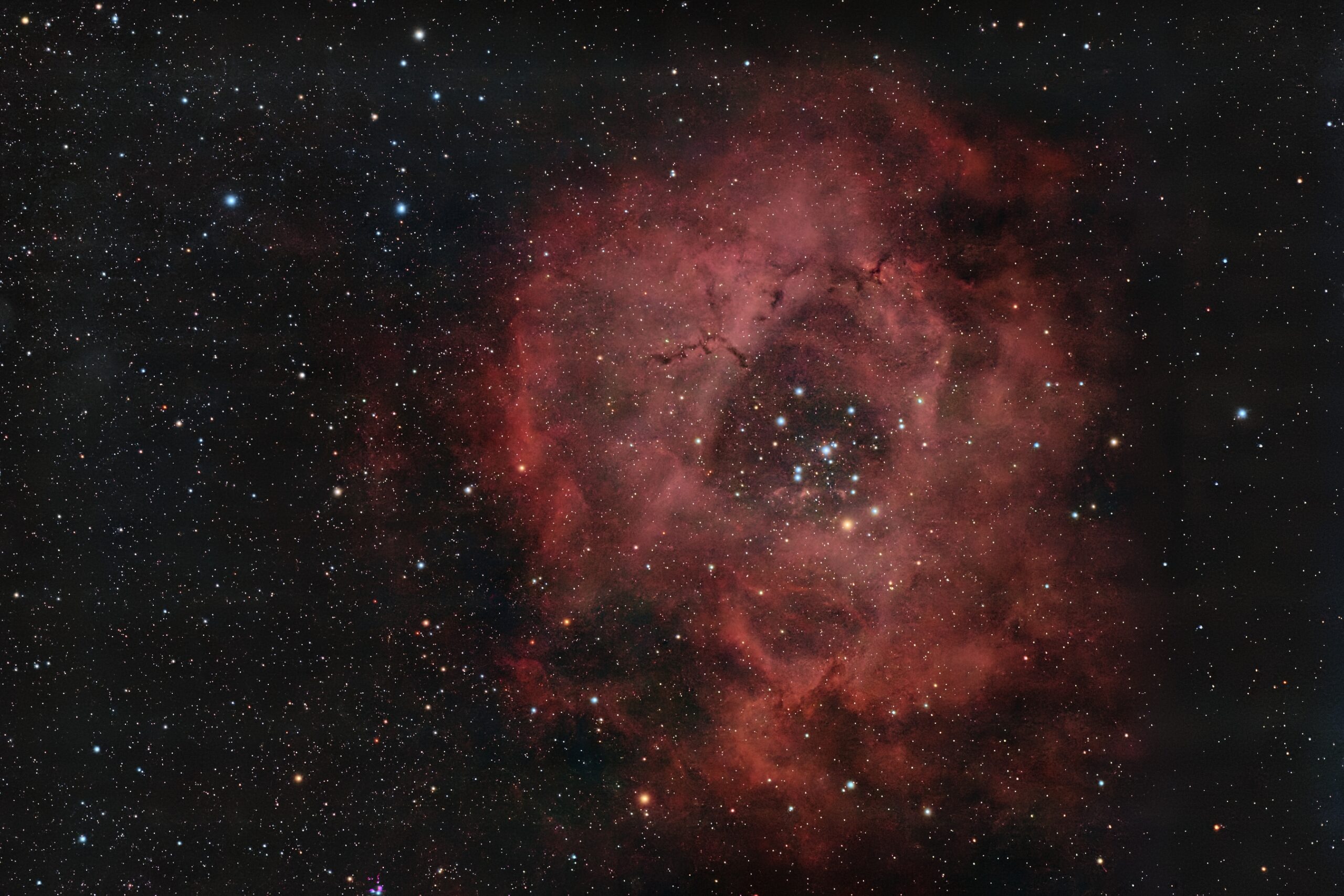
The images were taken with the following equipment:
- Date: 2007
- Location: Krefeld
- Telescope/Lens: Pentax 75
- Focal length [mm]: 500
- Focal ratio: 6.7
- Mount: Vixen GPDX
- Camera: Canon 300 Da
- Filter: OSC
- Exposure time [min]: 10
- Resolution: 3.04″/px



Leave a reply