• Home
  • Blog
  • Astrophotography
    • Deep Sky
      • Galaxies (Galaxien)
      • Nebulae (Nebel)
      • Planetary Nebulae (Planetarische Nebel)
      • Globular Clusters (Kugelsternhaufen)
      • Open Clusters (Offene Sternhaufen)
      • Miscellaneous (Verschiedenes)
    • Solar System (Sonnensystem)
      • Comets (Kometen)
      • Sun (Sonne)
      • Moon (Mond)
      • Mars
      • Jupiter
      • Saturn
      • Other Planets ( Andere Planeten)
  • Archiv

    • August 2026
    • Juli 2026
    • Juni 2026
    • Mai 2026
    • April 2026
    • Februar 2026
    • Januar 2026
    • Dezember 2025
    • November 2025
    • Oktober 2025
    • September 2025
    • August 2025
    • Juli 2025
    • Juni 2025
    • Mai 2025
    • April 2025
    • März 2025
    • Januar 2025
    • Dezember 2024
    • November 2024
    • Oktober 2024
    • September 2024
    • August 2024
    • Juli 2024
    • Juni 2024
    • Mai 2024
    • April 2024
    • März 2024
    • Februar 2024
    • Januar 2024
    • November 2023
    • Oktober 2023
    • September 2023
    • August 2023
    • Juli 2023
    • Juni 2023
    • Mai 2023
    • April 2023
    • März 2023
    • Februar 2023
    • Januar 2023
    • Dezember 2022
    • November 2022
    • Oktober 2022
    • September 2022
    • August 2022
    • Juli 2022
    • Juni 2022
    • Mai 2022
    • April 2022
    • März 2022
    • Februar 2022
    • Januar 2022
    • Dezember 2021
    • November 2021
    • September 2021
    • August 2021
    • Juli 2021
    • März 2021
    • Februar 2021
    • November 2020
    • September 2020
    • August 2020
    • April 2020
    • März 2020
    • Februar 2020
    • Januar 2020
    • Dezember 2019
    • November 2019
    • Oktober 2019
    • September 2019
    • August 2019
    • Mai 2019
    • April 2019
    • März 2019
    • Dezember 2018
    • November 2018
    • Oktober 2018
    • September 2018
    • Juni 2018
    • Mai 2018
    • April 2018
    • März 2018
    • Februar 2018
    • Januar 2018
    • Oktober 2017
    • Juli 2017
    • Juni 2017
    • März 2017
    • Januar 2017
    • Dezember 2016
    • September 2016
    • Mai 2016
    • März 2016
    • November 2015
    • Oktober 2015
    • Juli 2015
    • Mai 2015
    • März 2015
    • Februar 2015
    • September 2014
    • August 2014
    • März 2014
    • Februar 2014
    • Oktober 2013
    • September 2013
    • August 2013
    • April 2013
    • März 2013
    • November 2012
    • August 2012
    • Juli 2012
    • Mai 2012
    • März 2012
    • Januar 2012
    • November 2011
    • Oktober 2011
    • September 2011
    • August 2011
    • April 2011
    • März 2011
    • Oktober 2010
    • September 2010
    • August 2010
    • Juli 2010
    • April 2010
    • Juli 2009
    • Juli 2008
    • Januar 2008
    • Oktober 2007
    • Juli 2007
    • März 2007
    • Februar 2007
    • Juni 2006
    • Oktober 2005
    • September 2005
    • August 2005
    • Januar 2005
  • Kategorien

    • Asterism
    • Astrophotography
    • Barnard
    • Comet
    • Galaxies
    • Globular Cluster
    • IC
    • Messier
    • Moon
    • Nebula
    • NGC
    • Open cluster
    • Photography
    • Planetary Nebula
    • Travel
  • Meta

    • Anmelden
    • Eintrags-Feed
    • Kommentar-Feed
    • WordPress.org
  • Privacy Policy
  • Impressum
  • Haftungsausschluss
  • Cookie-Richtlinie
  • Datenschutzerklärung

wonderfuluniverse.de
  • Home
  • Blog
  • Astrophotography
    • Deep Sky
      • Galaxies (Galaxien)
      • Nebulae (Nebel)
      • Planetary Nebulae (Planetarische Nebel)
      • Globular Clusters (Kugelsternhaufen)
      • Open Clusters (Offene Sternhaufen)
      • Miscellaneous (Verschiedenes)
    • Solar System (Sonnensystem)
      • Comets (Kometen)
      • Sun (Sonne)
      • Moon (Mond)
      • Mars
      • Jupiter
      • Saturn
      • Other Planets ( Andere Planeten)

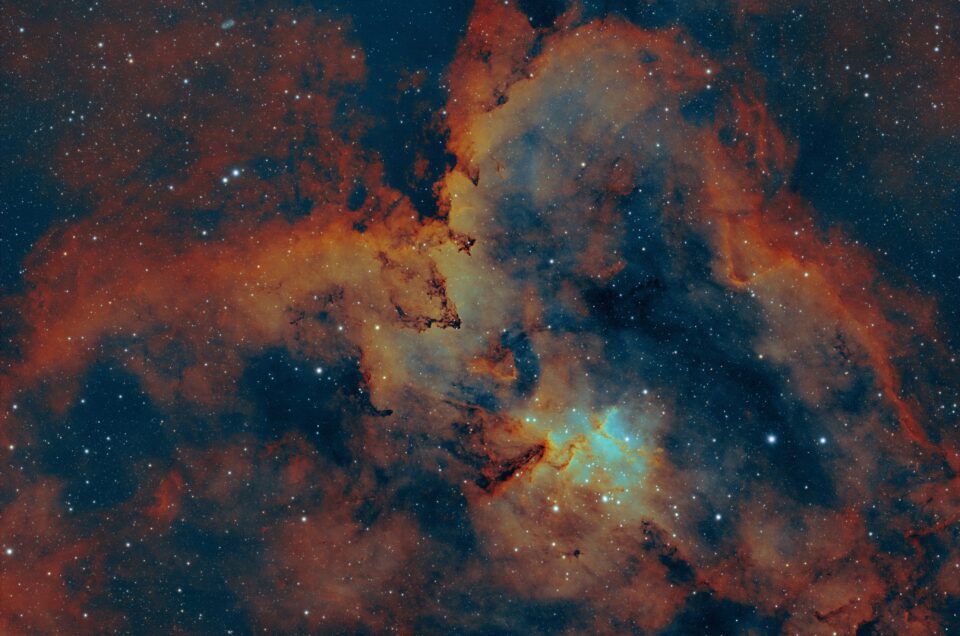
NGC 2018 from remote


In 2026, I received a high-quality OSC dataset of NGC 2018 with NGC 2031 from Astrophotomarket, acquired in USA.

NGC 2018 and NGC 2031 are two very different but very interesting objects in the Large Magellanic Cloud, and they sit in one of the most crowded and active parts of that nearby dwarf galaxy. NGC 2018 is an emission nebula with an embedded cluster, while NGC 2031 is a compact globular cluster-like stellar system with a rich population of variable stars.

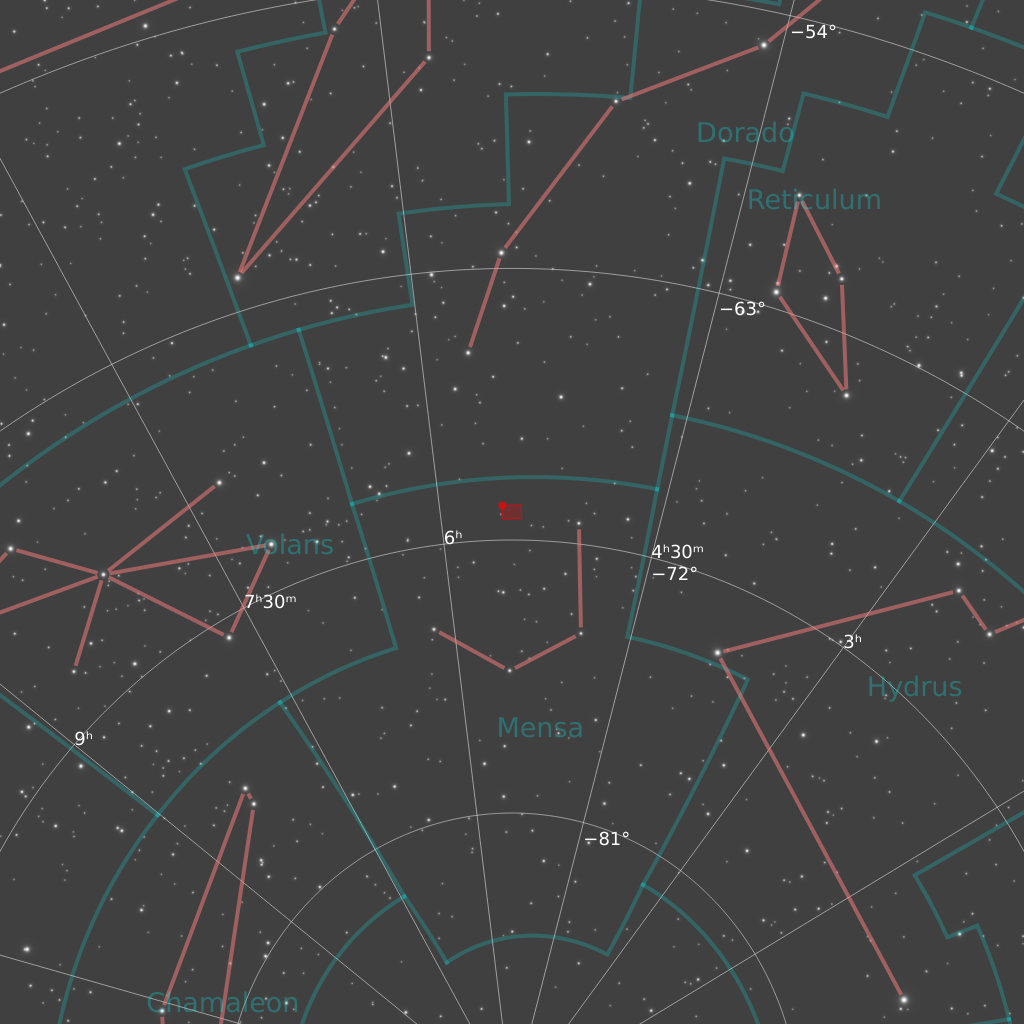
NGC 2018 lies in the southern constellation Mensa inside the LMC, about 163,000 light-years from Earth as part of that satellite galaxy. It was discovered by John Herschel on 3 November 1834. Public sources describe it as an open cluster associated with an emission nebula and identify the nebula as Henize 206 / LHA 120-N 206A. In some astronomy discussions it is also described as a “chaotic cluster of gas” or as part of a supernova-driven star-forming region.

The object is relatively small in apparent size, around 2.8 arcminutes, but that compact appearance hides a lively environment of gas and young stars. The region is interesting because it is not just a simple cluster: it is tied to an H II region where radiation and shocks from massive stars help sculpt the surrounding gas. One source notes that the area may even be influenced by supernova shock waves moving through clouds of gas and dust. That makes NGC 2018 a good example of how star formation, stellar feedback, and nebular emission can overlap in a single field.

In imaging, NGC 2018 is often described as a bright, crisp-edged, glowing patch in a crowded LMC neighborhood. It sits near other LMC structures such as NGC 2010, adding to the impression that the area is a small ecosystem of clusters and nebulae rather than one isolated object.

NGC 2031 is a much more conventional star cluster, and Hubble observations show it as a dense, brilliant blue cluster in the LMC. It lives in an extremely crowded and star-rich region of the galaxy, which creates “stellar contamination” when astronomers try to measure its properties. Even so, the cluster has been studied in detail because it contains a sizable population of Cepheid variable stars, with at least 14 identified. Cepheids are valuable because their pulsation periods are closely tied to their intrinsic brightness, making them vital distance indicators.

According to NASA’s Hubble summary, NGC 2031 is about 150,000 light-years from Earth, roughly the same scale as the LMC itself. It is estimated to be around 140 million years old and has a mass of more than 3,000 solar masses. That makes it far younger and less massive than ancient globular clusters, but still a compact and important stellar system.

NGC 2031 is located in the constellation Mensa inside the LMC, and its environment is so crowded that nearby stars can complicate photometry and spectral work. That crowded setting is actually useful, because the cluster’s variable stars help astronomers refine the LMC distance scale and study stellar evolution in a low-metallicity environment.

NGC 2018 and NGC 2031 both highlight the richness of the LMC, but they represent different stages of stellar life. NGC 2018 is a gas-rich, active nebular region where young stars are shaping their surroundings, while NGC 2031 is a more evolved, compact star cluster with Cepheid variables and a clearly measured age. Together, they show why the Large Magellanic Cloud is such a powerful laboratory: it contains both active star-forming regions and well-populated clusters that astronomers can use to study stellar populations, distances, and the effects of environment on cluster evolution.

For the Astrophotomarket data the calibration, registration, and final image processing were carried out in PixInsight.
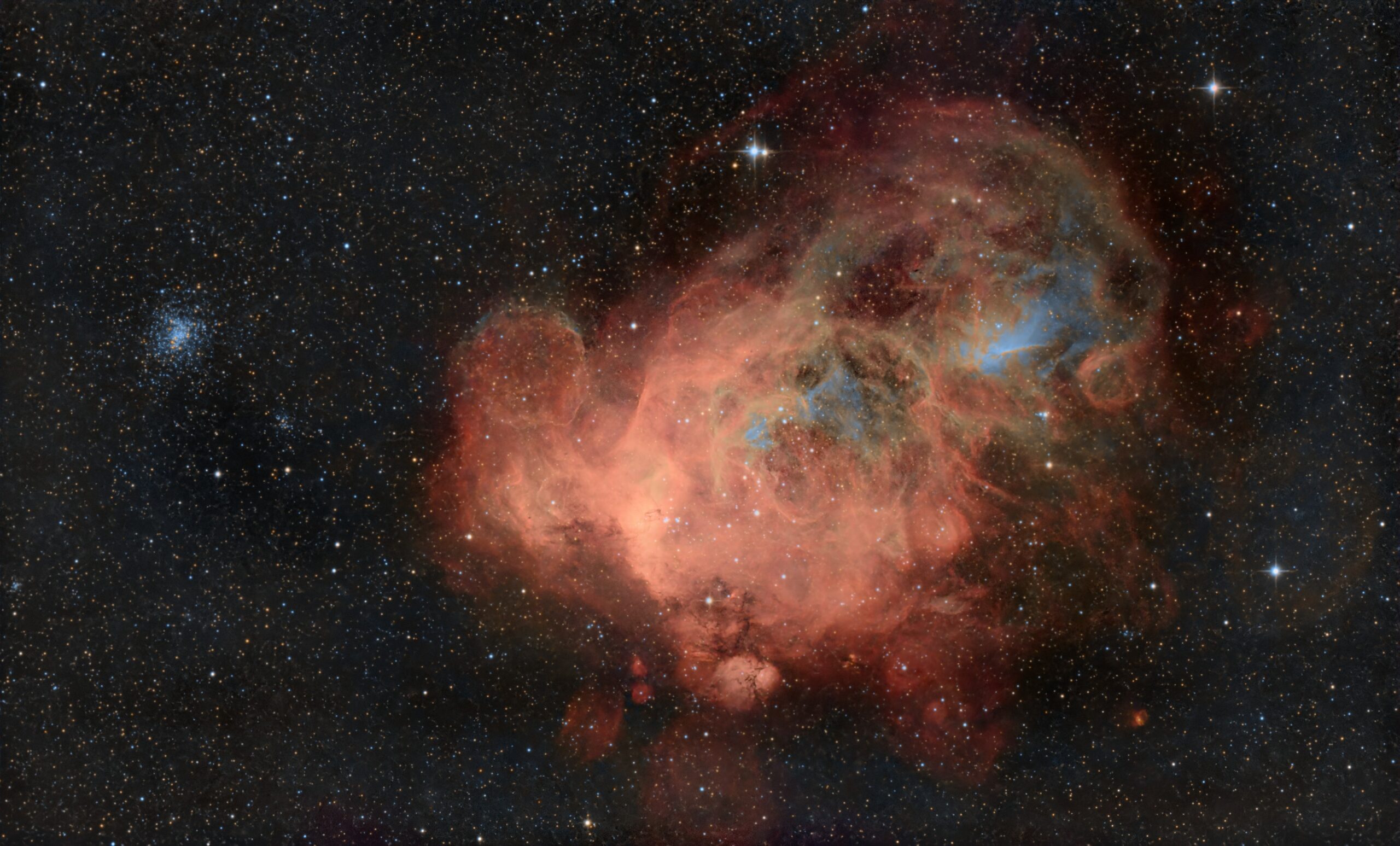
NGC 2018, Astrophotomarket, Australia, 2026
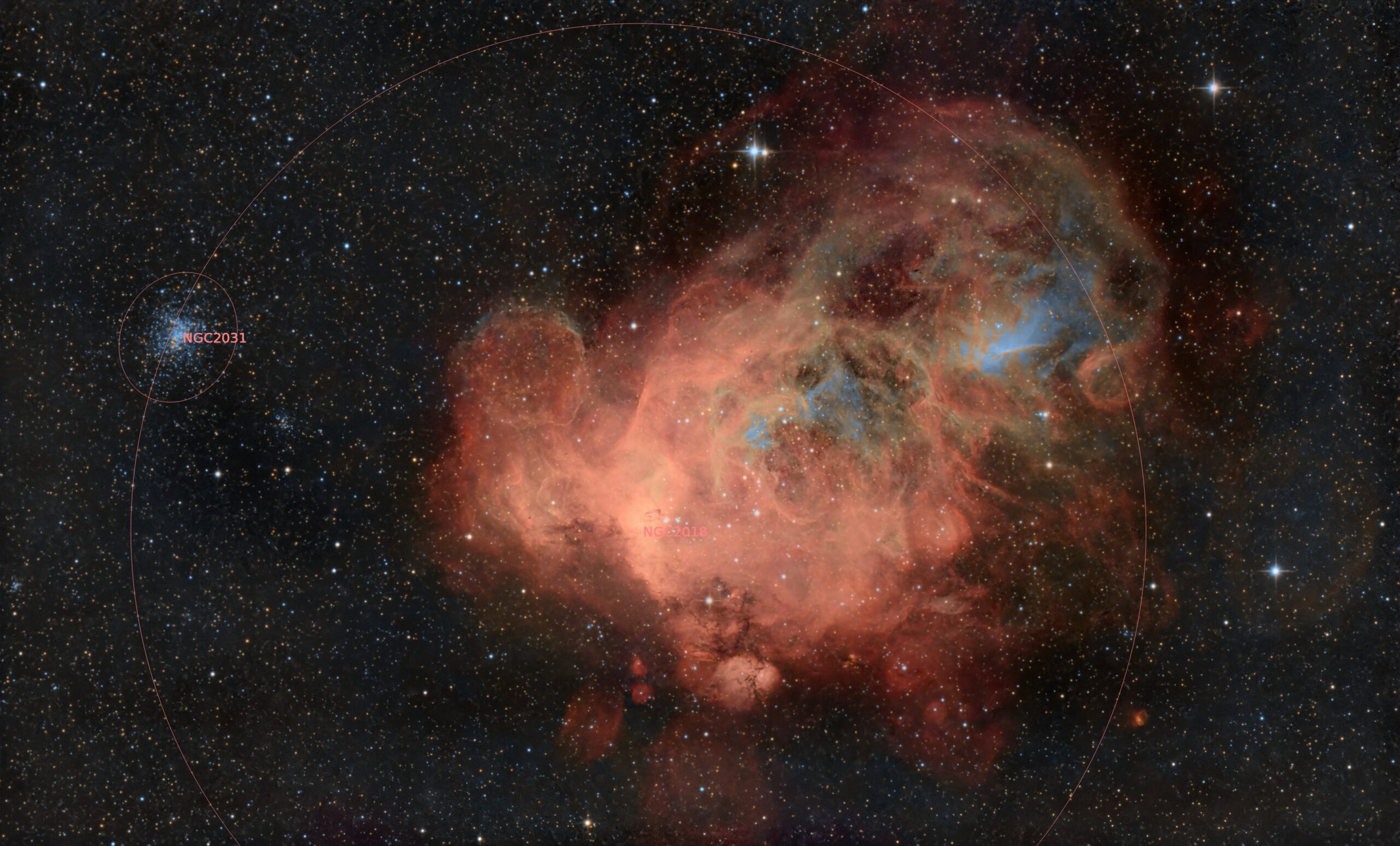
NGC 2018 annotated
NGC 2018 annotated


The images were taken with the following equipment:

  • Date: 2026
  • Location: Australia
  • Telescope/Lense: 8″ Skywatcher Newton
  • Focal length [mm]: 1000
  • Focal ratio: 5
  • Mount: Skywatcher AZ-EQ6 GT
  • Camera:ZWO ASI 585MC
  • Filter: OSC
  • Exposure time [min]: 330
  • Resolution: 0.63″/px


NGC 2018 Finder Chart

Stephan Küppers


You might also like
IC 1805 (Heart Nebula)
12. August 2026
IC 1318
15. Juli 2026
NGC 7000 with IC 5070
24. Juni 2026

Leave a reply

Schreibe einen Kommentar Antwort abbrechen

Deine E-Mail-Adresse wird nicht veröffentlicht. Erforderliche Felder sind mit * markiert


© Stephan Küppers 2020-2026

Cookie-Zustimmung verwalten
Wir verwenden Cookies, um unsere Website und unseren Service zu optimieren.
Funktional Immer aktiv
Die technische Speicherung oder der Zugang ist unbedingt erforderlich für den rechtmäßigen Zweck, die Nutzung eines bestimmten Dienstes zu ermöglichen, der vom Teilnehmer oder Nutzer ausdrücklich gewünscht wird, oder für den alleinigen Zweck, die Übertragung einer Nachricht über ein elektronisches Kommunikationsnetz durchzuführen.
Vorlieben
Die technische Speicherung oder der Zugriff ist für den rechtmäßigen Zweck der Speicherung von Präferenzen erforderlich, die nicht vom Abonnenten oder Benutzer angefordert wurden.
Statistiken
Die technische Speicherung oder der Zugriff, der ausschließlich zu statistischen Zwecken erfolgt. Die technische Speicherung oder der Zugriff, der ausschließlich zu anonymen statistischen Zwecken verwendet wird. Ohne eine Vorladung, die freiwillige Zustimmung deines Internetdienstanbieters oder zusätzliche Aufzeichnungen von Dritten können die zu diesem Zweck gespeicherten oder abgerufenen Informationen allein in der Regel nicht dazu verwendet werden, dich zu identifizieren.
Marketing
Die technische Speicherung oder der Zugriff ist erforderlich, um Nutzerprofile zu erstellen, um Werbung zu versenden oder um den Nutzer auf einer Website oder über mehrere Websites hinweg zu ähnlichen Marketingzwecken zu verfolgen.
  • Optionen verwalten
  • Dienste verwalten
  • Verwalten von {vendor_count}-Lieferanten
  • Lese mehr über diese Zwecke
Einstellungen anzeigen
  • {title}
  • {title}
  • {title}