

LBN 777 (The Baby Eagle) from remote
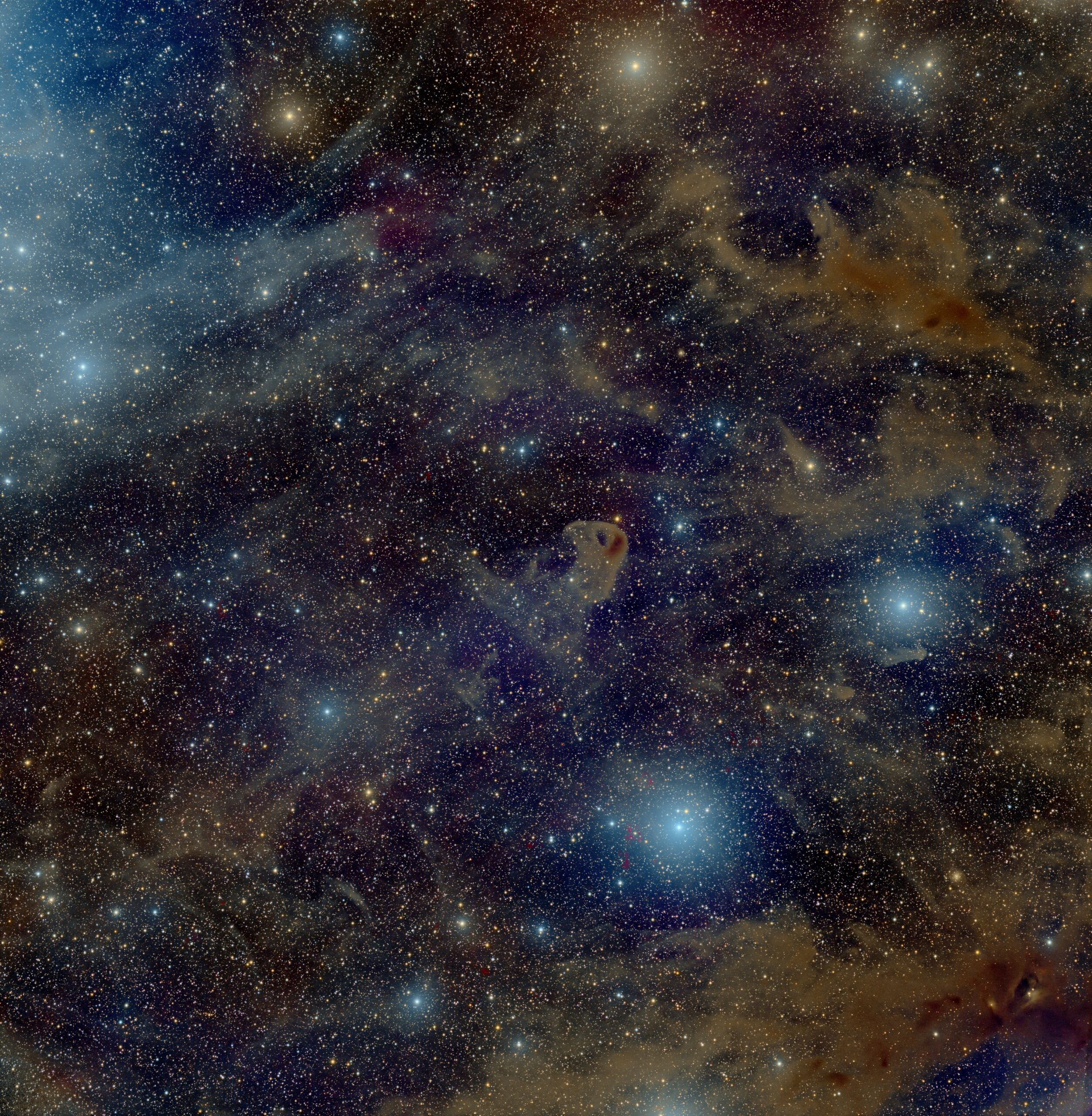
From time to time I obtain data sets from remote observatories. One of my favorite providers is Telescope Live with telescopes in e.g. Chile, Australia and Spain. One of the data sets I received, was data from the nebula LBN 777 located in the constellation Cassiopeia.
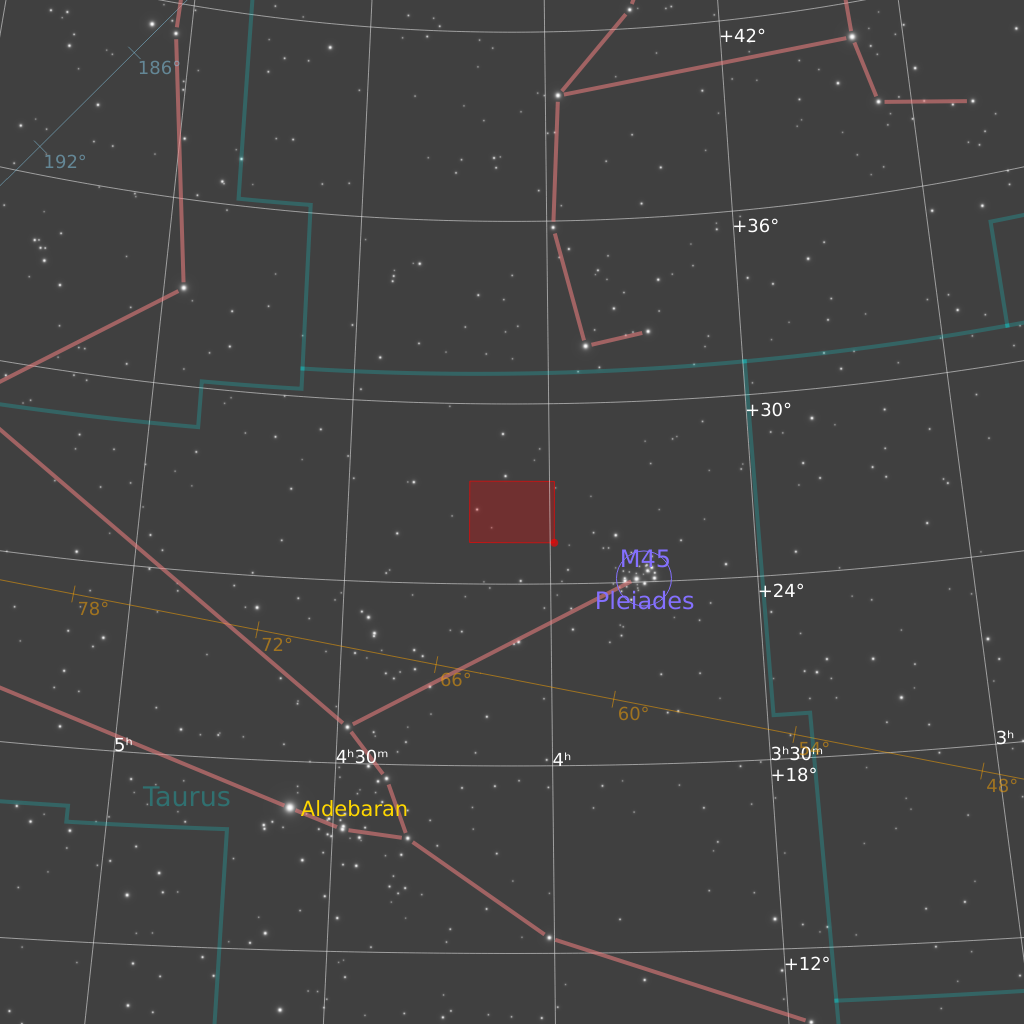
LBN 777 is a very faint reflection nebula in the constellation Taurus, popularly known as the Baby Eagle Nebula or sometimes the Vulture Head Nebula. It is part of the Taurus Molecular Cloud, one of the nearest large star-forming regions to the Sun, and it sits about 4.5 to 5 degrees northeast of the Pleiades (M45).
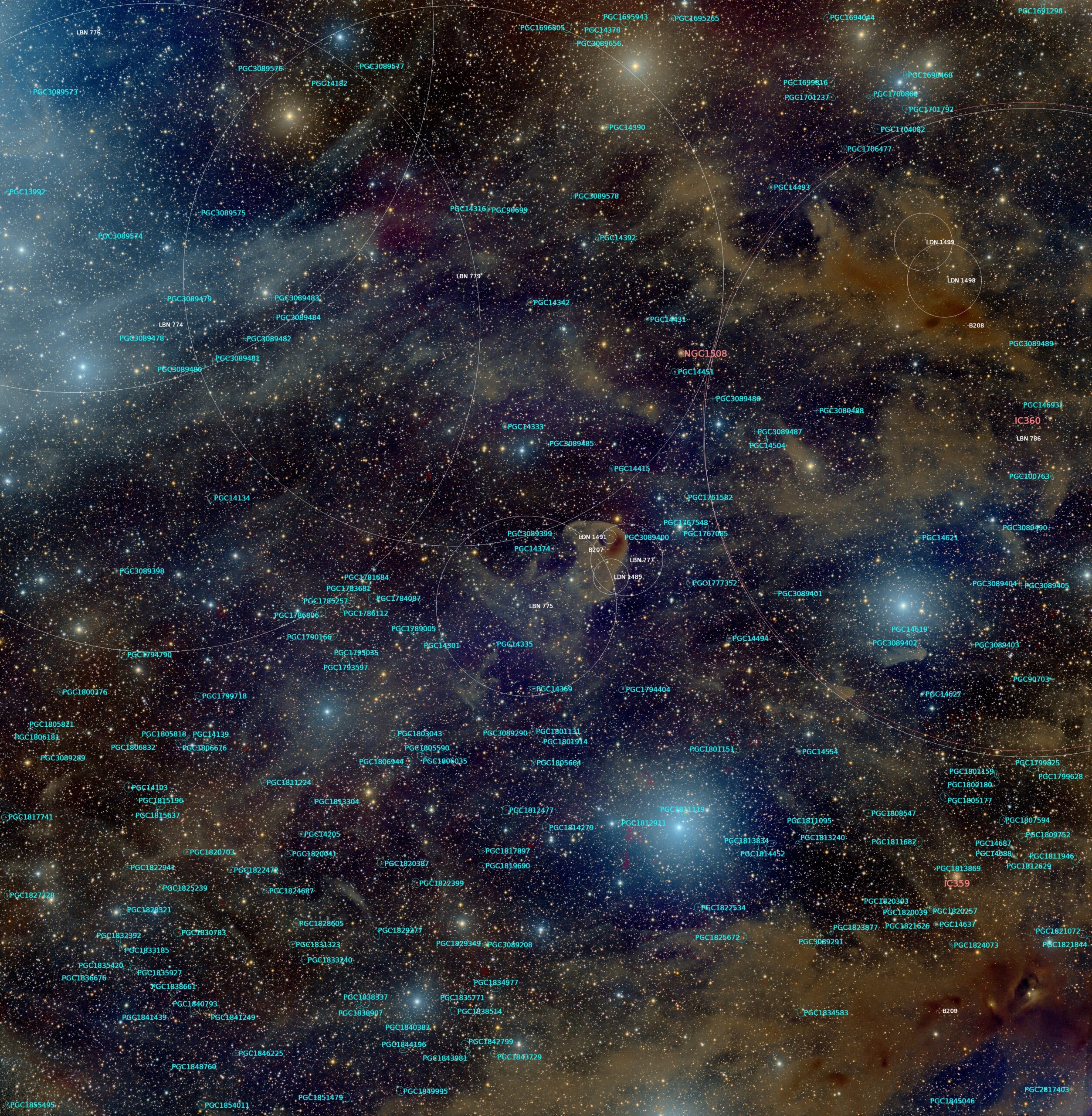
LBN 777 is classified as a reflection nebula, meaning it does not emit light of its own but glows because dust grains in the cloud scatter the light of nearby stars. Its appearance is dominated by sweeping arcs of faintly illuminated dust, with a darker, denser core that blocks background starlight. That dark core is cataloged as Barnard 207 (B 207), a dark nebula that is physically associated with LBN 777 and forms the “eye” or head of the bird-like shape.
Because the nebula only reflects starlight, it is extremely faint and requires long exposures and sensitive equipment to image well. In many wide-field images, it appears as a subtle brownish or bluish patch against the starry background, with Barnard 207 standing out as a darker silhouette.
The Baby Eagle Nebula lies at a distance of about 420–460 light-years (roughly 130–140 parsecs) from Earth. That places it very close by Galactic standards and firmly within the Taurus–Auriga–Perseus molecular cloud complex, a major nearby region of low-mass star formation.
LBN 777 was first cataloged as a bright nebula by American astronomer Beverly T. Lynds in her 1965 Catalogue of Bright Nebulae, where it is listed as LBN 777 (also LBN 168.10‑19.04). The darker part of the same structure was included earlier in her 1962 Catalogue of Dark Nebulae as LDN 1489. The densest knot within the nebula, which appears as a brown patch near the “eye,” is Barnard 207, from E. E. Barnard’s catalog of dark
Physically, the nebula is described as a cometary globule in the Taurus molecular cloud region, with a dense head (where B 207 lies) and more diffuse, fainter “tail” regions that are illuminated from the outside. The brownish tint seen in color images is caused by large dust grains embedded in the gas, which preferentially scatter and absorb starlight.
The Baby Eagle Nebula is scientifically interesting because it is a relatively nearby example of a dense, dusty clump in a star-forming cloud. The dark core, Barnard 207, is a likely site of ongoing or future low-mass star formation, as such dense regions are where new stars tend to collapse out of the molecular cloud. Because the entire complex is so close, it is an excellent target for studying the structure of molecular clouds, the physics of dust scattering, and the earliest stages of star formation.
At the same time, LBN 777 is a favorite of deep-sky astrophotographers precisely because it is faint and delicate. Capturing its subtle glow and the contrast with Barnard 207 requires long total exposures and careful processing, but the result is a striking “bird’s head” of dust and light.
Data calibration and registration and the final processing was done with PixInsight. The result was as follows:
The images were taken with the following equipment (SPA-1 CCD, Telescope Live):
- Date: 2022
- Location: IC Observatory, Spain
- Telescope/Lense: Takahashi FSQ-106ED
- Focal length [mm]: 390
- Focal ratio: 3.6
- Mount: Paramount MX+
- Camera: FLI Proline 16803
- Filter: L:R:G:B
- Exposure time [min]: 120:120:120:140
- Resolution: 4.75″/px



Leave a reply