• Home
  • Blog
  • Astrophotography
    • Deep Sky
      • Galaxies (Galaxien)
      • Nebulae (Nebel)
      • Planetary Nebulae (Planetarische Nebel)
      • Globular Clusters (Kugelsternhaufen)
      • Open Clusters (Offene Sternhaufen)
      • Miscellaneous (Verschiedenes)
    • Solar System (Sonnensystem)
      • Comets (Kometen)
      • Moon (Mond)
      • Planets (Planeten)
      • Sun (Sonne)
  • Archiv

    • Juli 2026
    • Juni 2026
    • Mai 2026
    • April 2026
    • Februar 2026
    • Januar 2026
    • Dezember 2025
    • November 2025
    • Oktober 2025
    • September 2025
    • August 2025
    • Juli 2025
    • Juni 2025
    • Mai 2025
    • April 2025
    • März 2025
    • Januar 2025
    • Dezember 2024
    • November 2024
    • Oktober 2024
    • September 2024
    • August 2024
    • Juli 2024
    • Juni 2024
    • Mai 2024
    • April 2024
    • März 2024
    • Februar 2024
    • Januar 2024
    • November 2023
    • Oktober 2023
    • September 2023
    • August 2023
    • Juli 2023
    • Juni 2023
    • Mai 2023
    • April 2023
    • März 2023
    • Februar 2023
    • Januar 2023
    • Dezember 2022
    • November 2022
    • Oktober 2022
    • September 2022
    • August 2022
    • Juli 2022
    • Juni 2022
    • Mai 2022
    • April 2022
    • März 2022
    • Februar 2022
    • Januar 2022
    • Dezember 2021
    • November 2021
    • September 2021
    • August 2021
    • Juli 2021
    • März 2021
    • Februar 2021
    • November 2020
    • September 2020
    • August 2020
    • April 2020
    • März 2020
    • Februar 2020
    • Januar 2020
    • Dezember 2019
    • November 2019
    • Oktober 2019
    • September 2019
    • August 2019
    • Mai 2019
    • April 2019
    • März 2019
    • Dezember 2018
    • November 2018
    • Oktober 2018
    • September 2018
    • Juni 2018
    • Mai 2018
    • April 2018
    • März 2018
    • Februar 2018
    • Januar 2018
    • Oktober 2017
    • Juli 2017
    • Juni 2017
    • Januar 2017
    • Dezember 2016
    • September 2016
    • Mai 2016
    • März 2016
    • November 2015
    • Oktober 2015
    • Juli 2015
    • Mai 2015
    • März 2015
    • Februar 2015
    • September 2014
    • August 2014
    • März 2014
    • Februar 2014
    • Oktober 2013
    • September 2013
    • August 2013
    • April 2013
    • März 2013
    • November 2012
    • August 2012
    • Juli 2012
    • Mai 2012
    • März 2012
    • Januar 2012
    • November 2011
    • Oktober 2011
    • September 2011
    • August 2011
    • April 2011
    • März 2011
    • Oktober 2010
    • September 2010
    • August 2010
    • Juli 2010
    • April 2010
    • Juli 2009
    • Juli 2008
    • Januar 2008
    • Oktober 2007
    • Juli 2007
    • März 2007
    • Februar 2007
    • Juni 2006
    • Oktober 2005
    • September 2005
    • August 2005
    • Januar 2005
  • Kategorien

    • Asterism
    • Astrophotography
    • Barnard
    • Comet
    • Galaxies
    • Globular Cluster
    • IC
    • Messier
    • Moon
    • Nebula
    • NGC
    • Open cluster
    • Photography
    • Planetary Nebula
    • Travel
  • Meta

    • Anmelden
    • Eintrags-Feed
    • Kommentar-Feed
    • WordPress.org
  • Privacy Policy
  • Impressum
  • Haftungsausschluss
  • Cookie-Richtlinie
  • Datenschutzerklärung

wonderfuluniverse.de
  • Home
  • Blog
  • Astrophotography
    • Deep Sky
      • Galaxies (Galaxien)
      • Nebulae (Nebel)
      • Planetary Nebulae (Planetarische Nebel)
      • Globular Clusters (Kugelsternhaufen)
      • Open Clusters (Offene Sternhaufen)
      • Miscellaneous (Verschiedenes)
    • Solar System (Sonnensystem)
      • Comets (Kometen)
      • Moon (Mond)
      • Planets (Planeten)
      • Sun (Sonne)

LBN 292


From time to time, I obtain datasets from remote observatories around the world. One of my favorite providers is Telescope Live, which operates telescopes at outstanding astronomical sites in Chile, Australia, and Spain. One of the datasets I received was of the diffuse nebula complex LBN 292, located in the rich star fields of the constellation Cygnus. The professional-quality data, acquired under exceptionally dark skies, allowed me to process an image revealing the delicate network of glowing hydrogen clouds, dark dust lanes, and countless background stars that characterize this fascinating region of the Milky Way.

LBN 292 is part of the extensive emission nebulae that permeate Cygnus, one of the Galaxy’s most active regions of ongoing star formation. The designation LBN refers to the Lynds‘ Catalogue of Bright Nebulae, compiled by the American astronomer Beverly T. Lynds in the 1960s. Objects in this catalog are often large and diffuse, making them challenging targets that require long exposure times and excellent sky conditions to reveal their faint structures.

The nebula lies at an estimated distance of around 2,000 to 3,000 light-years and forms part of the vast molecular cloud complexes associated with the Cygnus X region. This enormous concentration of gas and dust is one of the richest stellar nurseries in the Milky Way, containing numerous young star clusters, massive O- and B-type stars, and expanding H II regions. The intense ultraviolet radiation emitted by these young, massive stars ionizes the surrounding hydrogen gas, causing it to glow with the characteristic deep-red Hα emission seen in long-exposure astrophotographs.

Interwoven with the bright emission are intricate dark nebulae, dense clouds of interstellar dust that absorb the light from both the glowing gas and the background stars. These dust clouds are not empty regions but rather the raw material from which future generations of stars will eventually form. Deep images reveal a wealth of fine filaments, curved ionization fronts, and subtle variations in brightness, illustrating the complex interaction between stellar radiation, stellar winds, and the surrounding interstellar medium.

The field surrounding LBN 292 is exceptionally rich in stars because it lies almost directly along the plane of the Milky Way. Countless foreground stars of our own Galaxy are visible, while numerous faint background galaxies can still be detected through gaps in the interstellar dust. This combination of emission nebulae, obscuring dust clouds, and dense stellar fields makes the region one of the most rewarding wide-field targets in the northern sky.

Processing professional remote-observatory data offers the opportunity to concentrate entirely on image calibration, integration, and enhancement without the limitations imposed by local weather or light pollution. The Telescope Live dataset provided excellent signal-to-noise ratio and fine spatial resolution, allowing the delicate structures within the nebula to be rendered with remarkable clarity.

This image of LBN 292 beautifully demonstrates the power of modern remote observatories. It captures not only the intricate beauty of one of the Milky Way’s lesser-known emission nebulae but also the dynamic environment in which new stars continue to form. At the same time, it highlights how access to professional telescopes around the world enables amateur astrophotographers to explore deep-sky objects that would otherwise be extremely difficult to image from central Europe.

Data calibration and registration and the final processing was done with PixInsight. The result was as follows:
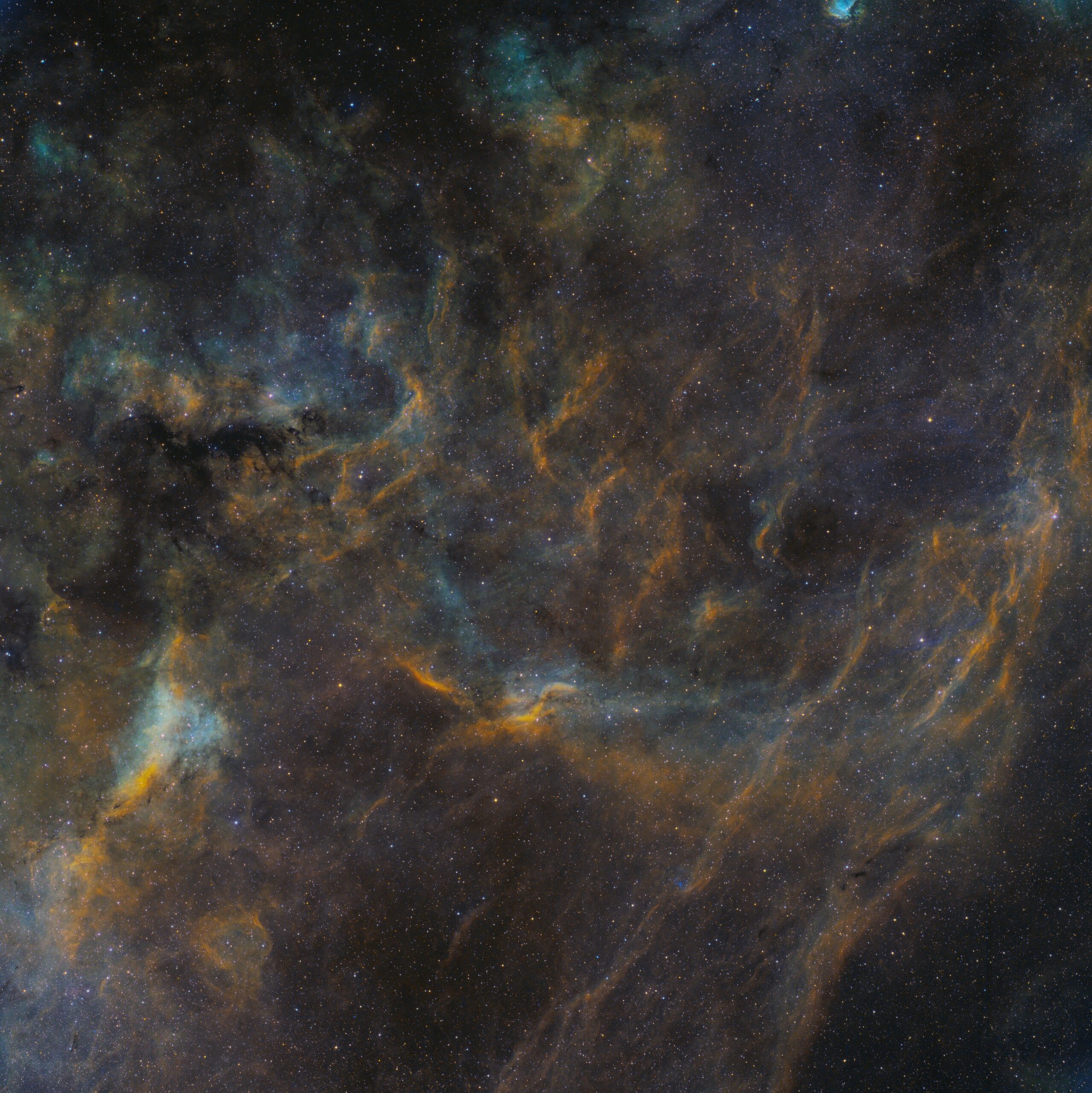
LBN 292 Hubble Palette, (SPA-3 Telescope Live), 2022
LBN 292 Hubble palette
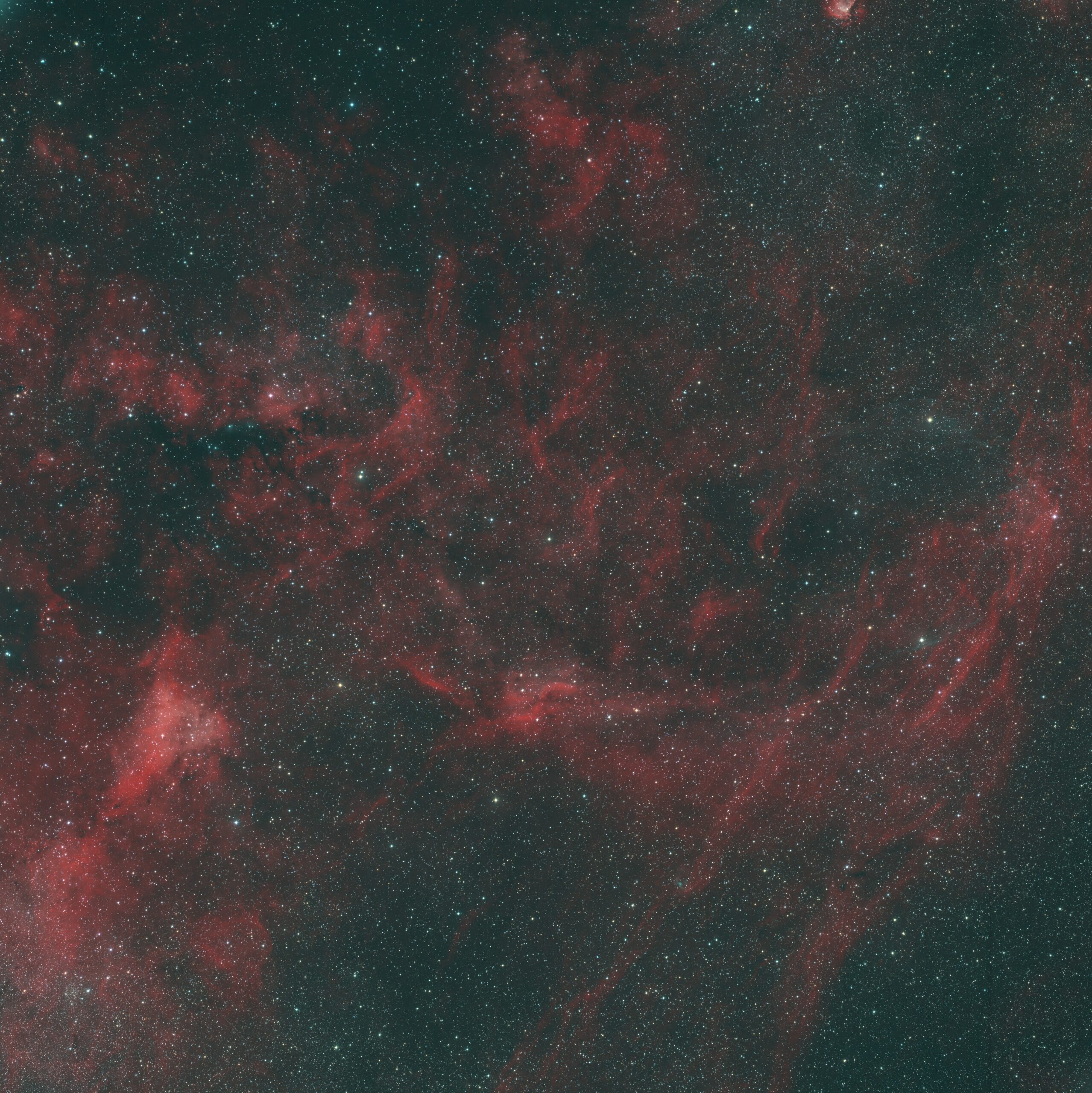
LBN 292 bicolor, (SPA-3 Telescope Live), 2022

LBN 292 bicolor

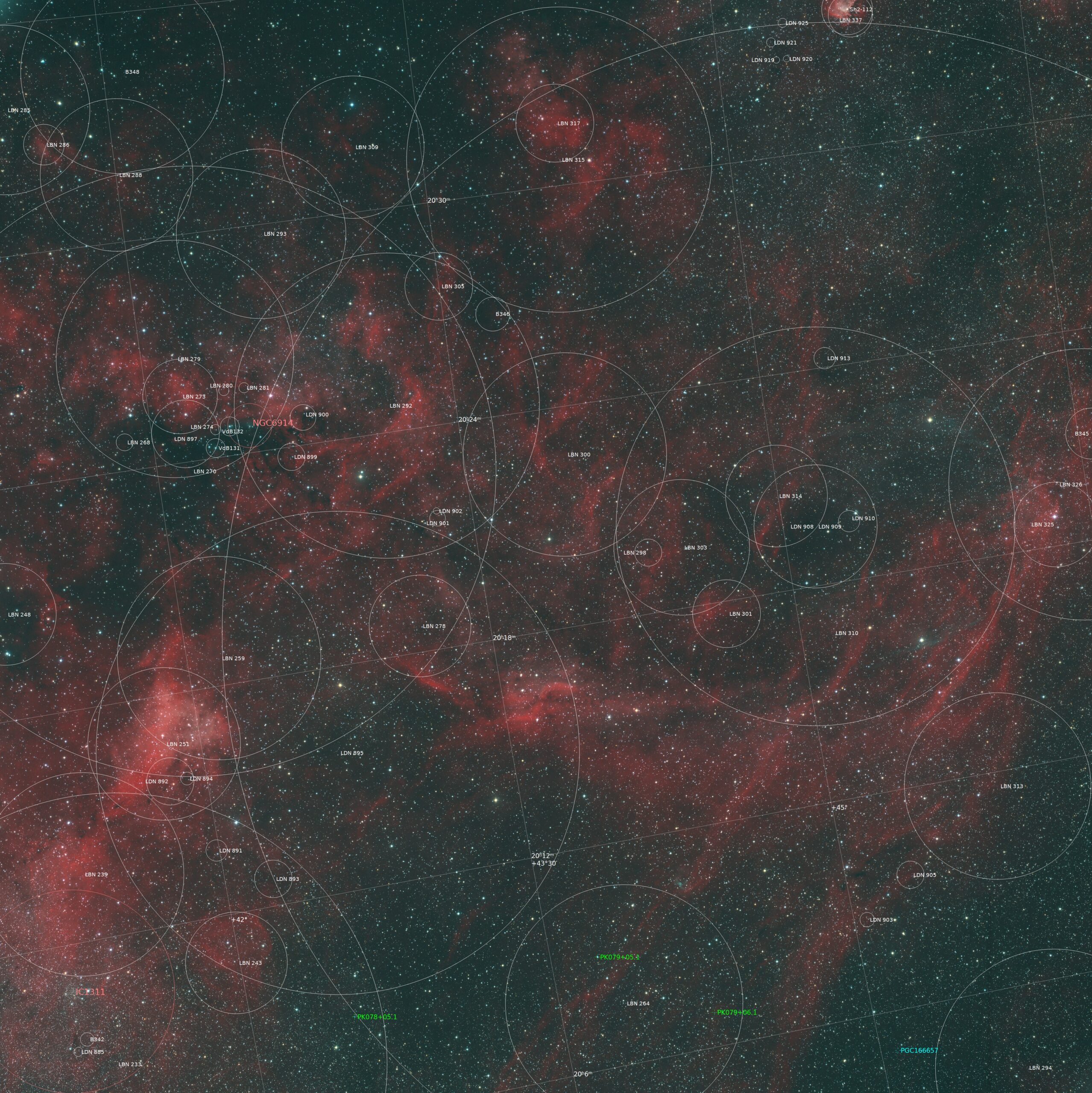
LBN 292 bicolor annotated

LBN 292 annotated


The images were taken with the following equipment:

  • Date: 2022
  • Location: IC Astronomy Observatory, Spain
  • Telescope: Takahashi FSQ-106EDX4
  • Focal length [mm]: 390
  • Focal ratio: 3.6
  • Mount: Paramount MX+
  • Camera: FLI Proline 16083
  • Filter: Hα:[OIII]:[SII]
  • Exposure time [min]: 340:340:340
  • Resolution: 3.6″/px


Stephan Küppers


You might also like
IC 1318
15. Juli 2026
NGC 7000 with IC 5070
24. Juni 2026
Sh2-129, Outters 4
29. Mai 2026

Leave a reply

Schreibe einen Kommentar Antwort abbrechen

Deine E-Mail-Adresse wird nicht veröffentlicht. Erforderliche Felder sind mit * markiert


© Stephan Küppers 2020-2022

Cookie-Zustimmung verwalten
Wir verwenden Cookies, um unsere Website und unseren Service zu optimieren.
Funktional Immer aktiv
Die technische Speicherung oder der Zugang ist unbedingt erforderlich für den rechtmäßigen Zweck, die Nutzung eines bestimmten Dienstes zu ermöglichen, der vom Teilnehmer oder Nutzer ausdrücklich gewünscht wird, oder für den alleinigen Zweck, die Übertragung einer Nachricht über ein elektronisches Kommunikationsnetz durchzuführen.
Vorlieben
Die technische Speicherung oder der Zugriff ist für den rechtmäßigen Zweck der Speicherung von Präferenzen erforderlich, die nicht vom Abonnenten oder Benutzer angefordert wurden.
Statistiken
Die technische Speicherung oder der Zugriff, der ausschließlich zu statistischen Zwecken erfolgt. Die technische Speicherung oder der Zugriff, der ausschließlich zu anonymen statistischen Zwecken verwendet wird. Ohne eine Vorladung, die freiwillige Zustimmung deines Internetdienstanbieters oder zusätzliche Aufzeichnungen von Dritten können die zu diesem Zweck gespeicherten oder abgerufenen Informationen allein in der Regel nicht dazu verwendet werden, dich zu identifizieren.
Marketing
Die technische Speicherung oder der Zugriff ist erforderlich, um Nutzerprofile zu erstellen, um Werbung zu versenden oder um den Nutzer auf einer Website oder über mehrere Websites hinweg zu ähnlichen Marketingzwecken zu verfolgen.
  • Optionen verwalten
  • Dienste verwalten
  • Verwalten von {vendor_count}-Lieferanten
  • Lese mehr über diese Zwecke
Einstellungen anzeigen
  • {title}
  • {title}
  • {title}