

IC 5146 (Cocoon Nebula) from my own backyard
This is an object I imaged four times over the years, from my own backyard and during holidays.
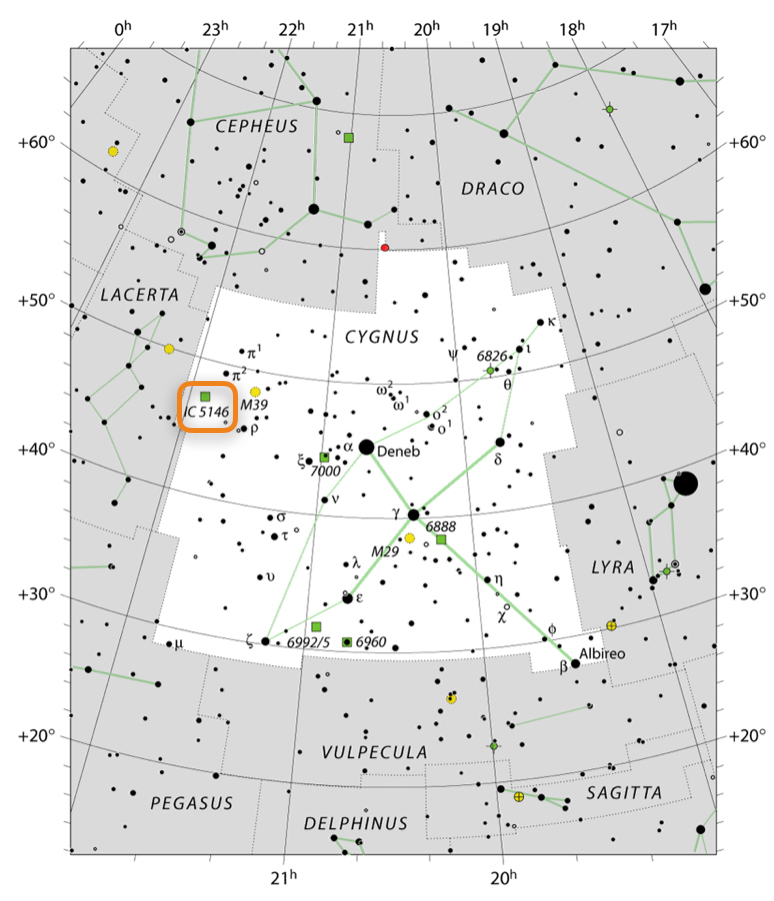
IC 5146 is a mixed emission and reflection nebula with an embedded young open star cluster. The bright, roughly circular core—the “cocoon” itself—is an H II region where hydrogen gas is ionized by a hot, massive B0 V star, BD +46° 3474. That star’s intense ultraviolet radiation strips electrons from hydrogen atoms, and when those electrons recombine, the gas glows red in hydrogen-alpha light. Around that ionized core, dust reflects starlight, giving parts of the nebula a bluish tint.apod.nasa+5
The nebula is about 15 light-years across and sits at the tip of a long, dark filamentary molecular cloud called the Northern Streamer or Dark Streamer, which extends to the northwest. Together, the glowing cocoon and the dark streamer form a single star-forming complex.iopscience.iop+2
IC 5146 is a very active stellar nursery. Infrared observations from Spitzer, WISE, and Herschel have identified hundreds of young stellar objects (YSOs) in and around the nebula. The central cluster, sometimes called Collinder 470, is extremely young, with a median age of about 1 million years. Many of its members are still pre-main-sequence stars, meaning they have not yet settled into stable hydrogen burning.iopscience.iop+4
The surrounding molecular cloud contains a network of dense filaments and prestellar cores, the seeds of future stars. Herschel observations found 27 filaments with remarkably similar widths of about 0.3 light-years, and more than 350 compact starless cores, with around 45 gravitationally bound prestellar cores likely to form stars in the future. That makes IC 5146 a key target for studying how filaments fragment into stars.iopscience.iop+1
Distances in the literature vary, with some sources placing IC 5146 at about 1,500–2,500 light-years and others at 3,000–4,000 light-years. The larger distance is commonly used in modern imaging summaries, which quote around 3,000–4,000 light-years. At that distance, the nebula’s apparent size of roughly 10–15 arcminutes corresponds to a physical diameter of about 10–15 light-years.apod.nasa+4
The bright ionized cavity is carved out of a larger molecular cloud, and the central B-type star essentially blows a bubble in the surrounding gas and dust. The dark streamer to the west is a dense, filamentary extension where new stars are still forming, and some studies suggest it may be an example of edge collapse and hub-filament dynamics.iopscience.iop+3
IC 5146 is scientifically valuable because it is nearby, rich in YSOs, and shows both an evolved H II region and an active filamentary cloud in one system. It belongs to the Gould Belt, a giant ring of young stars and star-forming clouds around the Sun, which makes it part of the local star-formation environment of the Milky Way. The combination of a bright ionized core, a young cluster, and a dark, filamentary tail makes it an excellent laboratory for studying how massive stars influence their natal clouds and how new generations of stars form along filaments.
The last time I imaged this nebula in 2026 with my Smart-Telescope from my own backyard.
Data calibration, registration and the final processing was done with PixInsight. The result was as follows:
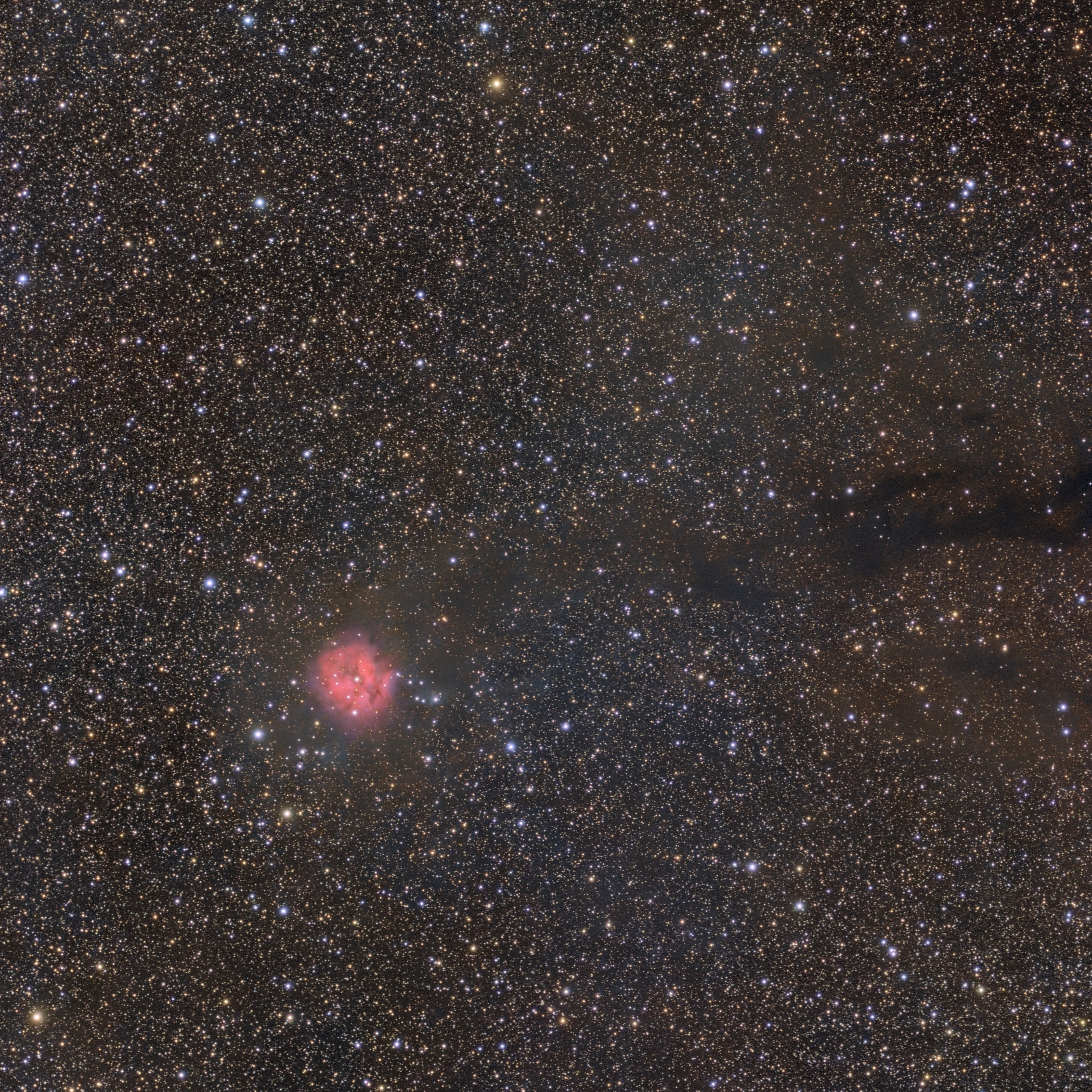
The images were taken with the following equipment:
- Date 2026
- Location: Varel, Germany
- Telescope: Seestar S30 Pro
- Focal length [mm]: 160
- Focal ratio: 5.3
- Mount: EQ Mode
- Camera: Seestar Tele
- Filter: OSC
- Exposure time [min]: 419
- Resolution: 3.67″/px
For the following image rom 2015, I have combined this Hα data with the RGB data from 2010. Data calibration, registration and the final processing was done with PixInsight. The result was as follows:
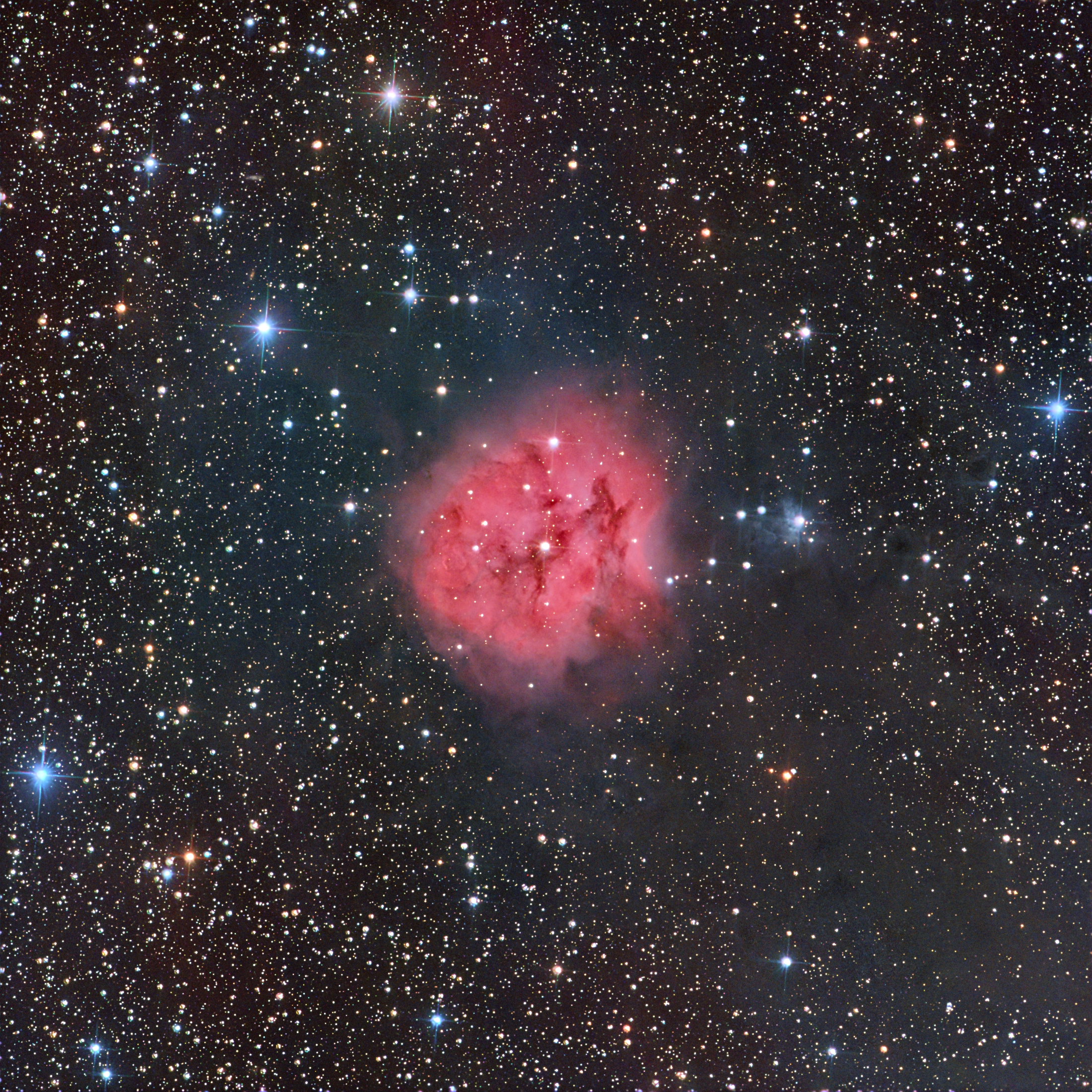
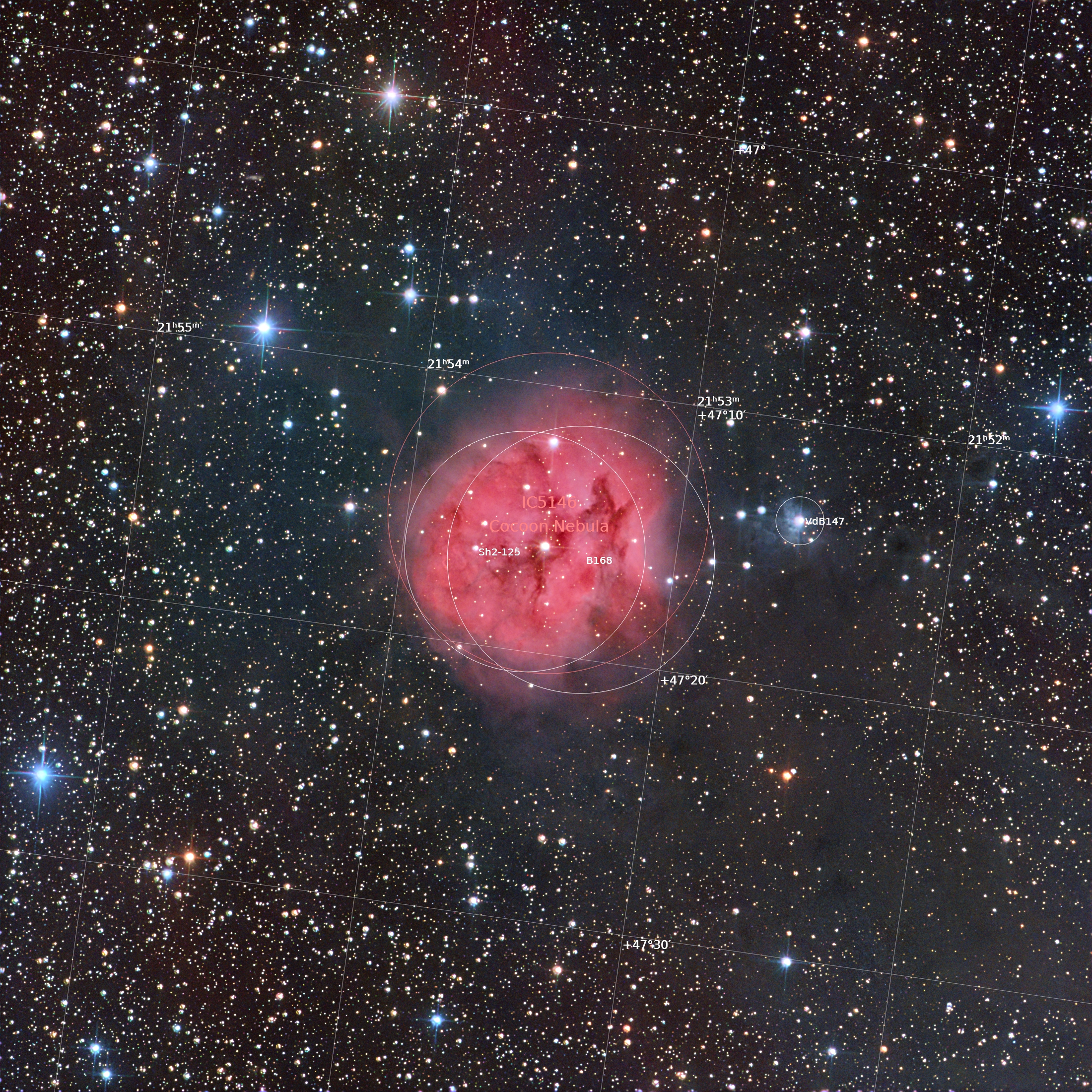
The images were taken with the following equipment:
- Date 2015
- Location: Krefeld, Germany
- Telescope: 10″ Newton ohne Namen
- Focal length [mm]: 1000
- Focal ratio: 3.9
- Mount: Losmandy G11
- Camera: Moravian FW 8300
- Filter: Hα
- Exposure time [min]: 108
- Resolution: 1.11″/px
The second time I imaged this nebula in 2010 during a holiday in Banon, France.
Data calibration and registration was done with DeepSkyStacker, the final processing was done with PixInsight. The result was as follows:
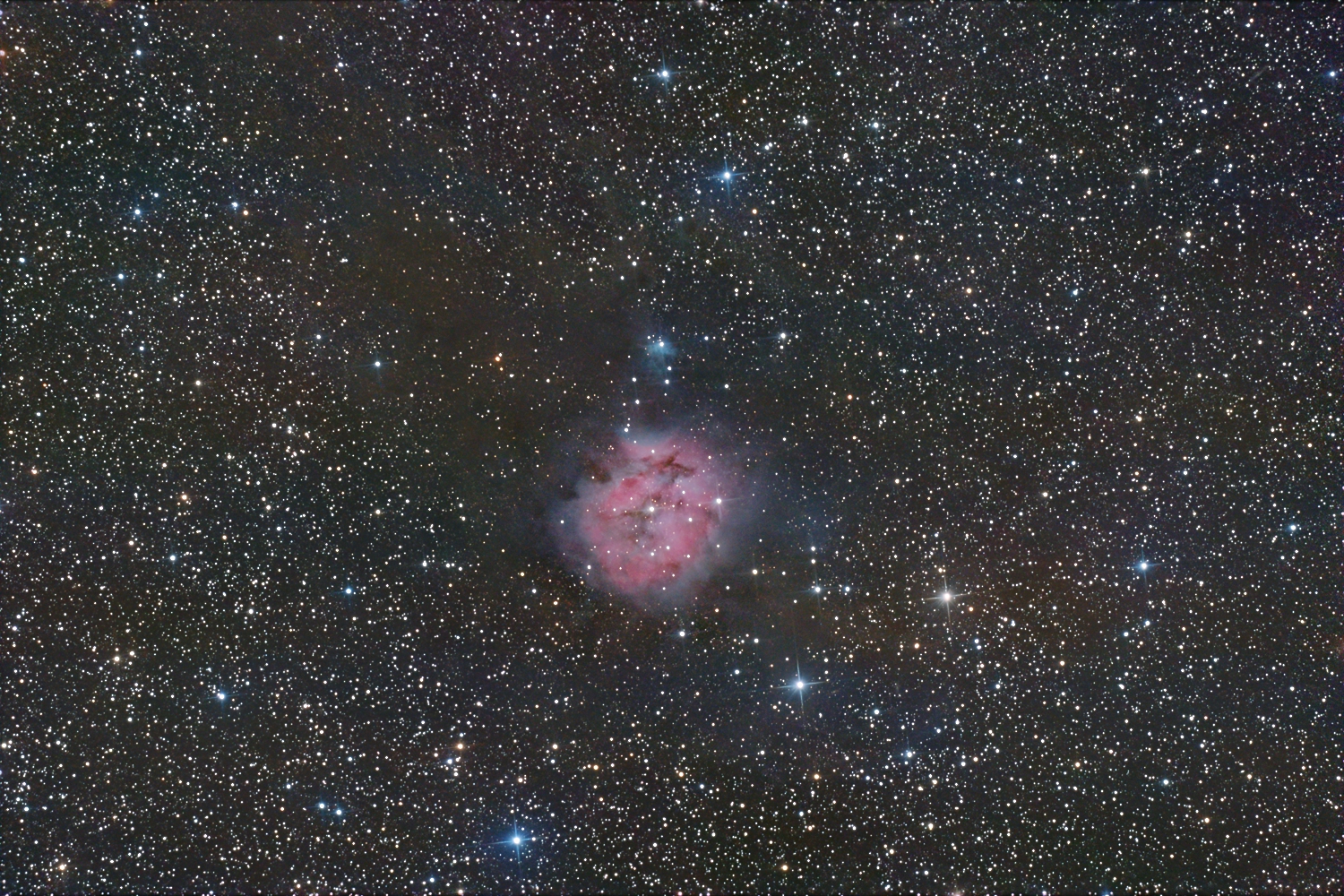
The images were taken with the following equipment:
- Date 2010
- Location: Banon, France
- Telescope: 8″ GSO Newton
- Focal length [mm]: 200
- Focal ratio: 4
- Mount: Skywatcher NEQ6
- Camera: Canon 500 Da
- Filter: OSC
- Exposure time [min]: 110
- Resolution: 3.11″/px
The first time I imaged this nebula during a holiday at the Emberger Alm, Austria in 2007. Data calibration and registration was done with DeepSkyStacker and the final processing was done with PixInsight. The result was as follows:
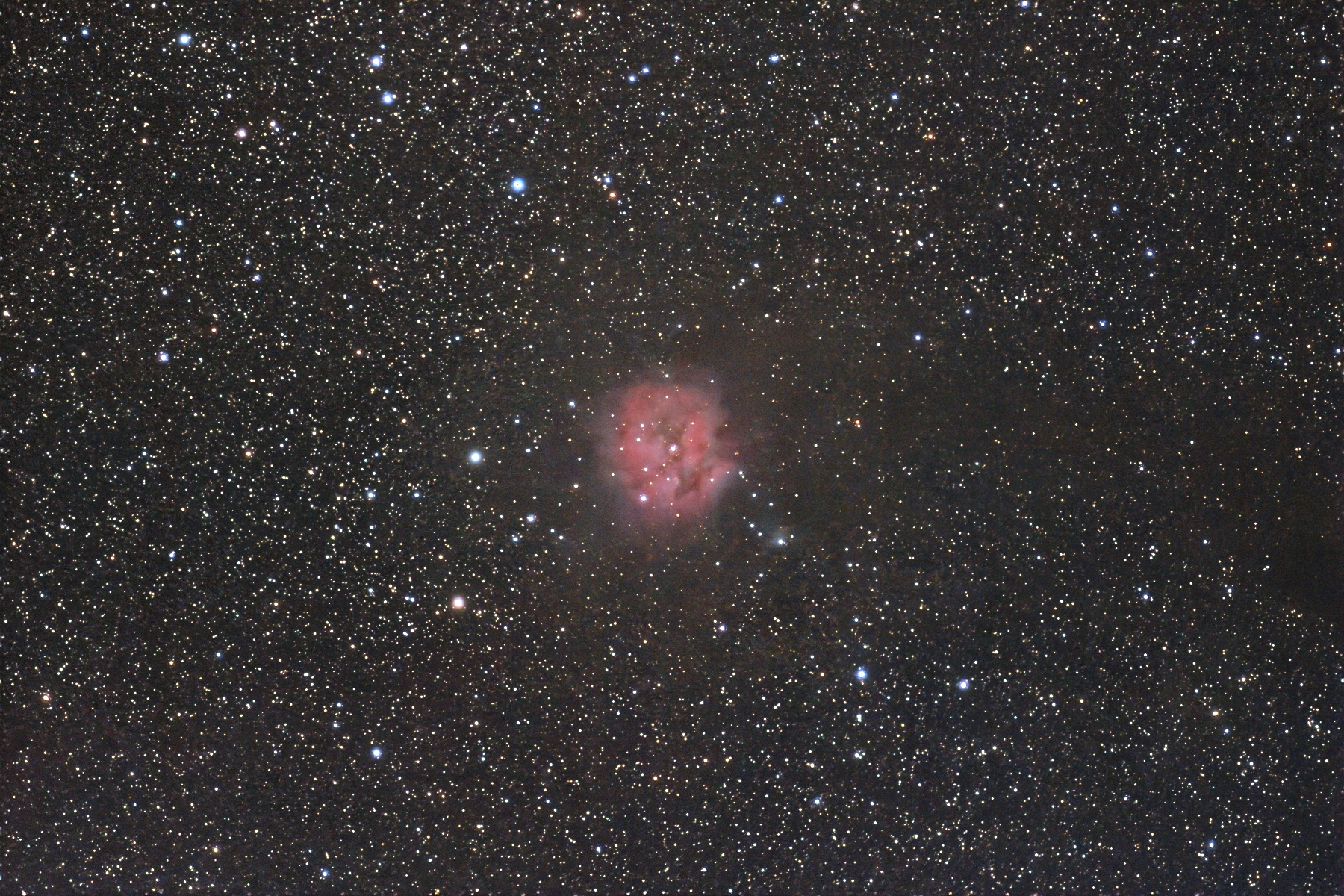
The images were taken with the following equipment:
- Date 2007
- Location: Emberger Alm, Austria
- Telescope: Pentax 75
- Focal length [mm]: 500
- Focal ratio: 6.7
- Mount: Vixen GP-DX
- Camera: Canon 300 Da
- Filter: OSC
- Exposure time [min]: 38
- Resolution: 3.73″/px



Leave a reply