

Horsehead Nebula with IC 434 from my own observatory and remote
The Horsehead Nebula and its surrounding region, including the magnificent Flame Nebula, have accompanied me throughout much of my astrophotography journey. My first images of this iconic area date back to 2007 and 2008, when I photographed it using DSLR equipment from my own observing site. Although modest by today’s standards, these early images marked an important milestone in my development as an astrophotographer and ignited a lasting fascination with one of the most celebrated deep-sky regions in the winter sky.
In 2021, I received a high-quality wide-field dataset from Telescope Live, revealing the Horsehead Nebula within its larger cosmic environment. The expansive field encompasses not only the famous dark nebula Barnard 33, silhouetted against the glowing hydrogen emission of IC 434, but also the spectacular Flame Nebula (NGC 2024).
Two years later, in 2023, I obtained another outstanding dataset from Telescope Live, this time concentrating on the Horsehead Nebula itself. The higher-resolution data revealed the intricate dust filaments, delicate ionization fronts, and subtle structures within the surrounding hydrogen cloud in exceptional detail.
The Horsehead Nebula and the Flame Nebula are two famous parts of the Orion molecular cloud complex, sitting close to the bright star Alnitak, the easternmost star in Orion’s Belt. They are a classic pair because one is a dark silhouette and the other is a glowing emission nebula, so together they show two very different ways that interstellar gas and dust can appear.
The Horsehead Nebula is cataloged as Barnard 33 and is actually a dark cloud of cold gas and dust seen in silhouette against the bright emission nebula IC 434. Its iconic horse-head shape comes from a finger-like protrusion of dense dust that blocks background light. The nebula is about 1,300–1,400 light-years away, though some sources round it to about 1,500 light-years. It is relatively small physically, only a few light-years tall, but it stands out because of the strong contrast with the glowing hydrogen behind it.
The bright strip behind it, IC 434, is an ionized hydrogen region lit by nearby hot stars. The Horsehead itself is part of the Orion B molecular cloud and is slowly being eroded by ultraviolet radiation and stellar winds. Hubble images show that the ridge is being photo-evaporated, and young stars are emerging from the cloud’s edge. This makes the Horsehead not just beautiful, but also a live example of a stellar nursery being shaped by radiation.
The Flame Nebula is NGC 2024 and sits very close to Alnitak as well, usually appearing just to the east or below it in wide-field images. It is an emission nebula, meaning it glows because hot young stars inside or near it ionize the surrounding hydrogen gas. The nebula lies roughly 900–1,500 light-years away and is part of the same Orion B molecular cloud region as the Horsehead.
Unlike the Horsehead, which is mostly a dark cloud, the Flame is bright and structured, often appearing like a tongue of fire in photographs. It contains a young cluster of roughly 800 stars, and at least one hot O-type star, IRS 2b, sits near its center and provides much of the ionizing radiation. Infrared and X-ray studies show that many of the stars in the cluster are still young and surrounded by disks, which means planet formation may already be underway around some of them.
The Horsehead and Flame Nebulae are often mentioned together because they are neighbors in both the sky and the same giant molecular cloud complex. They lie in front of the Orion B cloud, one of the closest active star-forming regions to Earth, about 1,400–1,500 light-years away. The same broader complex also includes other famous objects such as NGC 2023, Messier 78, and Barnard’s Loop.
Their contrast is scientifically useful. The Horsehead shows how dense dust can block light and preserve a cold molecular core, while the Flame shows what happens when hot young stars light up and disturb their natal cloud. Together they help astronomers study the life cycle of molecular clouds: collapse, star birth, ionization, and eventual erosion.
For the Telescope Live data, calibration, registration, and final image processing were all performed with PixInsight. The result was as follows:
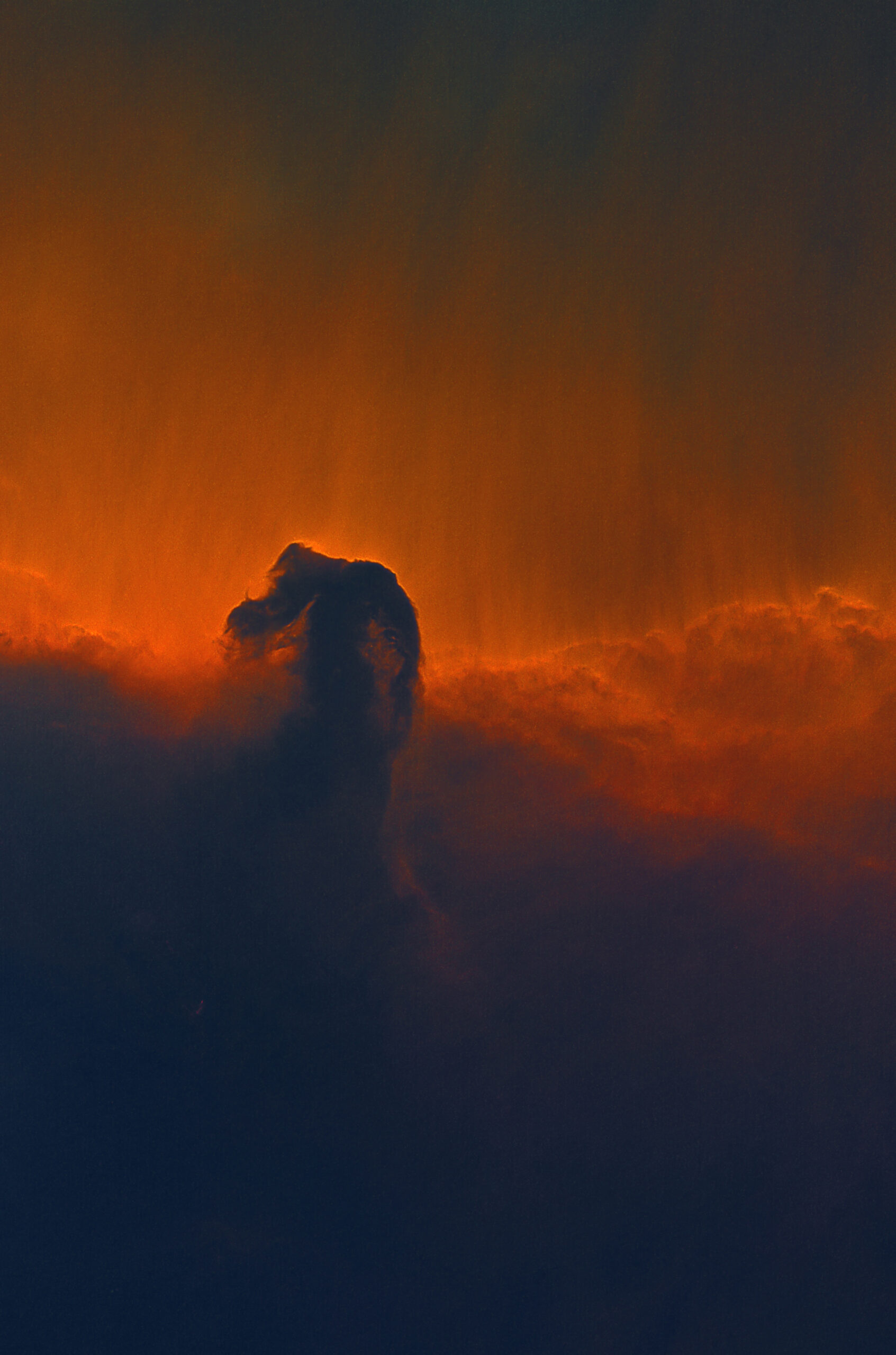
The images were taken with the following equipment (Telescope Live CHI-1 CMOS):
- Date: 2023
- Location: El Sauce Observatory, Chile
- Telescope: Planwave CDK24
- Focal length [mm]: 3962
- Focal ratio: 6.5
- Mount: Mathis MI-1000/1250
- Camera: QHY 600M Pro
- Filter: Hα:[OIII]:[SII]
- Exposure time [min]: 310:290:305
- Resolution: 0.39″/px (2×2 binning)
For the 2021 data, calibration, registration, and final image processing were all performed with PixInsight. The result was as follows:

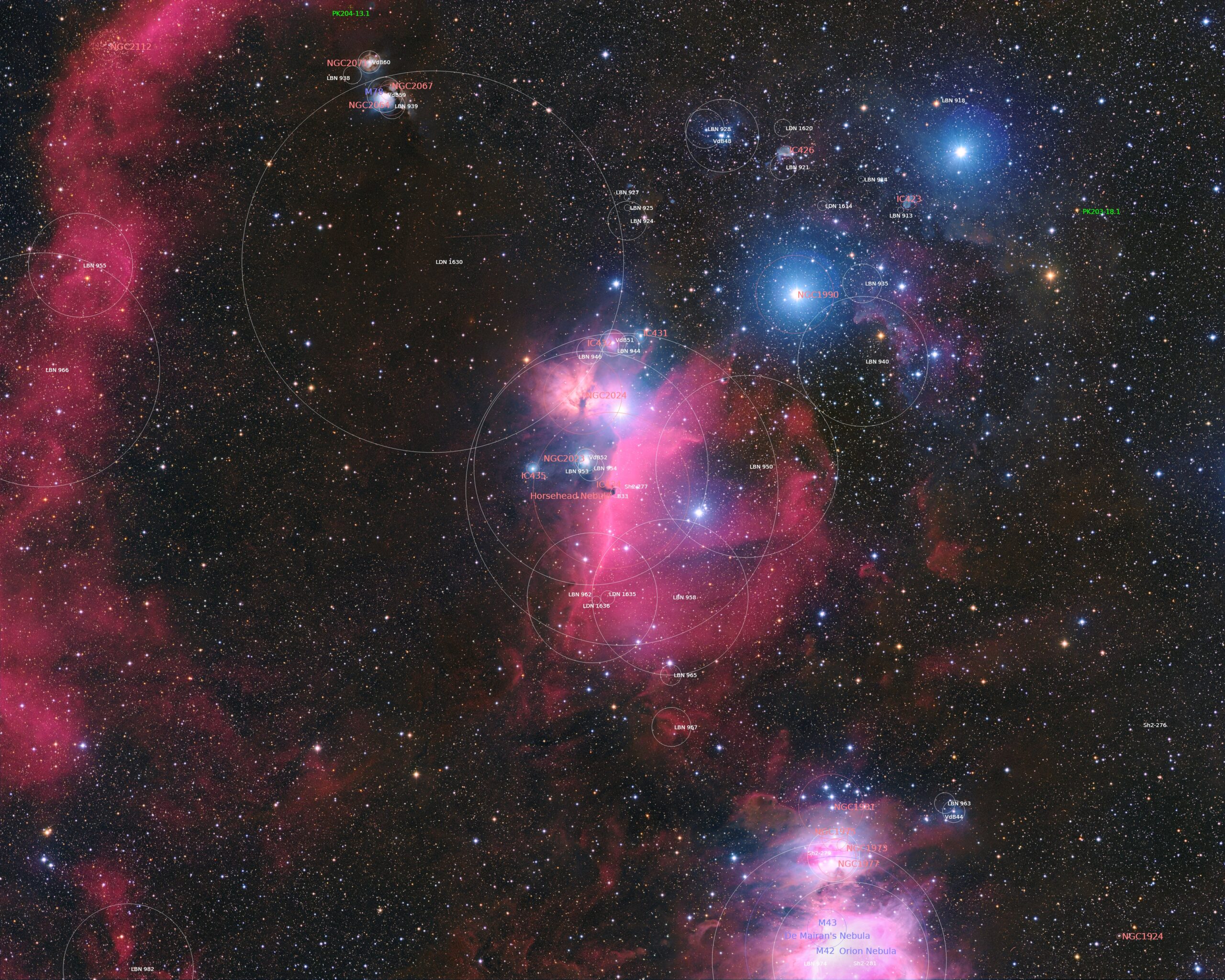
The images were taken with the following equipment (Telescope Live CHI-5 CCD):
- Date: 2021
- Location: El Sauce Observatory, Chile
- Telescope/Lens: Nikon 200
- Focal length [mm]: 200
- Focal ratio: 2
- Mount: ?
- Camera: FLI ML 16200
- Filter: Hα:L:R:G:B
- Exposure time [min]: 3:12:12:12:12
- Resolution: 5.3″/px
The calibration and registration of my own 2008 data was done with DeepSkyStacker and the final processing was done with PixInsight. The result was as follows:
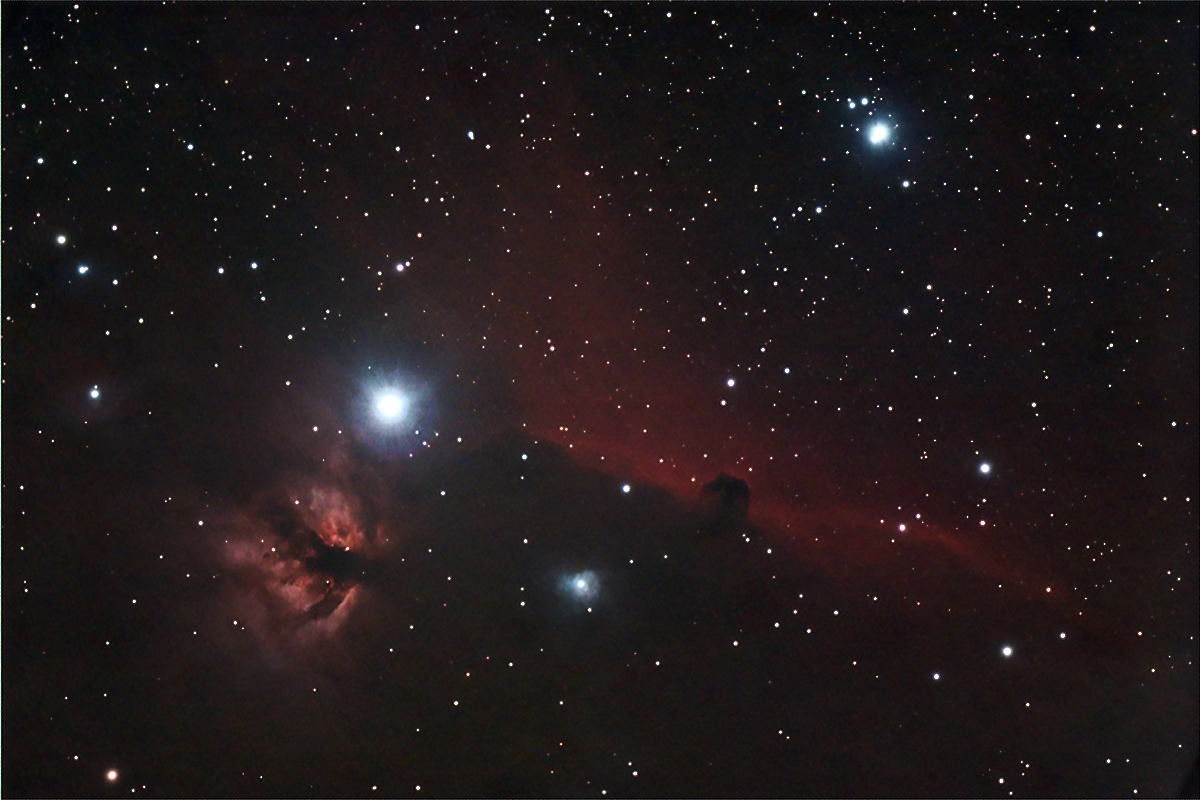
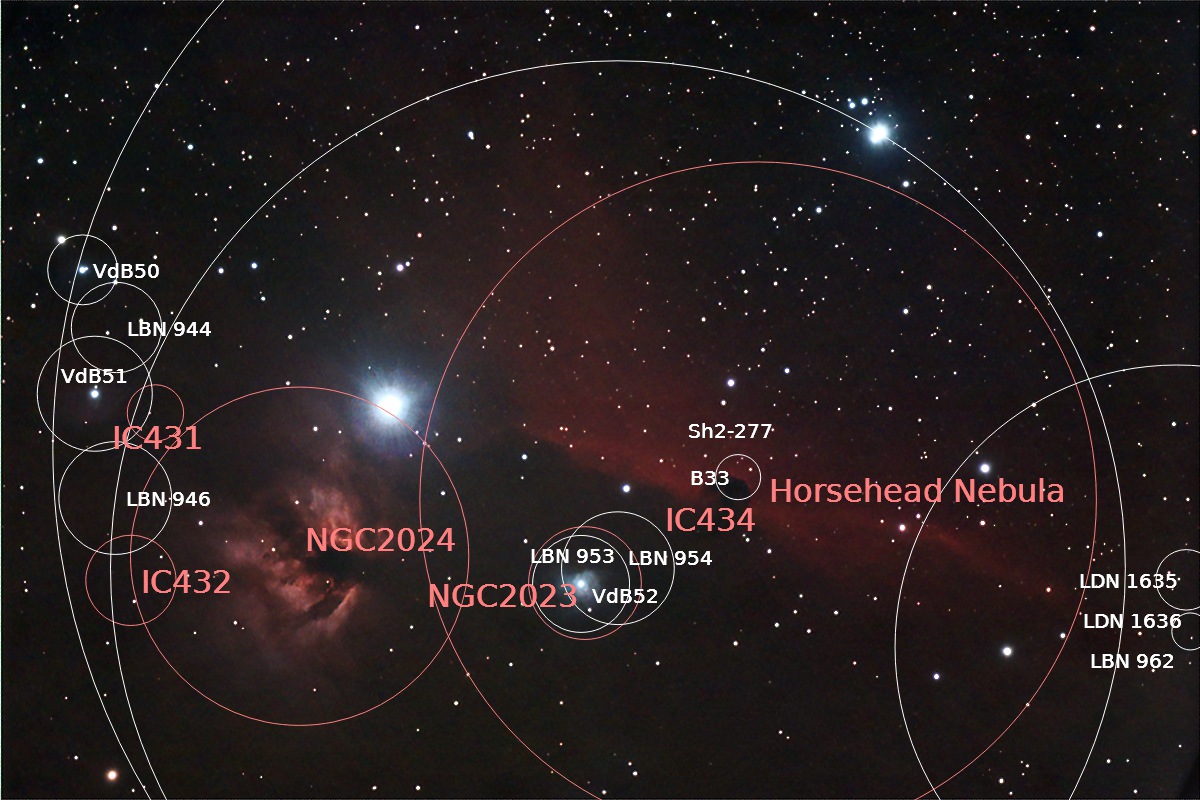
The images were taken with the following equipment:
- Date: 2008
- Location: Krefeld, Germany
- Telescope: Pentax 75
- Focal length [mm]: 500
- Focal ratio: 6.7
- Mount: Vixen GP-DX
- Camera: Canon 300 Da
- Filter: OSC
- Exposure time [min]: 45
- Resolution: 5.32″/px
The calibration and registration of my own 2007 data was done with DeepSkyStacker and the final processing was done with PixInsight. The result was as follows:
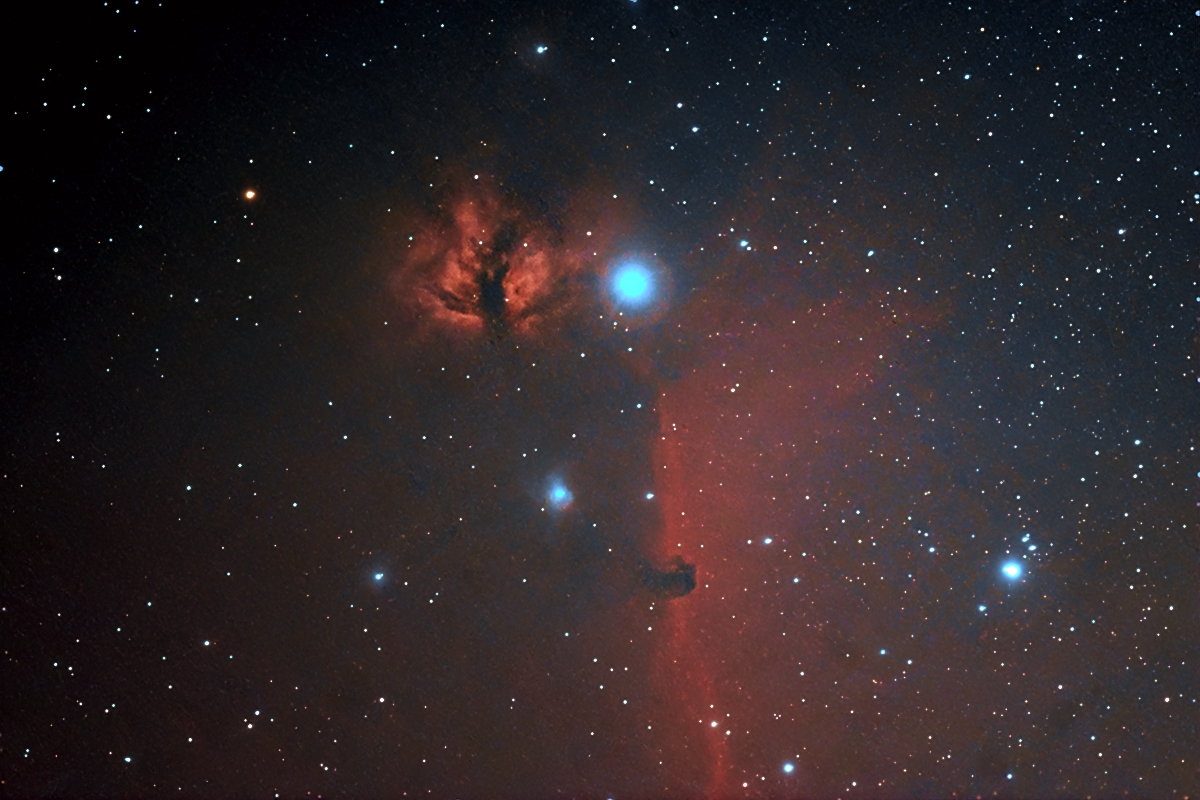
The images were taken with the following equipment:
- Date: 2007
- Location: Krefeld, Germany
- Telescope: Pentax 75
- Focal length [mm]: 500
- Focal ratio: 6.7
- Mount: Vixen GP-DX
- Camera: Canon 300 Da
- Filter: OSC
- Exposure time [min]: 30
- Resolution: 6.25″/px




Leave a reply