

Fornax Dwarf Galaxy (PGC 10074 / 10093) – VdS Remote Hakos
In 2023, I received a dataset of the Fornax Dwarf Galaxy from the VdS Remote Observatory at Hakos, Namibia. The data were acquired by Martin Nischang using the observatory’s professional equipment. As a member of the VdS Remote Observatory Group, I am permitted to process datasets obtained by other members and publish the resulting images. This collaborative concept allows all participants to benefit from the exceptional observing conditions in Namibia while contributing to a shared archive of high-quality astronomical data.
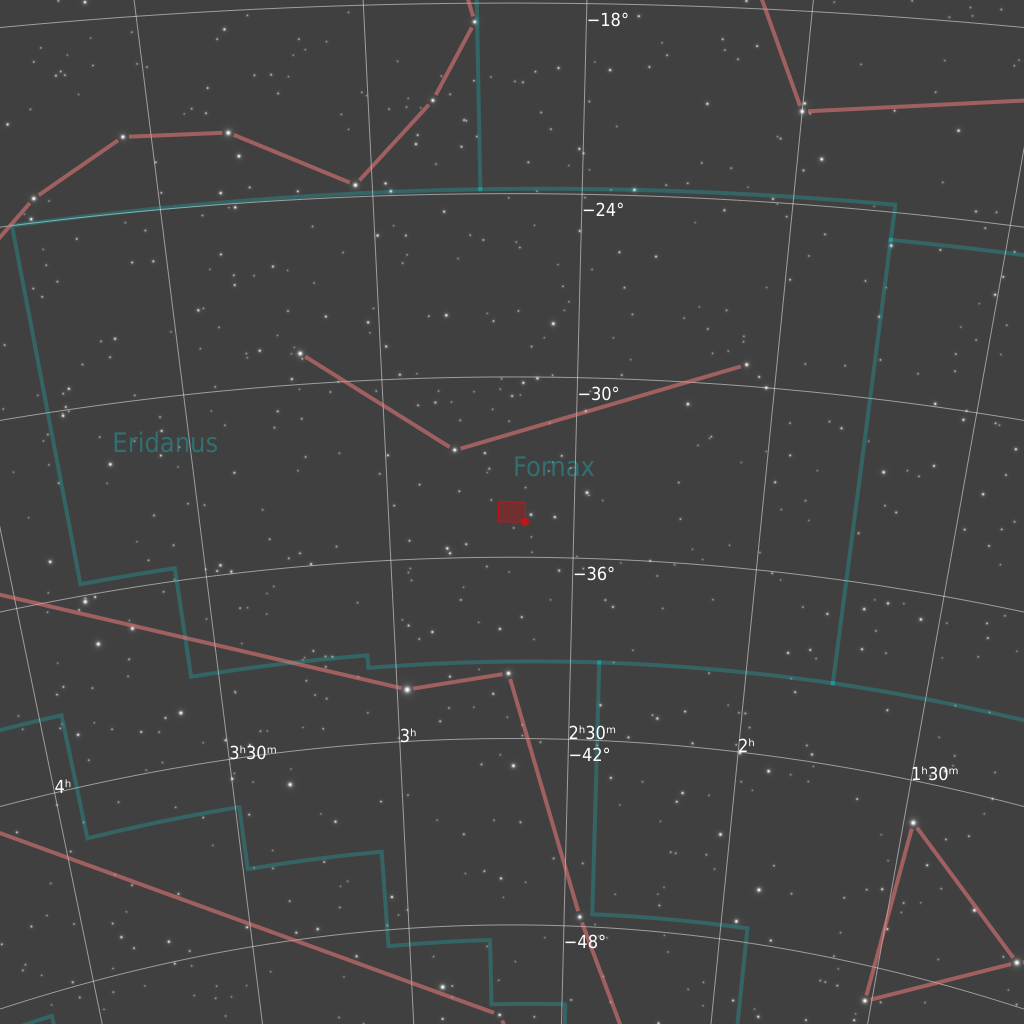
The Fornax Dwarf Galaxy is located in the constellation Fornax, at a distance of approximately 460,000 light-years from Earth. It is one of the largest dwarf spheroidal galaxies orbiting the Milky Way and, together with the Sculptor Dwarf Galaxy, belongs to the family of nearby satellite galaxies that make up the Local Group. Despite its relatively close distance, its extremely low surface brightness makes it a challenging object for both professional and amateur astrophotography.
Discovered in 1938 by the American astronomer Harlow Shapley, the Fornax Dwarf contains predominantly old, metal-poor stars, although unlike many other dwarf spheroidal galaxies, it also experienced several later episodes of star formation. This has produced a mixture of stellar populations with ages ranging from more than 10 billion years to only a few billion years, making the galaxy an important target for studying the evolutionary history of small galaxies.
One of the most remarkable characteristics of the Fornax Dwarf Galaxy is that it hosts five globular clusters—an unusually large number for a galaxy of its modest size. These clusters, designated Fornax 1 through Fornax 5, are among the oldest stellar systems in the Local Group and have played a key role in understanding the formation and evolution of dwarf galaxies. Their presence also provides valuable constraints on the distribution of dark matter, which dominates the galaxy’s total mass.
Deep images reveal the galaxy as a diffuse elliptical cloud of countless unresolved stars embedded within the rich foreground star field of the Milky Way. Its faint appearance reflects the fact that dwarf spheroidal galaxies contain very little gas and dust and almost no ongoing star formation. Instead, they preserve an ancient stellar population that offers a glimpse into the earliest epochs of galaxy formation.
From a scientific perspective, the Fornax Dwarf Galaxy is one of the most extensively studied satellite galaxies of the Milky Way. Its stellar populations, globular clusters, and dark matter content make it an excellent laboratory for investigating galaxy evolution on small scales and for testing cosmological models of hierarchical galaxy formation.
The 2023 dataset from the VdS Remote Observatory provided an outstanding opportunity to process professional-quality data obtained under the pristine skies of Hakos, Namibia. It also demonstrates the unique collaborative spirit of the VdS Remote Observatory Group, where members can process and publish data acquired by fellow observers. The resulting image is a detailed portrait of one of the Milky Way’s nearest galactic companions and an excellent example of how collaborative astronomy enables ambitious deep-sky projects that would be difficult to achieve individually.
All data calibration, registration, and final processing were performed in PixInsight.
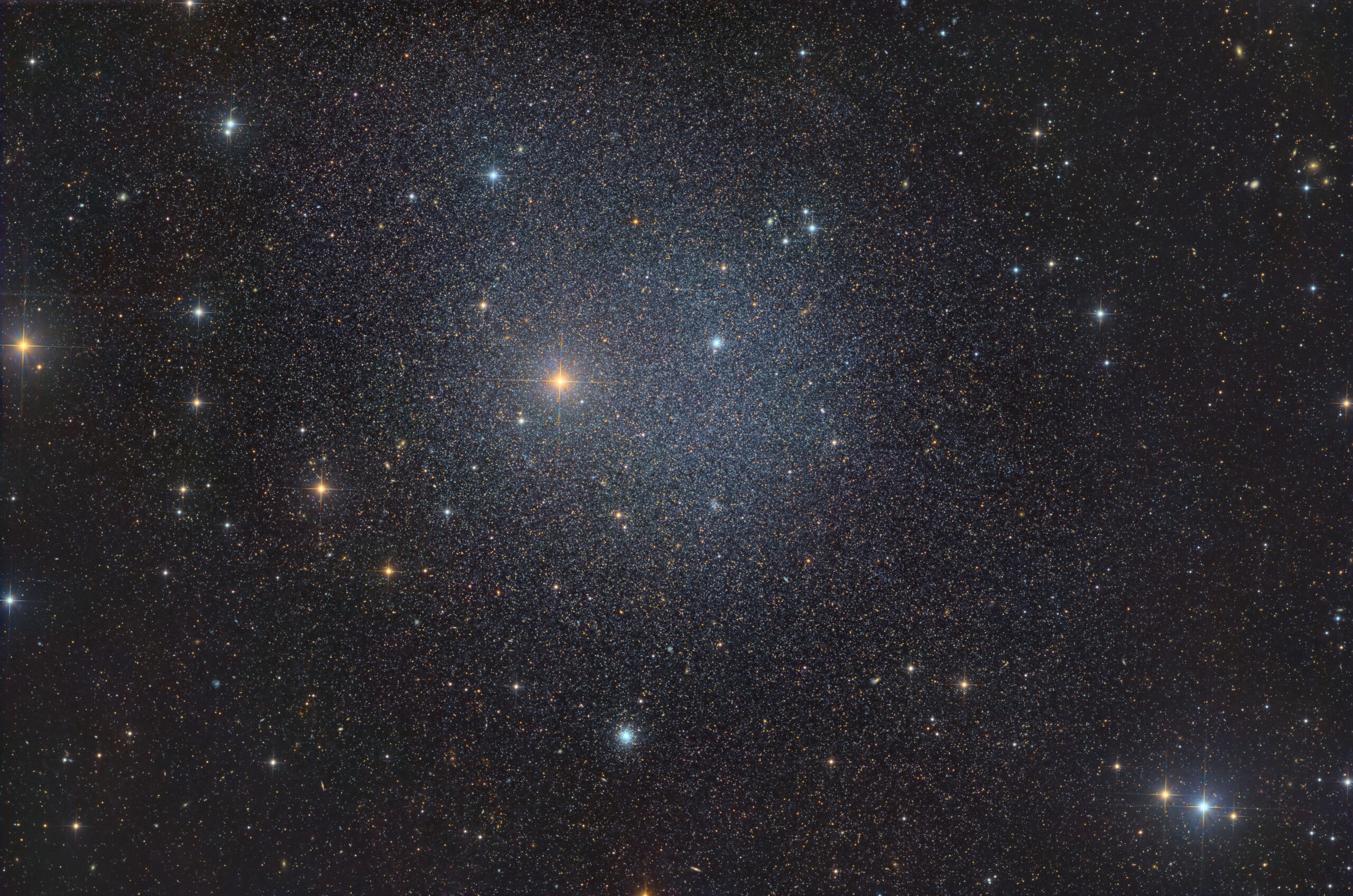
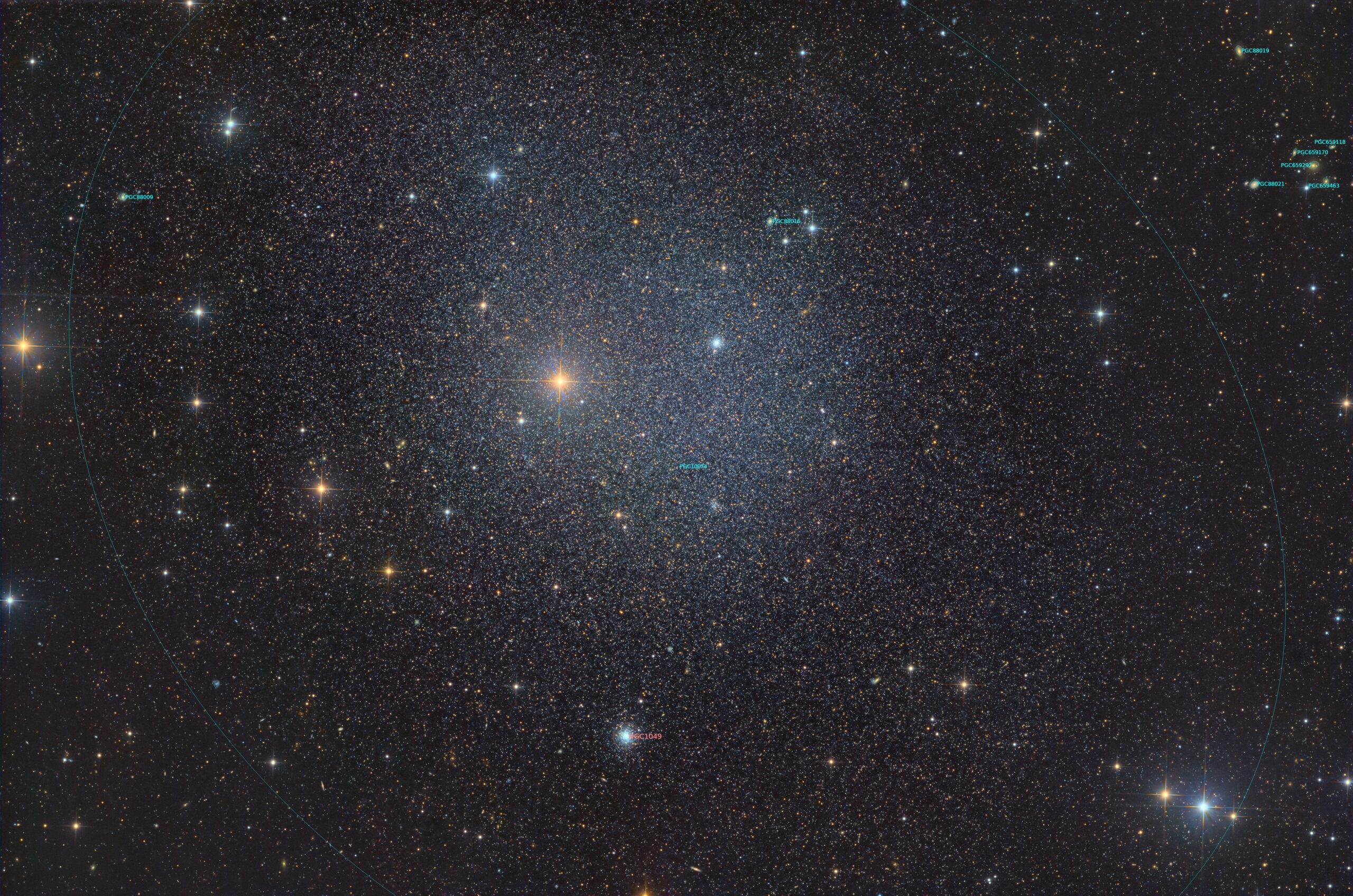
The images were taken with the following equipment:
- Date: 2024
- Location: Hakos, Namibia
- Telescope/Lens: TS 12“ Newton-Astrograph
- Focal length [mm]: 1391
- Focal ratio: 4.56
- Mount: 10Micron GM3000
- Camera: Lacerta DeepSkyPro2600 (mono)
- Filter: LRGB
- Exposure time [min]: 245:240:250:240
- Resolution: 0.56″/px



Leave a reply