

NGC 7129 and NGC 7142 from my „Sterntaucher“ observatory
In 2018, I imaged the fascinating region containing the reflection nebula NGC 7129 and the nearby open cluster NGC 7142 from my observatory in Krefeld using my dual-rig setup. With the larger telescope, I acquired high-resolution Luminance and Hα data, while the second telescope simultaneously recorded the RGB color information. Combining these datasets into a final LRGB-Hα image produced a detailed view of this remarkable field. The additional Hα data enhanced the faint emission surrounding the young stars in NGC 7129, while the high-resolution luminance revealed fine structures within the reflection nebula and preserved the rich stellar background.
Located in the constellation Cepheus, NGC 7129 lies at a distance of approximately 3,300 light-years. It is a compact reflection nebula embedded within a giant molecular cloud and represents an active region of ongoing star formation. The nebula is illuminated by several young, massive B-type stars, whose blue light is scattered by surrounding interstellar dust. In addition to the blue reflection nebulosity, deep Hα imaging reveals faint emission from ionized hydrogen, highlighting areas where energetic radiation from the young stars interacts with the surrounding gas.
Infrared observations have shown that NGC 7129 contains numerous young stellar objects, protostars, and Herbig–Haro objects, making it one of the most active stellar nurseries in Cepheus. Powerful stellar winds and bipolar outflows have carved cavities into the surrounding molecular cloud, creating the intricate mixture of bright reflection nebulosity, dark dust lanes, and faint emission structures visible in deep images.
Only a short distance away in the same field lies NGC 7142, an open cluster located approximately 6,200 light-years from Earth. Unlike NGC 7129, this cluster is remarkably old, with an estimated age of around 3 billion years. It contains several hundred stars, including numerous evolved red giants, giving it a distinctly different appearance from the young stellar population associated with the neighboring nebula.
The juxtaposition of these two objects is particularly fascinating. While NGC 7129 is a stellar nursery where new stars are actively forming, NGC 7142 represents a mature stellar population that has evolved over billions of years. Although they appear close together in the sky, they are physically unrelated and separated by nearly 3,000 light-years, illustrating the remarkable depth that can be captured in a single astronomical image.
The final LRGB-Hα image beautifully combines the strengths of the dual-rig system: the larger telescope provides exceptional luminance detail and enhanced hydrogen emission, while the second telescope contributes natural RGB color. The result is a detailed and scientifically rich portrait of one of Cepheus‘ most interesting regions, showcasing both the birth of stars within NGC 7129 and the ancient stellar population of NGC 7142 in a single field of view.
For the 2025 data the calibration, registration and the final processing was done with PixInsight. The result was as follows:
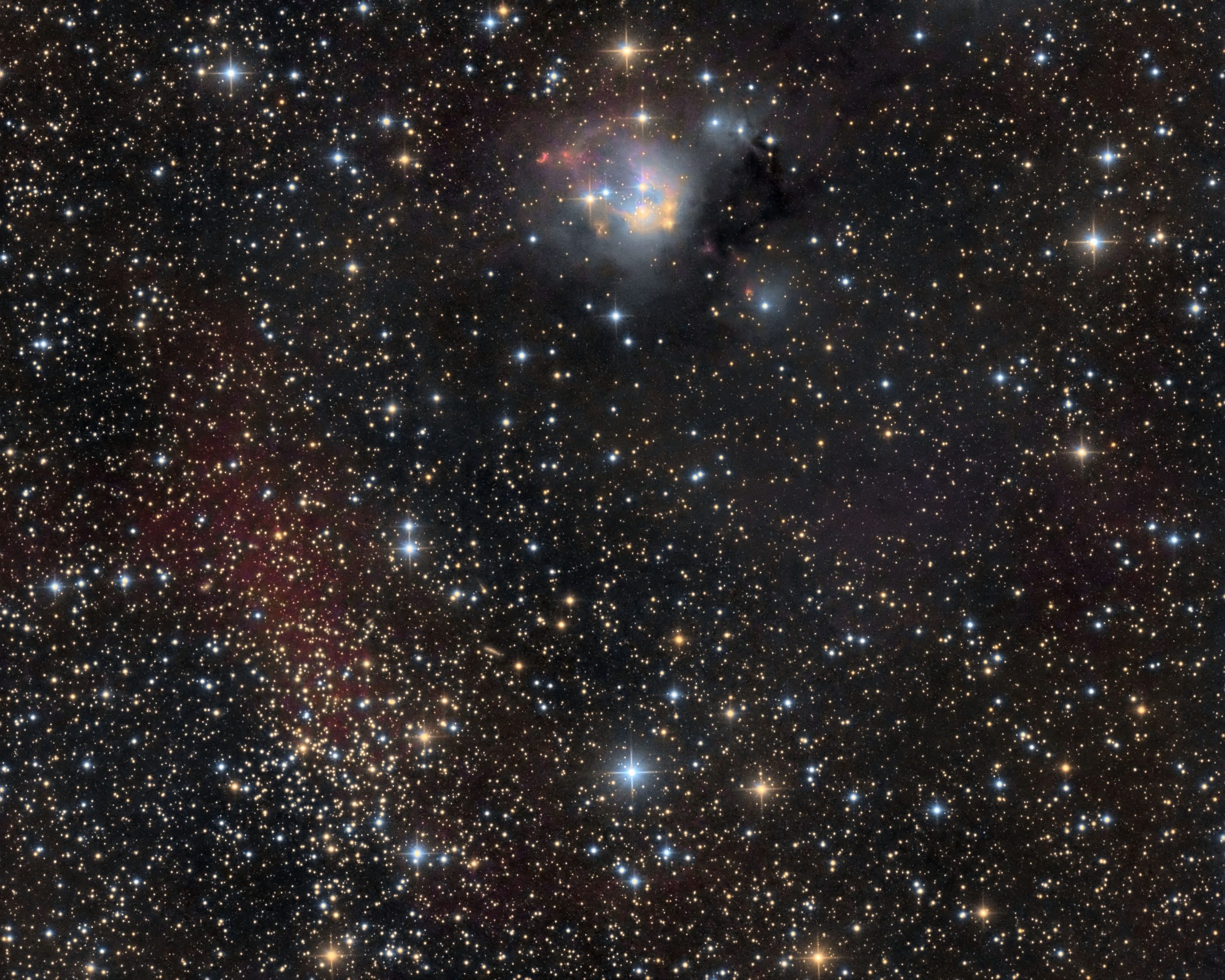
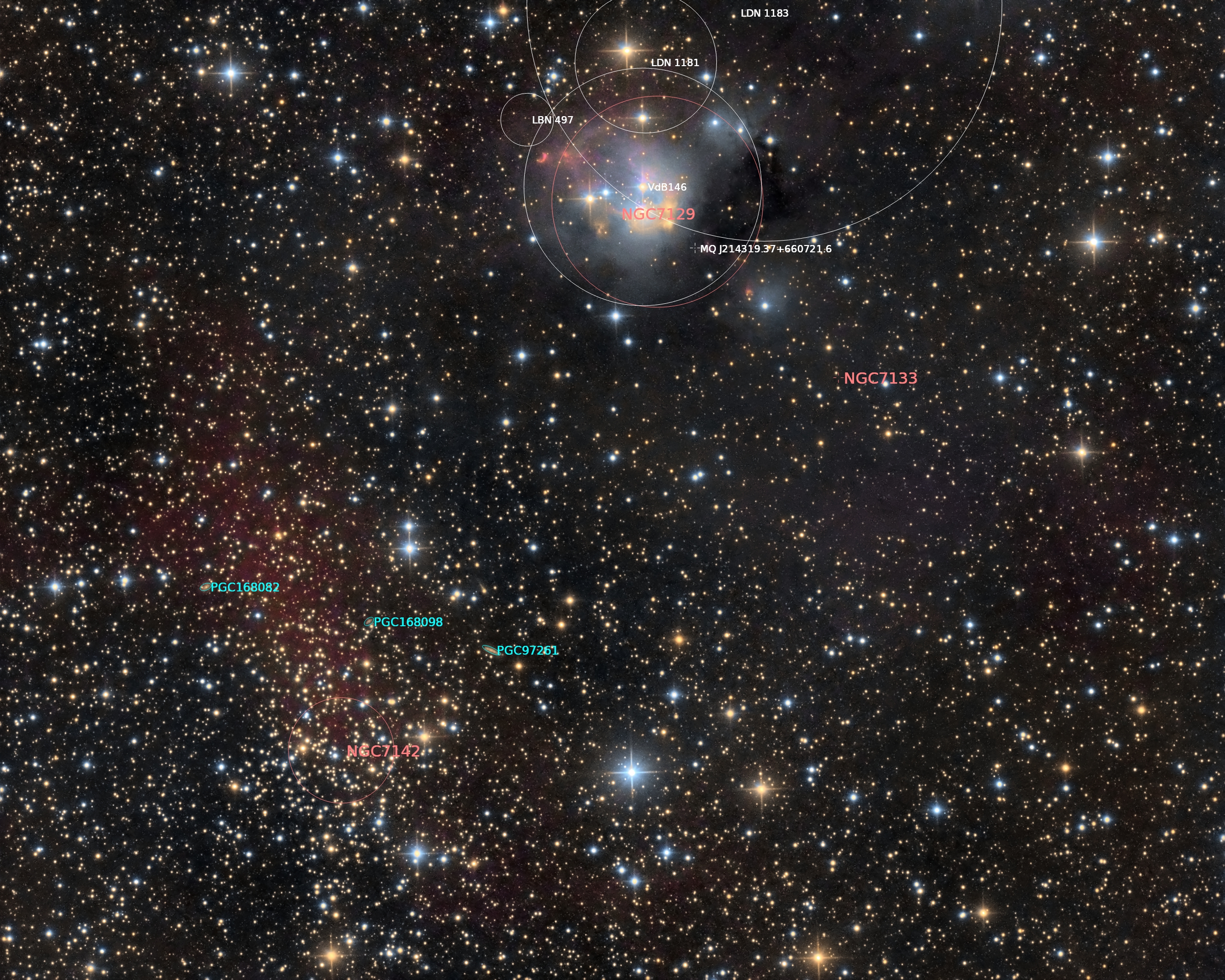
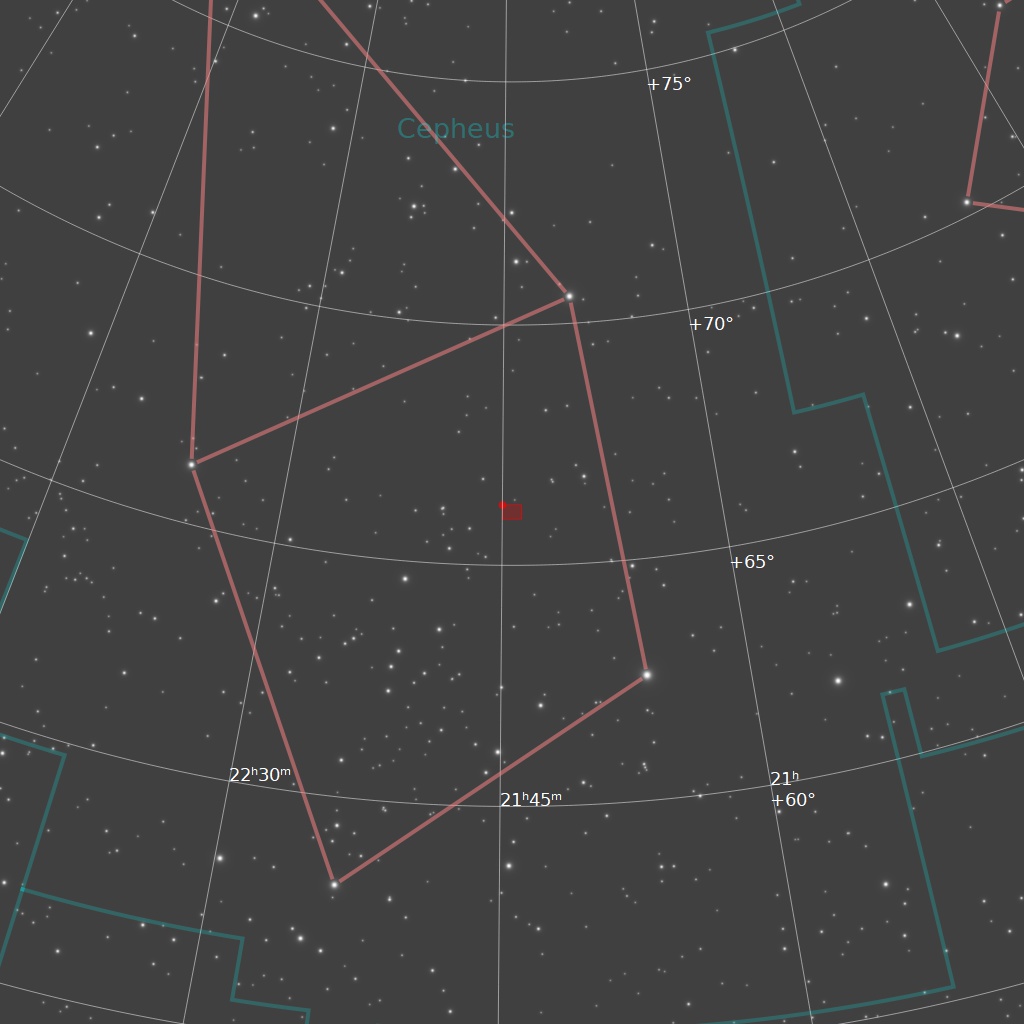
Here is an overview of the used equipment and the exposure times:
- Date: 2018
- Location: Krefeld
- Telescope/Lense: 10″ Newton ohne Namen – TS IS 65 Apo
- Focal length [mm]: 1000 – 420
- Focal ratio: 3.9 – 6.5
- Mount: Losmandy G11 and Skywatcher EQ 8
- Camera: Moravian 8300 FW – QSI 583 WS
- Filter: L:Hα – R:G:B
- Exposure time [min]: 415:450 – 180:150:170
- Resolution: 1.11/px



Leave a reply