

Ursa Minor Dwarf galaxy (UGC 9749) from my „Jade“ observatory
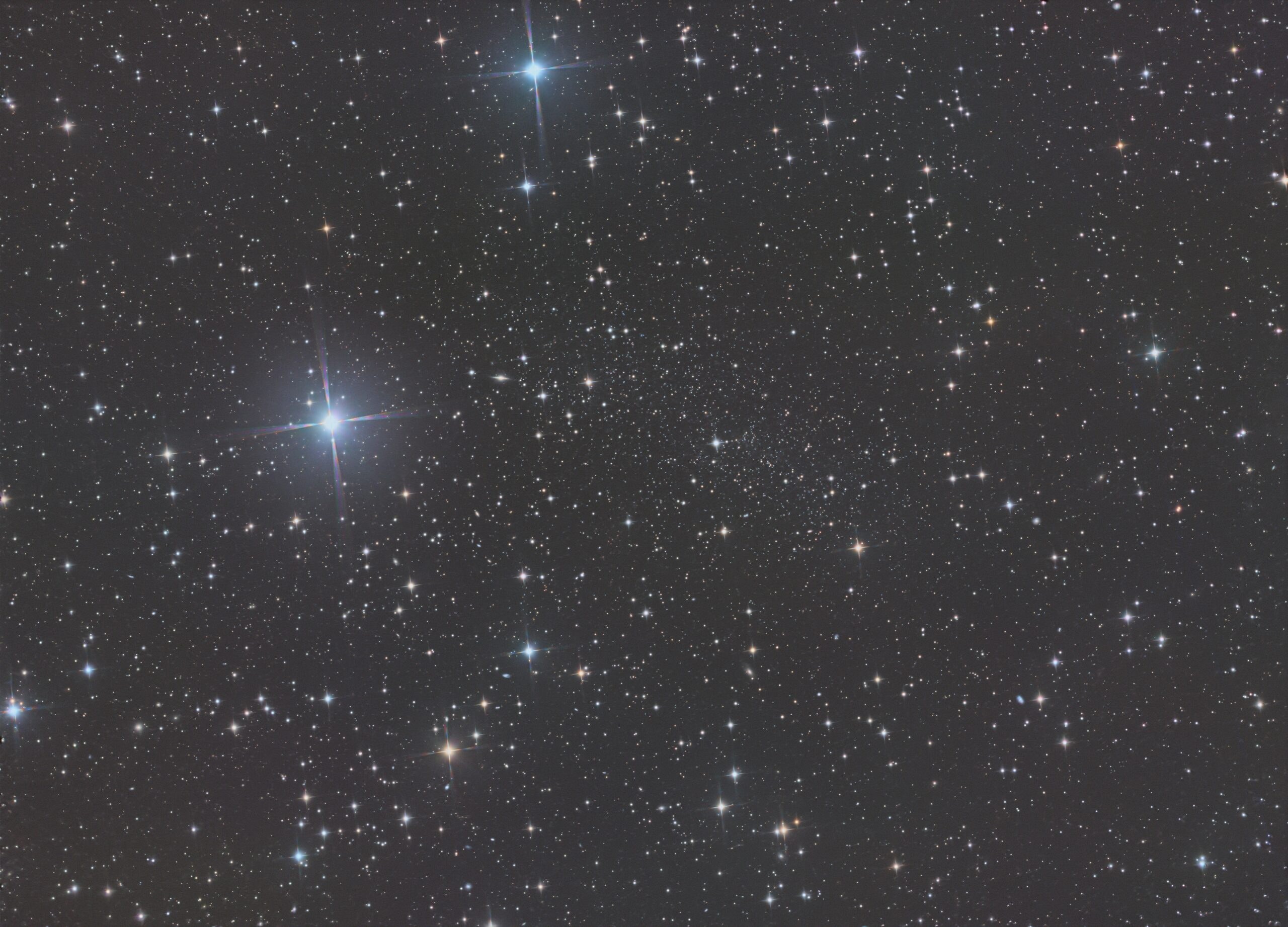
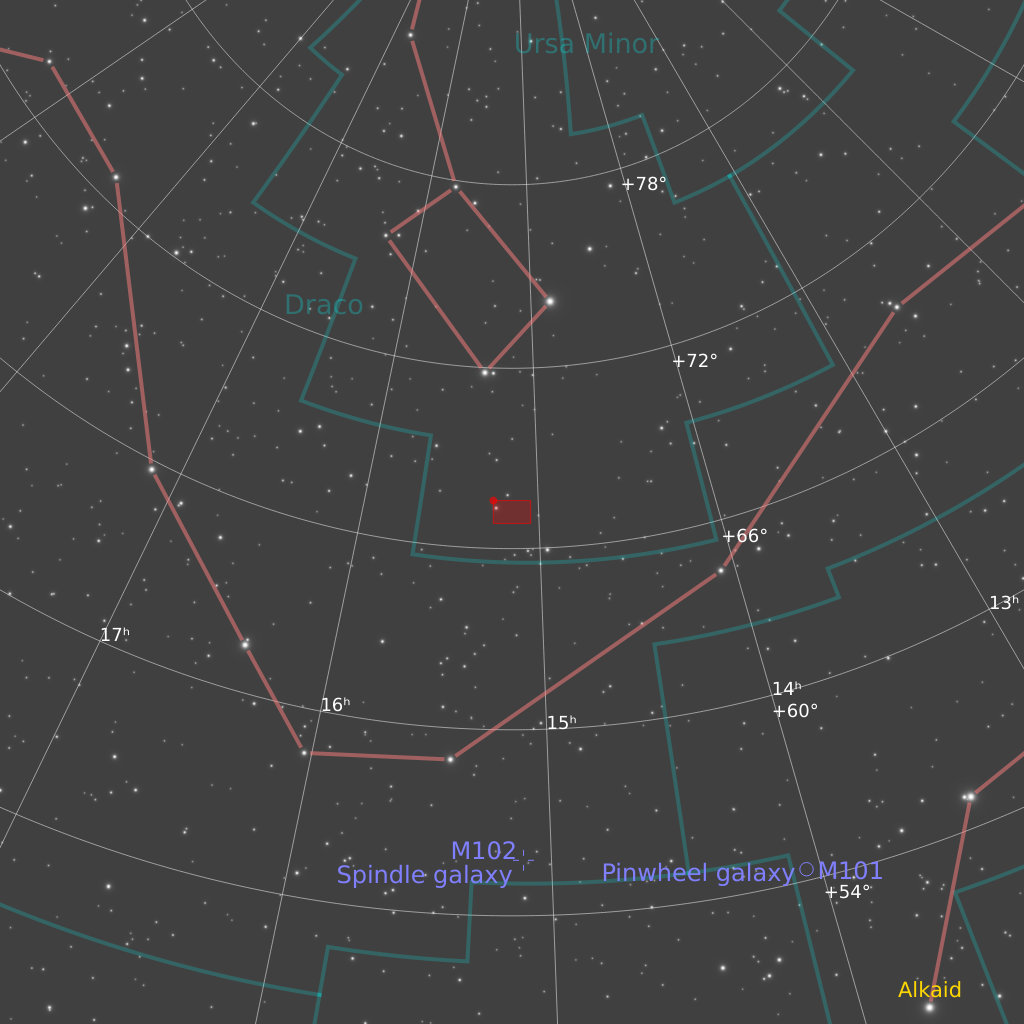
In 2025, I imaged the Ursa Minor Dwarf Galaxy (UGC 9749) from my backyard observatory in Varel, capturing the object in LRGB.
The Ursa Minor dwarf galaxy is a small dwarf spheroidal galaxy that orbits the Milky Way and lies in the direction of the constellation Ursa Minor. It was discovered in 1955 during the Palomar Sky Survey, and its center is about 225,000 light-years from Earth. Because it is so faint and diffuse, it is much harder to notice than ordinary star clusters or bright spiral galaxies.
Ursa Minor contains mostly old, metal-poor stars and shows little to no ongoing star formation. That means it is not currently building many new stars, unlike active dwarf irregular galaxies or spiral galaxies such as the Milky Way. Its overall appearance is smooth and roundish rather than structured, which is typical for dwarf spheroidals. In that sense, it looks more like a sparse stellar cloud than a classic “galaxy with arms.”
One of the most interesting facts about Ursa Minor is how ancient its stellar population is. Hubble Space Telescope studies found that it likely experienced a single major burst of star formation about 14 billion years ago that lasted for roughly 2 billion years. The stars are extremely metal-poor, with abundances similar to the globular cluster M92. That makes Ursa Minor a valuable fossil record of early galaxy formation, because it seems to preserve conditions from the young Universe.
Ursa Minor is also important in dark-matter research because the visible stars alone cannot explain its motions. Spectroscopic studies of its giant stars show a velocity dispersion of about 7.5 km/s and evidence for a very high mass-to-light ratio, which implies a large dark-matter component. Some work has also suggested rotation and possible tidal disruption by the Milky Way. More recent Gaia-based studies found evidence that its outskirts may have been shaped by tidal effects after multiple orbits around our Galaxy.
Although Ursa Minor is small, it is not perfectly simple. Recent observations have found stars in its outer halo, far from the center, and their chemical patterns suggest a low star-formation efficiency and an “outside-in” evolutionary history. That means the inner and outer parts of the galaxy may have evolved differently over time. The outer regions may have been populated partly by tidal stripping as the Milky Way’s gravity slowly pulled on the dwarf galaxy.
Ursa Minor is useful because it combines several things astronomers want to study in one object: an extremely old stellar population, very low metallicity, strong evidence for dark matter, and possible signs of tidal disturbance. In a sense, it is a small laboratory for early-Universe archaeology. By studying galaxies like this, scientists can learn how the first generations of stars formed and how tiny galaxies survive while orbiting a much larger one.
Data calibration, registration and the final processing was done with PixInsight. The result was as follows:
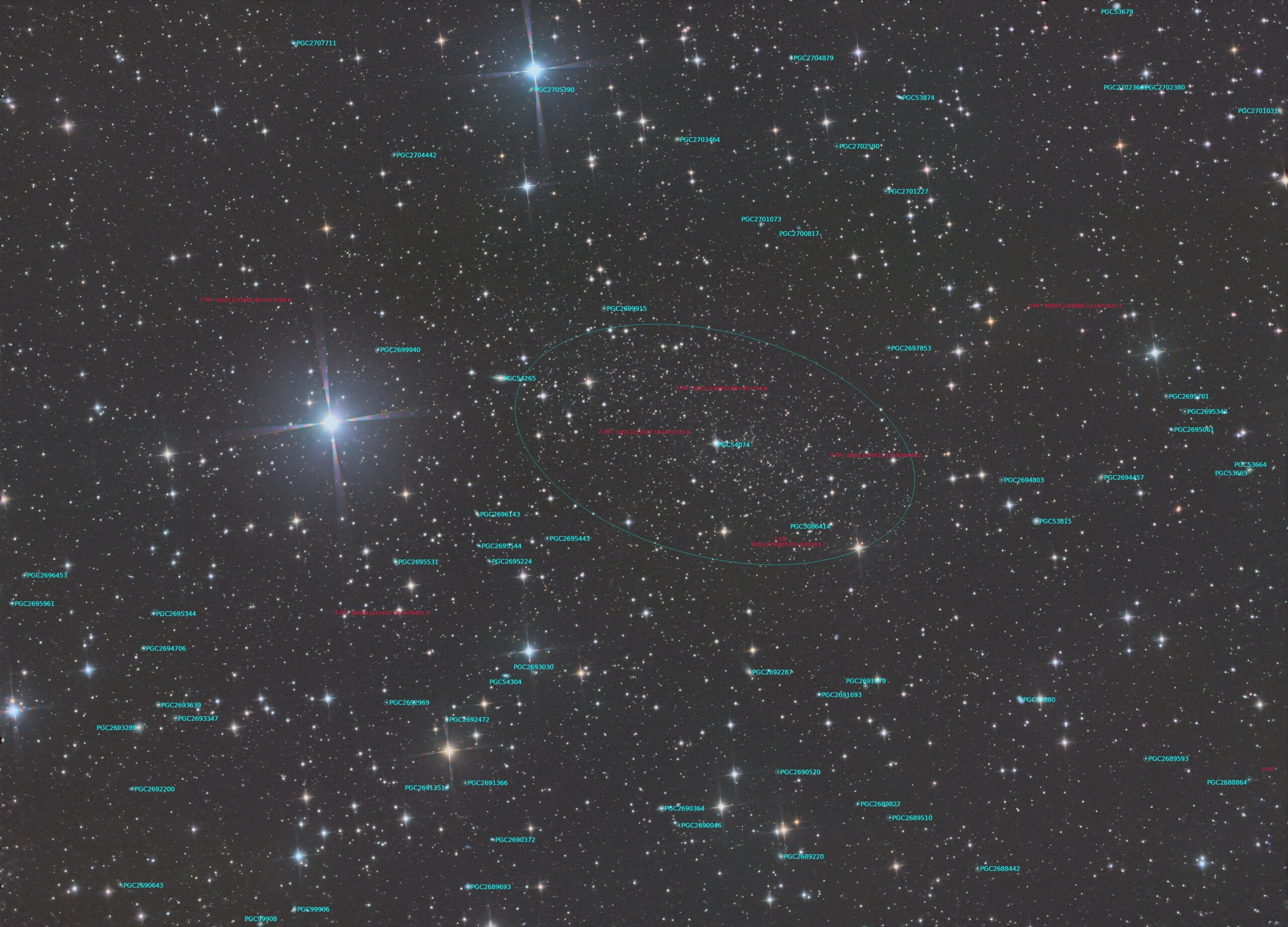
There are so many quasars in this image that I can only show the ones with z>2. The most distant of them is:
WISEA J151452.78+670431.3 with a redshift of 3.2.
Here is an overview of the used equipment and the exposure times:
- Date: April 2025
- Location: Varel
- Telescope/Lense: 6″ Lacerta Newton
- Focal length [mm]: 600
- Focal ratio: 4
- Mount: Skywatcher EQ 8
- Camera: Lacerta Deepsky 2600 M
- Autoguiding: Off-Axis with ZWO Asi 120 MM Mini
- Filter: L:R:G:B
- Exposure time [min]: 355:90:90:90
- Resolution: 1.71″/px


Leave a reply