

2 PN in Norma
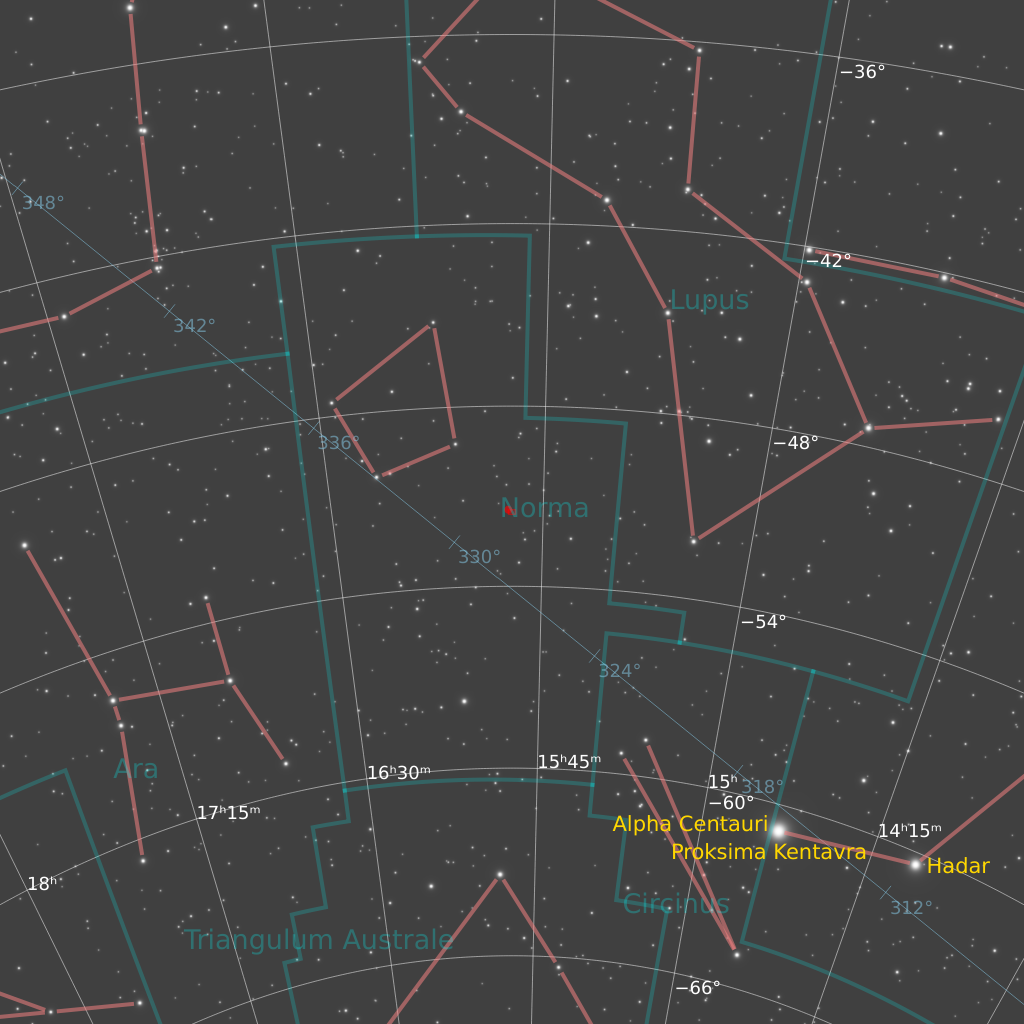
During a stay at the Tivoli Astrofarm in Namibia in 2013, I devoted part of my observing time to two fascinating and rarely imaged planetary nebulae in the constellation Norma: Shapley 1 and VBRC 7. Although both objects are relatively faint, they offer striking examples of the diverse morphologies found among planetary nebulae.
PK 329+01.1, also known as VBRC 7, and PK 329+02.1, better known as Shapley 1, are both planetary nebulae in the southern constellation Norma. They are very different in appearance: Shapley 1 is a famously neat annular nebula, while VBRC 7 is a much less widely known planetary nebula that appears in the same general Norma field but has far less public literature attached to it.
Shapley 1 is one of the most striking planetary nebulae in the sky because it looks like a nearly perfect ring, sometimes called the Fine Ring Nebula. It has a visual magnitude around 12.6 and an angular diameter of about 1.1 arcminutes. The nebula was discovered by Harlow Shapley in 1936, and its central object is a close binary system with a white dwarf and a companion star in a 2.9-day orbit. That binary geometry is important because it likely influences the shape of the gas shell and helps explain why the nebula is so symmetrical.
A planetary nebula forms when a Sun-like star reaches the end of its life and throws off its outer layers. In Shapley 1, the expelled gas is especially neat and appears annular because we are looking almost straight down onto the system’s symmetry axis. The glowing shell is rich in oxygen emission, which is why narrowband imaging often shows a bright circular halo with a faint outer rim. The central star is a hot white dwarf remnant that ionizes the gas and keeps the nebula visible.
The distance to Shapley 1 has been debated, with older sources giving values near 1,000 light-years while more recent work places it around 4,900 light-years. That uncertainty matters because it changes the inferred physical size and luminosity of the nebula. Recent summaries also describe a faint outer halo around the main ring, showing that the object is not just one thin shell but a multi-layered ejecta structure. For observers in the northern hemisphere, it sits very low in the sky, so it is best seen from southern latitudes.
VBRC 7 is a little-known planetary nebula in Norma, close to the better-known Shapley 1. Also cataloged as Wray 16-191 and ESO 225-3, it shows a small circular shell about 2 arcminutes across with both H-alpha and O III emission. Deep imaging has revealed a much larger outer H-alpha halo, roughly 17 by 21 arcminutes, and a smaller inner O III halo about 3.5 arcminutes wide. These halos likely trace different phases of stellar mass loss, making VBRC 7 a rare and scientifically interesting planetary nebula.
Together, these two nebulae show two very different faces of late stellar evolution. Shapley 1 is a textbook example of a nearly face-on ring-shaped planetary nebula shaped by a binary central star, while VBRC 7 represents the kind of lesser-known compact planetary nebulae that populate the southern sky. Studying such objects helps astronomers understand how mass loss, binarity, and viewing angle combine to produce the wide variety of shapes seen among planetary nebulae.
Data calibration, registration, as well as the final image processing, were all done with PixInsight.
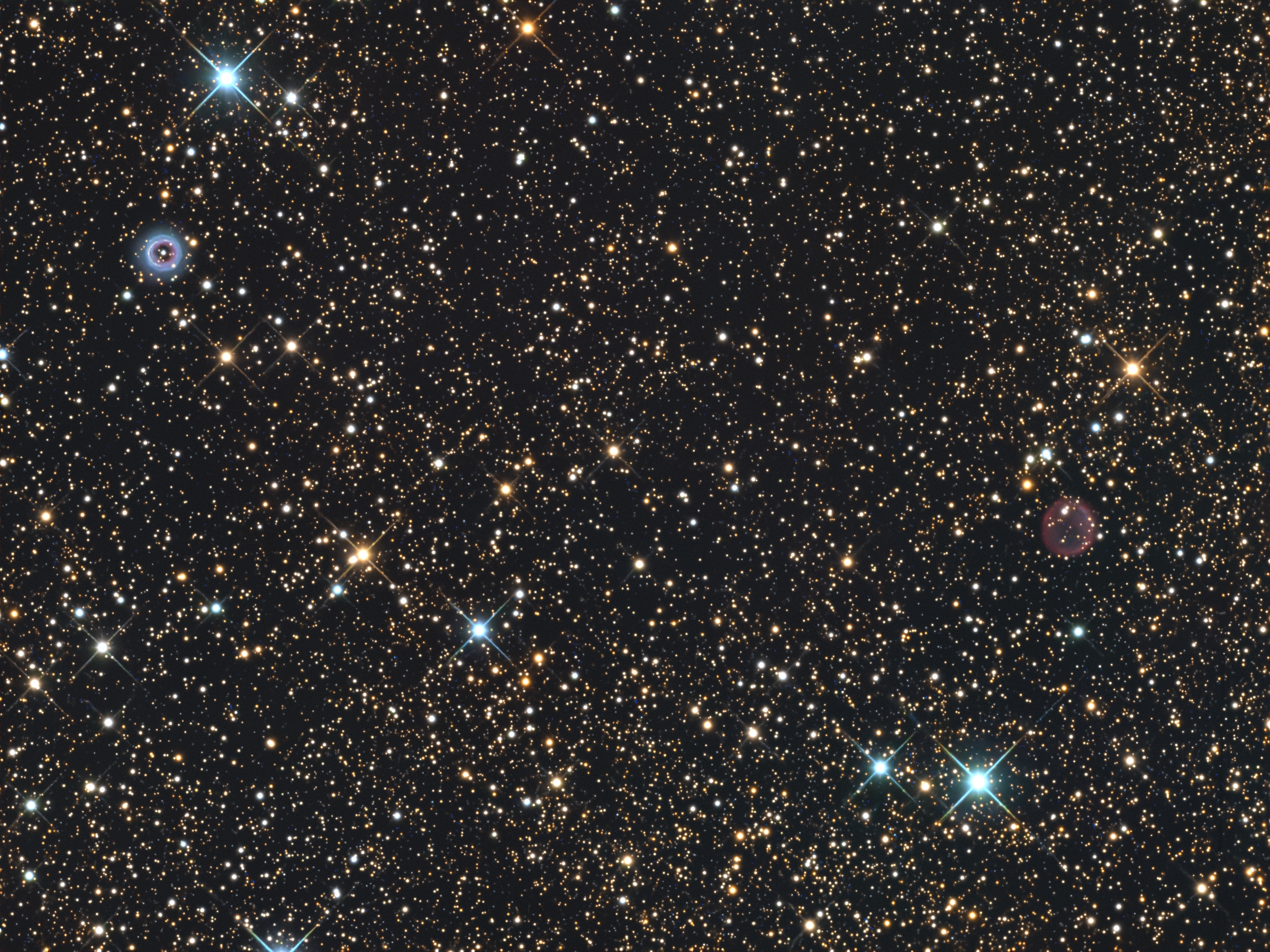
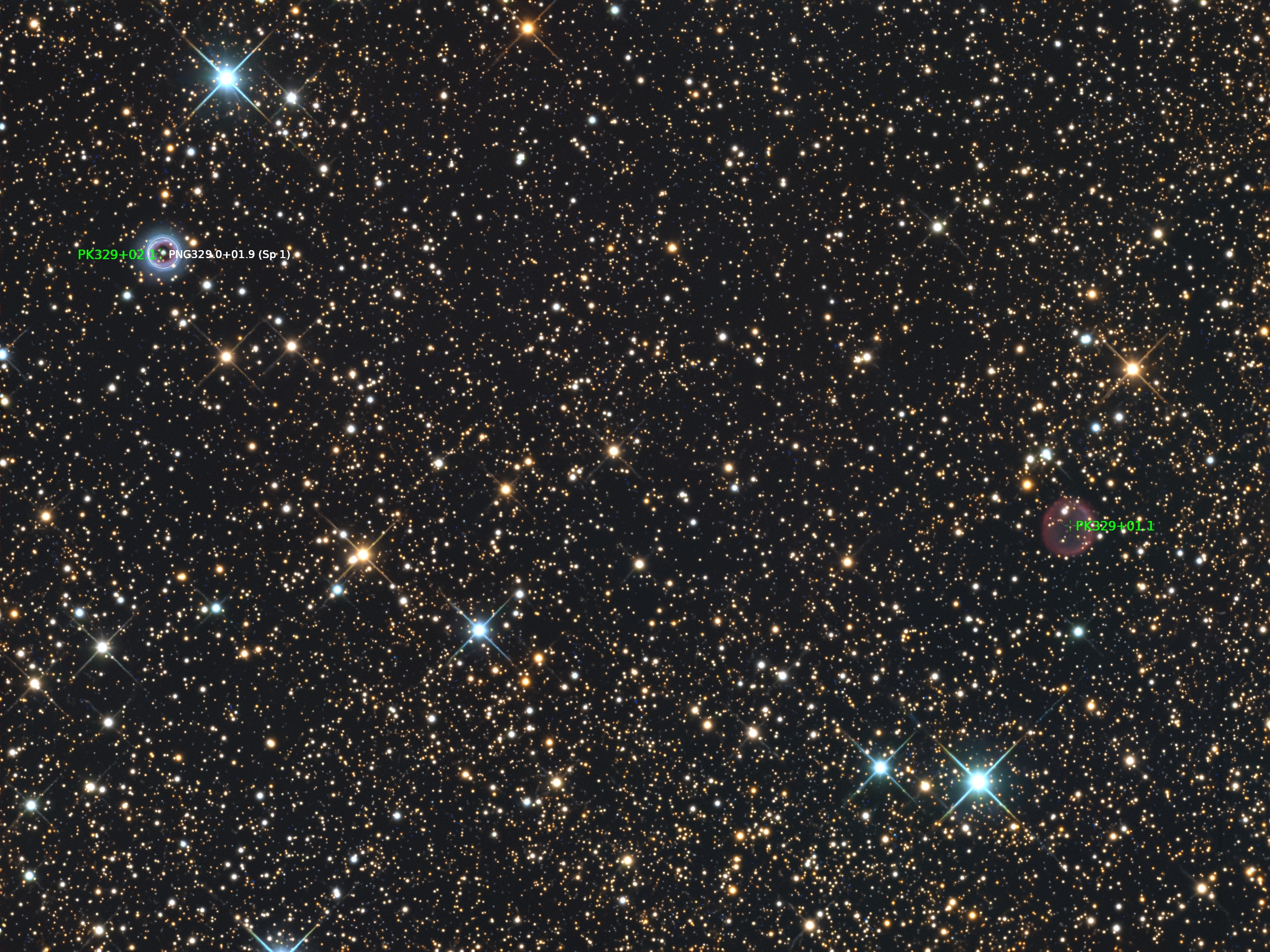
The images were taken with the following equipment:
- Date: 2013
- Location: Tivoli, Namibia
- Telescope: 12″ ASA Astrograph
- Focal length [mm]: 1076
- Focal ratio: 3.6
- Mount: ASA DDM85
- Camera: FLI Microline ML8300
- Filter: L:R:G:B:Hα:[OIII]
- Exposure time [min]: 60:30:30:30:70:70
- Resolution: 1.04″/px



Leave a reply