

NGC 891 from my own backyard and remote
The edge-on spiral galaxy NGC 891 is one of the objects I have revisited repeatedly over the years.
My first image dates back to 2005, taken with my very first DSLR equipment. At the time, capturing the thin, elongated structure and the prominent central dust lane was already a rewarding challenge. I returned to the galaxy in 2010, refining both acquisition and processing techniques.
In 2011 and 2012, I experimented further by combining DSLR data with monochrome CCD data from a small Meade DSI 2 camera. This hybrid approach allowed me to enhance structural detail in the dust lane while maintaining natural color information from the DSLR exposures. The combination significantly improved contrast in the galaxy’s delicate halo and emphasized the subtle extensions perpendicular to the disk.
Finally, in 2022, I received high-quality data of NGC 891 from Insight Observatory. With modern equipment and darker skies, this dataset revealed extraordinary fine detail: the sharply defined dust lane bisecting the galaxy, numerous foreground stars, and faint extraplanar features extending above and below the galactic plane.
Located in the constellation Andromeda, NGC 891 lies about 30 million light-years away. It is often considered a Milky Way analogue seen edge-on. Deep images show not only the striking dust lane but also a faint gaseous halo and filamentary structures, thought to be caused by stellar feedback processes that drive material out of the galactic disk.
Following this galaxy over nearly two decades beautifully reflects both technological progress and the enduring fascination of observing a system so similar in structure to our own Milky Way — only viewed from the outside.
For the 2022 data, the calibration and registration, as well as the final image processing, were performed entirely in PixInsight. The result was as follows:
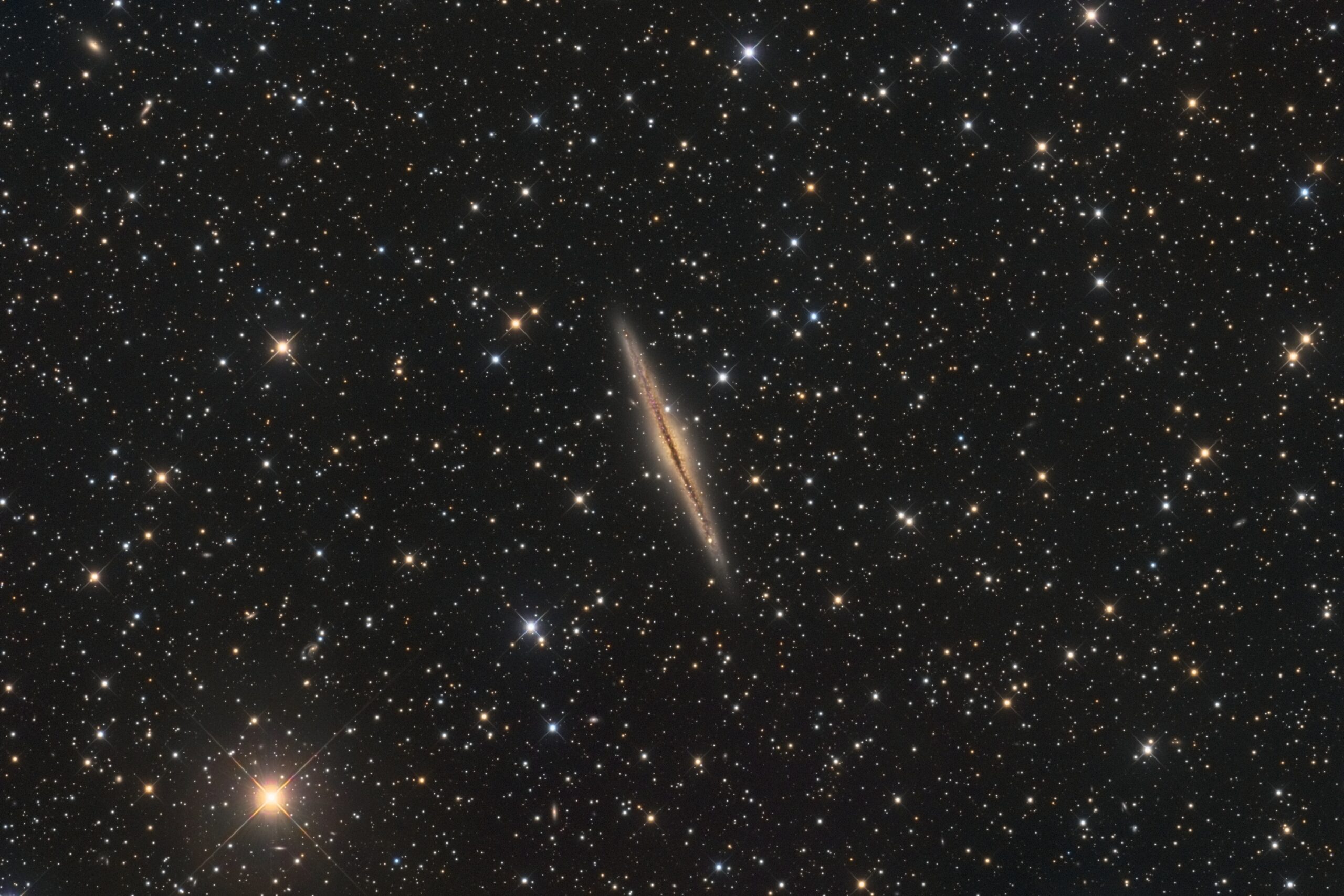
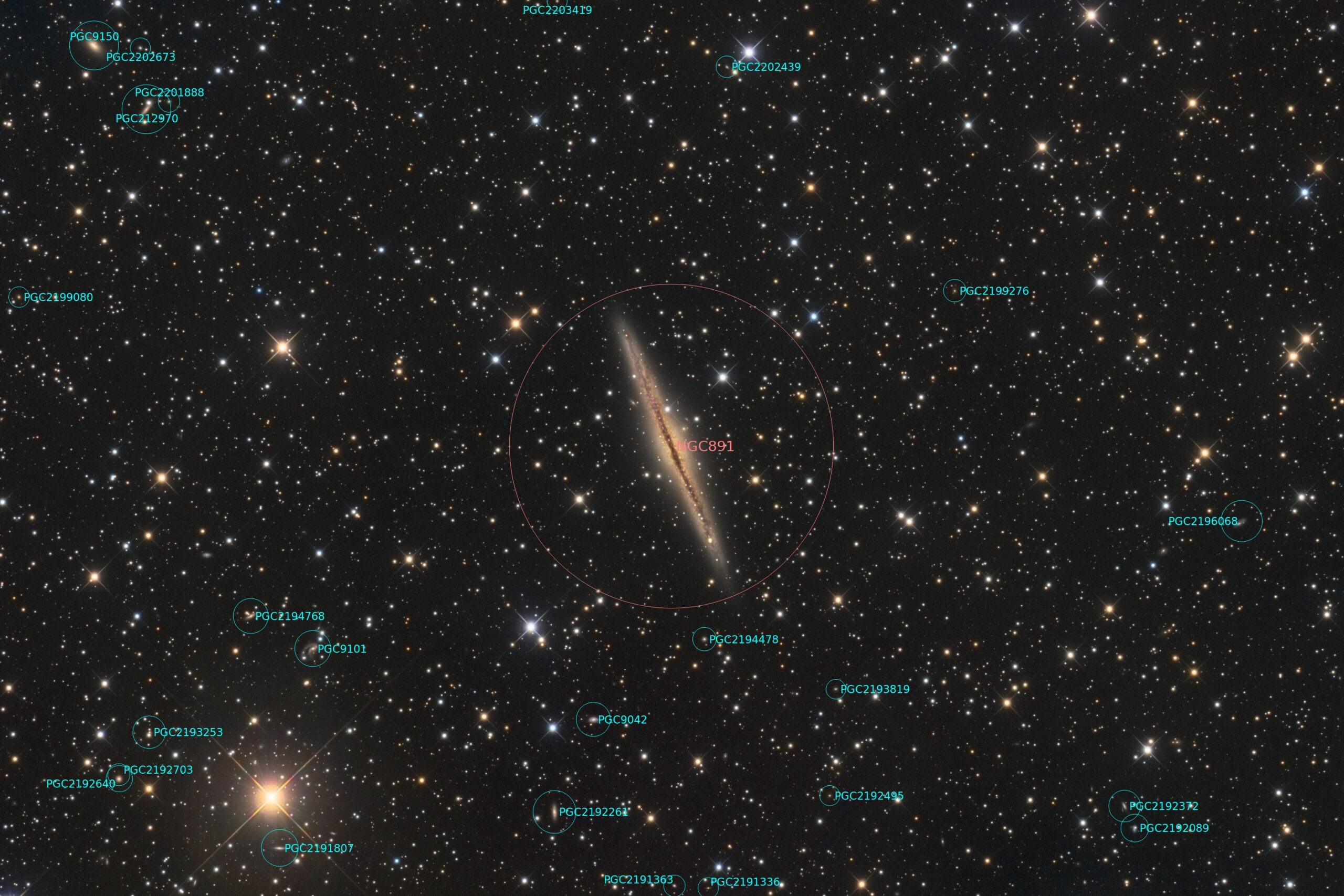
The images were taken with the following equipment:
- Date: 2021, 2022
- Location: China
- Telescope: AG10 CDK
- Focal length [mm]: 1655
- Focal ratio: 7
- Mount: Skywatcher EQ8
- Camera: FLI Proline 6303
- Filter: L:R:G:B:Hα
- Exposure time [min]: 310:120:90:110:105
- Resolution: 1.12″/px
For the 2011 DSLR and 2012 CCD data the calibration and registration was done with DeepSkyStacker and the final processing was done with PixInsight. The result was as follows:
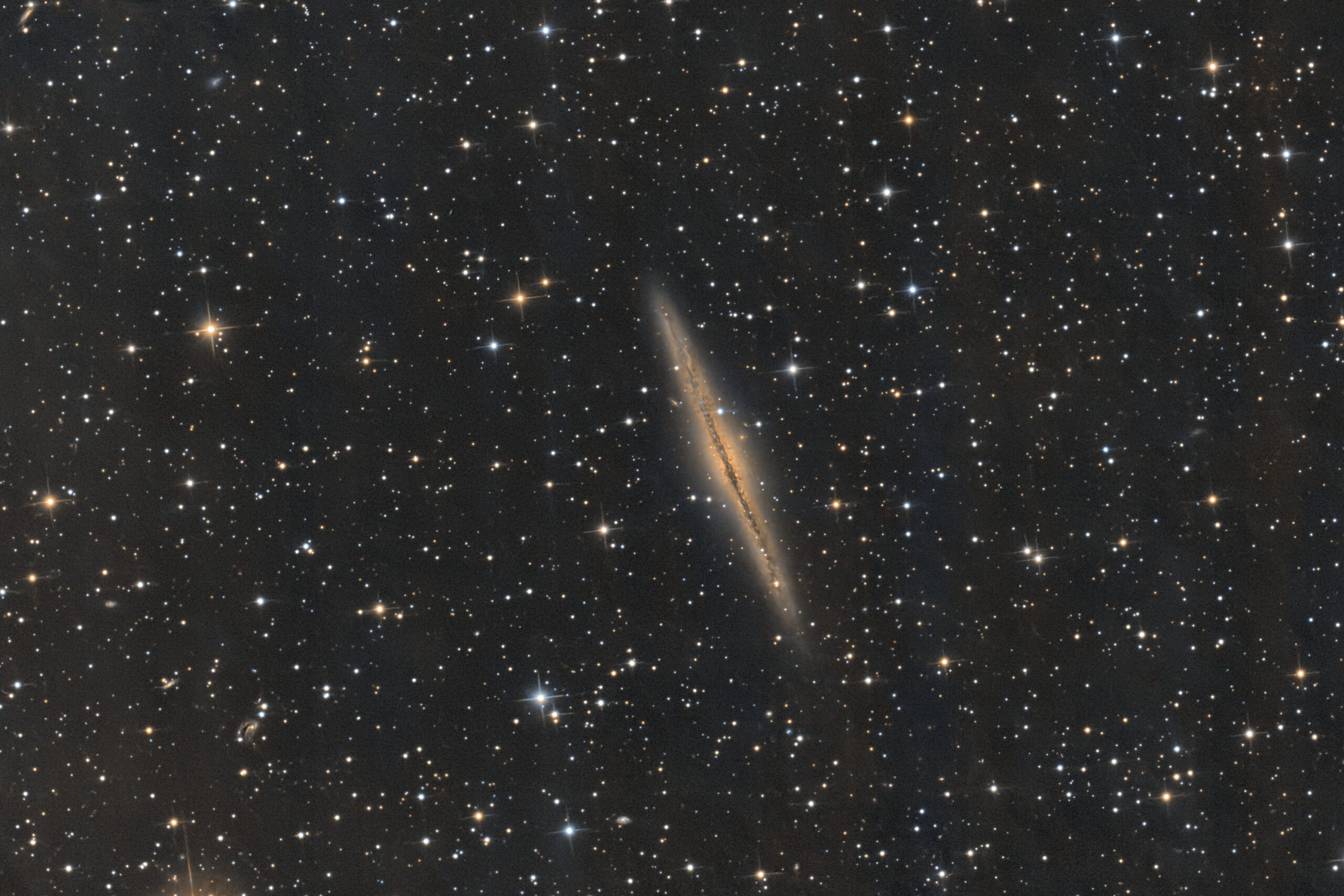
The images were taken with the following equipment:
- Date: 2011 – 2012
- Location: Krefeld, Germany
- Telescope: 10″ TS Newton
- Focal length [mm]: 1140
- Focal ratio: 4.5
- Mount: Skywatcher NEQ6
- Camera: Canon 500Da – Meade DSI 2 Pro
- Filter: OSC – no
- Exposure time [min]: 308 – 82
- Resolution: 0.85″/px
For the 2010 data the calibration and registration was done with DeepSkyStacker and the final processing was done with PixInsight. The result was as follows:
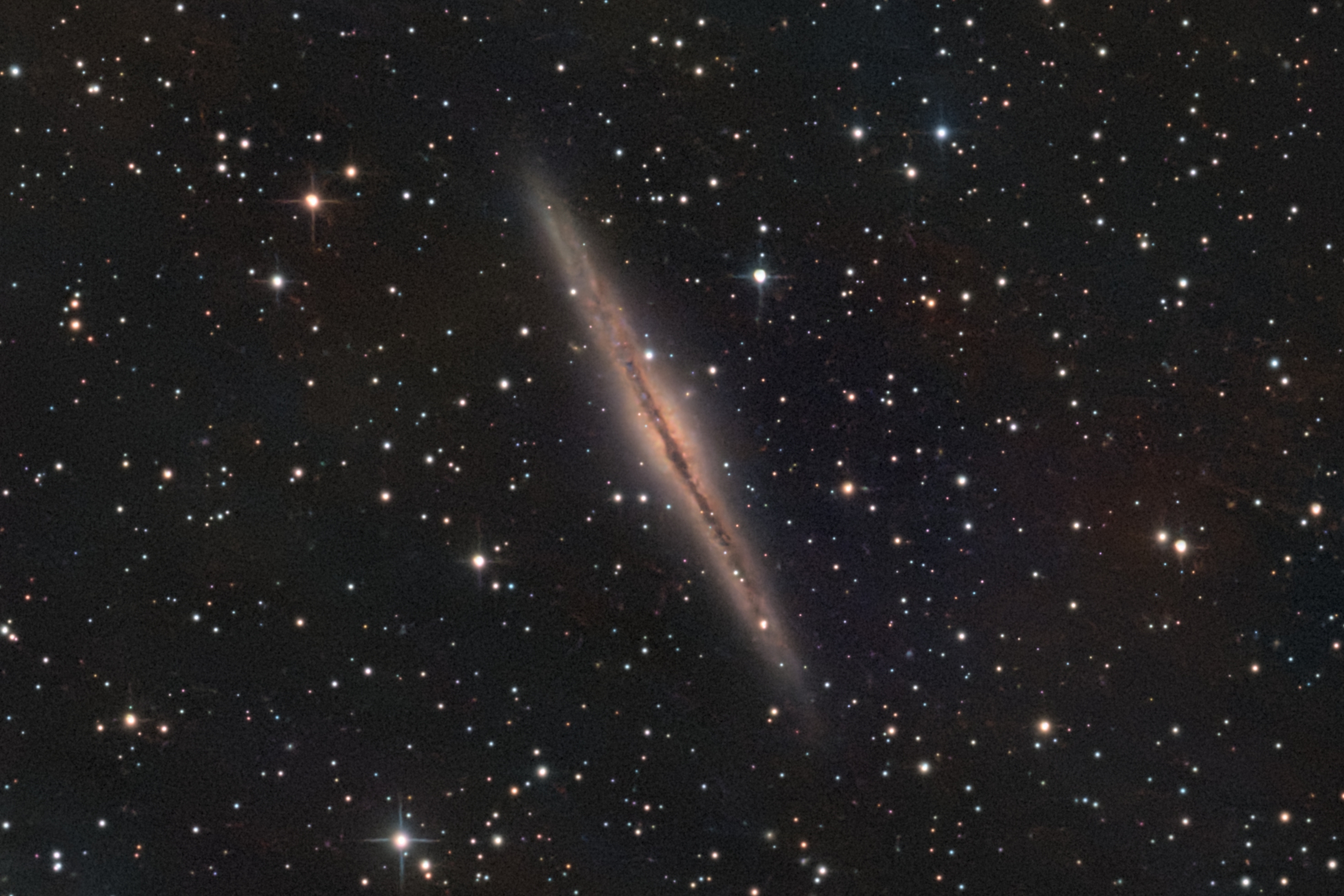
The images were taken with the following equipment:
- Date: 2010
- Location: Krefeld, Germany
- Telescope: 10″ Orion Newton
- Focal length [mm]: 1200
- Focal ratio: 4.8
- Mount: Skywatcher NEQ6
- Camera: Canon 500Da
- Filter: OSC
- Exposure time [min]: 180
- Resolution: 0.81″/px
The first succesful images of this object I took in 2005 from my own backyard. The data calibration and registration was done with DeepSkyStacker and the final processing was done with PixInsight. The result was as follows:
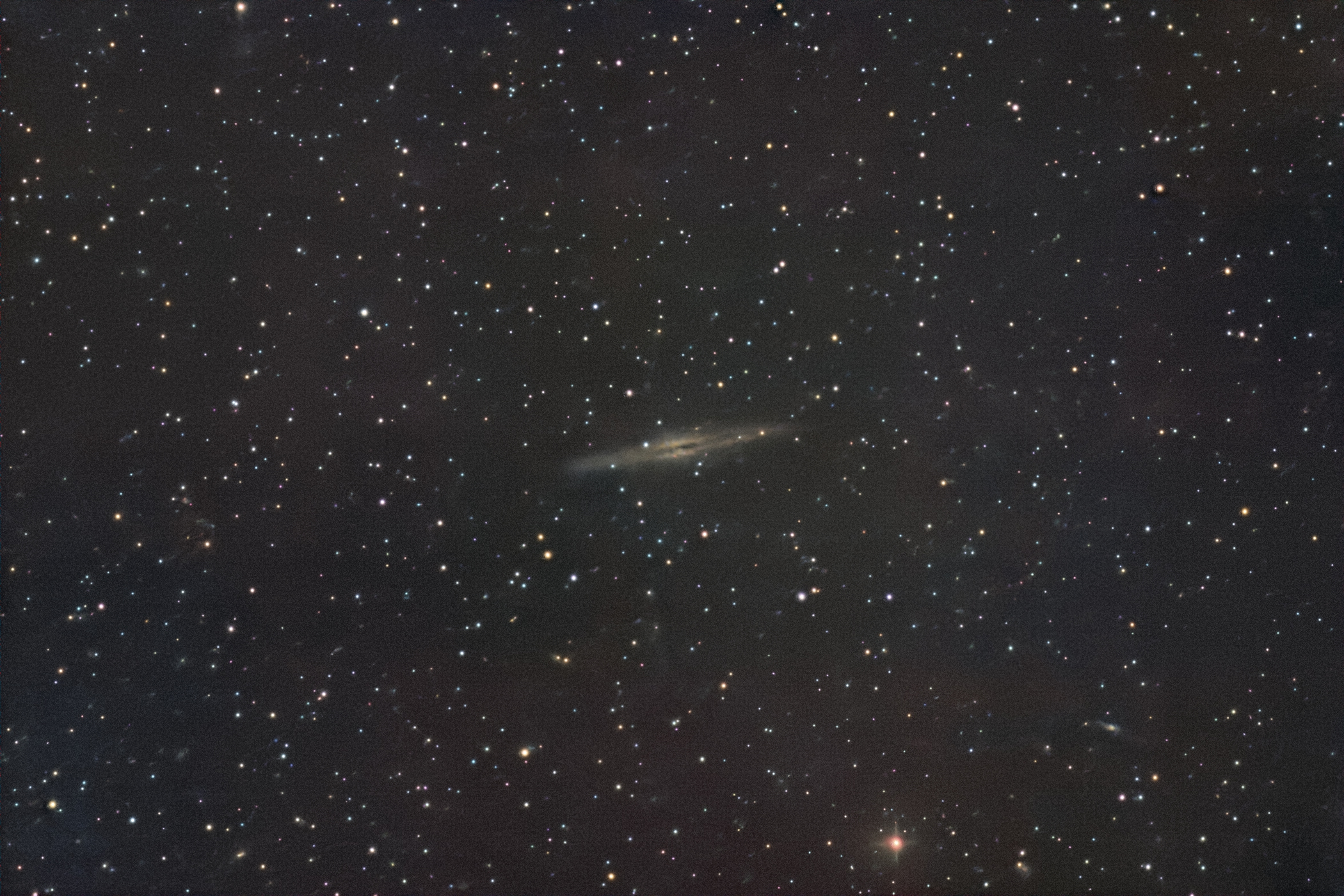
The images were taken with the following equipment:
- Date: 2005
- Location: Krefeld, Germany
- Telescope: 8″ GSO Newton
- Focal length [mm]: 800
- Focal ratio: 4
- Mount: Skywatcher HEQ5
- Camera: Canon 300Da
- Filter: OSC
- Exposure time [min]: 6
- Resolution: 1.88″/px


Leave a reply