

NGC 869, NGC 884 from my own backyard
The famous Double Cluster — NGC 869 and NGC 884 — is an object I have imaged three times over the years.
My first attempt was in 2005, followed by another session in 2009, both taken from my own backyard using DSLR equipment. Even under suburban skies, the sheer richness of this stellar pair made it a rewarding target. The wide dynamic range of DSLR imaging captured the dense star fields and the subtle color variations between the hot blue stars and the more evolved orange members.
The most recent image dates from 2016, when I revisited the Double Cluster with my CCD equipment. The improved sensitivity and resolution allowed for deeper exposures, revealing fainter cluster members and a more refined color balance. The CCD data also brought out the delicate background star field of the Milky Way with greater clarity.
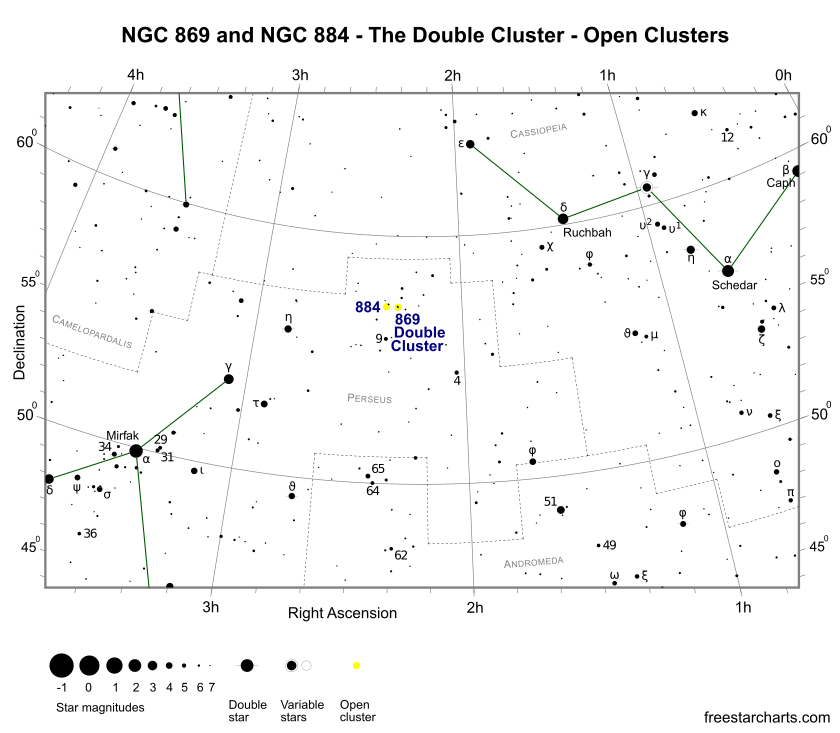
Located in the constellation Perseus, the Double Cluster lies about 7,500 light-years away and is approximately 13 million years old. Both clusters are physically related and likely formed from the same giant molecular cloud. Rich in hot, massive stars, they shine brilliantly against the dense galactic background, making them one of the most spectacular open cluster pairs in the northern sky.
Revisiting this object over more than a decade nicely illustrates not only technological progress—from DSLR to CCD—but also the continuous refinement of imaging and processing techniques over time.
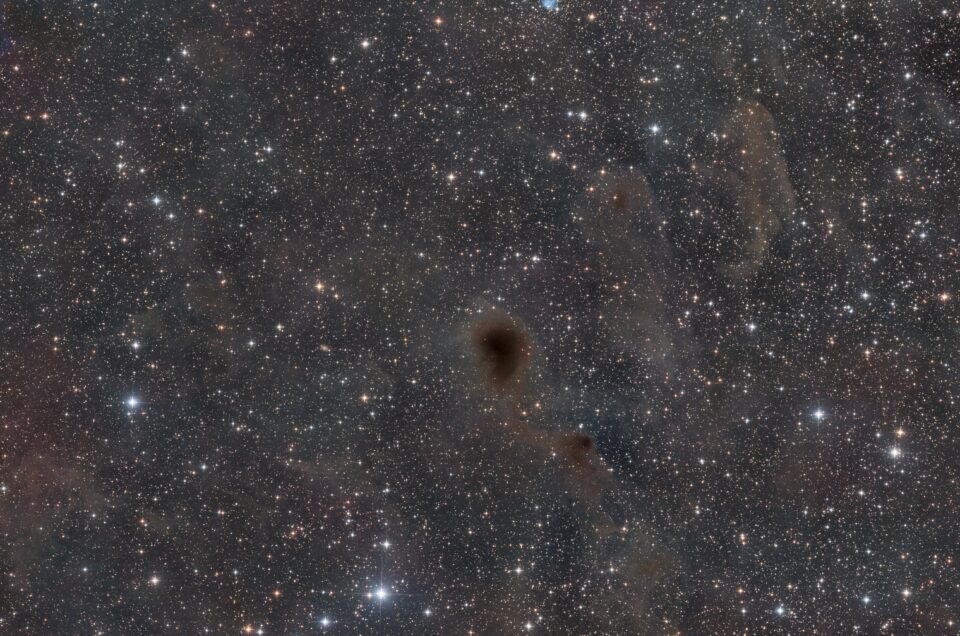
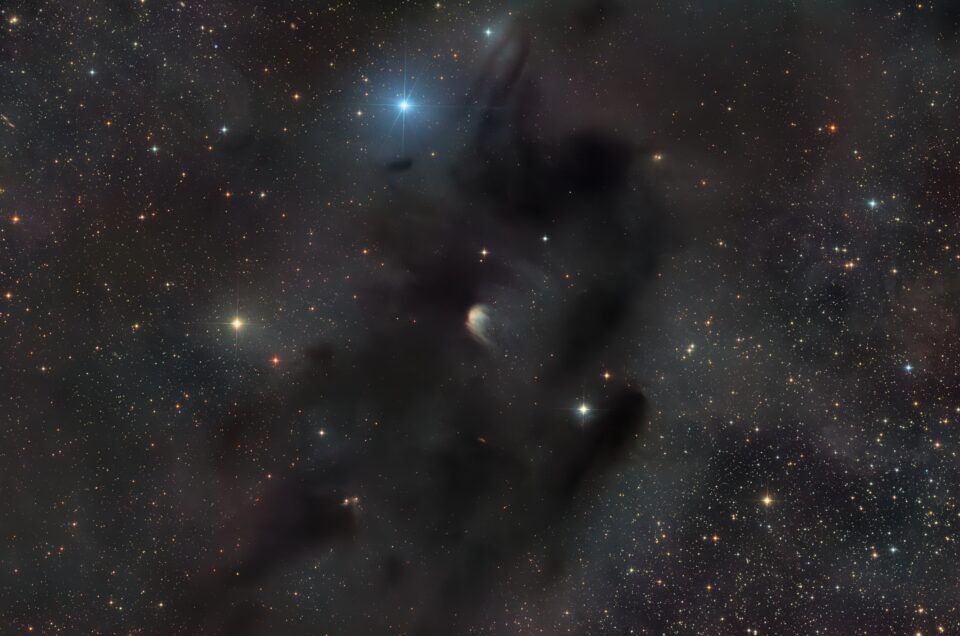
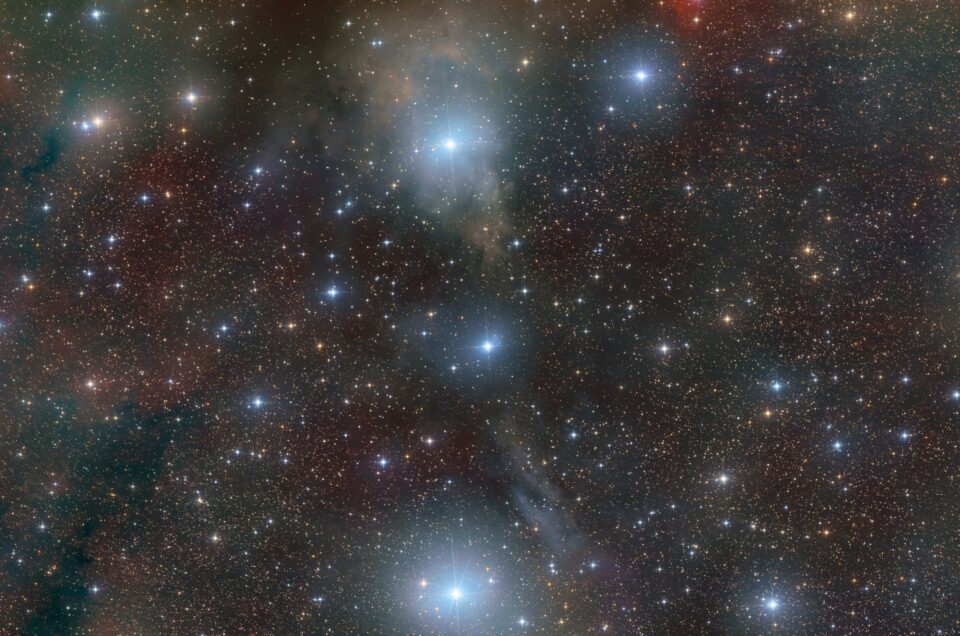
For the 2016 data, the calibration and registration, as well as the final image processing, were performed entirely in PixInsight. The result was as follows:
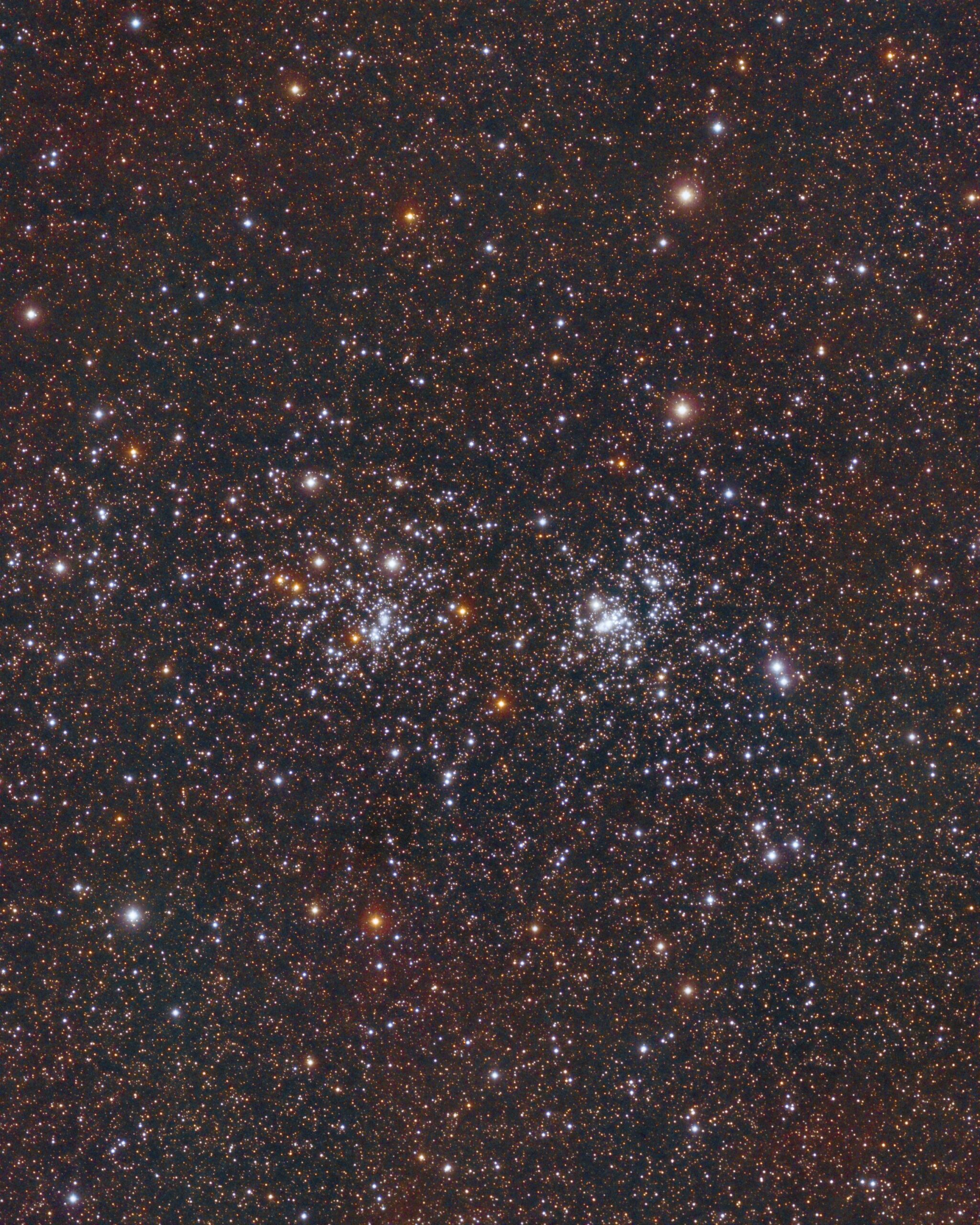
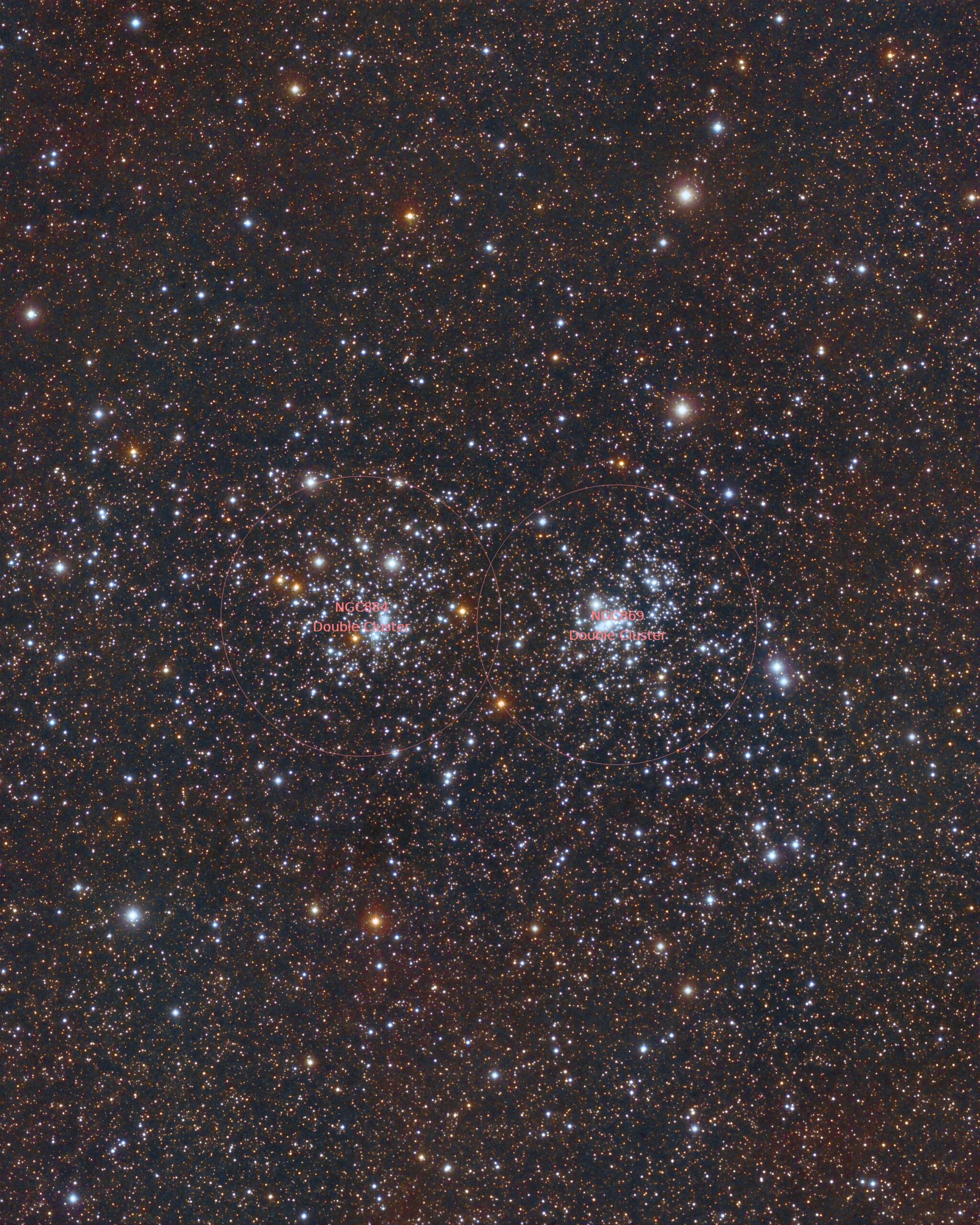
The images were taken with the following equipment:
- Date: 2016
- Location: Krefeld, Germany
- Telescope: TS 65mm Apo
- Focal length [mm]: 420
- Focal ratio: 6.5
- Mount: Skywatcher NEQ6
- Camera: Moravian FW8300
- Filter: R:G:B:Hα
- Exposure time [min]: 60:60:60:440
- Resolution: 2.62″/px
For the 2009 data the calibration and registration was done with DeepSkyStacker and the final processing was done with PixInsight. The result was as follows:

The images were taken with the following equipment:
- Date: 2009
- Location: Krefeld, Germany
- Telescope: 8″ GSO Newton
- Focal length [mm]: 800
- Focal ratio: 4
- Mount: Skywatcher NEQ6
- Camera: Canon 300Da
- Filter: OSC
- Exposure time [min]: 119
- Resolution: 1.88″/px
The first succesful images of this object I took in 2005 from my own backyard. The data calibration and registration was done with DeepSkyStacker and the final processing was done with PixInsight. The result was as follows:
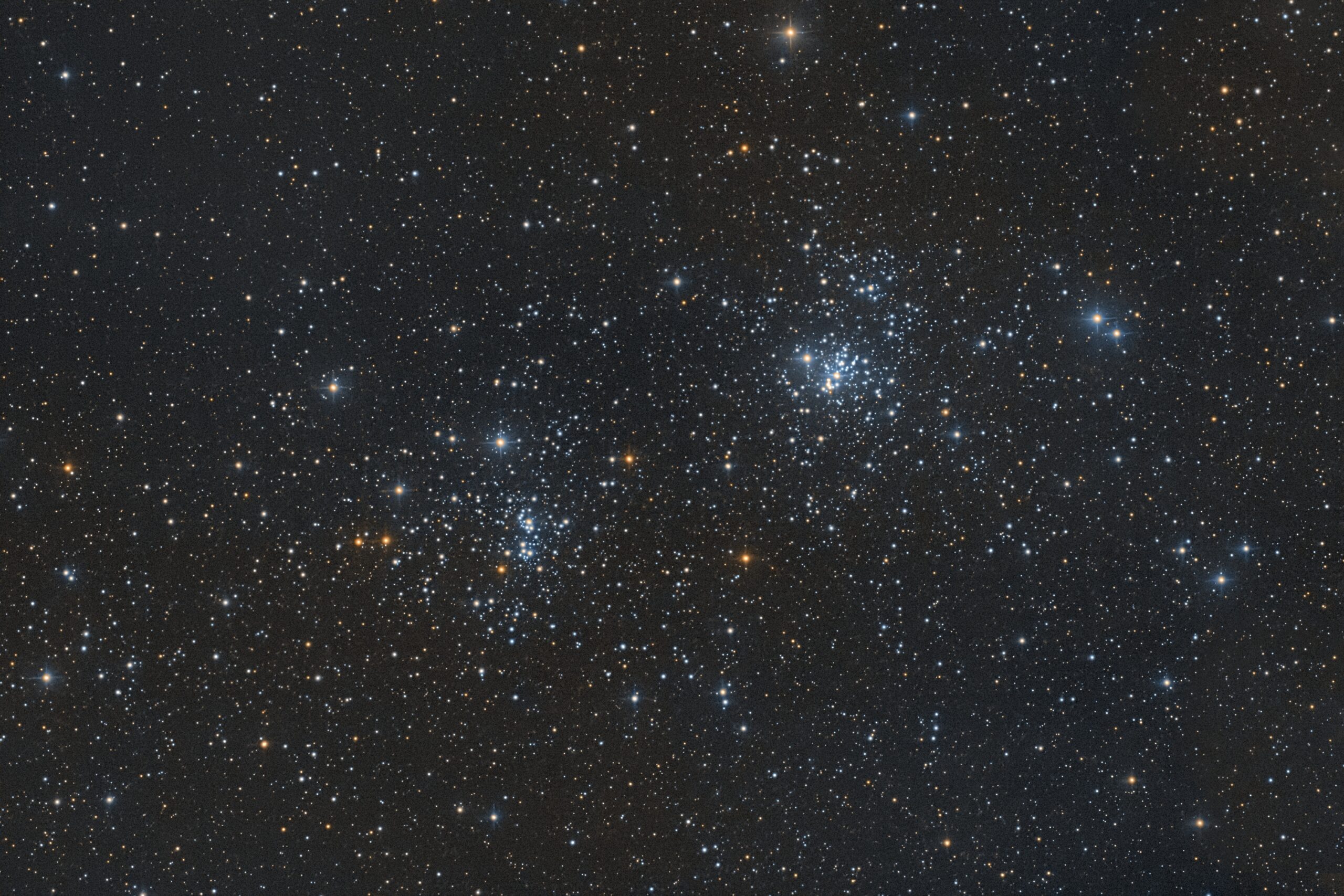
The images were taken with the following equipment:
- Date: 2005
- Location: Krefeld, Germany
- Telescope: 8″ GSO Newton
- Focal length [mm]: 800
- Focal ratio: 4
- Mount: Skywatcher HEQ5
- Camera: Canon 300Da
- Filter: OSC
- Exposure time [min]: 5
- Resolution: 1.18″/px

Leave a reply