

NGC 772
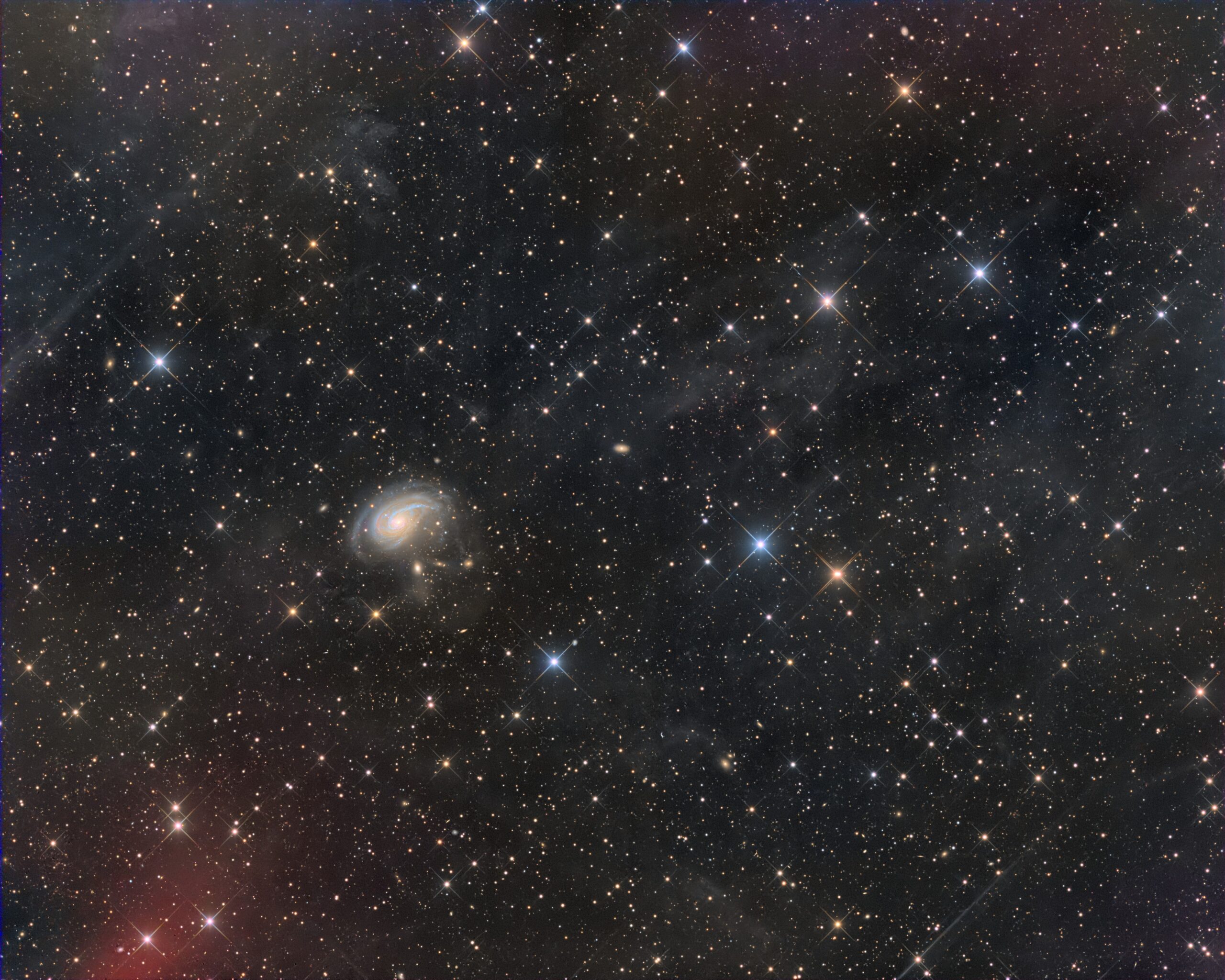
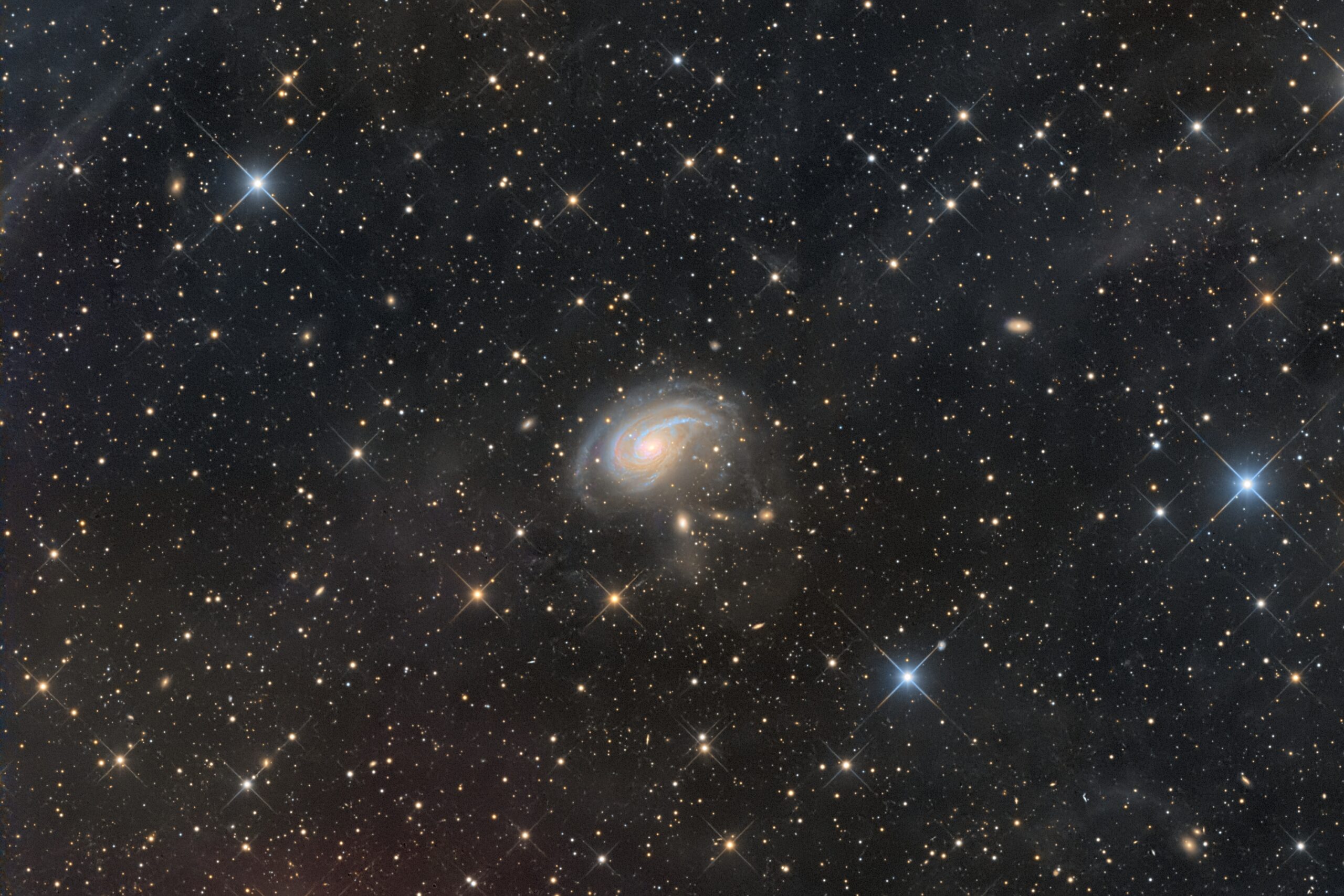
In 2017, during a stay at an astrofarm Tivoli in Namibia, I captured a deep image of the spiral galaxy NGC 772 using a rented observatory. The exceptionally dark and transparent skies allowed for long integration times, revealing faint outer structures that are difficult to detect from more light-polluted locations.
NGC 772 is located in the constellation Aries at a distance of approximately 100 million light-years. It is classified as an unbarred spiral galaxy (SA(s)b)) and is particularly notable for its strongly asymmetric spiral pattern. One dominant spiral arm extends much farther and appears brighter than the opposite side, giving the galaxy a distinctly lopsided appearance.
This asymmetry is believed to be the result of gravitational interaction with its smaller companion galaxy, NGC 770, which lies nearby. Tidal forces from this interaction likely enhanced star formation along the prominent spiral arm. Deep imaging under Namibia’s pristine skies made it possible to capture not only the bright inner structure but also the faint outer halo and subtle distortions—clear evidence of the ongoing gravitational dialogue between the two galaxies.
The data calibration and registration, as well as the final image processing, were all done with PixInsight.
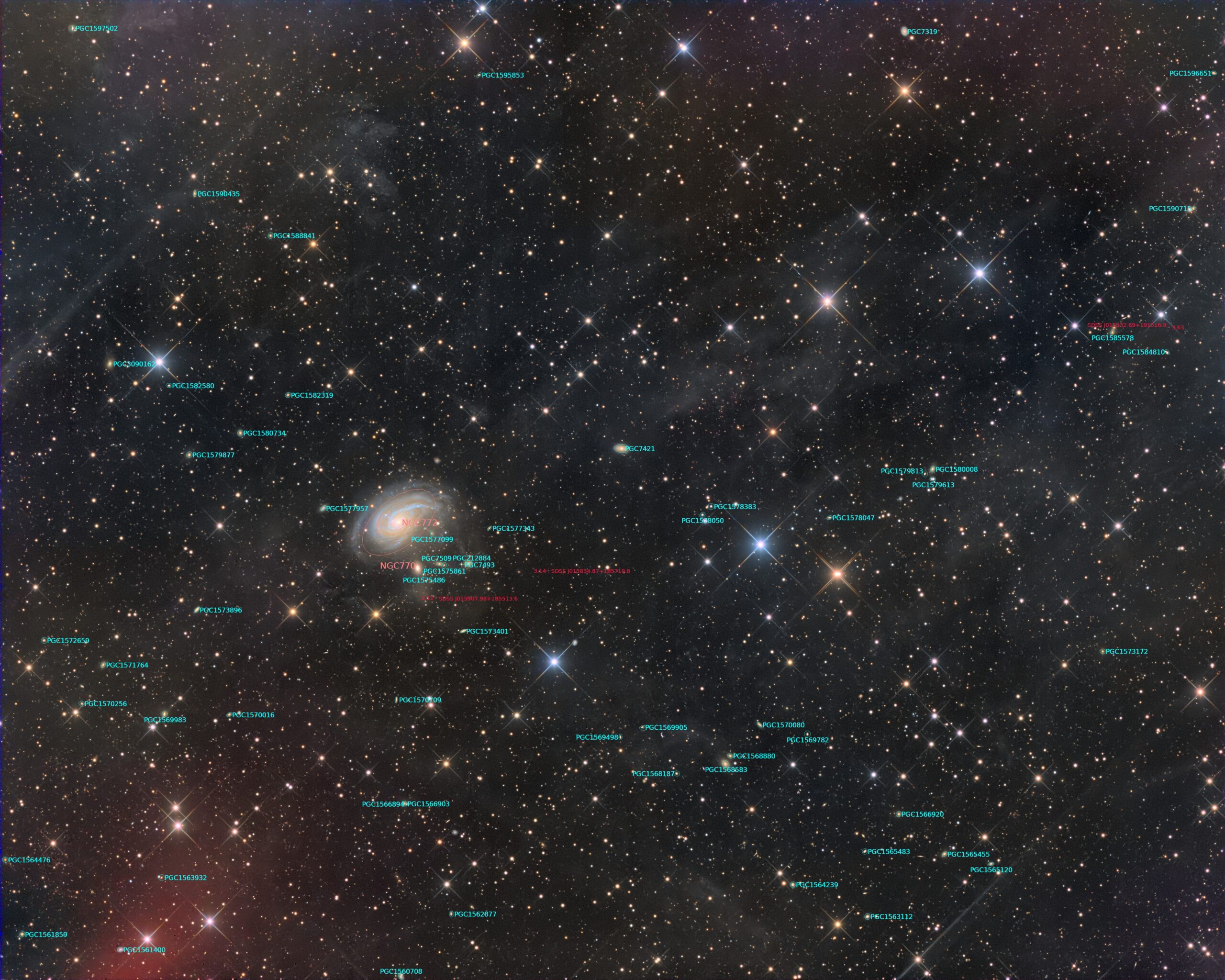
In the image, countless background galaxies and quasars are scattered across the field of view. Therefore I only show the quasars with a z > 3. Among them, the most distant identified object is:
- SDSS J015532.69+191516.9 with a redshift of 3.63
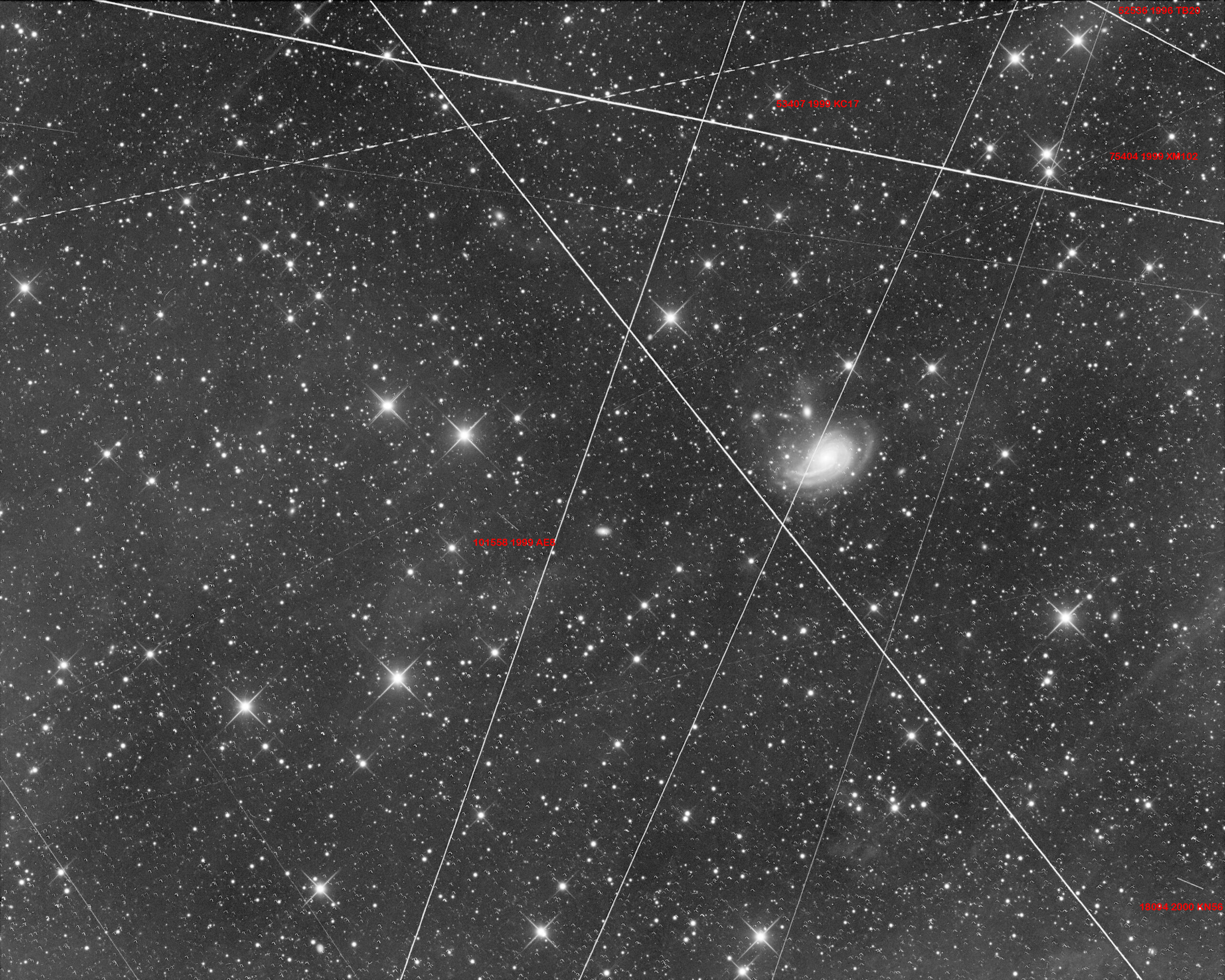
Interestingly, the image also contains several asteroids, visible as small streaks or slightly elongated trails across the field. During long exposures, these minor planets move perceptibly against the fixed background of stars and galaxies, leaving linear traces that subtly record their motion within our own Solar System. Their presence adds an additional layer of depth to the image—foreground objects only a few astronomical units away contrasted with galaxies tens of millions of light-years distant—beautifully illustrating the vast range of scales captured in a single deep exposure.
The images were taken with the following equipment:
- Location: Tivoli, Namibia
- Telescope: 12″ ASA Astrograph
- Focal length [mm]: 1076
- Focal ratio: 3.6
- Mount: ASA DDM85
- Camera: FLI Microline ML16200
- Filter: L:R:G:B
- Exposure time [min]: 180:60:60:60
- Resolution: 1.14″/px


Leave a reply