

NGC 470, NGC 474
In 2011, I imaged the spiral galaxy NGC 470 from my own backyard using my DSLR equipment. Capturing a relatively faint galaxy under suburban skies was challenging, especially in terms of background control and bringing out the delicate spiral structure. Nevertheless, the dataset already revealed the asymmetric shape of the galaxy and hints of its interaction with its close companion.
In 2017, during a stay at an astrofarm Tivoli in Namibia, I had the opportunity to image the same object again—this time under pristine dark skies using a rented observatory setup. The dramatic improvement in sky quality allowed for significantly deeper exposures, revealing faint outer spiral arms, subtle tidal distortions, and improved color differentiation within the galaxy’s star-forming regions.
Scientifically, NGC 470 lies in the constellation Pisces at a distance of roughly 100 million light-years. It forms an interacting pair with its neighboring galaxy NGC 474, which is well known for its spectacular system of faint tidal shells—evidence of past gravitational interactions. The distortions visible in NGC 470 are likely connected to this interaction. Comparing the 2011 backyard image with the 2017 Namibia dataset not only highlights the impact of dark-sky conditions but also illustrates how gravitational encounters shape galaxies over cosmic timescales.
The data calibration and registration, as well as the final image processing, were all done with PixInsight.
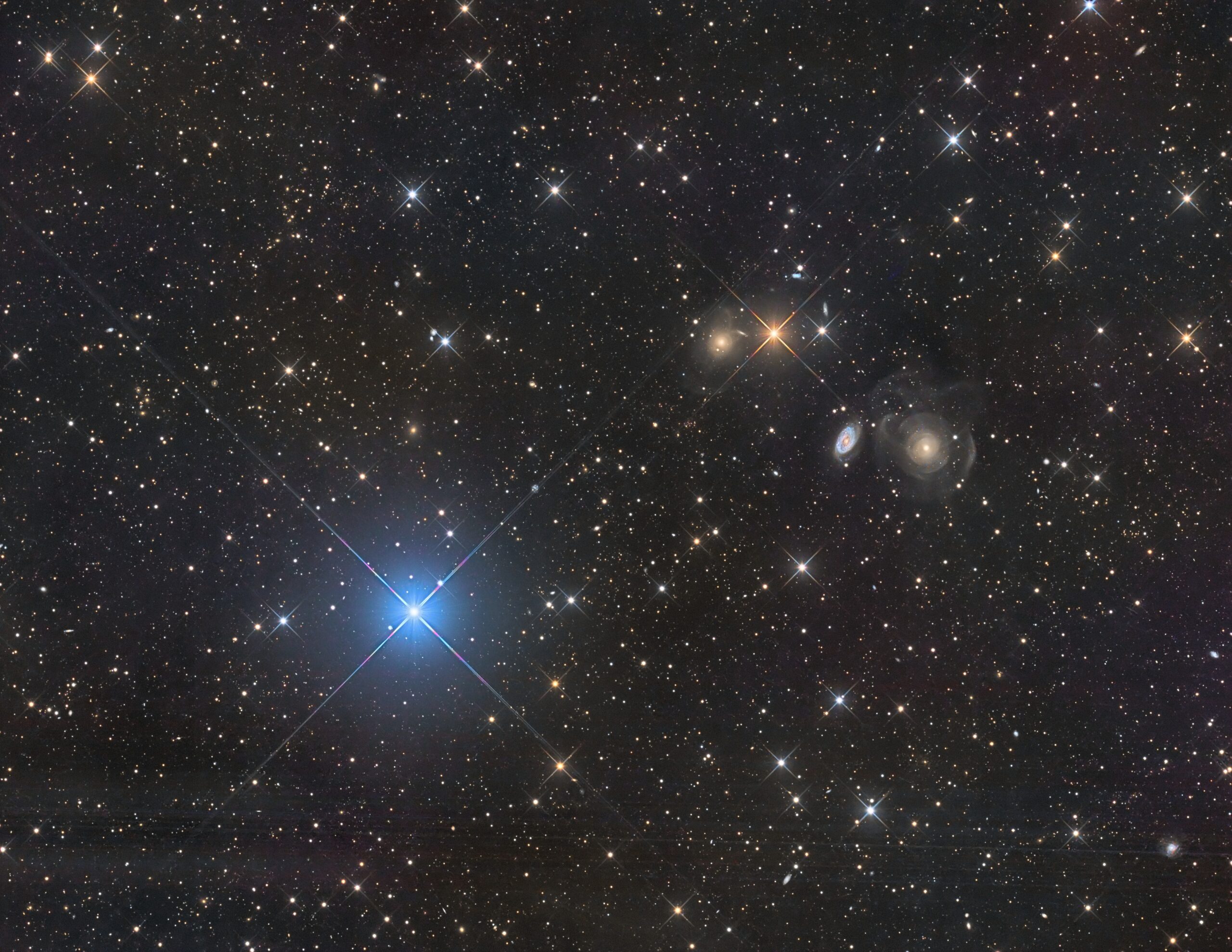
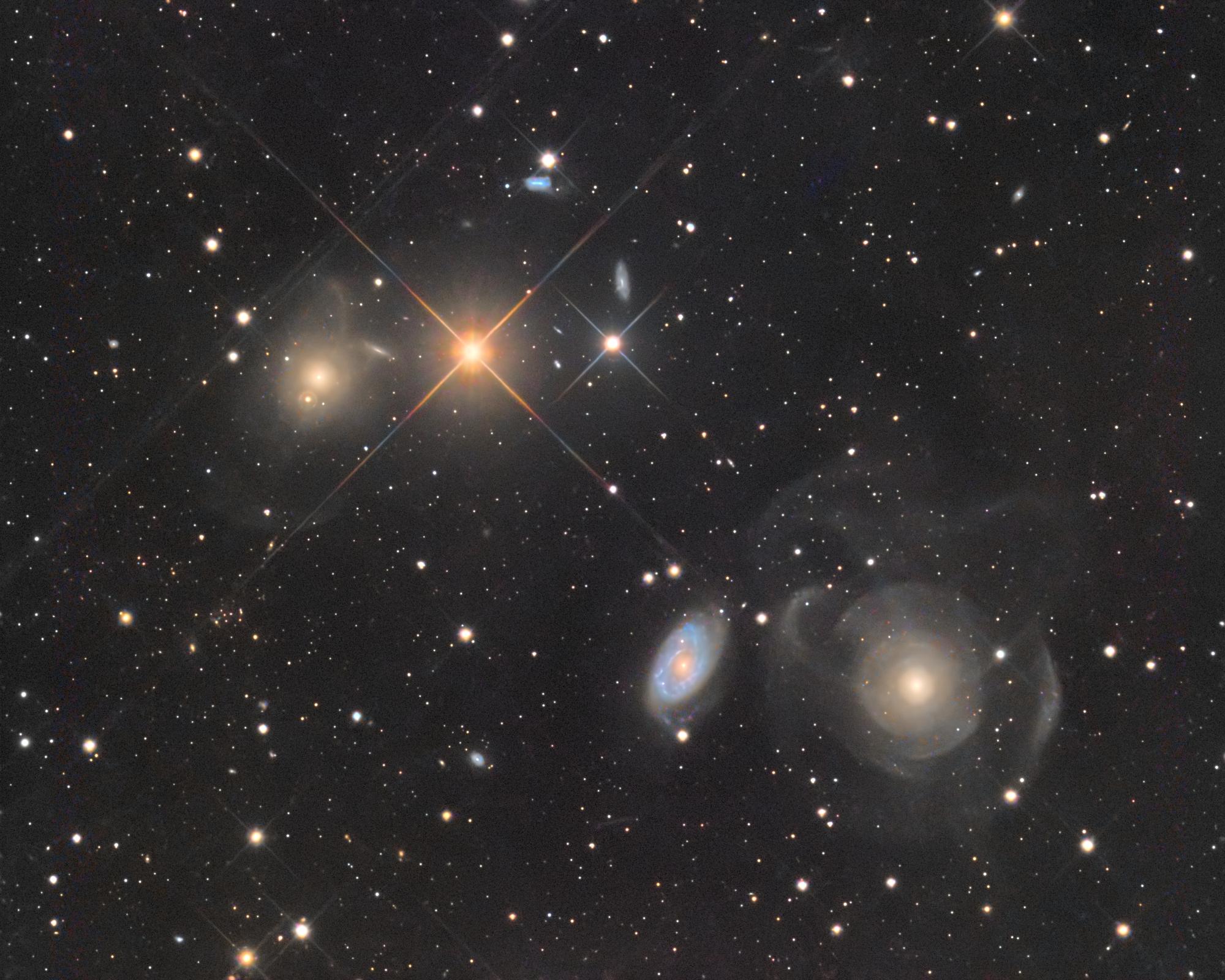
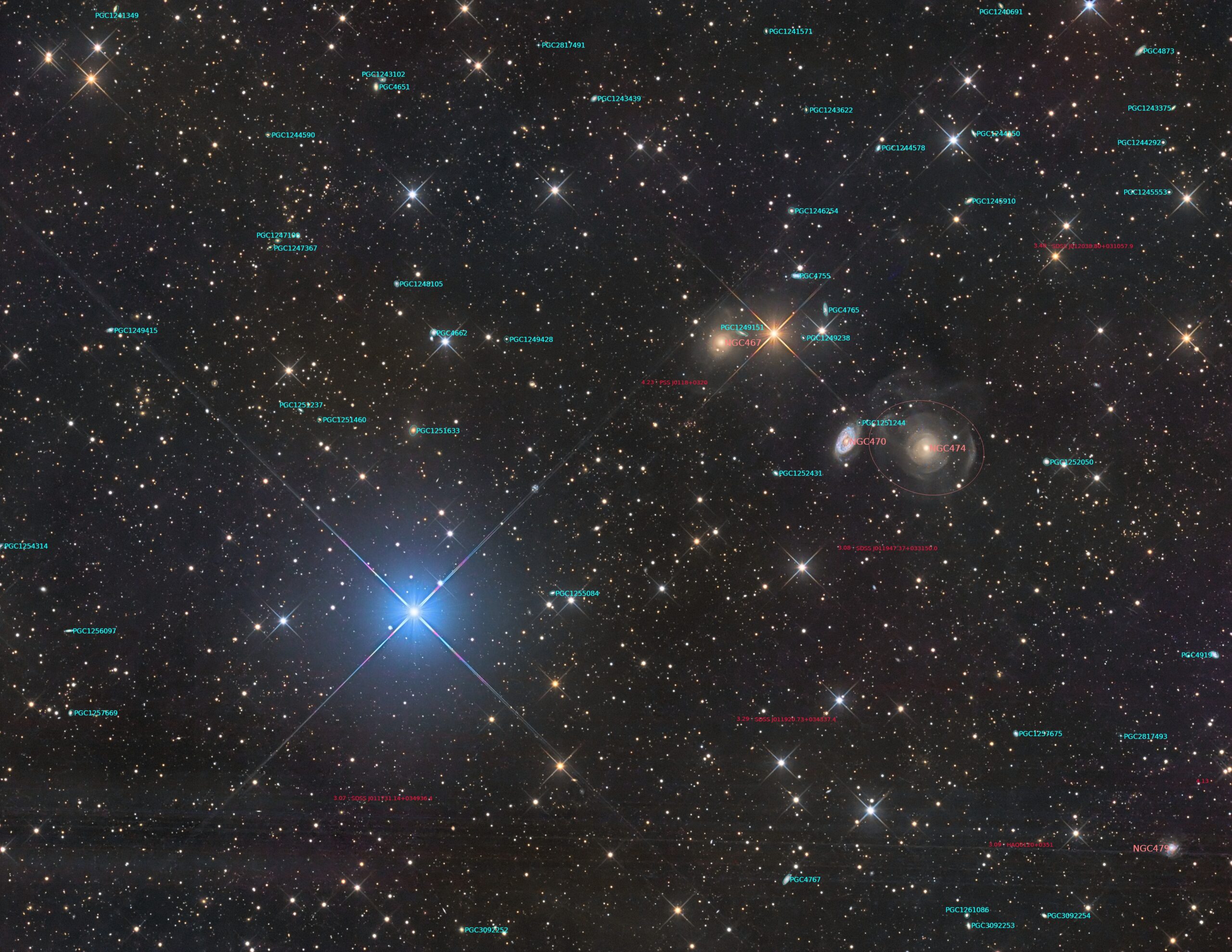
In the image, countless background galaxies and quasars are scattered across the field of view. Therefore I only show the quasars with a z > 3. Among them, the most distant identified object are:
- PSS J0118+0320 with a redshift of 4.23
- PSS J0121+0347 with a redshift of 4.13
The images were taken with the following equipment:
- Location: Tivoli, Namibia
- Telescope: 12″ ASA Astrograph
- Focal length [mm]: 1076
- Focal ratio: 3.6
- Mount: ASA DDM85
- Camera: FLI Microline ML16200
- Filter: L:R:G:B
- Exposure time [min]: 175:60:60:60
- Resolution: 1.14″/px
for the 2011 data the calibration and registration was done with DeepSkyStacker, the final image processing, were all done with PixInsight.
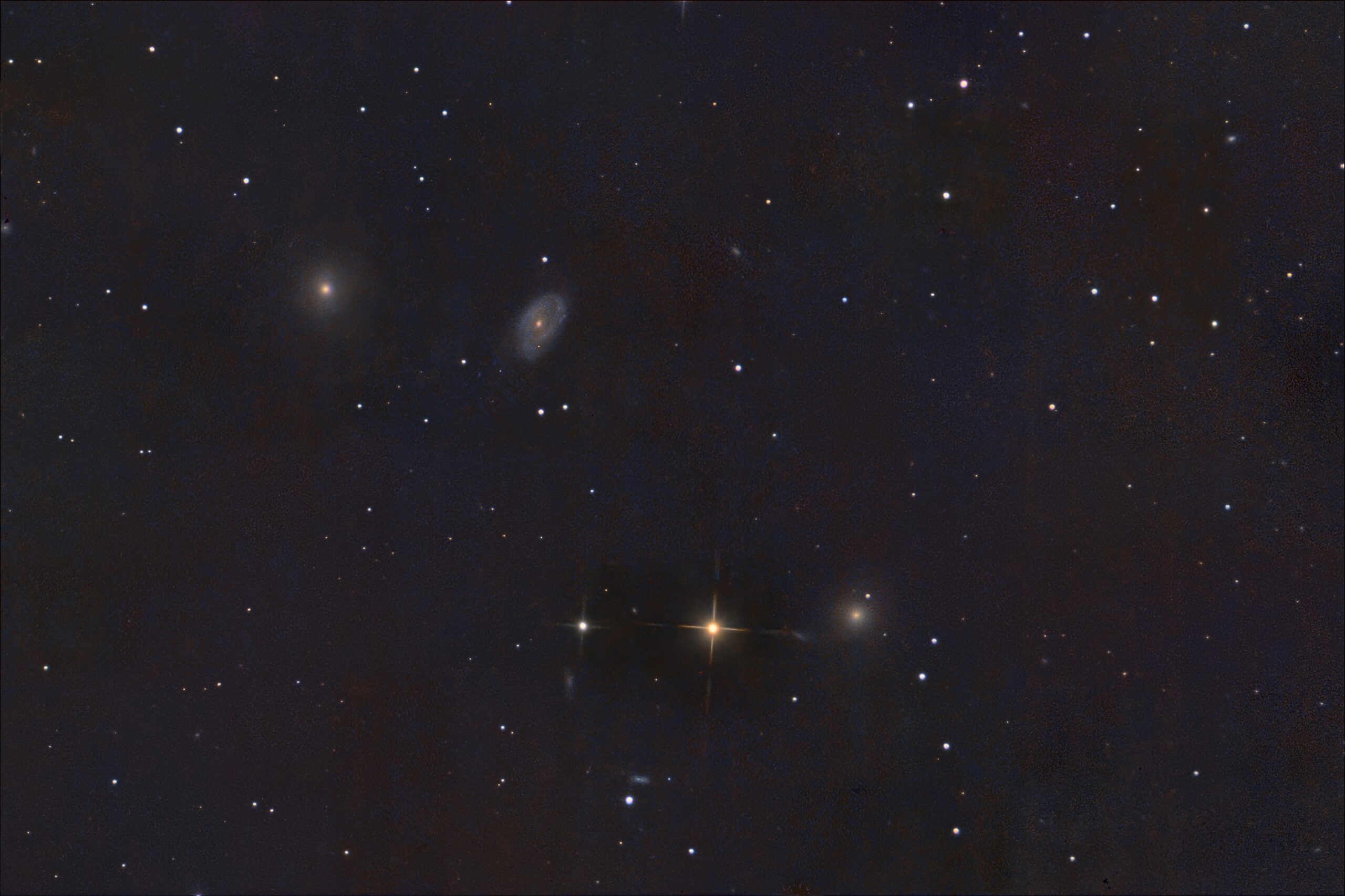
The images were taken with the following equipment:
- Location: Krefeld, Germany
- Telescope: 10″ Orion Newton
- Focal length [mm]: 1200
- Focal ratio: 4.8
- Mount: Skywatcher NEQ6
- Camera: Canon 500 Da
- Filter: OSC
- Exposure time [min]: 209
- Resolution: 0.43″/px (Drizzle 2)


Leave a reply