

NGC 2170
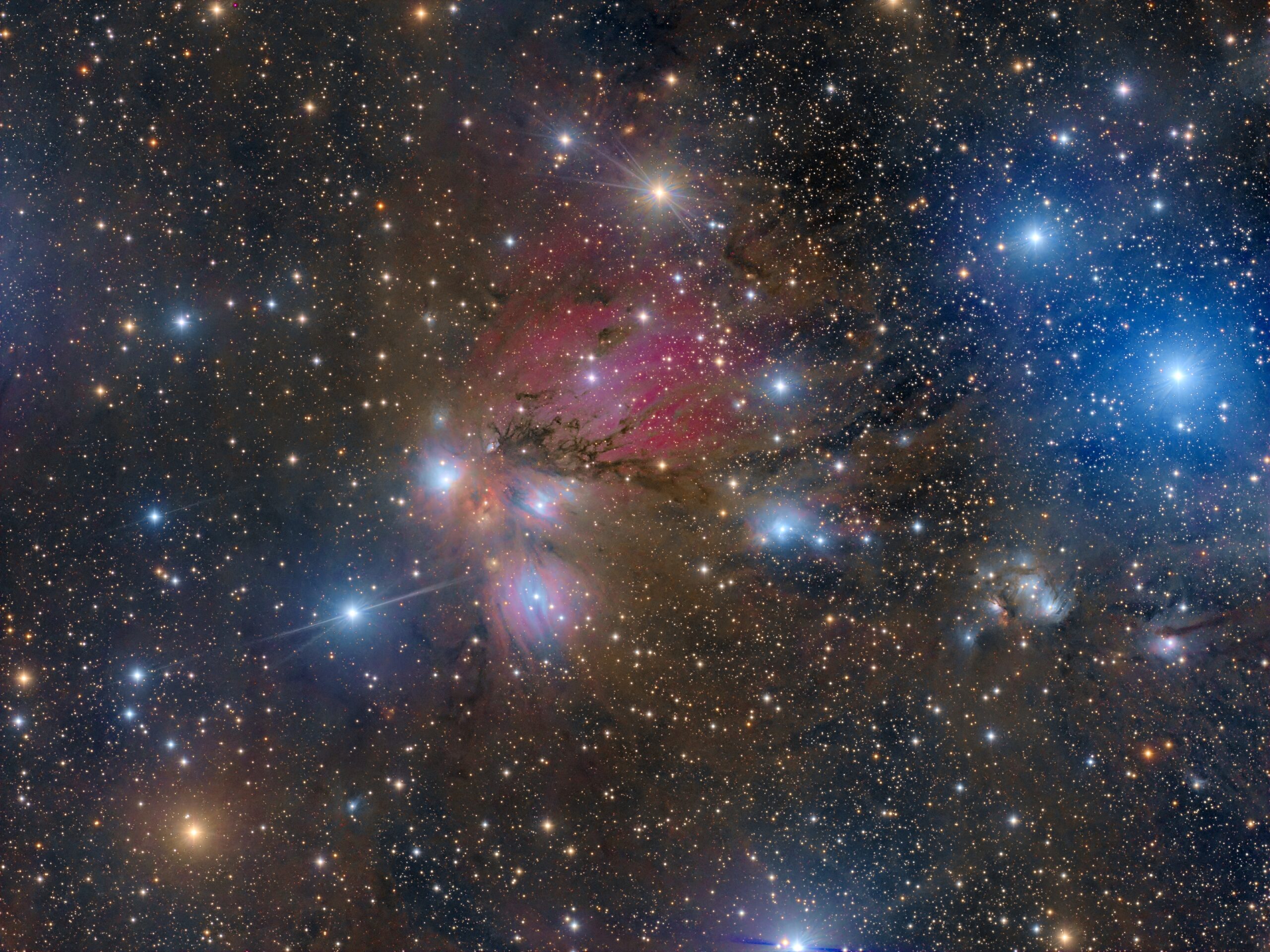
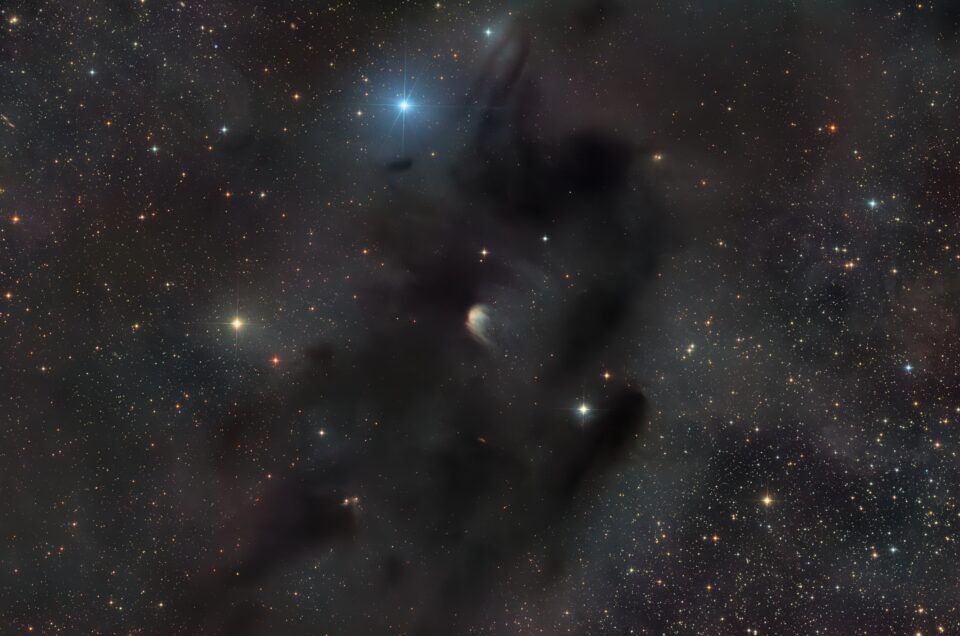
In 2019, I received a high-quality LRGB dataset of the reflection nebula NGC 2170 from the Deep Sky West Observatory, located in New Mexico. The combination of dark desert skies, stable seeing conditions, and professional-grade instrumentation resulted in exceptionally clean and deep data. This made it possible to capture not only the bright reflection nebula itself but also the faint and complex structures that surround it.
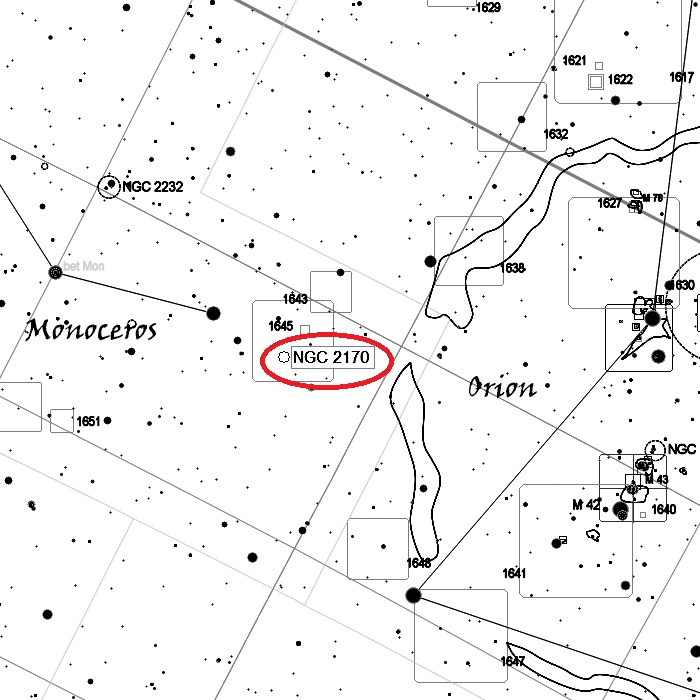
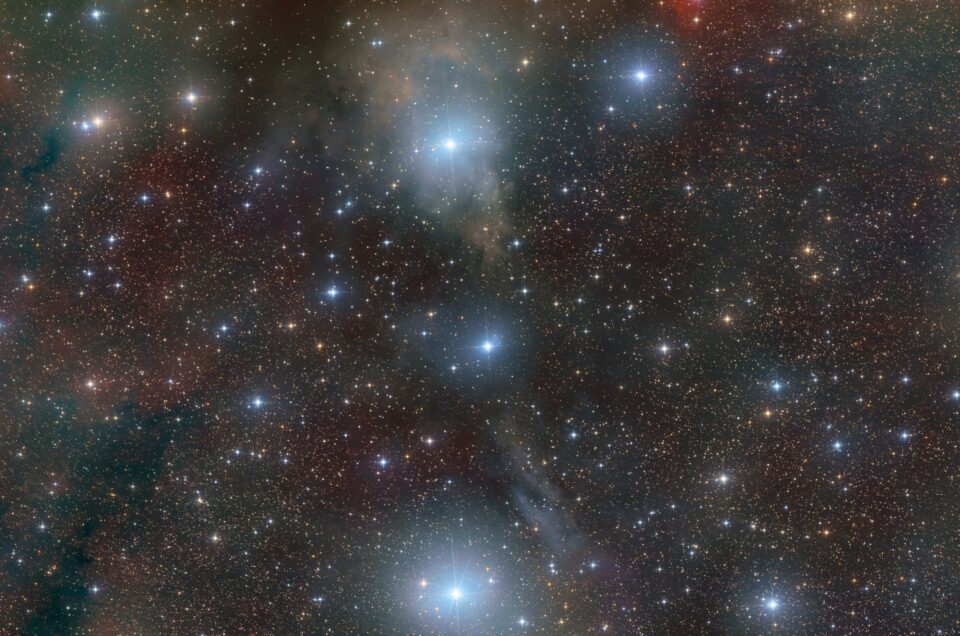
NGC 2170 is situated in the constellation Monoceros and forms part of the vast Monoceros molecular cloud complex, a nearby region of active star formation located roughly 2,400 light-years from Earth. Unlike emission nebulae, which glow due to ionized gas, NGC 2170 shines primarily by reflected starlight. Dust grains within the nebula scatter the light of nearby stars, producing the characteristic bluish tones seen in broadband images. This scattering process is wavelength-dependent, favoring shorter wavelengths and giving reflection nebulae their distinct appearance.
What makes this region particularly fascinating is its diversity of interstellar phenomena. Surrounding NGC 2170 are numerous dark nebulae—dense concentrations of cold dust that obscure the background star field—as well as faint emission regions where hydrogen gas is ionized by nearby young stars. The interplay between these components creates a rich tapestry of light and shadow, with soft gradients, filamentary dust lanes, and subtle transitions between illuminated and obscured areas.
Deep imaging reveals that the nebula is embedded in a highly structured environment shaped by turbulence, gravity, and stellar feedback. Within these clouds, young stellar objects (YSOs) are forming, some of which are still deeply embedded and invisible in optical wavelengths. Their presence is often hinted at by localized brightening, reflection patches, or small cavities carved into the surrounding dust.
From an imaging perspective, NGC 2170 is a demanding but rewarding target. Its relatively low surface brightness and the complexity of the surrounding field require careful calibration, long integration times, and precise processing to preserve faint details without overwhelming the image with noise. The LRGB dataset from Deep Sky West provided an excellent foundation for this, allowing both the fine dust structures and the subtle color variations to be rendered with high fidelity.
The final image highlights not only the delicate beauty of NGC 2170 itself but also the broader structure of the interstellar medium in this region—an intricate environment where stars are born and shaped by the very clouds from which they emerge.
Data calibration and registration and the final processing was done with PixInsight. The result was as follows:
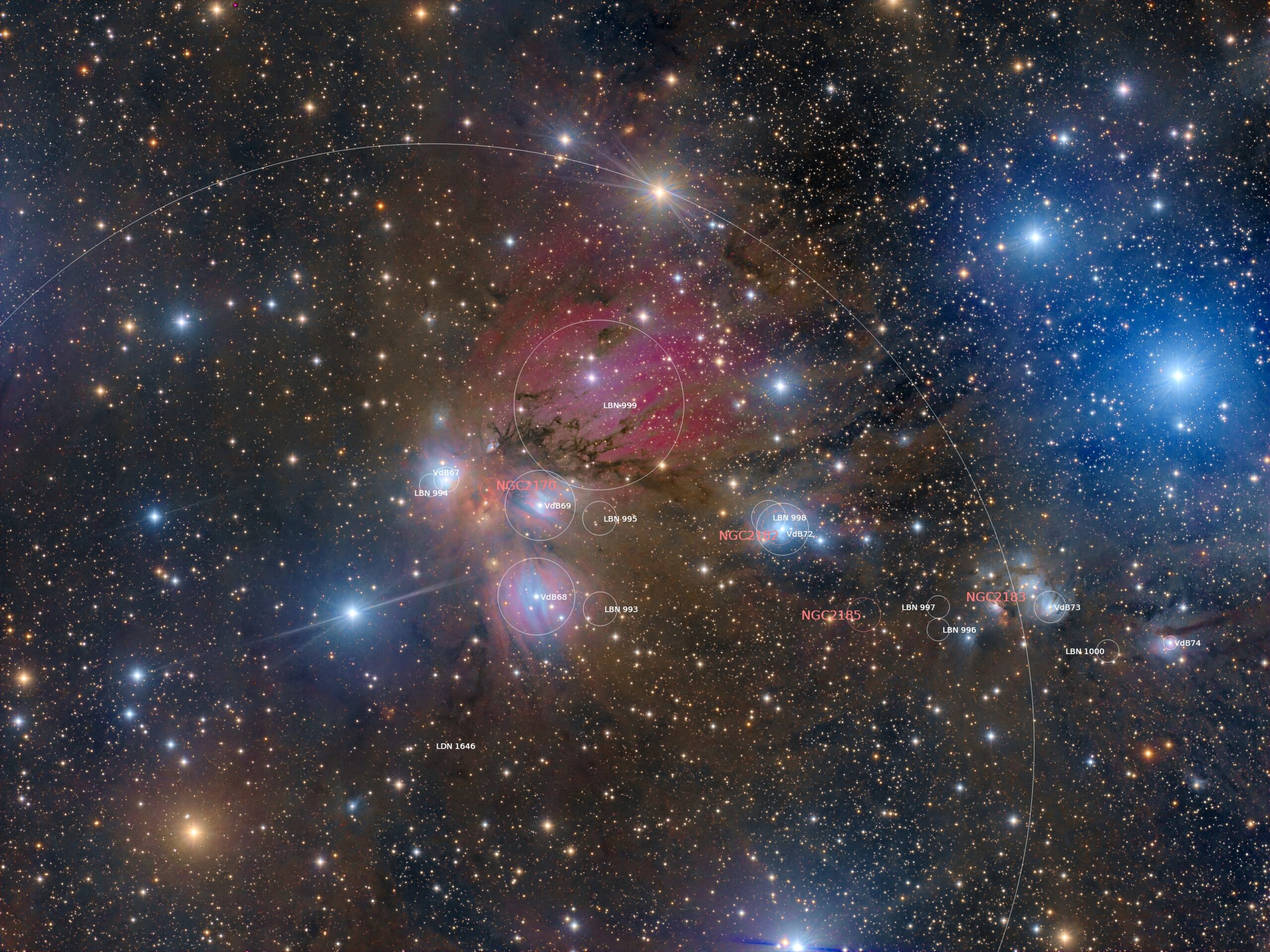
The images were taken with the following equipment:
- Date: 2019
- Location: Rowe, New Mexico
- Telescope/Lens: Takahashi FSQ-106
- Focal length [mm]: 530
- Focal ratio: 5
- Mount: Paramount MyT
- Camera: QSI 683-WSG-8
- Filter: L:R:G:B
- Exposure time [min]: 255:240:270:255
- Resolution: 2.08″/px

Leave a reply