

NGC 2070 (Tarantula Nebula)
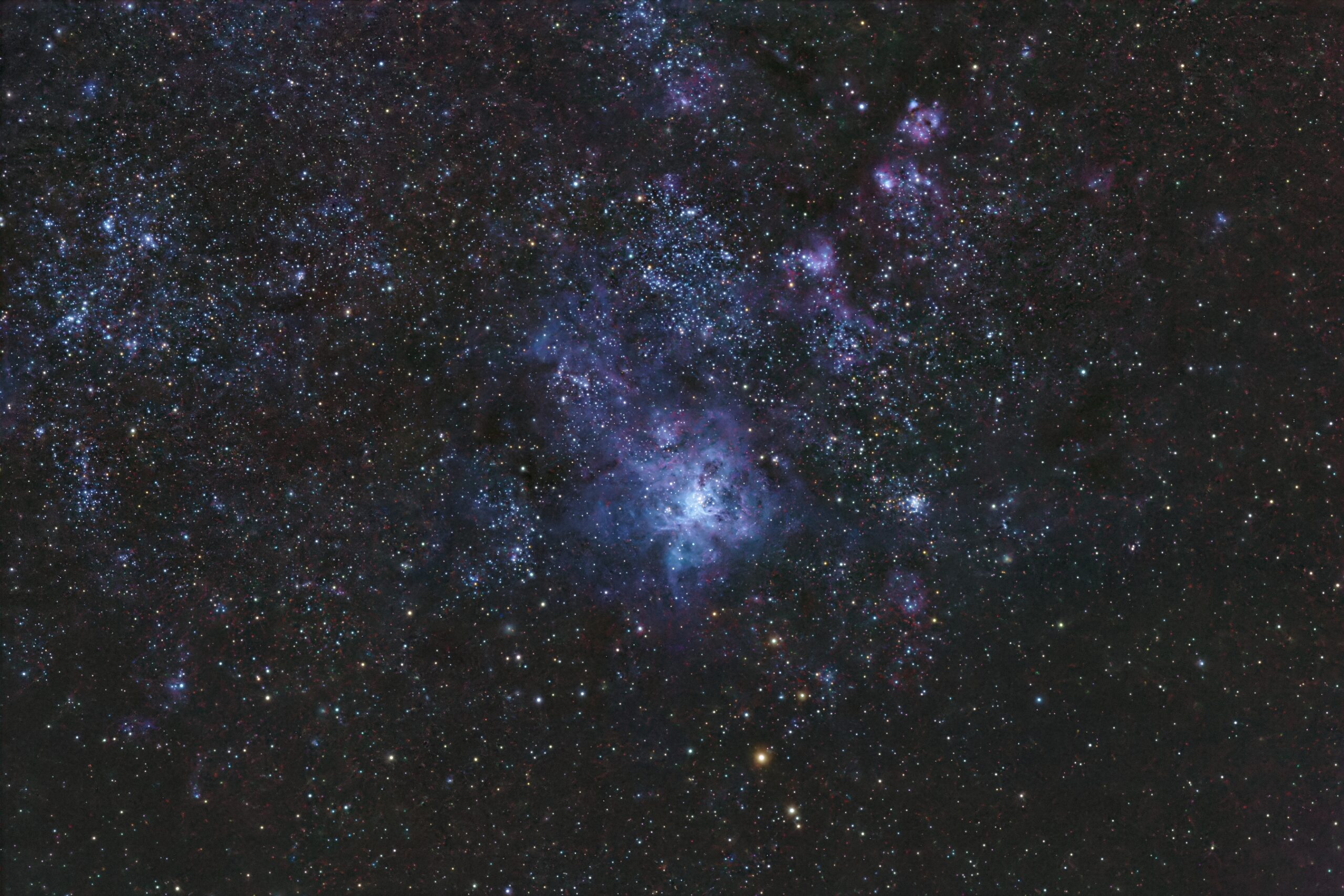
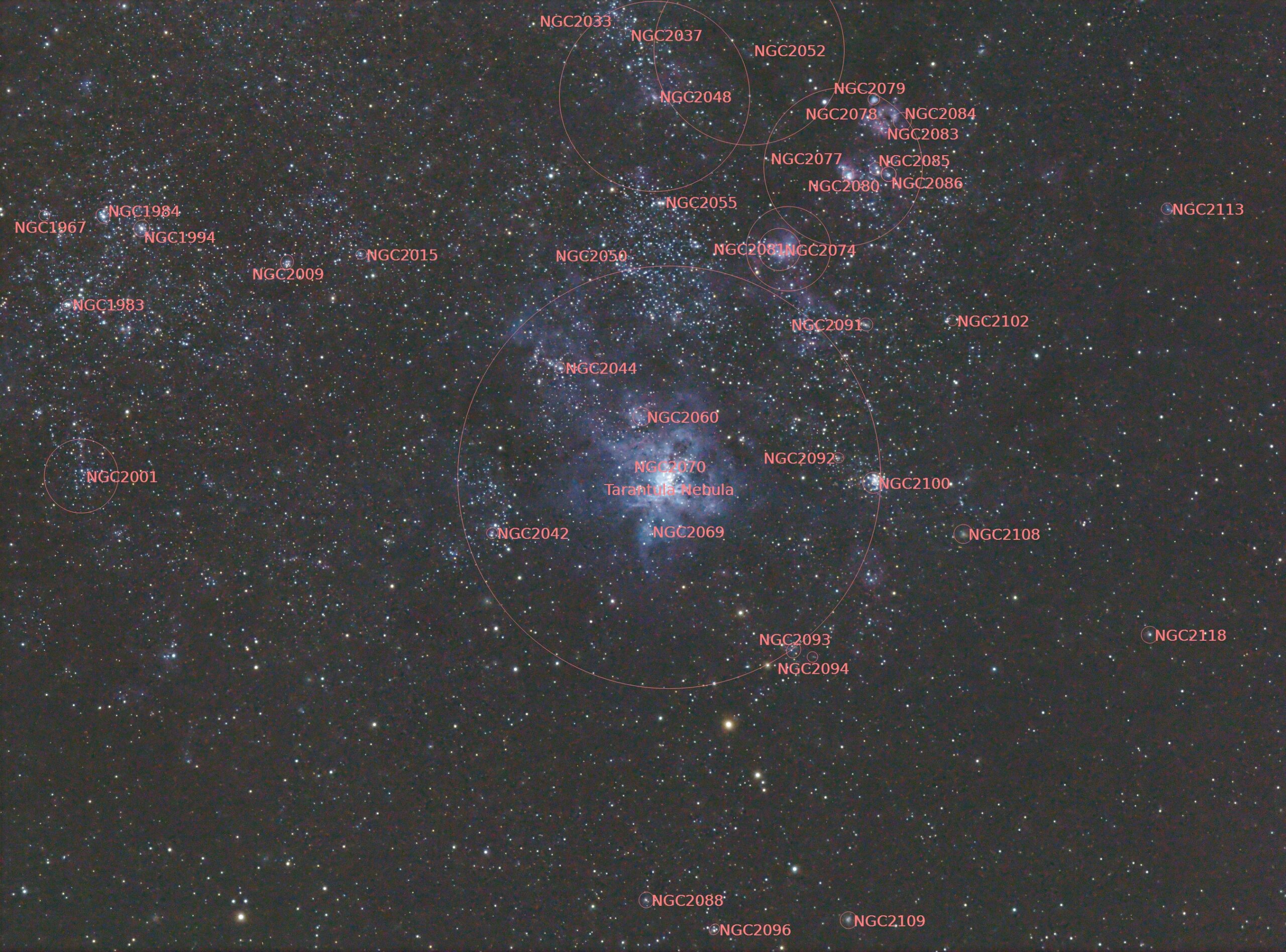
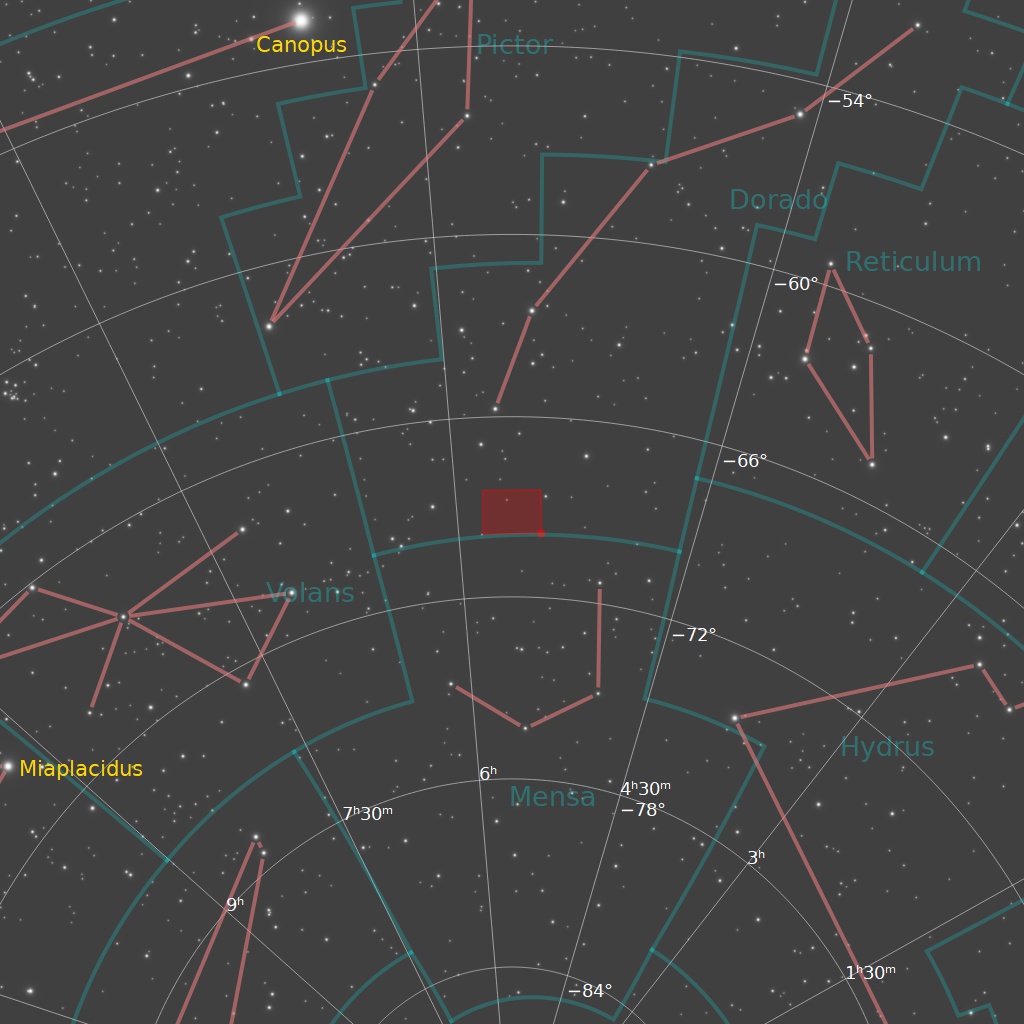
In 2005, I captured an image of the emission nebula NGC 2070 using a telephoto lens and my DSLR camera during a stay at the astrofarm Hakos in Namibia. Even with relatively simple equipment, the exceptionally dark southern skies and excellent transparency allowed this remarkable object to stand out clearly. The wide-field setup was particularly well suited to framing the broader environment of the nebula, capturing not only its bright core but also parts of the surrounding stellar field within the Large Magellanic Cloud.
NGC 2070 forms the central and most active region of the Tarantula Nebula, the largest and most luminous star-forming region in the Local Group of galaxies. Located at a distance of about 160,000 light-years, it is a giant H II region whose brightness is so intense that, if it were located at the distance of the Orion Nebula, it would cast visible shadows on Earth. This makes it a key object for studying extreme star formation processes in environments very different from those typically found in the Milky Way.
At the heart of NGC 2070 lies the extraordinary star cluster R136, which contains some of the most massive stars ever observed, with masses exceeding 100 solar masses. These stars produce enormous amounts of ultraviolet radiation, ionizing the surrounding hydrogen gas and generating the nebula’s intense red emission. In addition, powerful stellar winds and shock waves from supernova explosions carve out cavities, compress nearby gas, and trigger further waves of star formation.
The surrounding region is a complex network of glowing filaments, dark dust lanes, and expanding shells, all shaped by the feedback from these massive stars. Deep imaging reveals a highly structured environment where turbulence, radiation pressure, and gravity interact on multiple scales. Even in a relatively simple wide-field image, the richness of the region is evident, with countless stars embedded within a glowing web of gas.
Imaging NGC 2070 from Namibia was a particularly memorable experience, not only because of the pristine observing conditions but also because of the sheer astrophysical significance of the object. It represents a nearby analogue to the intense starburst regions seen in distant galaxies, allowing us to study processes that are fundamental to galaxy evolution.
Data calibration and registration were done with DeepSkyStacker, while the final image processing was completed in PixInsight.
The images were taken with the following equipment:
- Date 2005
- Location: Hakos, Namibia
- Telescope: Rubinar 500 mm
- Focal length [mm]: 500
- Focal ratio: 5.6
- Mount: Liebscher
- Camera: Canon 300 Da
- Filter: OSC
- Exposure time [min]: 10
- Resolution: 2.7″/px

Leave a reply