

NGC 1528 from my own „Sterntaucher“ observatory
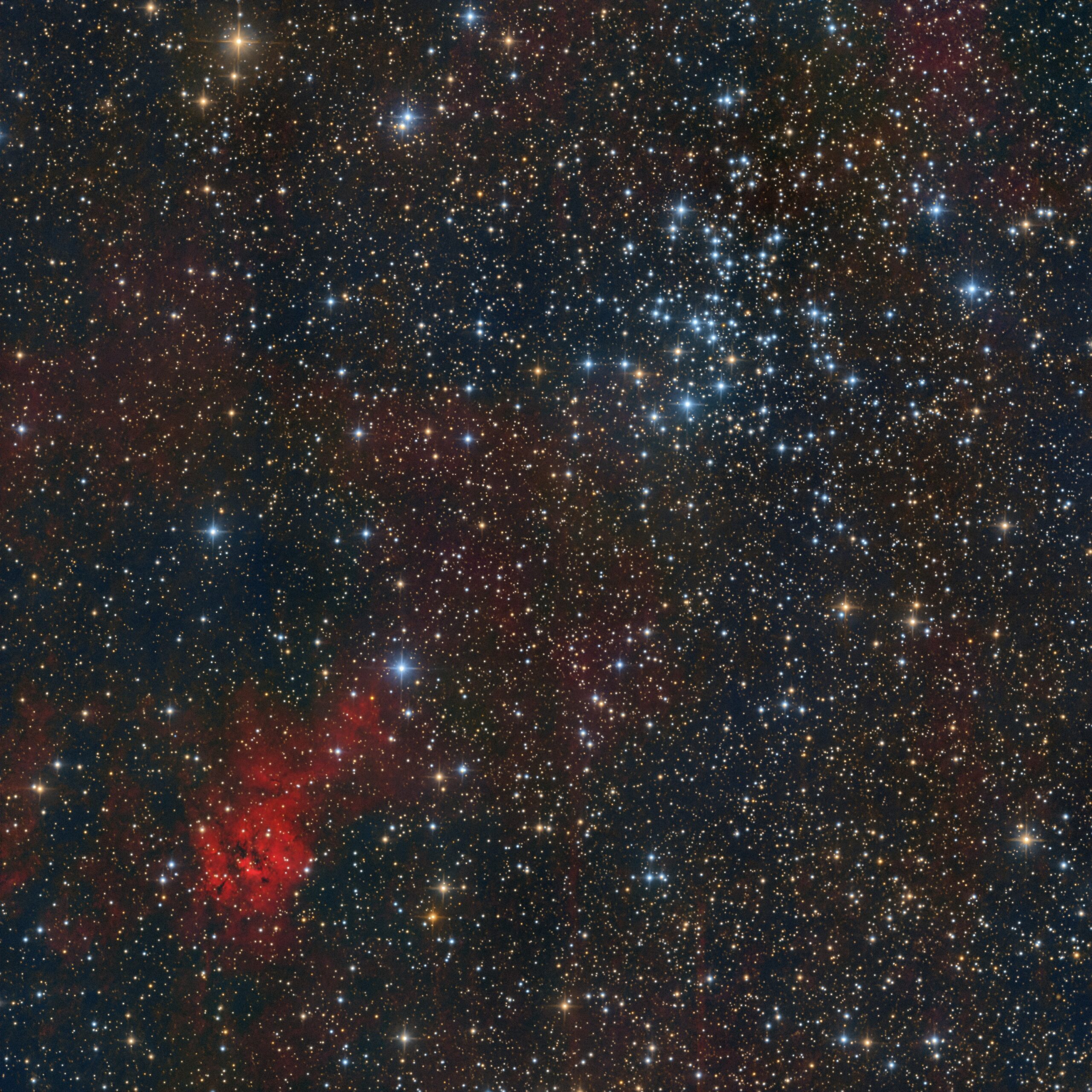
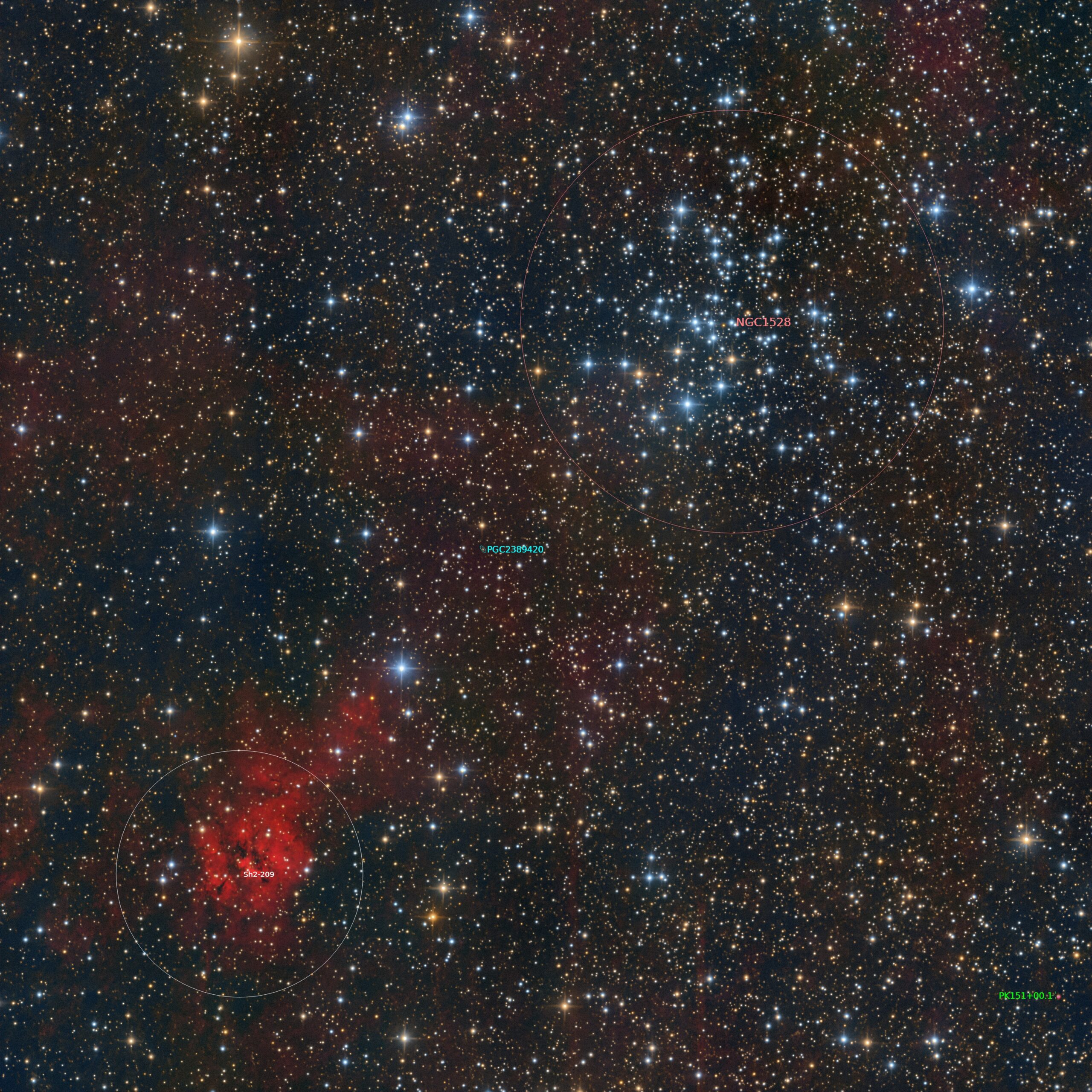
In 2024, I imaged the open cluster NGC 1528 together with the nearby emission nebula Sh2-209 using my CCD equipment. The field presents an interesting combination of stellar and nebular structures, with the rich star cluster embedded in a region of faint hydrogen emission.
NGC 1528 lies in the constellation Perseus and is a moderately rich open star cluster located roughly 2,500 light-years from Earth. It contains several dozen stars spread over a relatively large area of the sky and is estimated to be a few hundred million years old. The cluster is dominated by moderately bright stars and stands out nicely against the dense Milky Way background in this region.
Close to the cluster lies the faint emission nebula Sh2-209, a small H II region catalogued in the Sharpless catalog compiled by Stewart Sharpless. Such nebulae consist of clouds of interstellar hydrogen gas ionized by nearby hot stars. In deep images they appear as delicate red emission structures, tracing regions where recent or ongoing star formation has taken place within the Milky Way. The combination of the open cluster and the faint surrounding nebula makes this field an attractive deep-sky target, particularly for wide-field imaging.
Data calibration and registration and the final processing was done with PixInsight.
Here is an overview of the used equipment and the exposure times:
- Date: January 2024
- Location: Krefeld
- Telescope/Lense: 10″ Newton ohne Namen
- Focal length [mm]: 1000
- Focal ratio: 3.9
- Mount: Skywatcher EQ8
- Camera: Moravian G3 16200 FW
- Filter: Hα:R:G:B
- Exposure time [min]: 500:175:175:175
- Resolution: 1.24″/px




Leave a reply