

NGC 1514 from my own backyard
IIn 2011, I imaged the planetary nebula NGC 1514 from my backyard using my DSLR equipment and produced an RGB image from the collected data. A few years later, in 2014, I returned to this object and obtained additional luminance data with a CCD camera. By combining the higher-resolution luminance frames with the earlier DSLR color data, I was able to create a much more detailed LRGB image of the nebula.
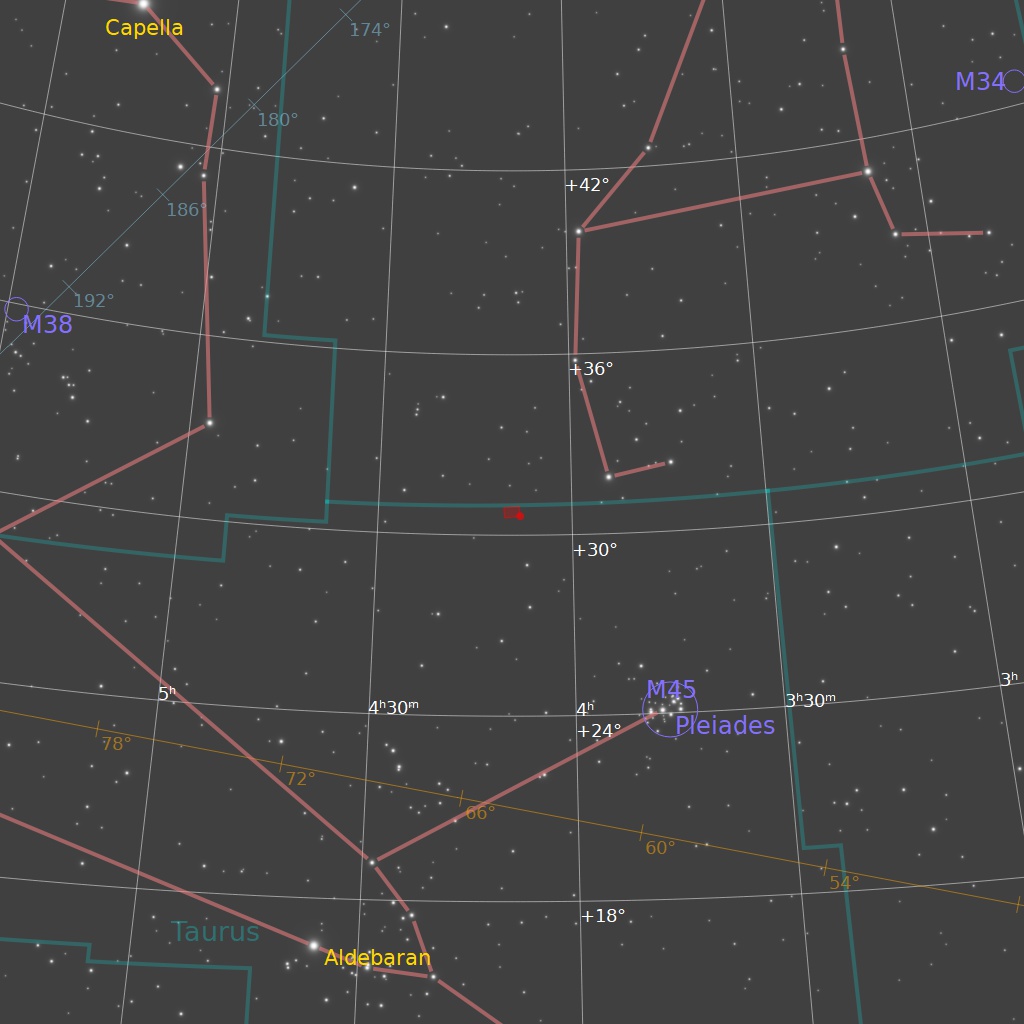
NGC 1514 lies in the constellation Taurus at a distance of roughly 1,500–3,000 light-years. The nebula was discovered in 1790 by William Herschel, who famously noted that it appeared as a faint nebulous atmosphere surrounding a bright star, one of the first clear cases where a star was seen embedded in a nebula.
The central object of this PN is particularly interesting: it is a binary star system, consisting of a hot compact star responsible for ionizing the nebula and a brighter A-type companion that dominates the visible light. The glowing shell surrounding the stars is the result of material expelled when the progenitor star reached the planetary nebula phase of stellar evolution. In deep images, NGC 1514 shows a soft, slightly elliptical structure with subtle internal arcs and shells produced by multiple mass-loss episodes during the late stages of the star’s life.
Because the bright central star can easily overwhelm the faint nebular glow, capturing both the stellar core and the delicate surrounding structure makes NGC 1514 a rewarding challenge for deep-sky imaging.
The data calibration and registration was done with DeepSkyStacker, the final image processing, were performed entirely in PixInsight. The result was as follows:
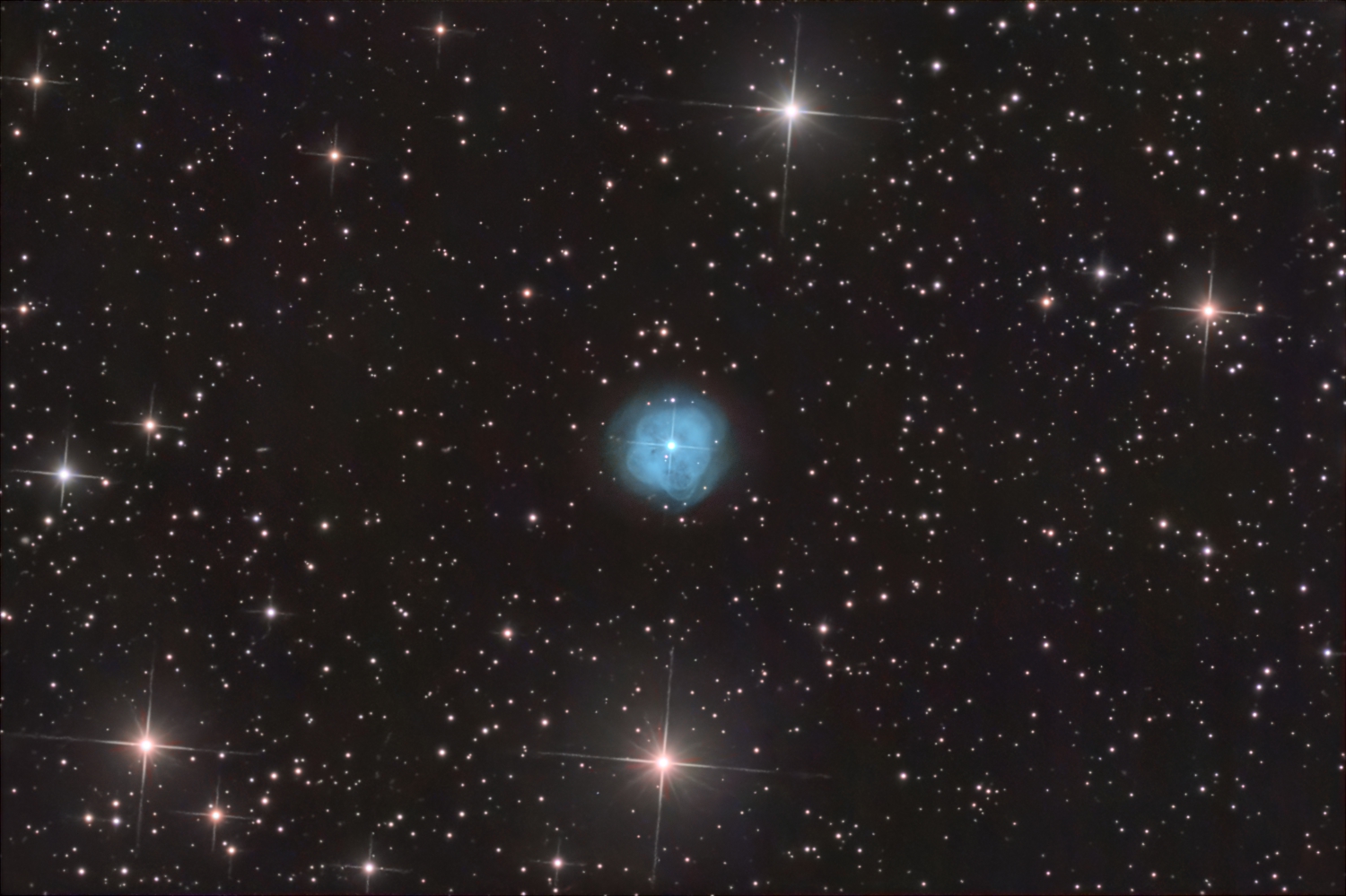
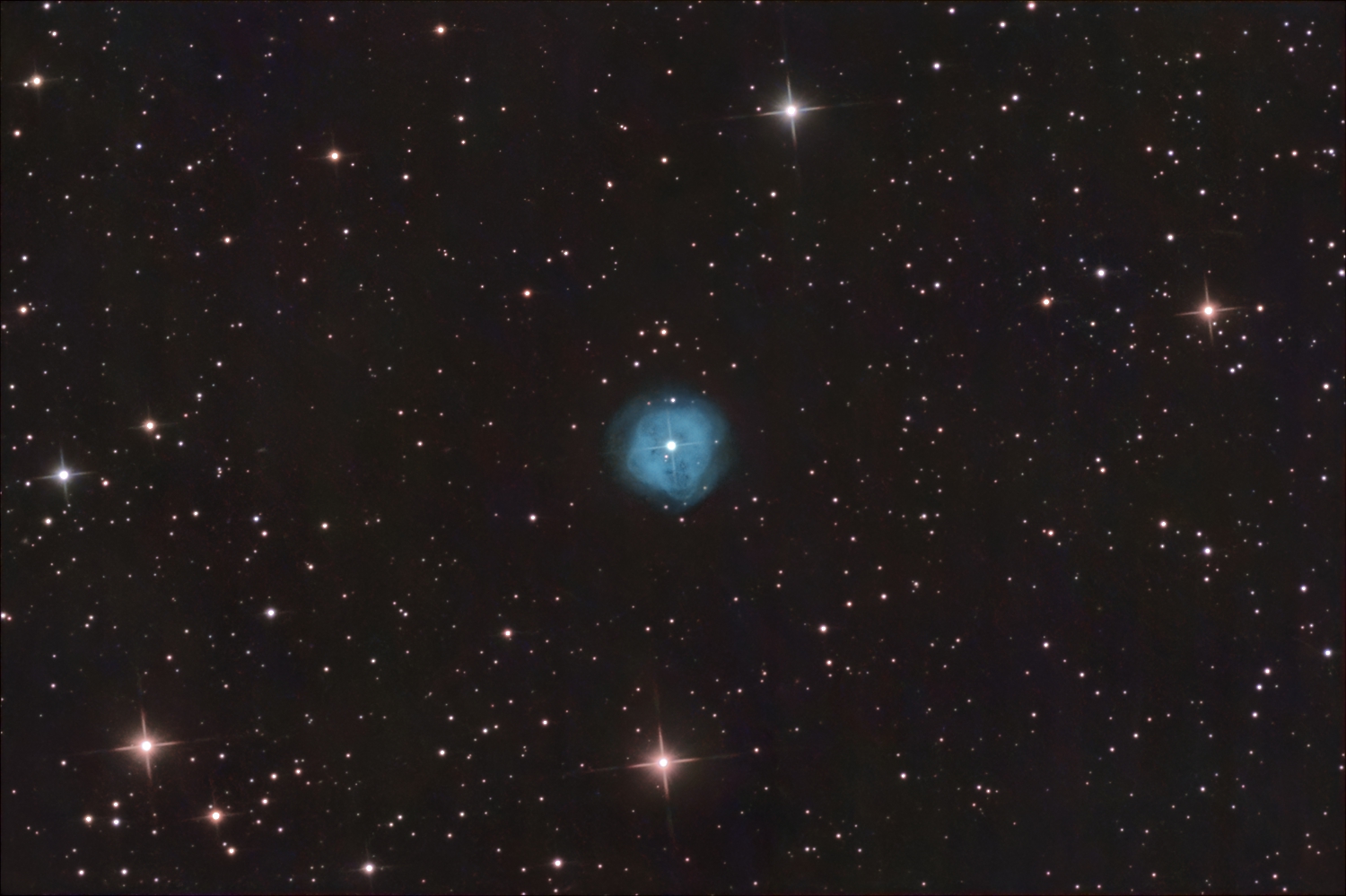
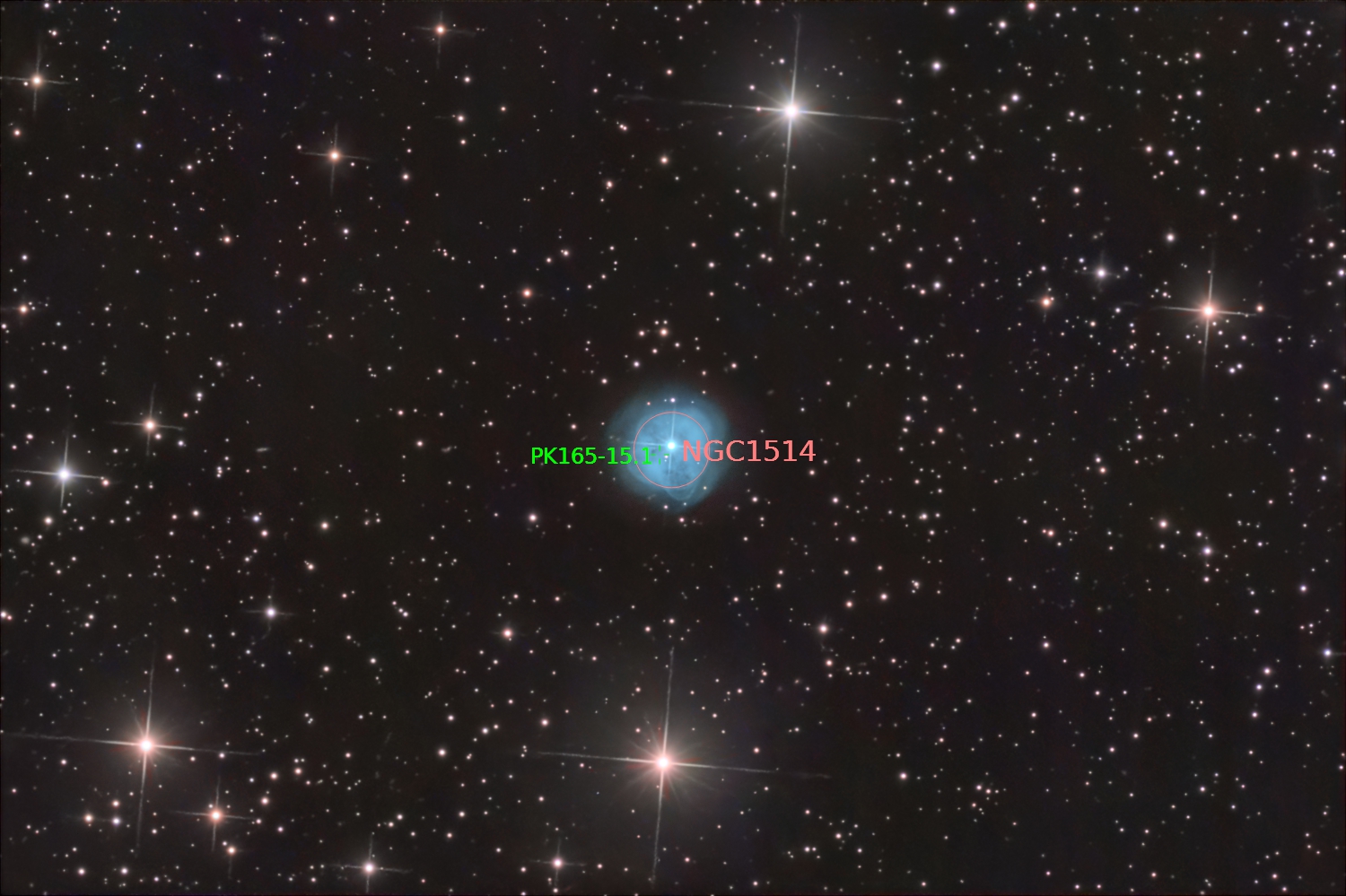
The images were taken with the following equipment:
- Date: 2011 – 2014
- Location: Krefeld, Germany
- Telescope: 10″ TS Newton – 10″ Newton ohne Namen
- Focal length [mm]: 1140 – 1000
- Focal ratio: 4.5 -3.9
- Mount: Skywatcher NEQ6 – Losmandy G11
- Camera: Canon 500Da – Moravian FW8300
- Filter: OSC – L
- Exposure time [min]: 375 – 198
- Resolution: 1.36″/px (bin 2)

Leave a reply