

NGC 1342 from my own „Sterntaucher“ observatory
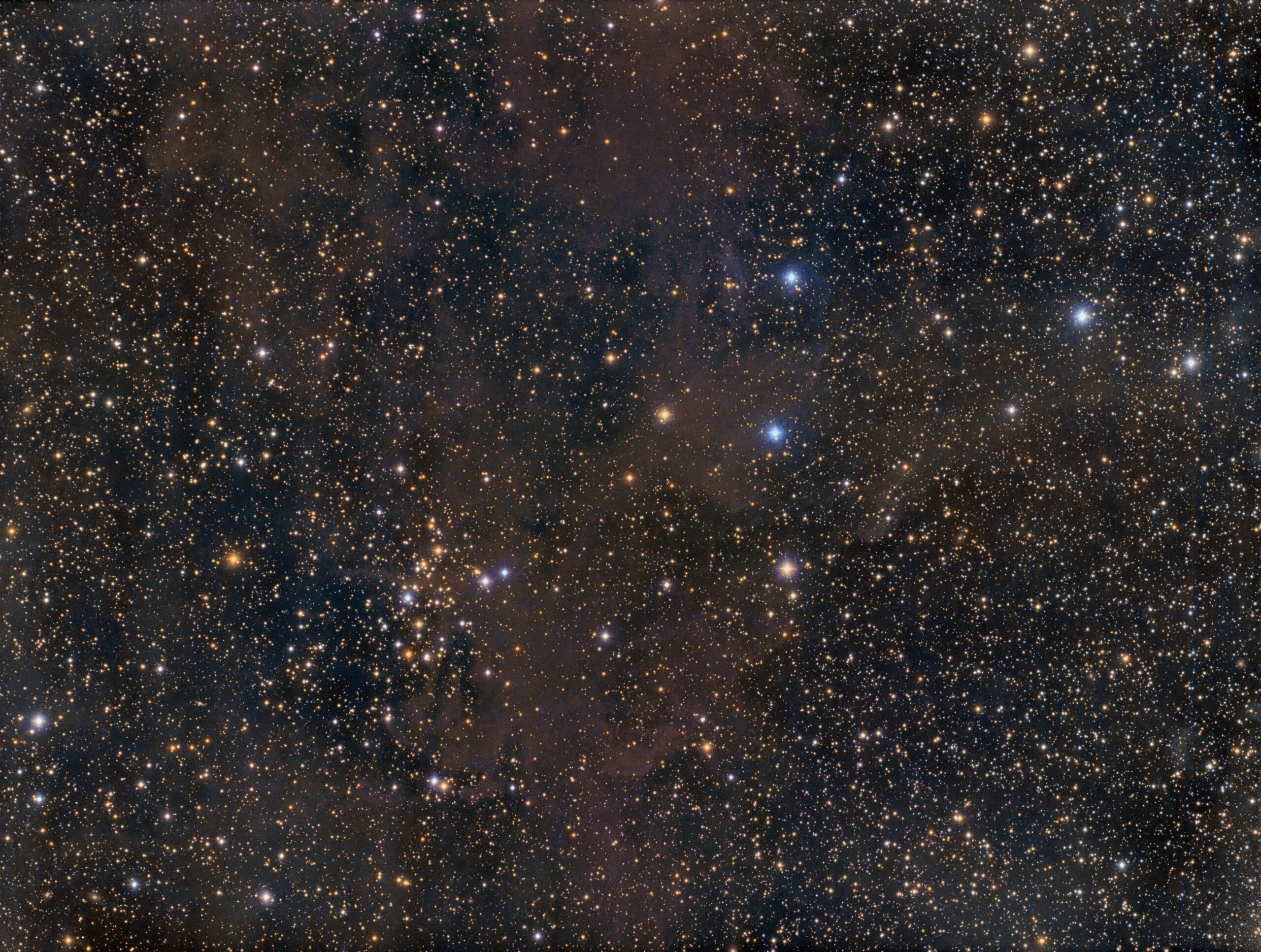
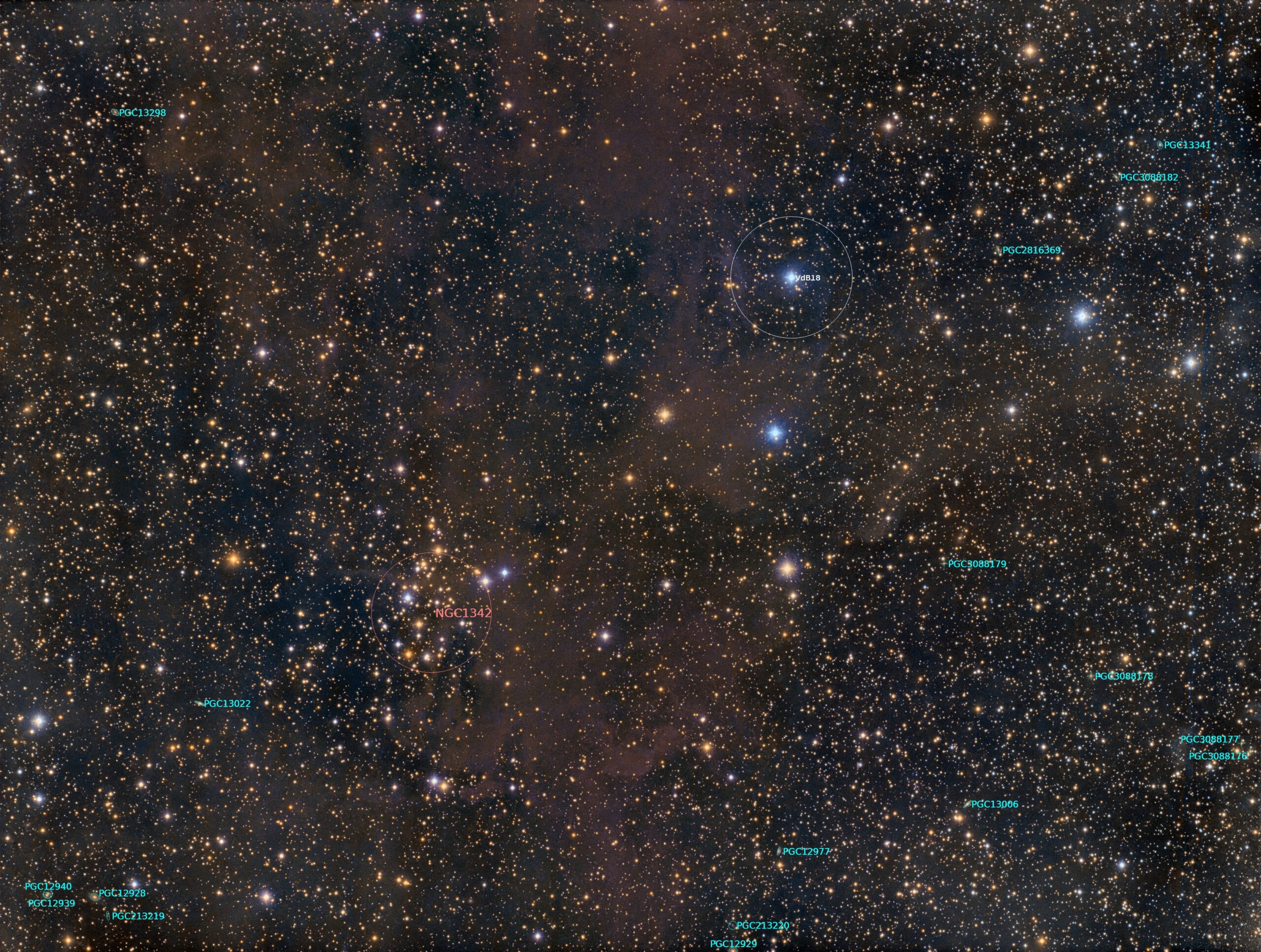
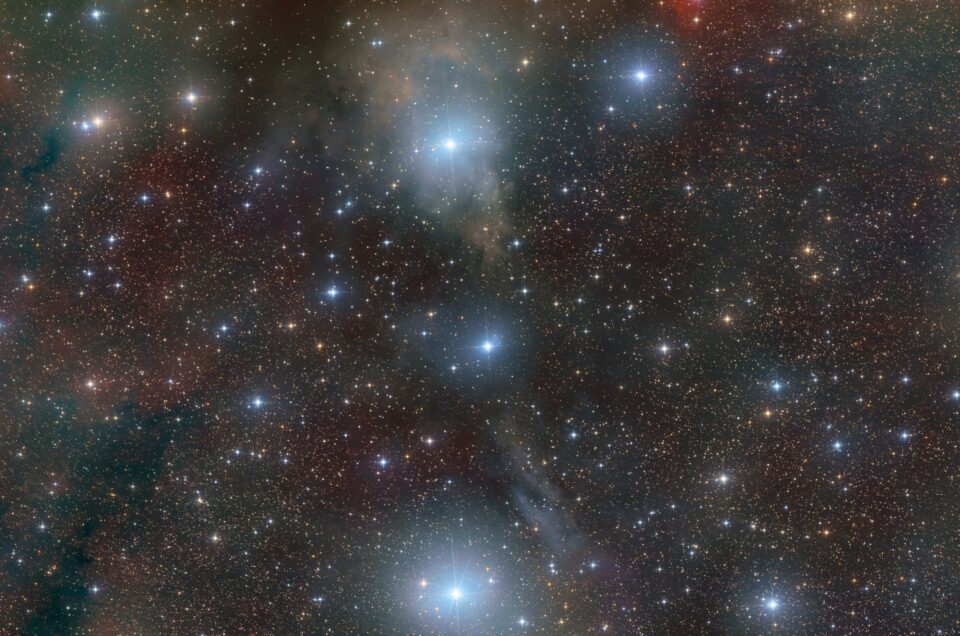
In 2019, I imaged the open cluster NGC 1342 from my observatory in Krefeld. The configuration consisted of a 10″ Newtonian telescope for the luminance data and a short apochromatic refractor for the RGB channels. To produce the final LRGB image, the RGB data were upscaled to match the higher-resolution luminance frames, allowing the detailed structure captured by the Newtonian to define the final image while the refractor provided accurate color information.
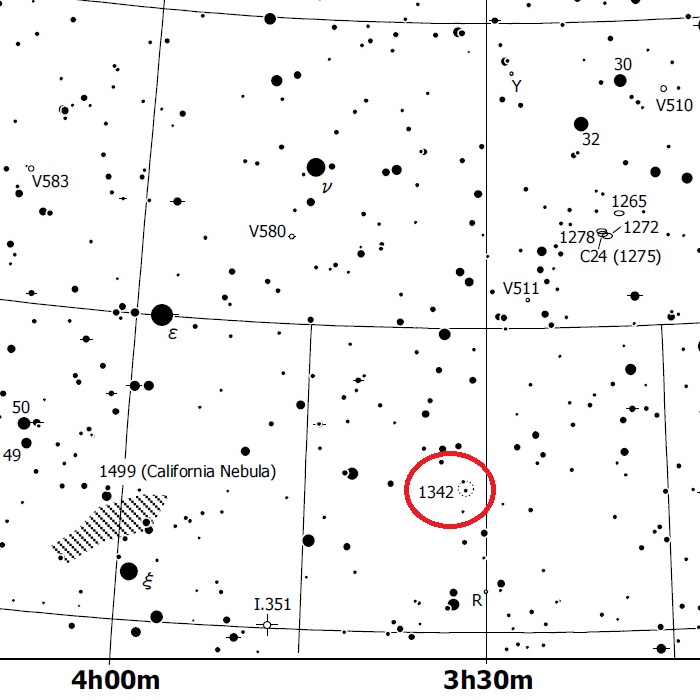
This cluster is located in the constellation Perseus at a distance of roughly 2,000 light-years. It is a relatively sparse open cluster with an estimated age of several hundred million years. Unlike very young clusters that still contain large numbers of hot blue stars, it shows a mixture of stellar types, including several evolved yellow and orange giants. This diversity in stellar colors makes the cluster particularly attractive for LRGB imaging, as the different stellar temperatures translate into subtle but beautiful color contrasts across the field.
Although not as dense as many famous open clusters, NGC 1342 stands out against the rich Milky Way background of Perseus, and deep imaging reveals numerous faint background stars that emphasize the cluster’s loose and scattered structure.
The data calibration, registration, and final image processing were all performed in PixInsight.
Here is an overview of the used equipment and the exposure times:
- Date: October and November 2019
- Telescope/Lense: 10″ Newton ohne Namen – TSQ-65ED Apo
- Focal length [mm]: 1000 – 400
- Focal ration: 3.9 – 6.5
- Mount: Skywatcher EQ8
- Filter: CLS – R:G:B
- Exposure time [min]: 360 – 180:130:180
- Resolution: 1.11″/px – 2.95″/px

Leave a reply