

NGC 104 – (47 Tucanae)
I imaged NGC 104 (47 Tucanae) twice, both times under the superb southern skies of Namibia. My first attempt was in 2005 during a stay at the Astrofarm Hakos, where I used a 500 mm telephoto lens and my DSLR camera to capture the cluster in a wide-field context. Three years later, in 2008, I revisited the object from the Astrofarm Tivoli, this time with a 500 mm semi-APO refractor, again paired with a DSLR. Despite the relatively modest equipment, both sessions benefited enormously from Namibia’s dark, transparent skies, allowing the dense core of the cluster to be recorded with surprising depth and clarity.
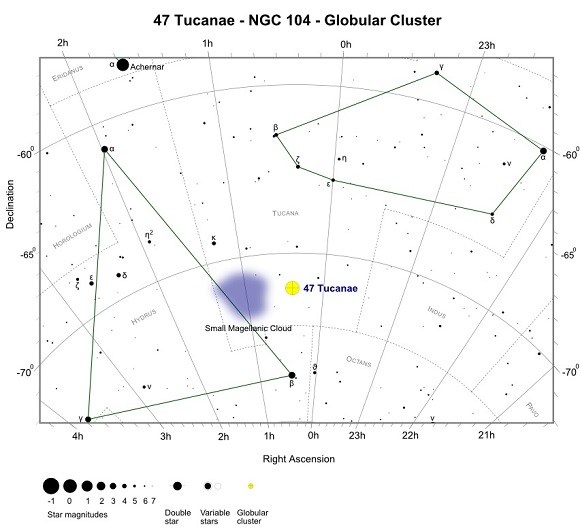
From a scientific standpoint, NGC 104 is one of the most remarkable globular clusters in the entire sky. Located in the constellation Tucana, it is the second-brightest globular cluster after Omega Centauri and one of the closest, at a distance of about 13,000 light-years. Its mass—estimated at well over 10⁶ solar masses—makes it one of the most massive clusters in the Milky Way.
47 Tuc is also rich in exotic stellar populations, including numerous millisecond pulsars, blue stragglers, and X-ray binaries, all of which testify to the intense stellar interactions occurring in its extremely dense core. Its location near the Small Magellanic Cloud adds an appealing visual context, making it a favorite target for both astrophotographers and professional astronomers.
Data calibration and registration were carried out using DeepSkyStacker, while the final image processing was performed in PixInsight.
The result was as follows:
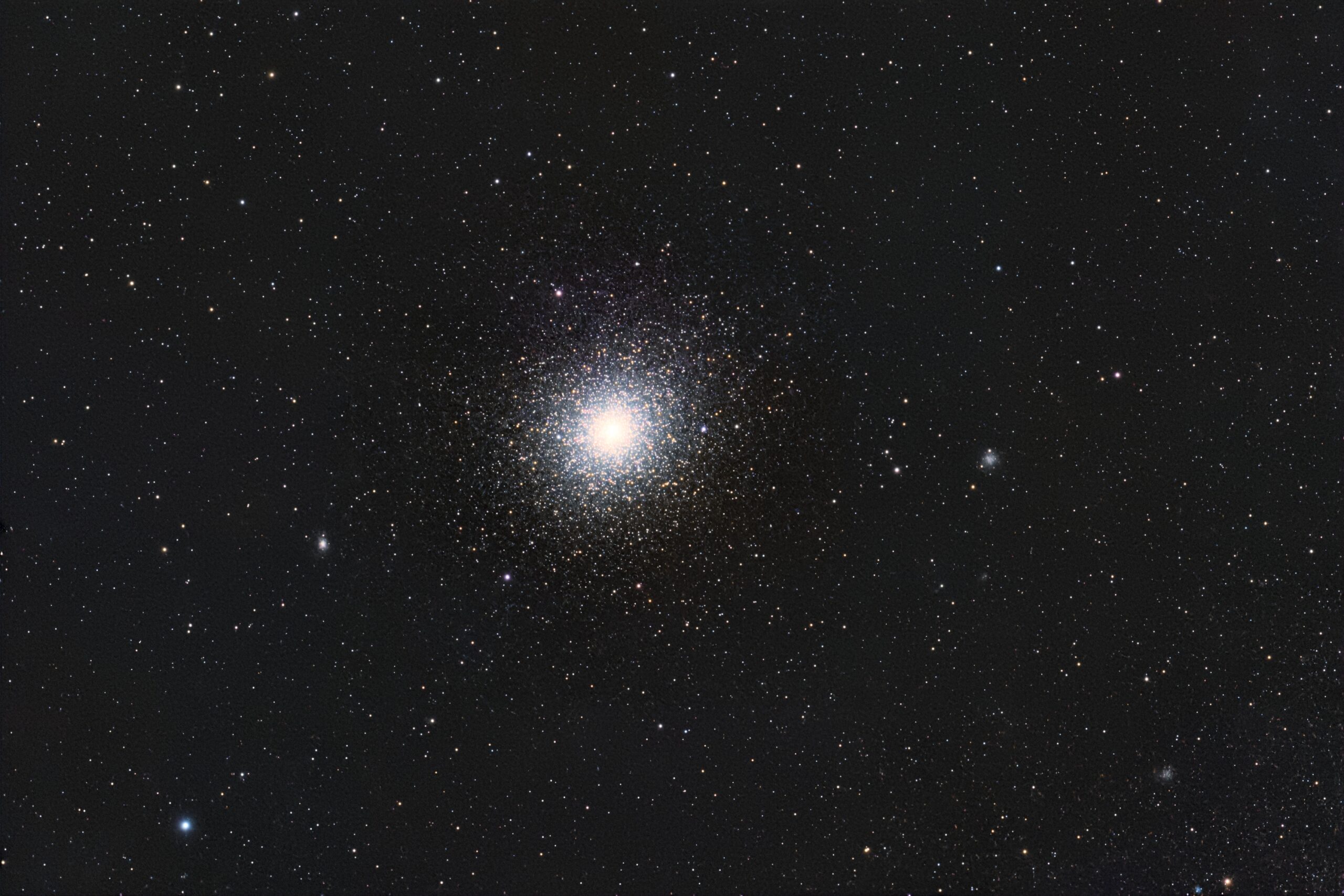
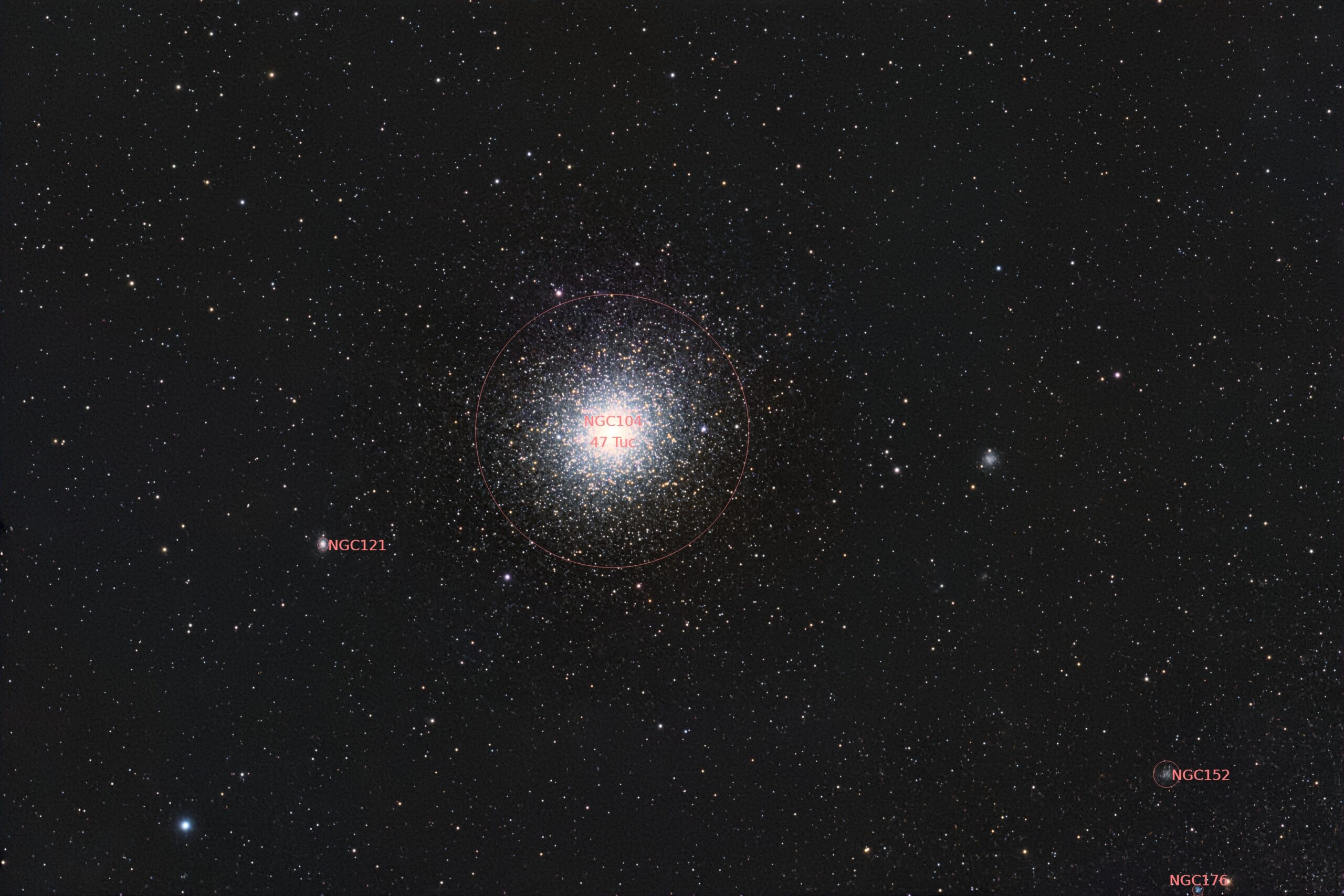
The images were taken with the following equipment:
- Date: 2008
- Location: Tivoli, Namibia
- Telescope: Pentax 75
- Focal length [mm]: 500
- Focal ratio: 6.7
- Mount: Vixen Atlux
- Camera: Canon 300 Da
- Filter: OSC
- Exposure time [min]: 16
- Resolution: 3.88″/px
For the 2006 data the calibration and registration was done with DeepSkyStacker, the the final processing was done with PixInsight. The result was as follows:
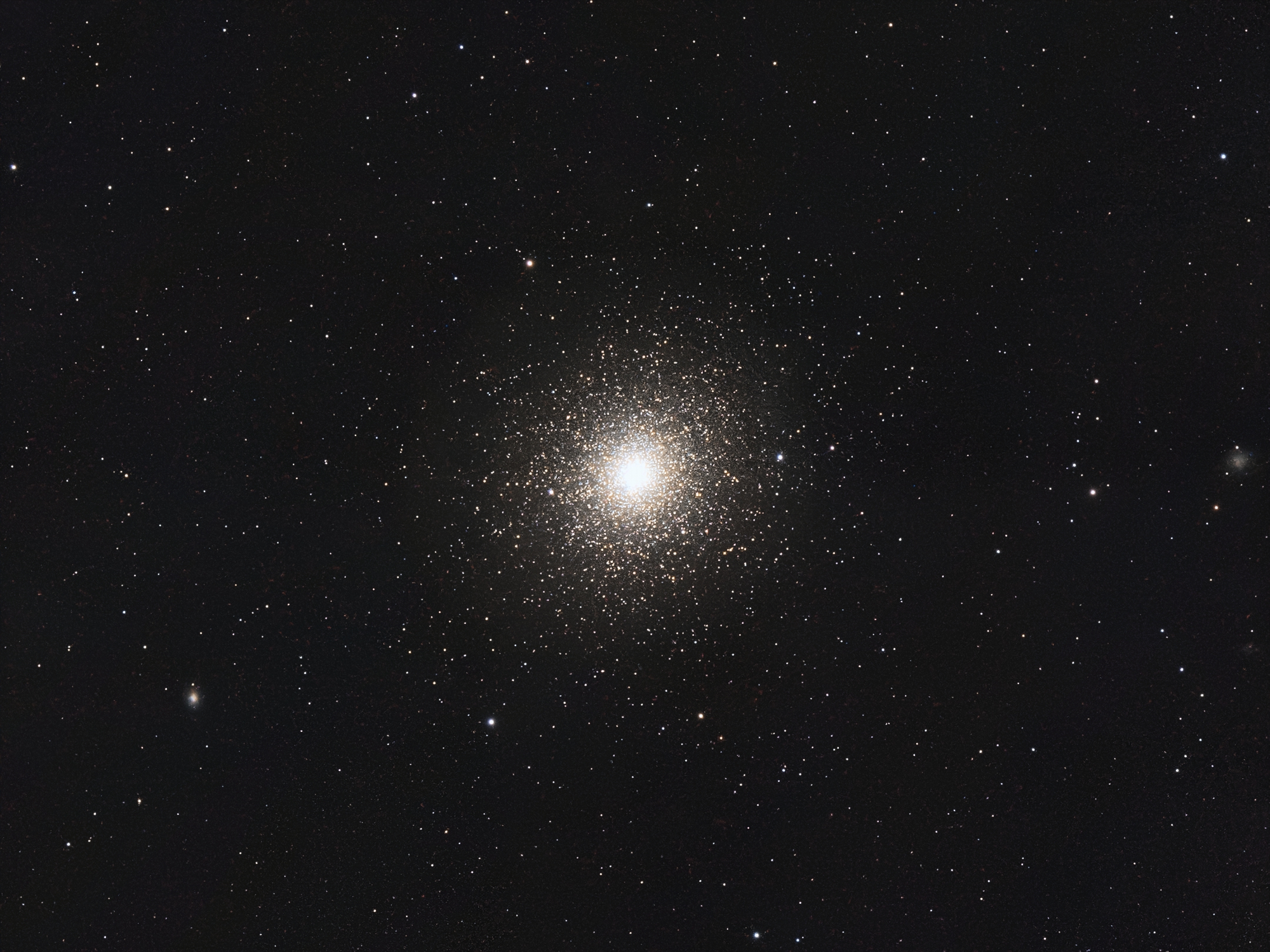
The images were taken with the following equipment:
- Date: 2005
- Location: Hakos, Namibia
- Telescope: Rubinar 500mm lens
- Focal length [mm]: 500
- Focal ratio: 5.6
- Mount: Liebscher
- Camera: Canon 300 Da
- Filter: OSC
- Exposure time [min]: 10
- Resolution: 2.7″/px

Leave a reply