

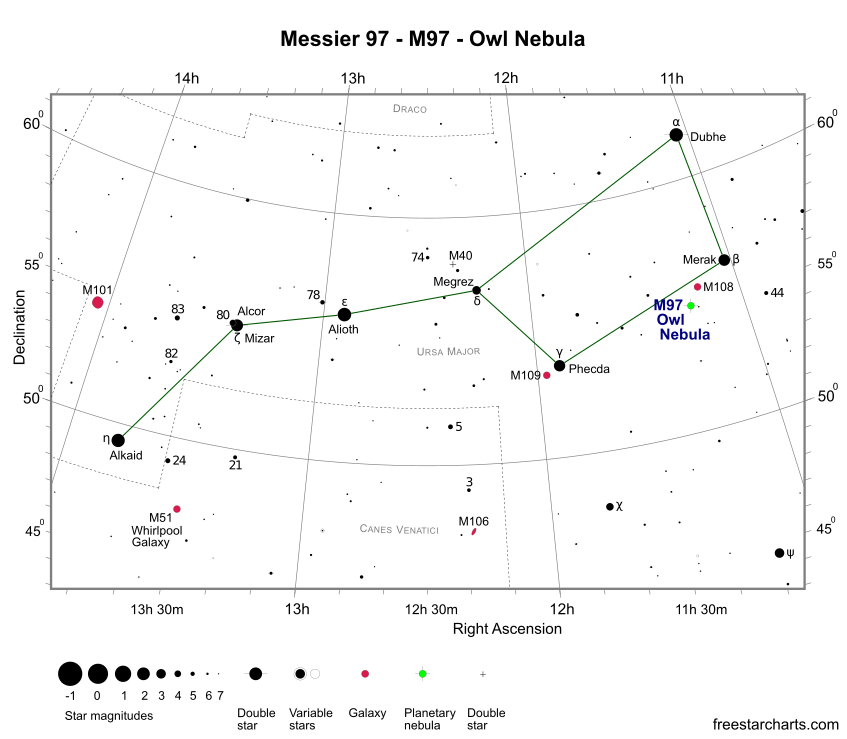
Messier 97 (NGC 3587) from my new „Jade“ observatory
I imaged Messier 97—the Owl Nebula—several times over the years, each time with improved equipment and a deeper look into its complex structure. My first attempt dates back to 2005, using my early DSLR setup from my backyard. Despite the limitations of the equipment, the characteristic dual “eyes” of the nebula were already faintly recognizable. In 2014, I revisited M97 with a larger telescope and my first CCD camera, which provided a significant improvement in resolution and allowed a more detailed representation of the faint outer shell.
Most recently, in 2025, I imaged M97 again from my Jade Observatory, this time focusing solely on luminance data to capture the fine structures in the nebula’s central regions. I later combined this high-resolution L-data with my older RGB exposures to produce a balanced, detailed final result.
Scientifically, Messier 97 (NGC 3587) is one of the most famous planetary nebulae in the northern sky. Located about 2,600 light-years away in the constellation Ursa Major, it spans roughly 2 light-years and is estimated to be around 8,000 years old. The nebula’s iconic “owl-like” appearance is caused by variations in gas density created by the dying central star, which has expelled multiple shells of material during its late evolutionary stages.
Deep imaging reveals an extended, extremely faint outer halo, evidence of earlier mass-loss phases. At its center lies a hot white dwarf, the remnant core that illuminates the surrounding gas. M97’s layered structure and low surface brightness make it an excellent target for long-exposure imaging and a rewarding object to revisit over the years as equipment and techniques improve.
Data calibration, registration and the final processing was done with PixInsight. The result was as follows:
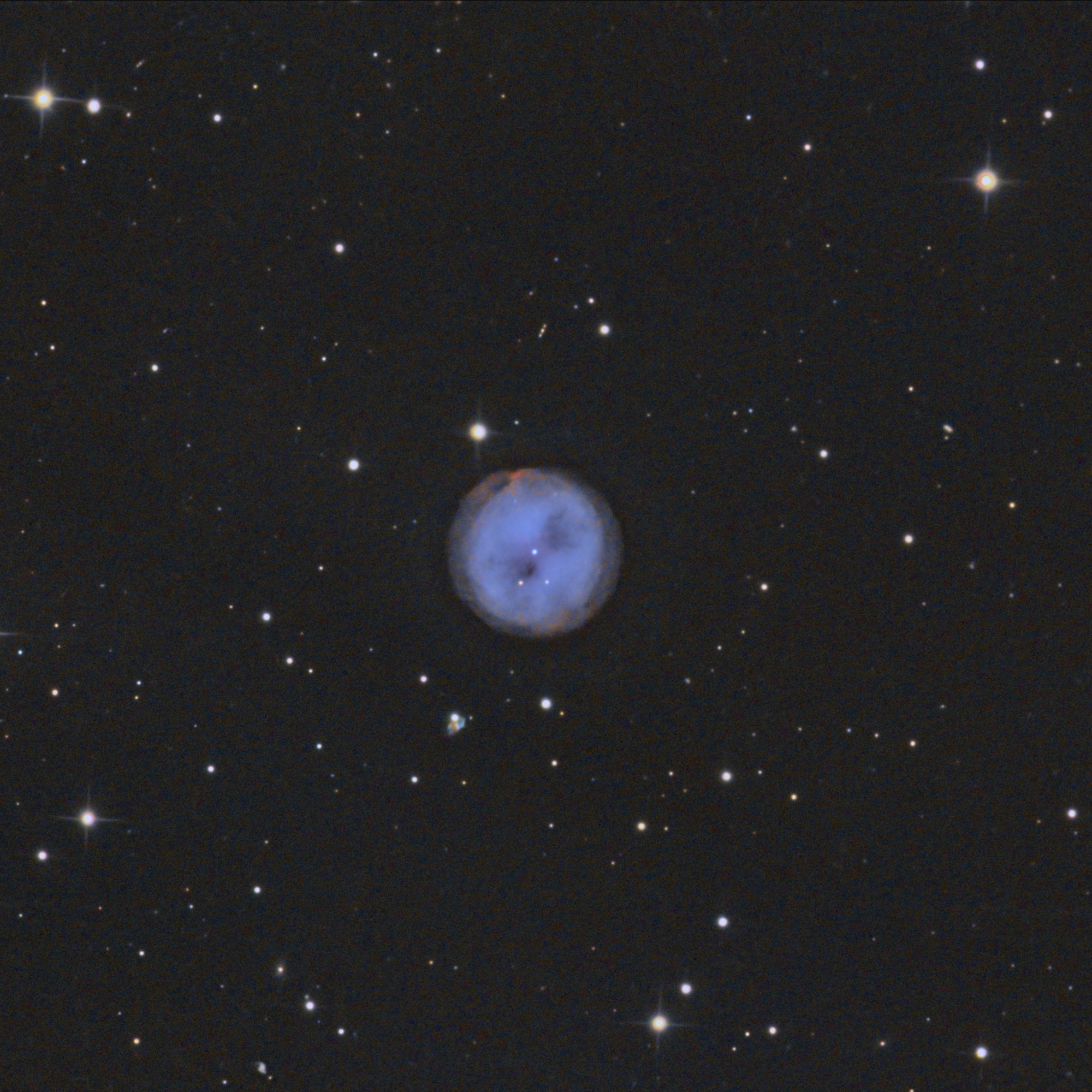
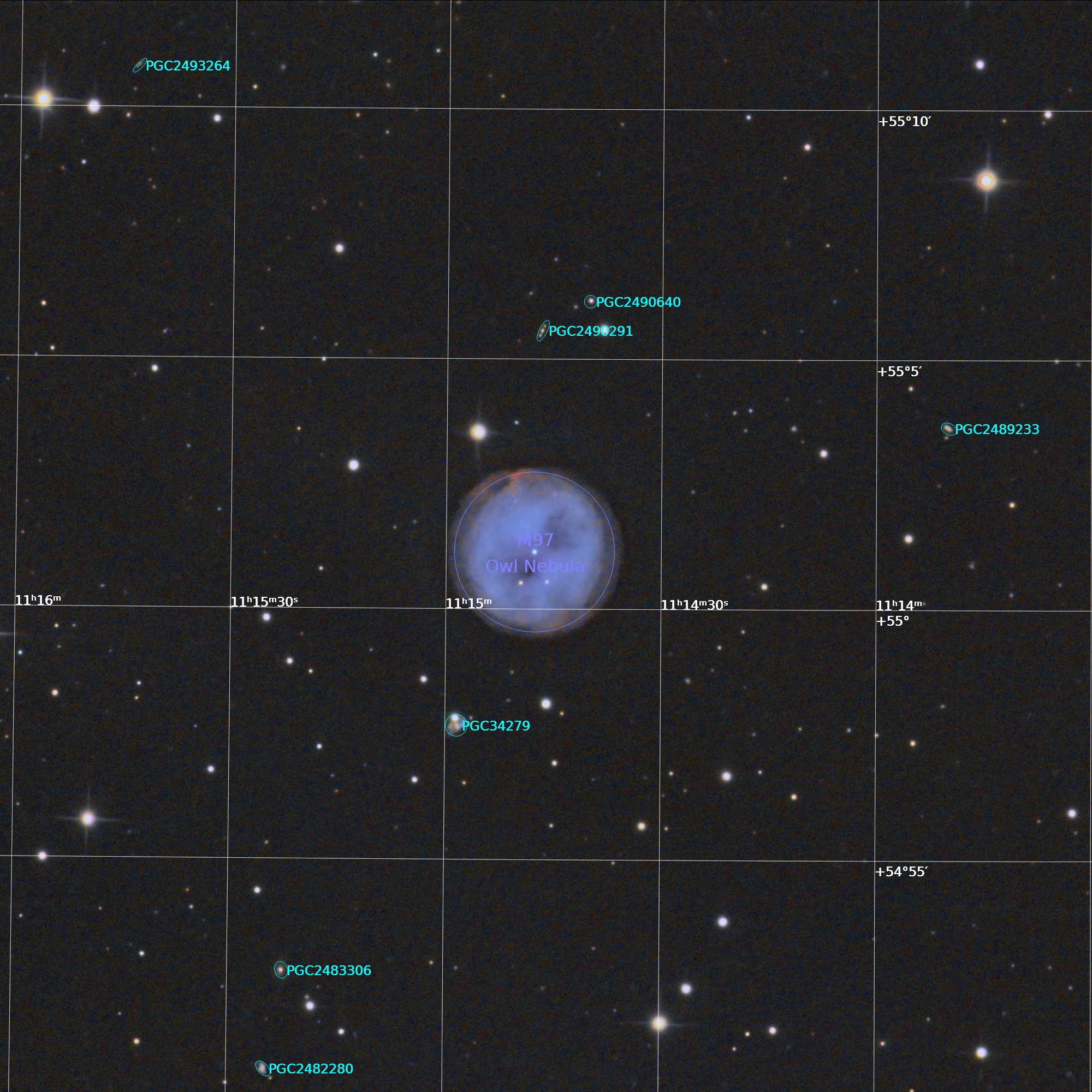
Here is an overview of the used equipment and the exposure times:
- Date: March 2025
- Location: Varel
- Telescope/Lense: 6″ Lacerta Newton
- Focal length [mm]: 600
- Focal ratio: 4
- Mount: Skywatcher EQ 8
- Camera: Lacerta Deepsky 2600 M
- Autoguiding: Off-Axis with ZWO Asi 120 MM Mini
- Filter: L
- Exposure time [min]: 96
- Resolution: 0.66″/px (2* Drizzle)
The 2014 data calibration, registration and the final processing was performed with PixInsight. The result was as follows:
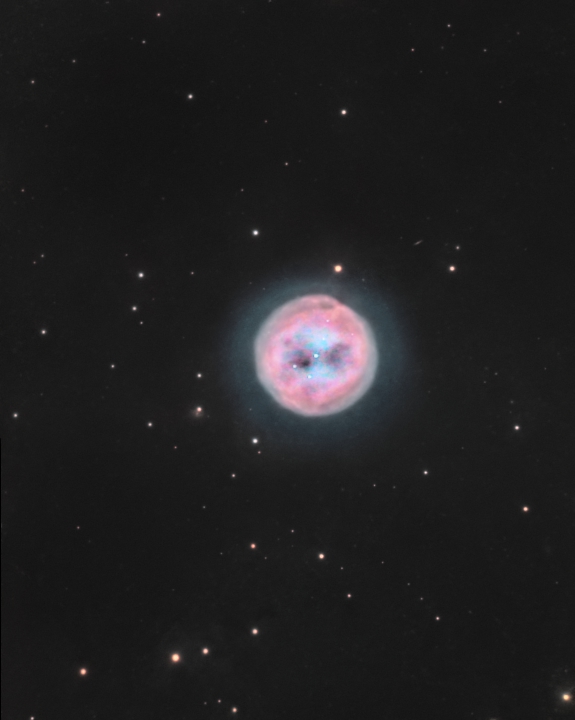
Here is an overview of the used equipment and the exposure times:
- Date: 2014
- Location: Krefeld
- Telescope/Lense: 10″ Newton ohne Namen
- Focal length [mm]: 1000
- Focal ratio: 3.9
- Mount: Losmandy G11
- Camera: Moravian FW8300
- Autoguiding: no
- Filter: Hα:[OIII]
- Exposure time [min]: 330:260
- Resolution: 1.74″/px
The 2005 data calibration and registration was done with DeepSkyStacker, the final processing was performed with PixInsight. The result was as follows:
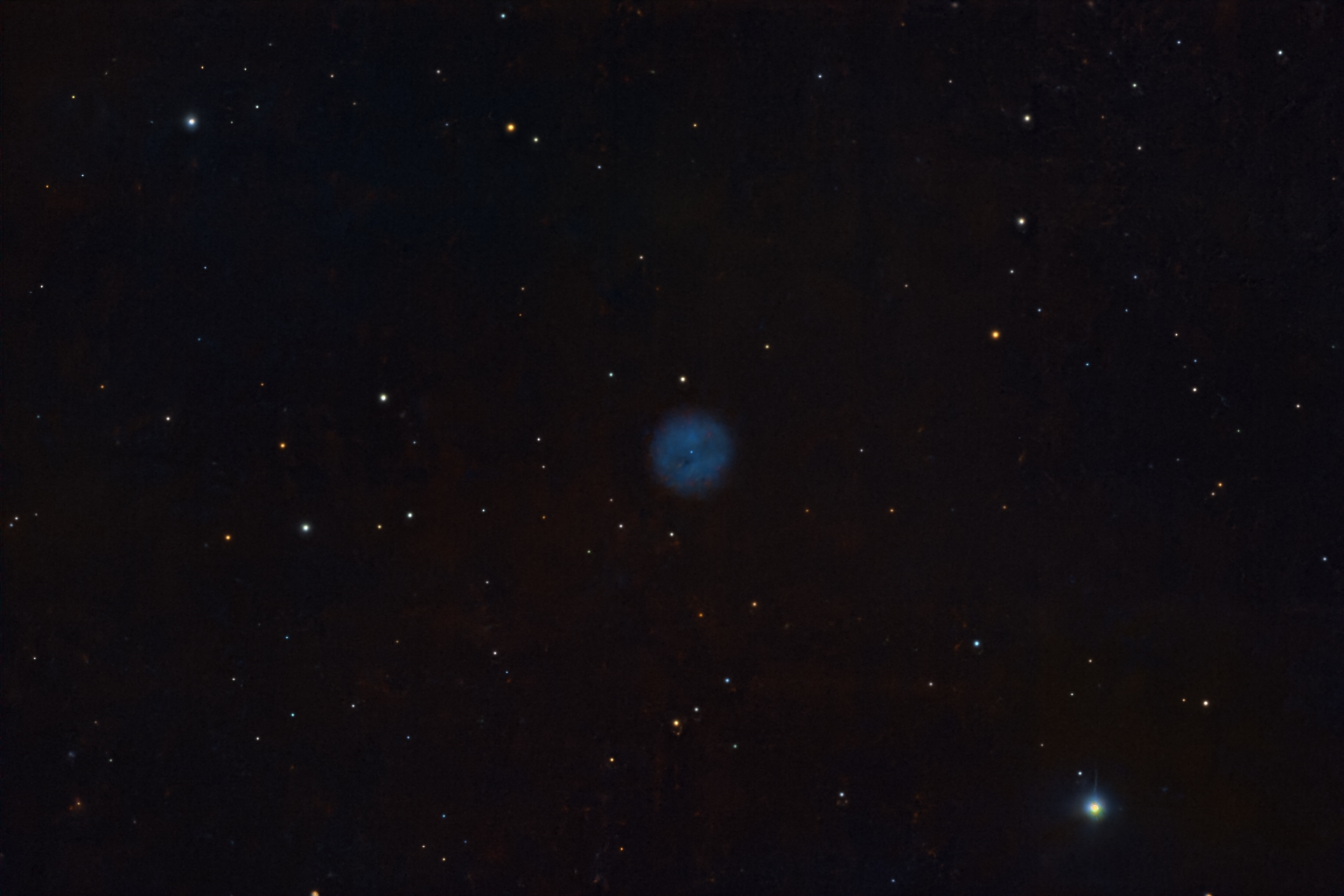
Here is an overview of the used equipment and the exposure times:
- Date: 2005
- Location: Krefeld
- Telescope/Lense: 8″ GSO Newton
- Focal length [mm]: 800
- Focal ratio: 4
- Mount: Vixen GP-DX
- Camera: Canon 300Da
- Autoguiding: no
- Filter: no
- Exposure time [min]: 9
- Resolution: 1.89″/px

Leave a reply