

Messier 107 (NGC 6171) – VdS Remote Hakos
As a member of the VdS Remote Observatory Group, I again had the opportunity in 2024 to make use of the excellent facilities at Hakos, Namibia. For my imaging project of Messier 107 (M107), I employed both telescopes of the VdS remote observatory simultaneously, combining the strengths of the larger instrument for high-resolution detail with the wide-field capability of the second system. This dual-setup approach provides a deeper and more complete dataset than would be possible with a single telescope alone.
Scientifically, Messier 107 is one of the more loosely concentrated globular clusters in the Messier catalogue, classified as Shapley–Sawyer class X. Located in the constellation Ophiuchus at a distance of roughly 20,000 light-years, M107 is part of the Milky Way’s inner halo population. Its relatively low central concentration allows individual stars to be distinguished more easily, revealing its rich population of red giants, horizontal-branch stars, and a notable fraction of variable stars, including RR Lyrae types.
Spectroscopic studies show that M107 is moderately metal-poor, with a metallicity around [Fe/H] ≈ –1.0, placing it among the younger and more metal-rich halo clusters—a characteristic that may hint at a complex formation history or possible accretion from a dwarf galaxy in the early evolution of the Milky Way.
The powerful combination of Namibian skies, long integration time, and dual-instrument data produced a clean, deep result that highlights both the resolved stellar population and the subtle outer halo of this often overlooked globular cluster.
All data calibration, registration, and final processing were performed in PixInsight.
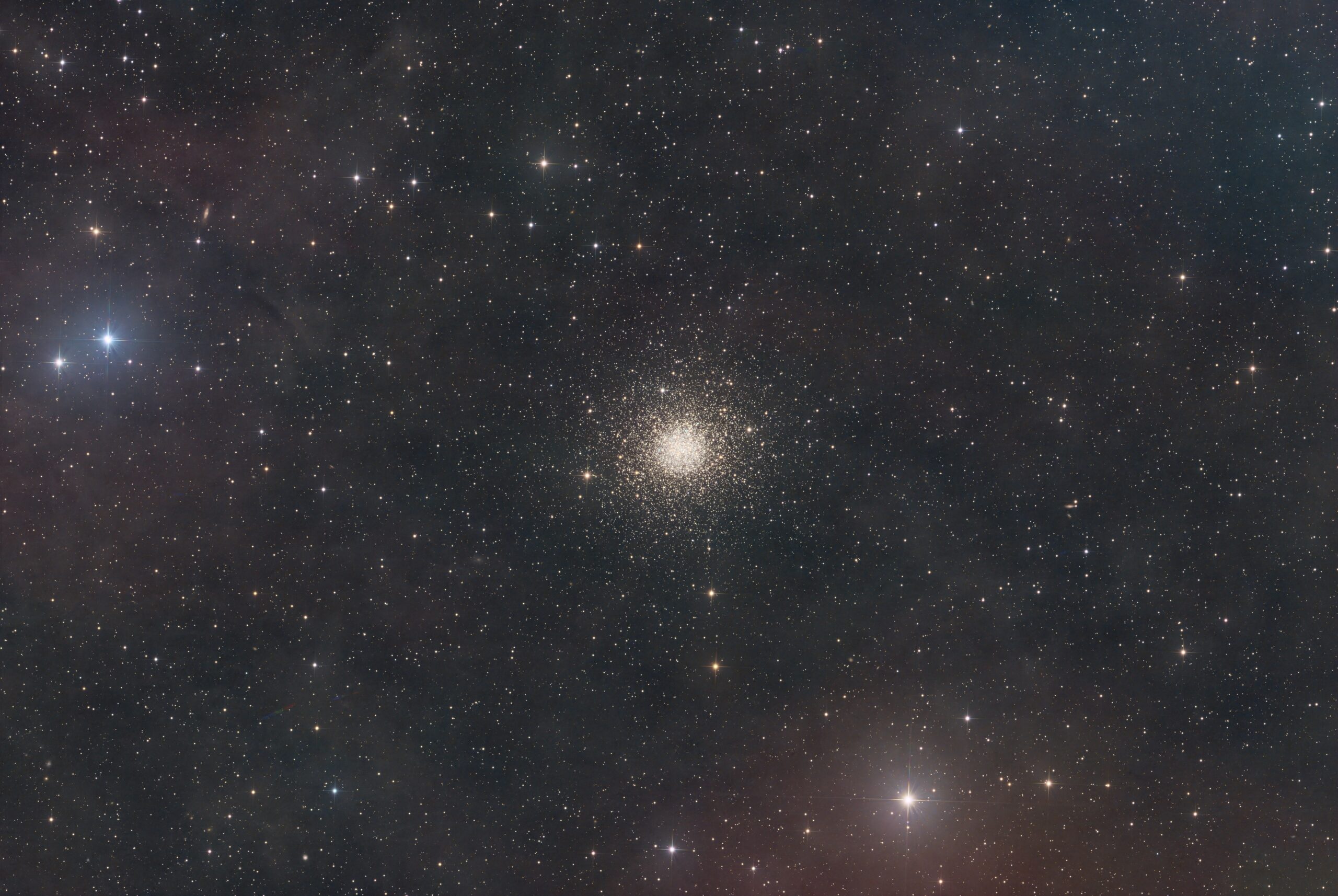

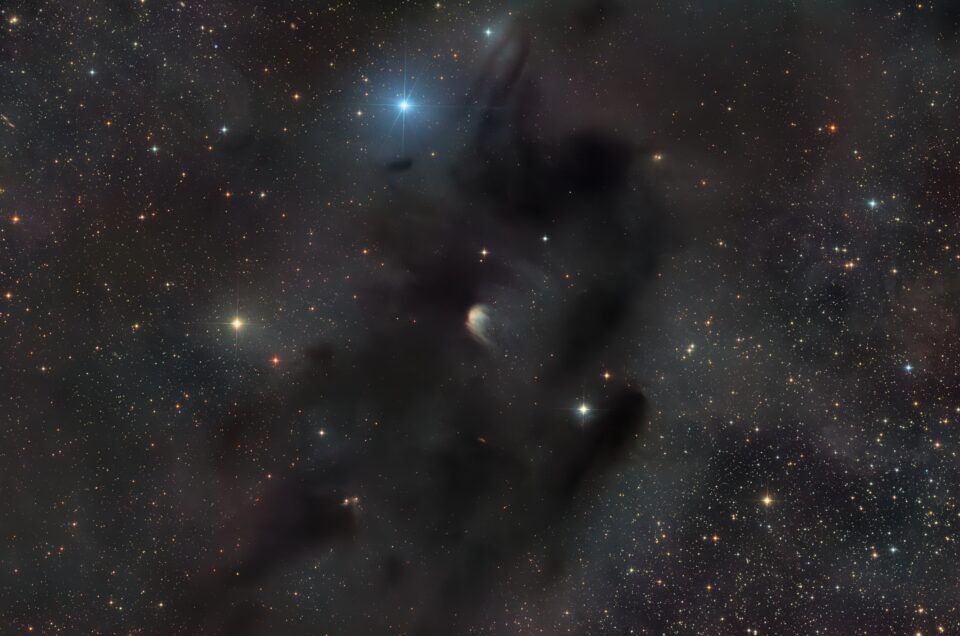
The images were taken with the following equipment:
- Date: 2024
- Location: Hakos, Namibia
- Telescope/Lens: TS 12“ Newton-Astrograph
- Focal length [mm]: 1391
- Focal ratio: 4.56
- Mount: 10Micron GM3000
- Camera: Lacerta DeepSkyPro2600 (mono)
- Filter: RGB
- Exposure time [min]: 65:65:65
- Resolution: 0.56″/px
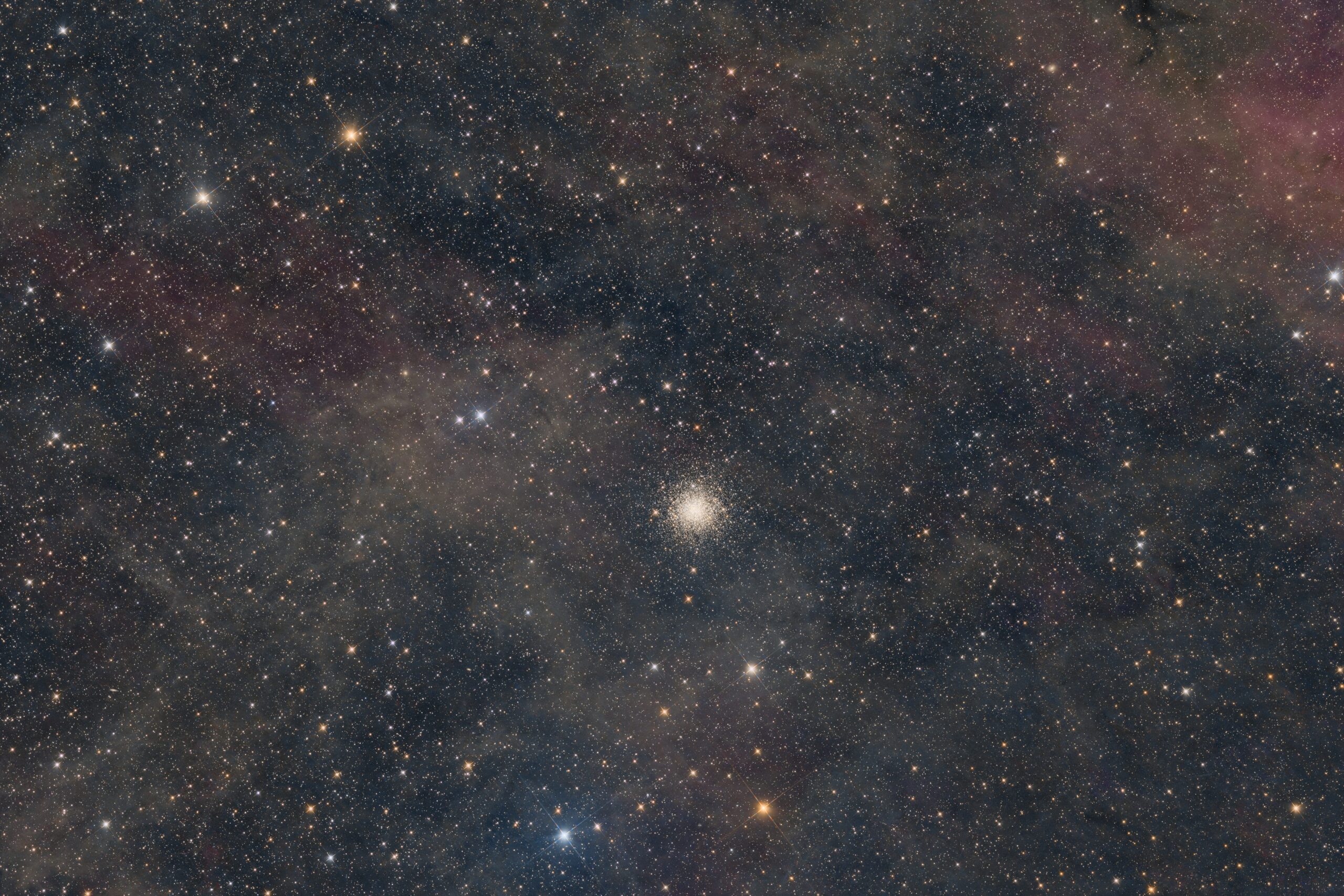

In the image you can find many quasars. The most distant of them is:
PS1 J163118.21-124308.6 with a redshift of 3.455.
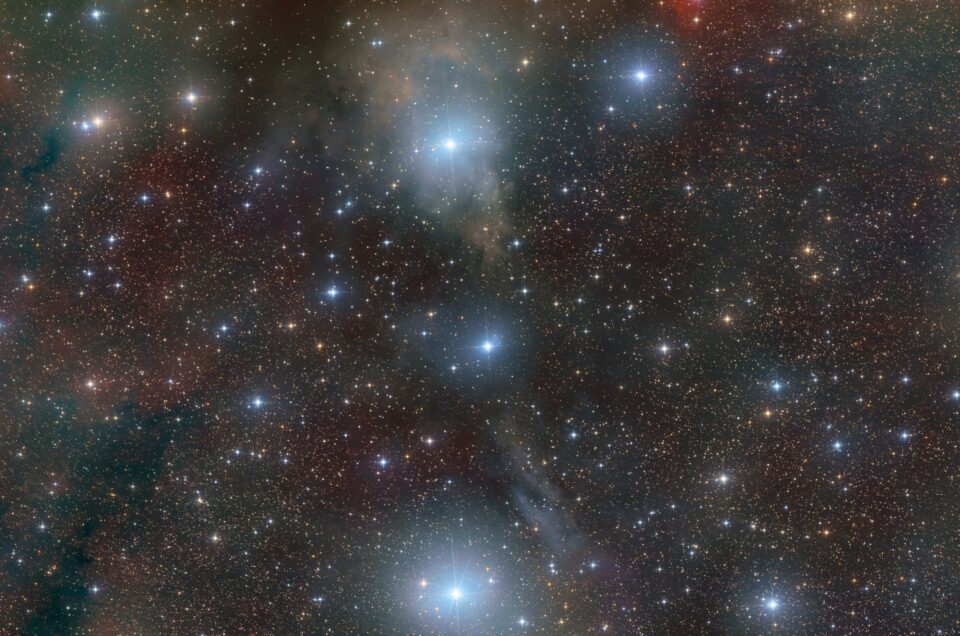
The images were taken with the following equipment:
- Date: 2024
- Location: Hakos, Namibia
- Telescope/Lens: Takahashi Epsilon-160ED
- Focal length [mm]: 535
- Focal ratio: 3.3
- Mount: 10Micron GM3000
- Camera: Lacerta DeepSkyPro2600 C
- Filter: Clear
- Exposure time [min]: 159
- Resolution: 1.45″/px

Leave a reply