

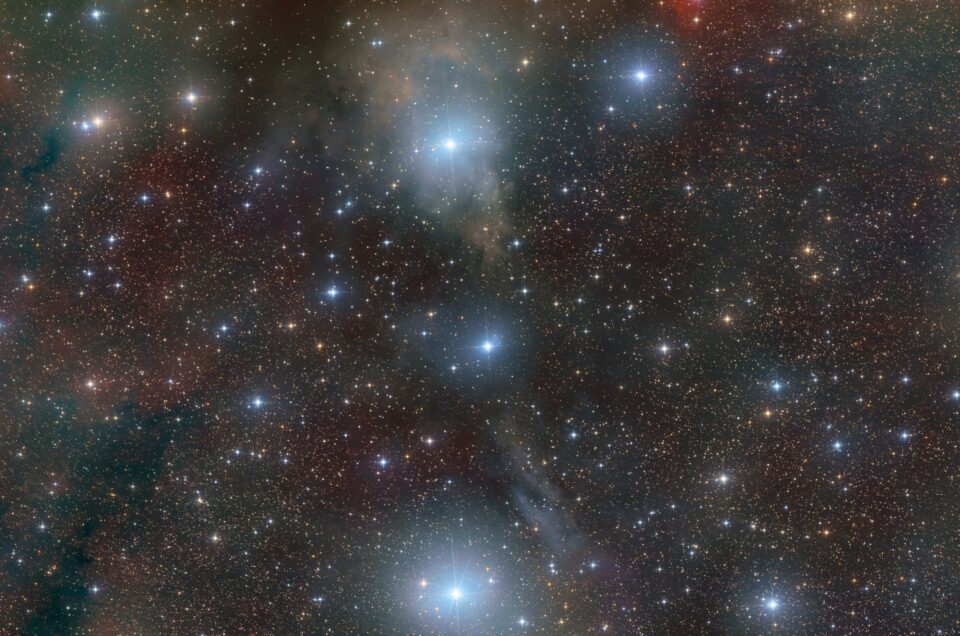
LDN 1667
From time to time, I obtain data sets from remote observatories around the world. One of my favorite providers is Telescope Live, which operates a network of advanced telescopes in Chile, Australia, and Spain, offering access to pristine southern skies and professional-grade data.
One of the data sets I received featured LDN 1667, a dark nebula located in the constellation Canis Major. This region is part of a complex network of interstellar dust clouds that obscure the background starlight, creating striking contrasts against the surrounding emission regions. Though faint and often overlooked, dark nebulae like LDN 1667 are the raw material for star formation—dense molecular clouds where gravity slowly draws gas and dust together to ignite new suns.
Working with this data set was a rewarding challenge, as the subtle tonal variations in the dust and the faint background glow demanded careful balancing during post-processing.
The data calibration, registration, and final image processing were performed entirely in PixInsight.
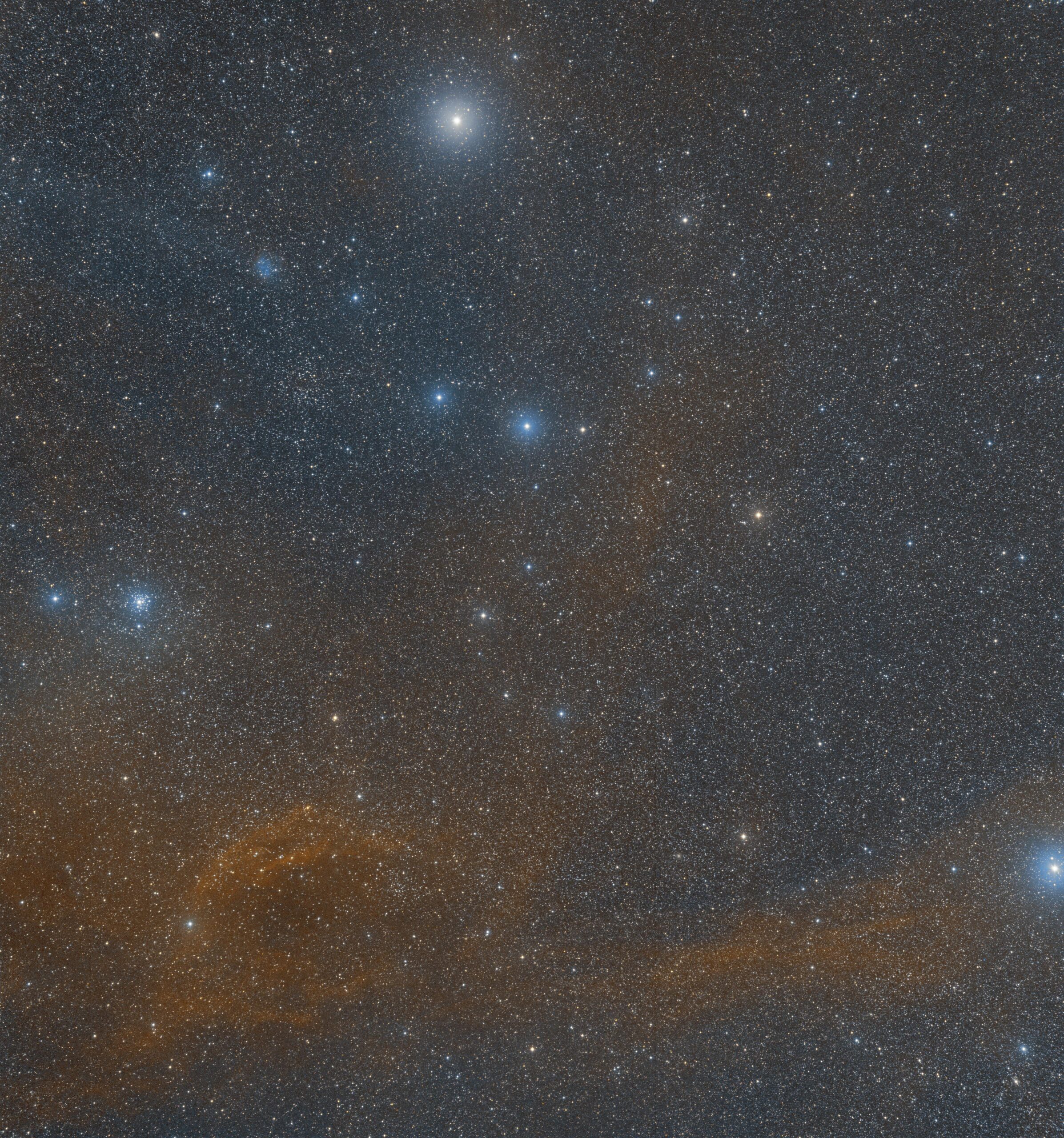
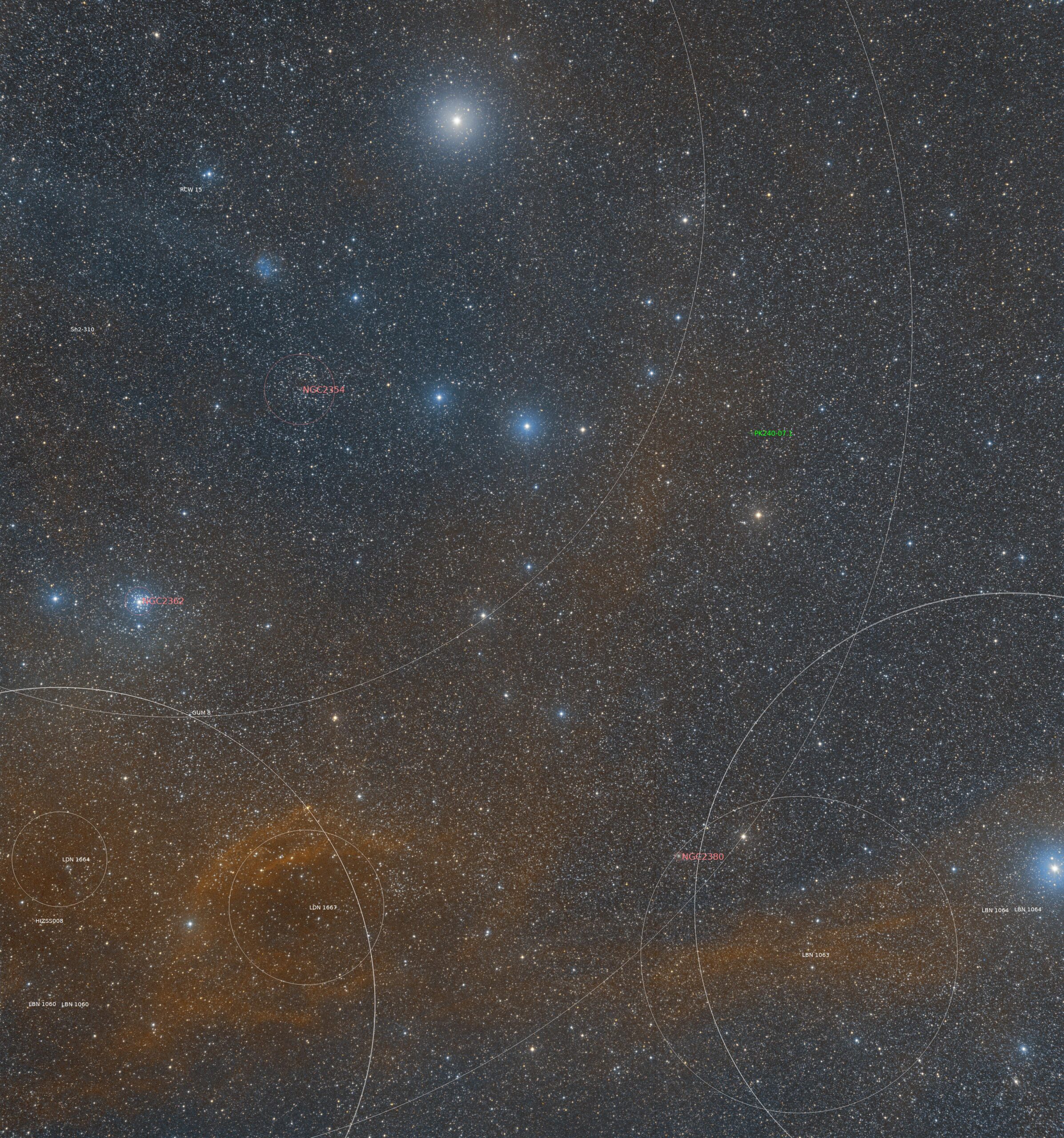
LDN 1667 annotated
The images were taken with the following equipment (AUS-2 CCD, Telescope Live):
- Date: 2023
- Location: Heaven’s Mirror Observatory, Australia
- Telescope/Lens: Takahashi FSQ-106ED
- Focal length [mm]: 390
- Focal ratio: 3.6
- Mount: Paramount MX+
- Camera: FLI Proline 16803
- Filter: Hα:[OIII]:[SII]
- Exposure time [min]: 150:150:160
- Resolution: 4.74″/px

Leave a reply