• Home
  • Blog
  • Astrophotography
    • Deep Sky
      • Galaxies (Galaxien)
      • Nebulae (Nebel)
      • Planetary Nebulae (Planetarische Nebel)
      • Globular Clusters (Kugelsternhaufen)
      • Open Clusters (Offene Sternhaufen)
      • Miscellaneous (Verschiedenes)
    • Solar System (Sonnensystem)
      • Comets (Kometen)
      • Moon (Mond)
      • Planets (Planeten)
      • Sun (Sonne)
  • Archiv

    • Juni 2026
    • Mai 2026
    • April 2026
    • Dezember 2025
    • November 2025
    • Oktober 2025
    • September 2025
    • August 2025
    • Juli 2025
    • Juni 2025
    • Mai 2025
    • April 2025
    • März 2025
    • Januar 2025
    • Dezember 2024
    • November 2024
    • Oktober 2024
    • September 2024
    • Juli 2024
    • Juni 2024
    • Mai 2024
    • April 2024
    • März 2024
    • Februar 2024
    • Januar 2024
    • Dezember 2023
    • November 2023
    • Oktober 2023
    • September 2023
    • August 2023
    • Juli 2023
    • Juni 2023
    • Mai 2023
    • April 2023
    • März 2023
    • Februar 2023
    • Januar 2023
    • Dezember 2022
    • November 2022
    • Oktober 2022
    • September 2022
    • August 2022
    • Juni 2022
    • Mai 2022
    • April 2022
    • März 2022
    • Februar 2022
    • Januar 2022
    • Dezember 2021
    • November 2021
    • September 2021
    • August 2021
    • Juli 2021
    • März 2021
    • Februar 2021
    • November 2020
    • September 2020
    • August 2020
    • April 2020
    • März 2020
    • Februar 2020
    • Januar 2020
    • Dezember 2019
    • November 2019
    • Oktober 2019
    • September 2019
    • August 2019
    • Mai 2019
    • April 2019
    • März 2019
    • Dezember 2018
    • November 2018
    • September 2018
    • Juli 2018
    • Juni 2018
    • Mai 2018
    • April 2018
    • März 2018
    • Februar 2018
    • Januar 2018
    • Oktober 2017
    • Juli 2017
    • Juni 2017
    • Januar 2017
    • September 2016
    • Mai 2016
    • März 2016
    • Oktober 2015
    • September 2015
    • Mai 2015
    • März 2015
    • Februar 2015
    • September 2014
    • März 2014
    • Februar 2014
    • Oktober 2013
    • September 2013
    • August 2013
    • April 2013
    • März 2013
    • November 2012
    • August 2012
    • Juli 2012
    • Mai 2012
    • März 2012
    • Januar 2012
    • November 2011
    • Oktober 2011
    • September 2011
    • August 2011
    • April 2011
    • März 2011
    • Oktober 2010
    • September 2010
    • August 2010
    • Juli 2010
    • April 2010
    • Juli 2009
    • Juli 2008
    • Januar 2008
    • Oktober 2007
    • Juli 2007
    • Februar 2007
    • Juni 2006
    • August 2005
    • Januar 2005
  • Kategorien

    • Asterism
    • Astrophotography
    • Barnard
    • Comet
    • Galaxies
    • Globular Cluster
    • IC
    • Messier
    • Moon
    • Nebula
    • NGC
    • Open cluster
    • Photography
    • Planetary Nebula
    • Travel
  • Meta

    • Anmelden
    • Eintrags-Feed
    • Kommentar-Feed
    • WordPress.org
  • Privacy Policy
  • Impressum
  • Haftungsausschluss
  • Cookie-Richtlinie
  • Datenschutzerklärung

wonderfuluniverse.de
  • Home
  • Blog
  • Astrophotography
    • Deep Sky
      • Galaxies (Galaxien)
      • Nebulae (Nebel)
      • Planetary Nebulae (Planetarische Nebel)
      • Globular Clusters (Kugelsternhaufen)
      • Open Clusters (Offene Sternhaufen)
      • Miscellaneous (Verschiedenes)
    • Solar System (Sonnensystem)
      • Comets (Kometen)
      • Moon (Mond)
      • Planets (Planeten)
      • Sun (Sonne)

Messier 13 (NGC 6205) from my own backyard, observatory and abroad


I have imaged the famous globular cluster Messier 13 several times over the years, using a wide variety of equipment and imaging techniques. The most recent image was captured from my backyard with my new Seestar S30 Pro smart telescope, demonstrating how modern compact systems are now capable of producing impressive deep-sky results with minimal setup effort.

Located in the constellation Hercules, M13 is often referred to as the Great Hercules Globular Cluster and is one of the brightest and best-known globular clusters in the northern sky. It lies at a distance of approximately 22,000 light-years and contains several hundred thousand stars packed into a region only about 145 light-years across. The cluster is estimated to be more than 11 billion years old, making it one of the oldest stellar systems in the Milky Way.

Deep images of M13 reveal a dense and highly concentrated stellar core surrounded by countless resolved outer stars. The cluster contains a rich population of red giant stars, horizontal branch stars, and several known variable stars. It is also home to the famous Barnard 29, a rare blue post-asymptotic giant branch star that stands out clearly against the otherwise warm-colored stellar population.

Over the years, revisiting M13 with different generations of equipment—from early DSLR systems to CCD and CMOS cameras, and now a compact smart telescope—has provided an interesting perspective on the technological evolution of amateur astrophotography. Even with the relatively small aperture of the Seestar S30 Pro, modern sensors and automated processing make it possible to capture the beauty and complexity of this ancient stellar system directly from a suburban backyard.

Registration and the final image processing were carried out using PixInsight. To improve the effective image resolution and better sample the stellar details within the dense core of the cluster, the data were processed with 2× drizzle integration. This technique helped to recover fine structural detail and improve star separation, particularly in the crowded central regions of Messier 13.

The result was as follows:
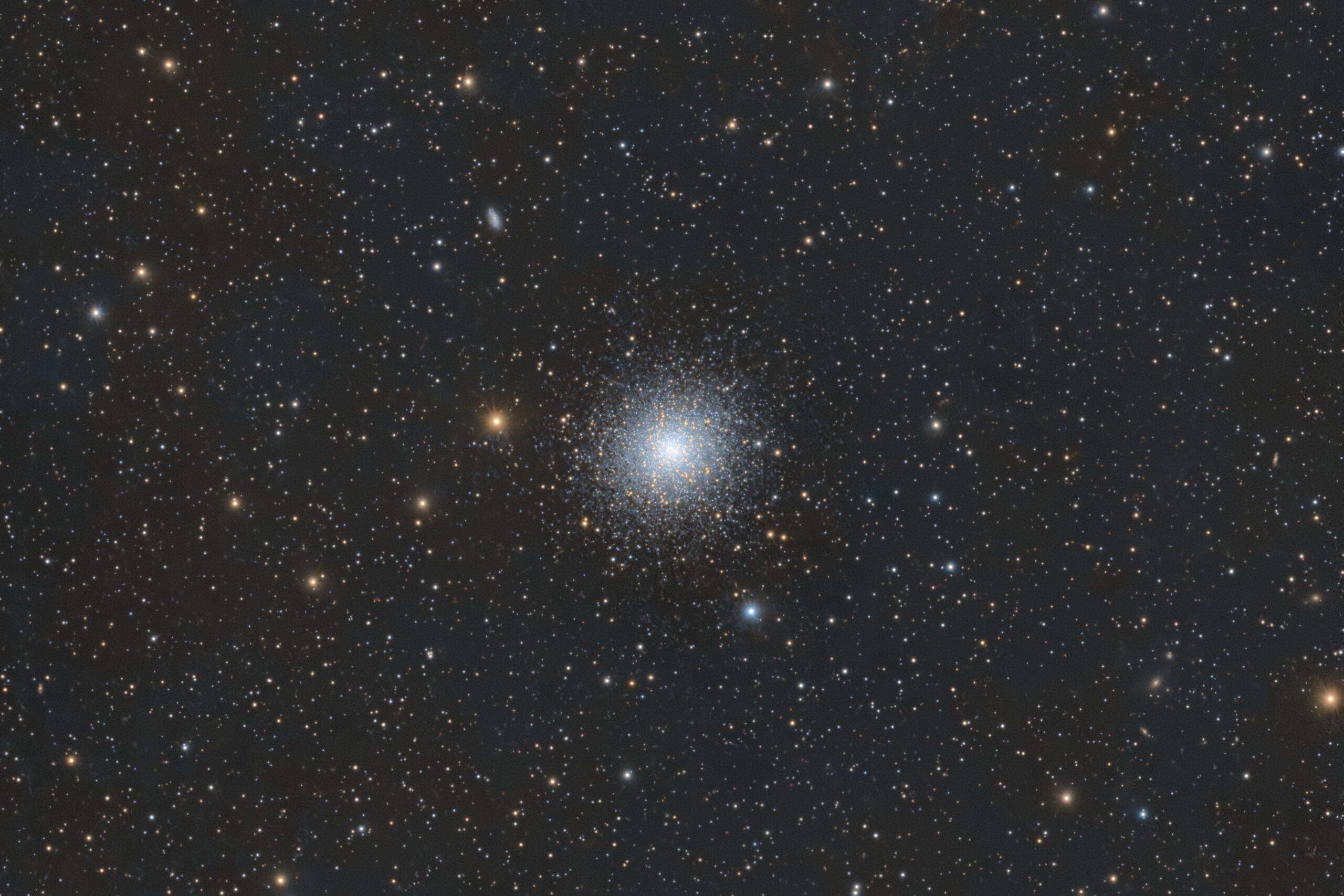
Messier 13, Varel, 2026


The images were taken with the following equipment:

  • Date: 2026
  • Seestar S30 Pro
  • Focal length [mm]: 160
  • Focal ratio: 5.3
  • Mount: Seestar, EQ Mode
  • Camera: Seestar Tele
  • Filter: OSC
  • Exposure time: 250
  • Resolution: 1.84″/px (drizzle 2)


Messier 13, Krefeld, 2019
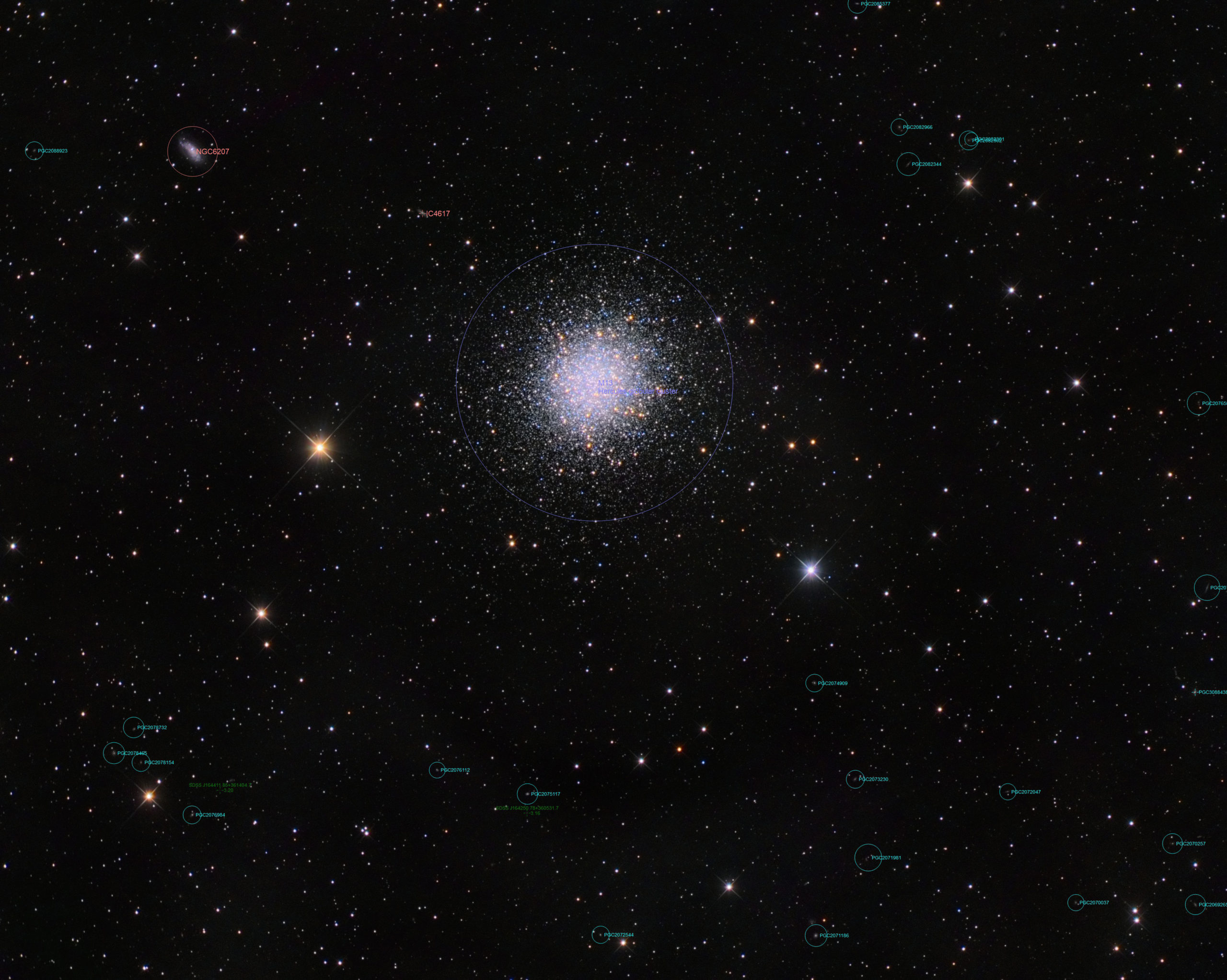
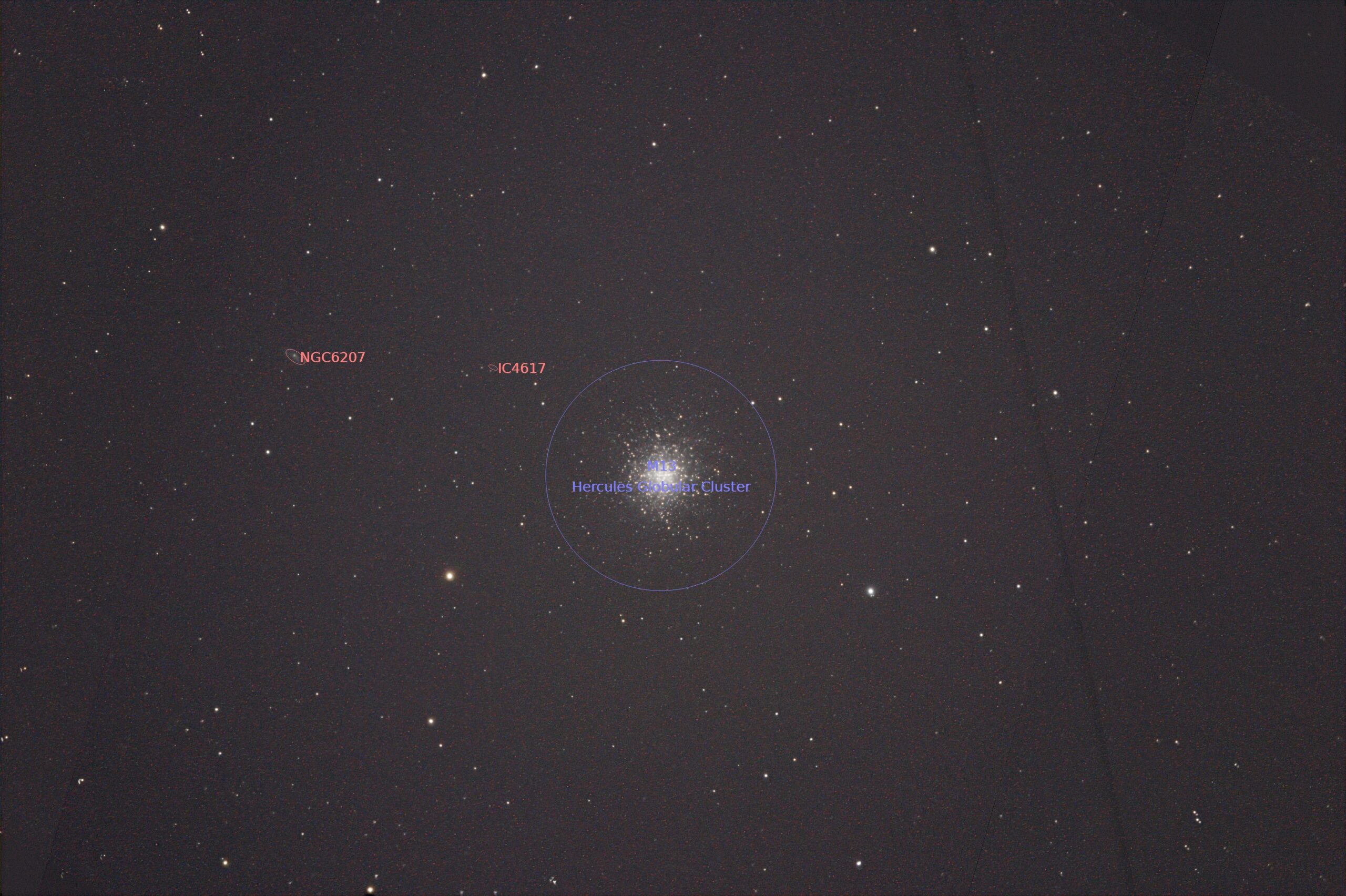
Messier 13 annotated

The two highest redshift quasars [Flesh 2015] in the image are:
SDSS J164411.85+361404.7 z=3.20 magG=20.4 (Gaia DR2)
SDSS J164250.78+360531.7 z=3.16 magG=19.3 (Gaia DR2)


The images were taken with the following equipment:

  • Date: 2019
  • Telescope: 10″ Newton ohne Namen – TSQ-65ED Apo
  • Focal length [mm]: 1000 – 420
  • Focal ratio: 3.9 – 6.5
  • Mount: Skywatcher EQ 8
  • Camera: Moravian G3 16200 FW – Moravian G2 8300 FW
  • Filter: L – R:G:B
  • Exposure time: 420 – 170:180:130
  • Resolution: 1.23″/px – 2.65″/px


In 2010 I took some images of Messier 13 from my own backyard.

Data calibration and registration was done with DeepSkyStacker and the final processing was done with PixInsight. The result was as follows:
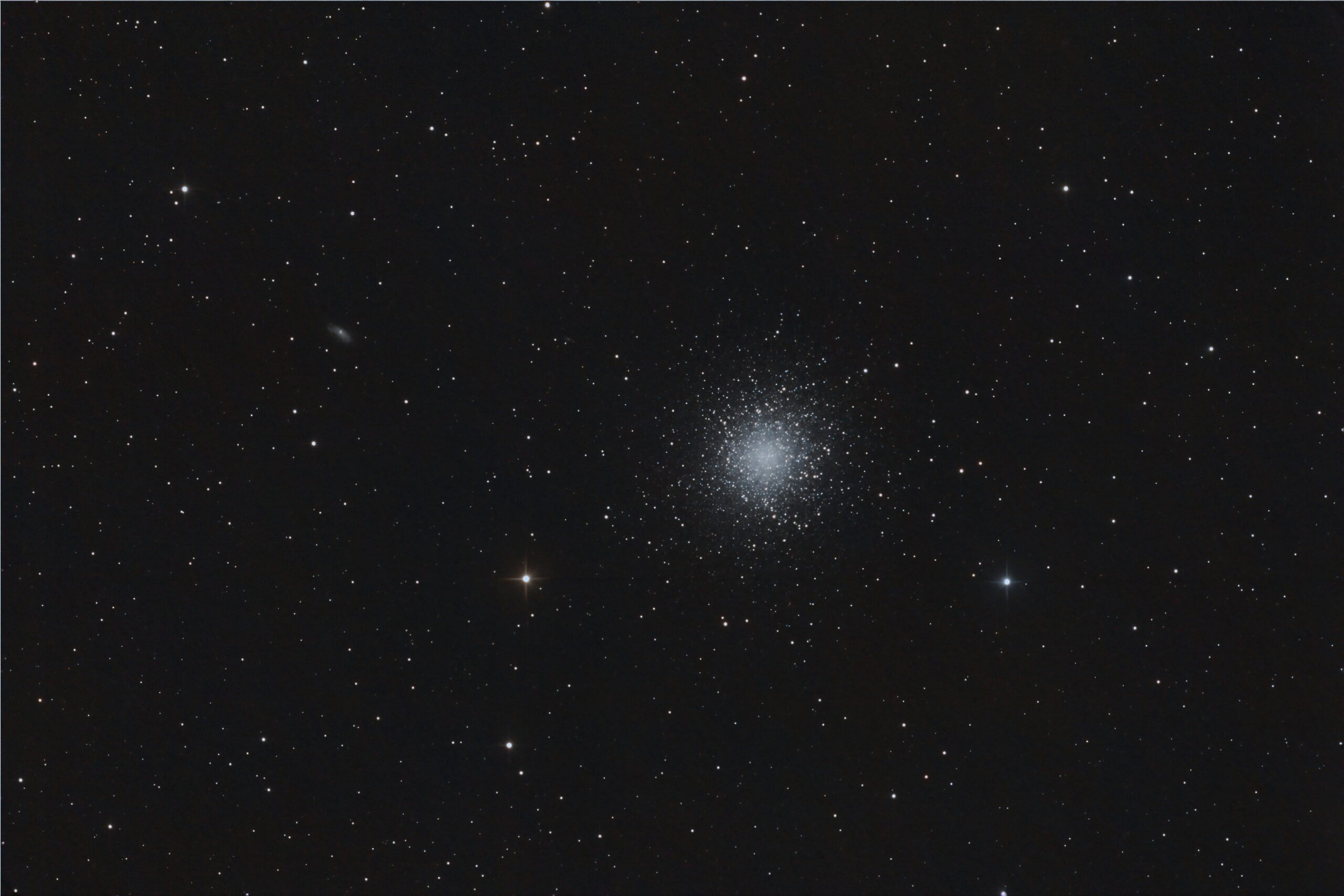
Messier 13, Krefeld, 2010


The images were taken with the following equipment:

  • Date: 2010
  • Telescope: GSO 8″ Newton
  • Focal length [mm]: 800
  • Focal ratio: 4
  • Mount: Skywatcher NEQ 6
  • Camera: Canon 300 Da
  • Filter: OSC
  • Exposure time: 180
  • Resolution: 1.88″/px


In 2008 I took some images of Messier 13 from my own backyard.

Data calibration and registration was done with DeepSkyStacker and the final processing was done with PixInsight. The result was as follows:
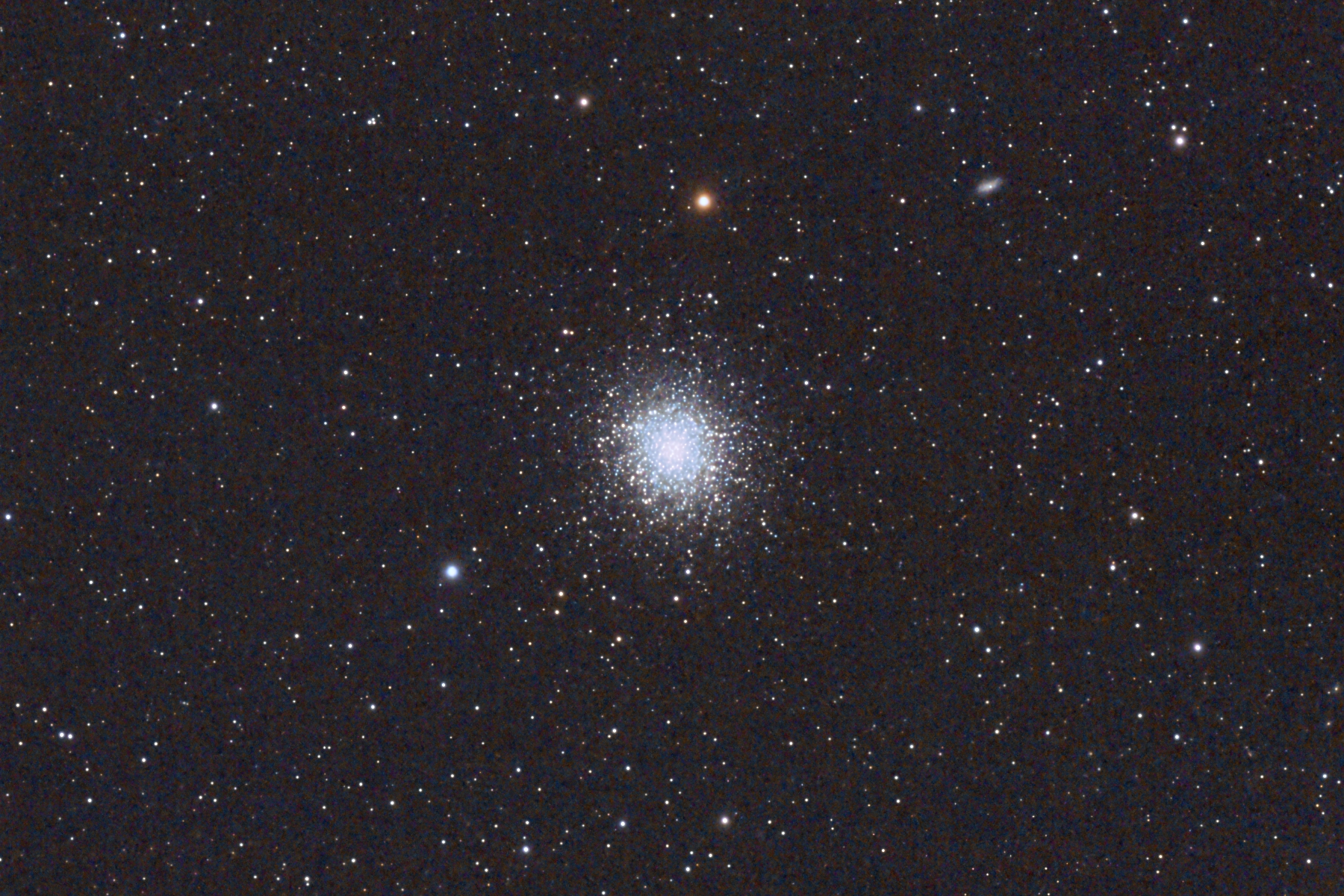
Messier 13, Krefeld 2008


The images were taken with the following equipment:

  • Date: 2008
  • Telescope: Pentax 75 SDHF
  • Focal length [mm]: 500
  • Focal ratio: 6.7
  • Mount: Vixen GP-DX
  • Camera: Canon 300 Da
  • Filter: OSC
  • Exposure time: 24
  • Resolution: 3.04″/px


In 2005 I took some images of Messier 13 during a stay at the astrofarm Hakos.

Data calibration and registration was done with DeepSkyStacker and the final processing was done with PixInsight. The result was as follows:
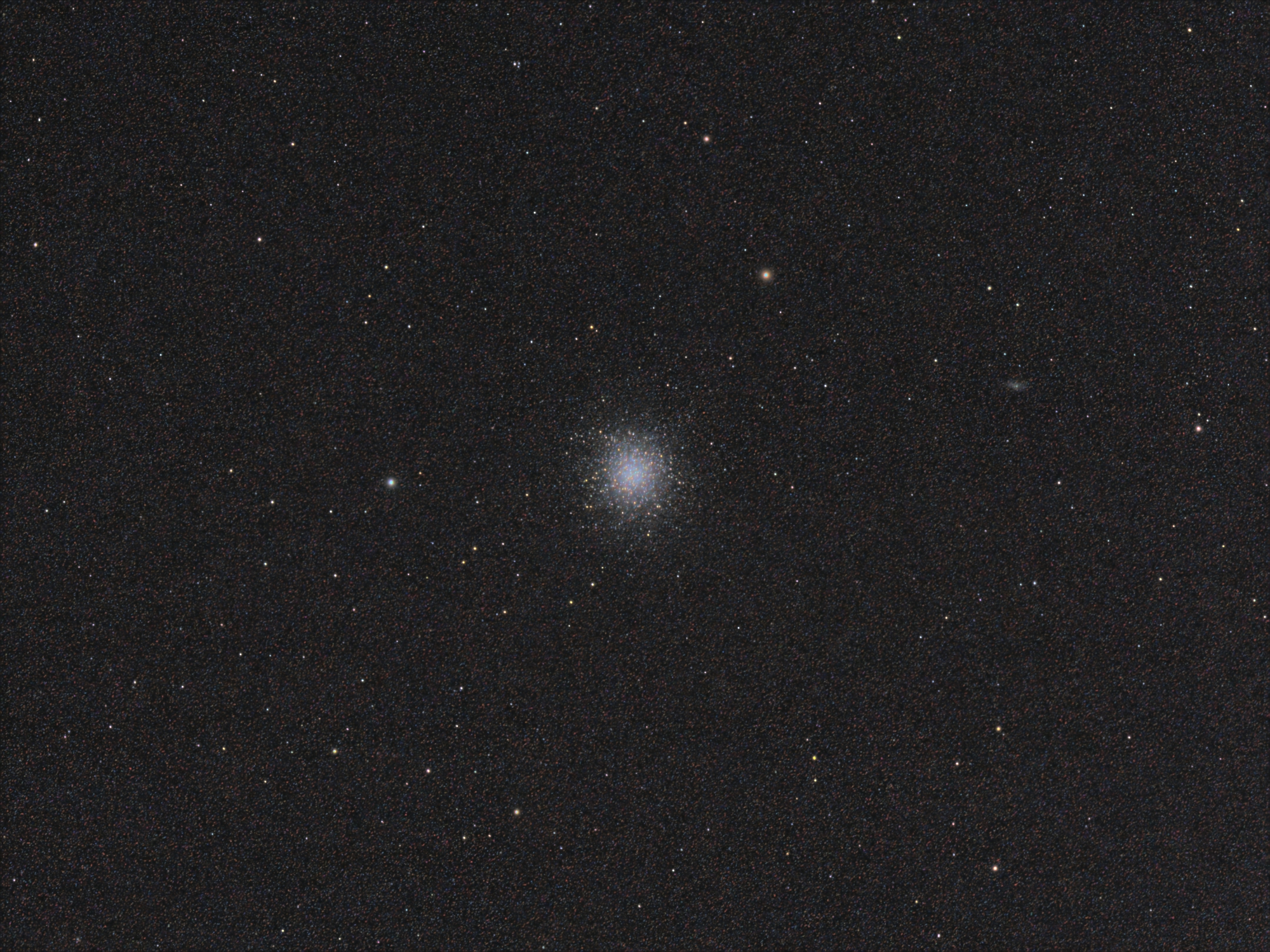
Messier 13, Krefeld, 2005


The images were taken with the following equipment:

  • Date: 2005
  • Telescope: Rubinar lens
  • Focal length [mm]: 500
  • Focal ratio: 5.6
  • Mount: Liebscher
  • Camera: Canon 300 Da
  • Filter: OSC
  • Exposure time: 16
  • Resolution: 2.7″/px


The first time I imaged Messier 13 was in 2005 from my own backyard.

Data calibration and registration was done with DeepSkyStacker and the final processing was done with PixInsight. The result was as follows:
Messier 13, Krefeld, 2005
M13, Krefeld, 2005

The images were taken with the following equipment:

  • Date: 2005
  • Telescope: GSO 8″ Newton
  • Focal length [mm]: 800
  • Focal ratio: 4
  • Mount: Skywatcher HEQ-5
  • Camera: Canon 300 Da
  • Filter: OSC
  • Exposure time: 5
  • Resolution: 1.88″/px


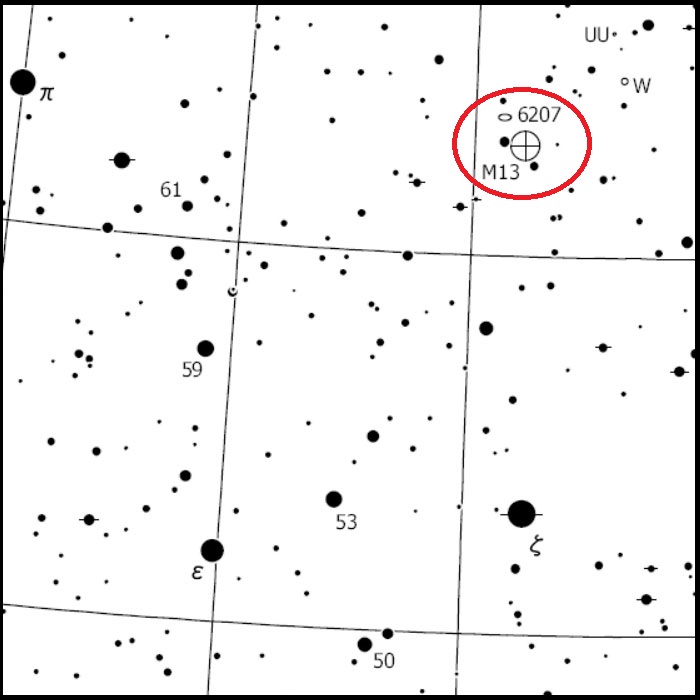
Messier 13 finder chart
M13 finder chart

Stephan Küppers


You might also like
NGC 7000 with IC 5070
24. Juni 2026
NGC 5907
15. Mai 2026
Messier 106 (NGC 4258)
8. Mai 2026

Leave a reply

Schreibe einen Kommentar Antwort abbrechen

Deine E-Mail-Adresse wird nicht veröffentlicht. Erforderliche Felder sind mit * markiert


© Stephan Küppers 2020-2022

Cookie-Zustimmung verwalten
Wir verwenden Cookies, um unsere Website und unseren Service zu optimieren.
Funktional Immer aktiv
Die technische Speicherung oder der Zugang ist unbedingt erforderlich für den rechtmäßigen Zweck, die Nutzung eines bestimmten Dienstes zu ermöglichen, der vom Teilnehmer oder Nutzer ausdrücklich gewünscht wird, oder für den alleinigen Zweck, die Übertragung einer Nachricht über ein elektronisches Kommunikationsnetz durchzuführen.
Vorlieben
Die technische Speicherung oder der Zugriff ist für den rechtmäßigen Zweck der Speicherung von Präferenzen erforderlich, die nicht vom Abonnenten oder Benutzer angefordert wurden.
Statistiken
Die technische Speicherung oder der Zugriff, der ausschließlich zu statistischen Zwecken erfolgt. Die technische Speicherung oder der Zugriff, der ausschließlich zu anonymen statistischen Zwecken verwendet wird. Ohne eine Vorladung, die freiwillige Zustimmung deines Internetdienstanbieters oder zusätzliche Aufzeichnungen von Dritten können die zu diesem Zweck gespeicherten oder abgerufenen Informationen allein in der Regel nicht dazu verwendet werden, dich zu identifizieren.
Marketing
Die technische Speicherung oder der Zugriff ist erforderlich, um Nutzerprofile zu erstellen, um Werbung zu versenden oder um den Nutzer auf einer Website oder über mehrere Websites hinweg zu ähnlichen Marketingzwecken zu verfolgen.
  • Optionen verwalten
  • Dienste verwalten
  • Verwalten von {vendor_count}-Lieferanten
  • Lese mehr über diese Zwecke
Einstellungen anzeigen
  • {title}
  • {title}
  • {title}