

NGC 1788 from remote
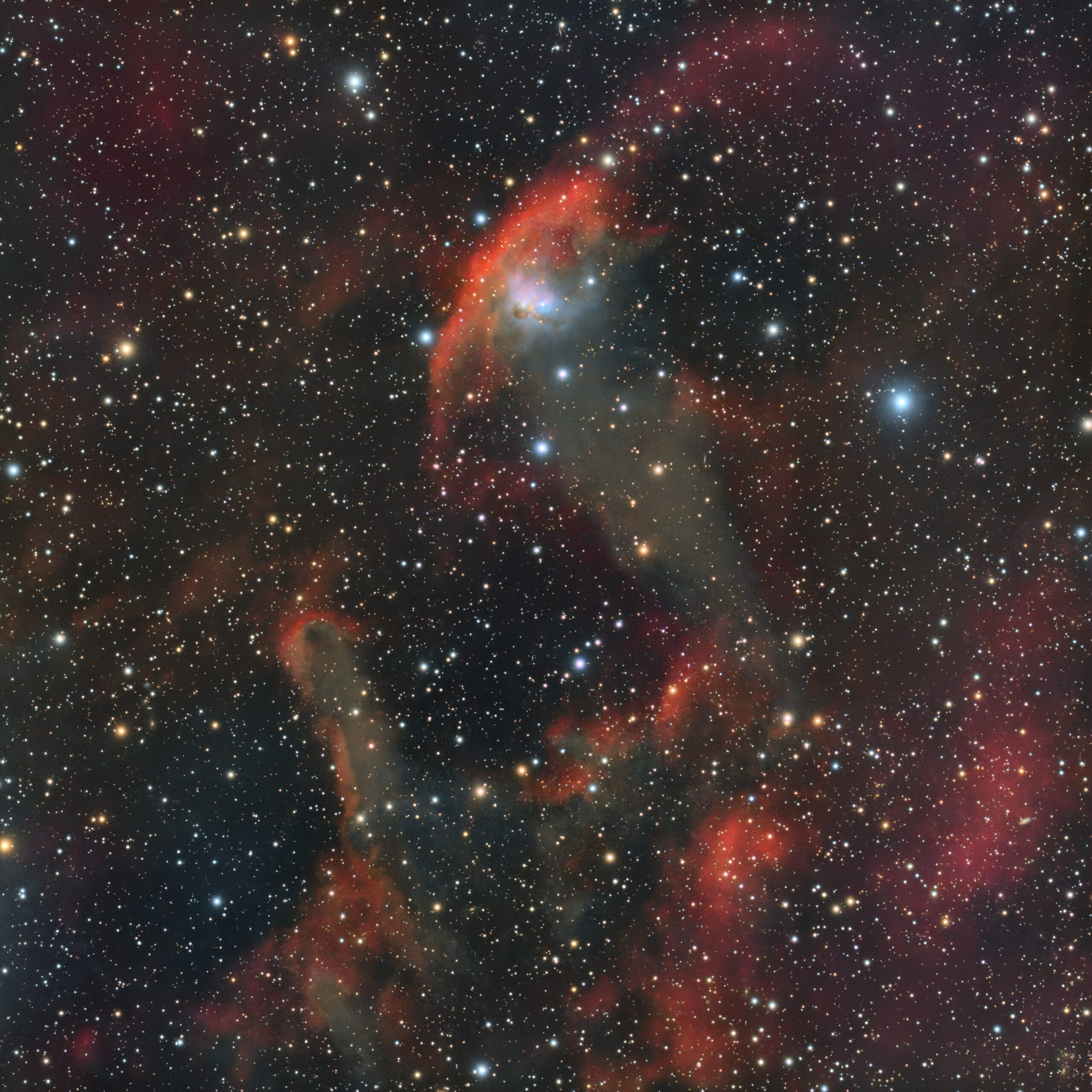
In 2026, I received a high-quality OSC dataset of NGC 1788 from Astrophotomarket, acquired in Canada.
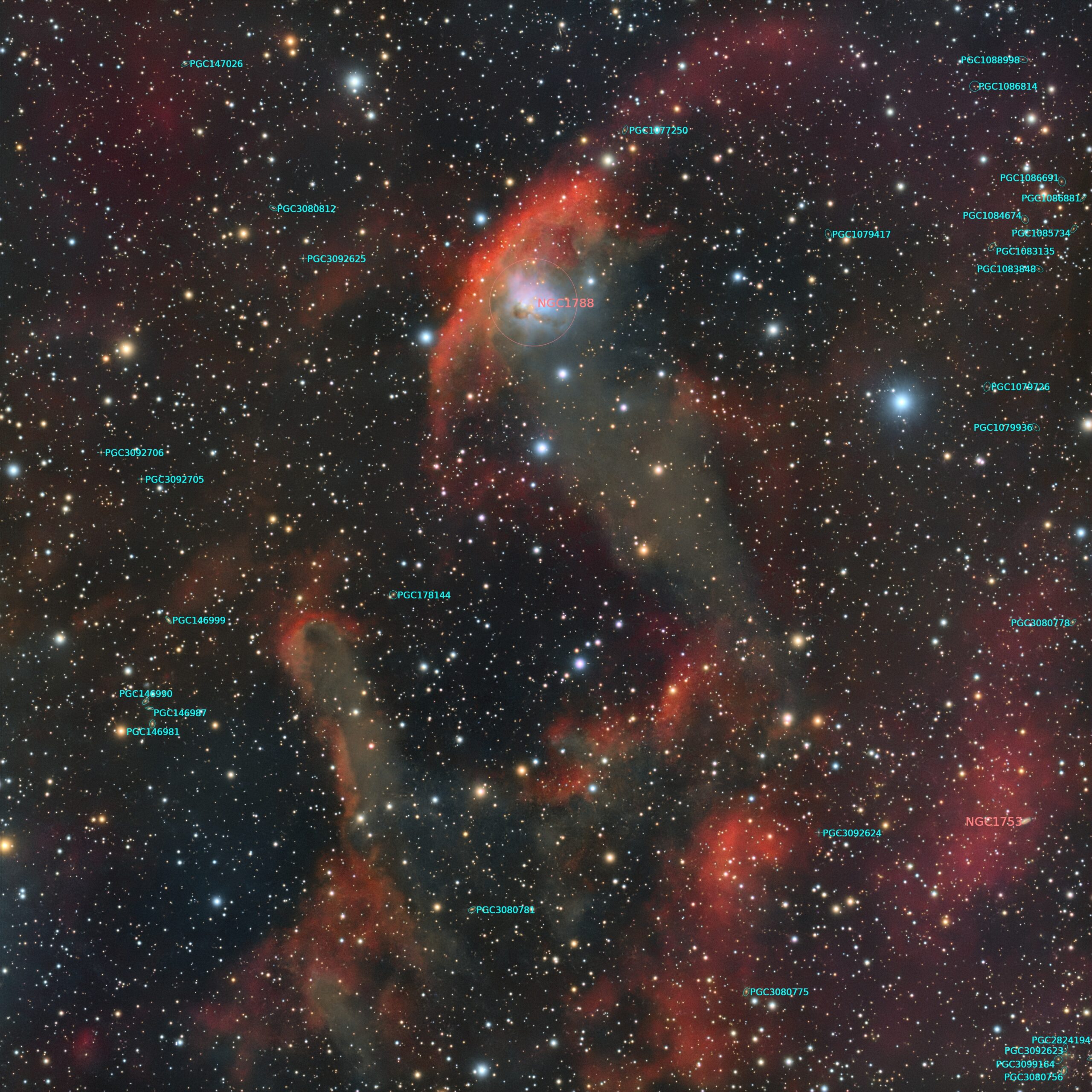
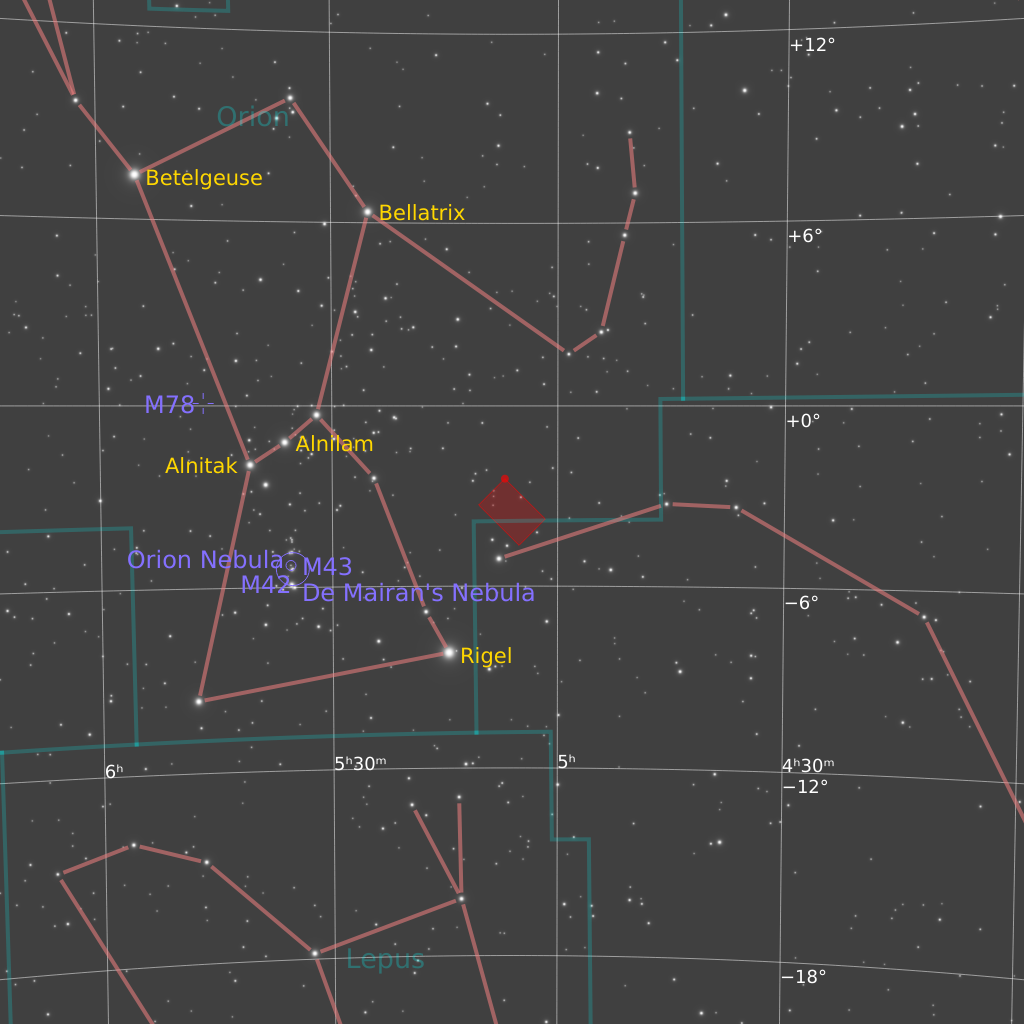
NGC 1788 is a small but fascinating reflection nebula in the constellation Orion, often nicknamed the Cosmic Bat Nebula because its shape looks like a bat spreading its wings. It is a star-forming region on the outskirts of Orion’s main molecular cloud complex, and although it looks isolated, it is strongly influenced by the larger Orion environment.
Unlike an emission nebula, NGC 1788 does not glow because its gas is ionized. Instead, its bluish-white center is caused by starlight scattering off dust grains in the nebula. Surrounding that reflection component is a red ring of hydrogen gas, which shows that the region is being energized by nearby hot, massive stars. This combination of blue reflected light and red hydrogen emission gives the nebula a very unusual and striking appearance.
NGC 1788 was discovered by William Herschel on 1 February 1786. It is relatively compact, with an apparent size of about 5 × 3 arcminutes, and lies at roughly 1,300 light-years from Earth, though some sources give a somewhat larger value near 2,000 light-years. In physical terms, it spans only a few to several light-years, but that is enough to hold a small cluster of very young stars.
The stars inside NGC 1788 are extremely young, with an average age of about 1 million years. That is almost newborn by stellar standards. The nebula contains a small cluster of embedded young stars, and most of the other stars in the region are hidden from view by dust. One of the few visible exceptions mentioned in the literature is HD 293815.
This youth is important because it makes NGC 1788 a useful laboratory for studying the earliest phases of star formation. The dust and gas around these stars are still in the process of being dispersed, so astronomers can see how stellar winds and radiation shape the natal cloud. In that sense, NGC 1788 is a snapshot of star birth in action.
The bat-like shape is created by a combination of dust lanes, embedded stars, and external sculpting by powerful winds from nearby massive stars in the Orion region. The nebula’s light and shadow pattern makes it look almost like a winged creature in flight. One side is sharply defined and bordered by dark dust, especially by the dark nebula Lynds 1616, which is apparently part of the same structure.
Although NGC 1788 seems isolated, astronomers believe its form has been influenced by nearby massive stars outside the cloud. Their winds and radiation may have compressed the gas, helped trigger star formation, and carved the nebula into its present shape. This makes the object more than just a pretty cloud; it is a record of the interaction between young stars and their parent material.
NGC 1788 is scientifically interesting because it combines reflection nebulosity, embedded young stars, and a surrounding red hydrogen ring in one compact object. It is not as famous as the Orion Nebula or Horsehead Nebula, but it provides a quieter, more isolated example of a stellar nursery. That isolation helps astronomers study how a small cluster evolves when it is not buried in the brightest parts of a giant star-forming region.
For the Astrophotomarket data the calibration, registration, and final image processing were carried out in PixInsight.
The images were taken with the following equipment:
- Date: 2026
- Location: Canada
- Telescope/Lense: Askar 71 F
- Focal length [mm]: 490
- Focal ratio: 6.9
- Mount: ZWO AM3
- Camera:ZWO ASI 533MC Pro
- Filter: OSC
- Exposure time [min]: 2211
- Resolution: 2.01″/px



Leave a reply