

Sh2-311 – VdS Remote Hakos and remote
In 2023 and again in 2025, I received two complementary datasets of Sh2-311 from Telescope Live. The first, acquired with a long focal length telescope in Chile, provided high-resolution SHO narrowband data, revealing the intricate filamentary structure and delicate ionized gas within the nebula. The second dataset, captured with a wide-field telescope in Australia, complemented the original image by placing Sh2-311 into its rich surrounding star field and highlighting the extensive hydrogen emission that extends far beyond the central nebula.
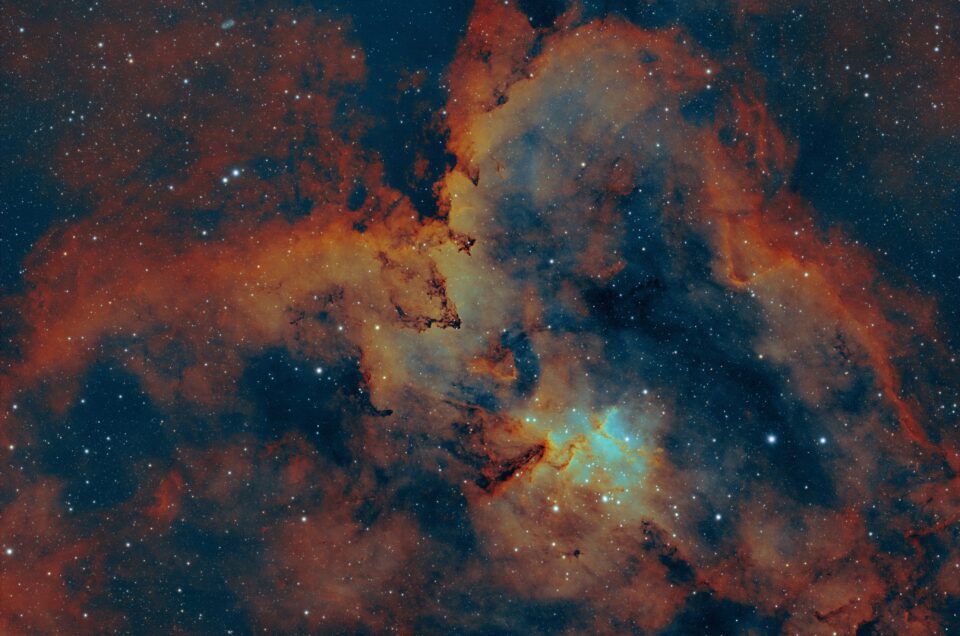
Inspired by these excellent remote datasets, my astrophotography companion Karsten Möller and I decided to image the same object ourselves one year later. In 2026, using the VdS Remote Observatory at Hakos, Namibia, we acquired a deep HαLRGB dataset under the exceptionally dark skies of the Khomas Highlands. By combining high-resolution Hα data with broadband LRGB exposures, we were able to preserve the natural colours of the stars while significantly enhancing the intricate hydrogen emission that dominates this active star-forming region.
Sh2-311 is the Sharpless name for the bright nebular complex around NGC 2467, a star-forming region in Puppis that is often nicknamed the “Skull and Crossbones Nebula” or “Mandrill Nebula”. It is one of the more interesting southern H II regions because it combines ionized gas, embedded clusters, reflection nebulosity, and ongoing star formation in one crowded field.
Sh2-311 is an emission nebula, so its red light comes from hydrogen gas ionized by hot young stars. NGC 2467 is not really a single open cluster in the usual sense; rather, it is a visual grouping of several stellar populations and nebular components along roughly the same line of sight. The area includes the subclusters Haffner 18 and Haffner 19, both young and physically important to the region’s structure.
The dominant ionizing star in the region is HD 64315, an O6-type star, which is hot enough to produce strong ultraviolet radiation and keep the nebula glowing. Other early-type stars, including HD 64568, also contribute to the complex, though their exact relationships to the clusters are still debated. In practical terms, these massive stars act like cosmic floodlights, stripping electrons from the surrounding hydrogen and shaping the bright emission seen in images.
Haffner 19 is generally described as a compact cluster with an age of around 2 million years and a distance near 5.0 to 6.4 kiloparsecs, depending on the study. Haffner 18 is more controversial: some estimates place it much farther away, others nearer, and its age is very young, possibly close to 1 million years. One recent study even suggests that H18 may still contain a star, FM3060a, that is just emerging from its natal material. That mix of ages and distances shows that the field is a layered structure rather than one simple cluster.
NGC 2467 is scientifically valuable because it appears to host triggered star formation at the edges of the H II region. In one deep optical and near-infrared survey, several class II young stellar objects were found near the periphery of Sh2-311, with ages mostly under 1 million years and masses roughly 0.4 to 3.5 solar masses. That pattern is important: when the expanding ionized gas compresses nearby molecular material, it can help form a new generation of stars. Spitzer-based work also specifically analyzed this system as a candidate case of triggered star formation.
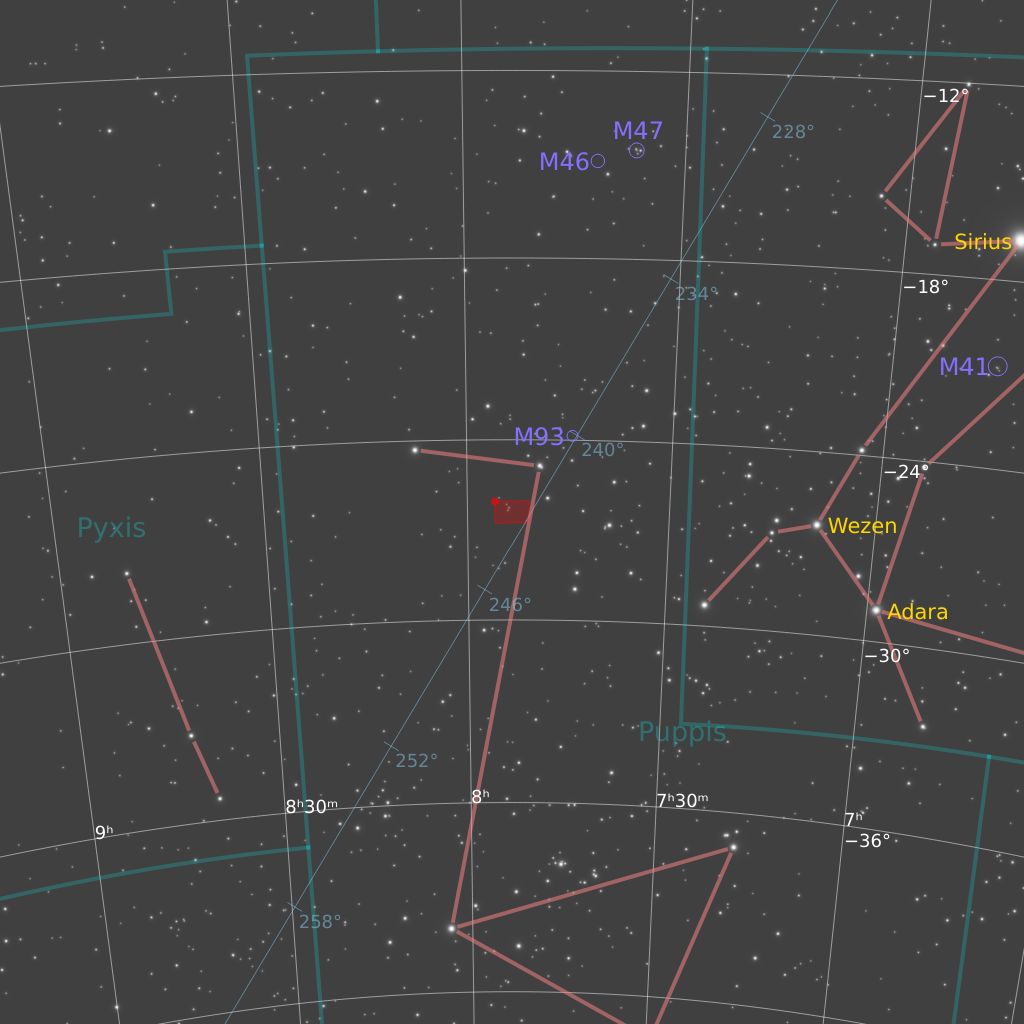
The region lies in the southern constellation Puppis and is associated with the Canis Major OB1 / Perseus-arm direction. Distances in the literature vary, but many values cluster around 5 to 6.5 kiloparsecs, or roughly 16,000 to 21,000 light-years. That makes it a distant but very luminous star-forming complex, large enough to include multiple clusters and nebular lobes.
Its popular “skull and crossbones” nickname comes from the dark dust lanes and bright patches that create a face-like pattern in long-exposure images. The nebula is not only visually striking but also physically complicated, with emission gas, reflection components, and obscuring dust all mixed together. That combination is why it is a favorite target for astrophotographers and a useful case study for astronomers.
In short, Sh2-311 / NGC 2467 is a distant but active stellar nursery where hot massive stars illuminate gas, young clusters are embedded in the cloud, and the edges of the nebula may still be forming new stars.
For the 2026 data the calibration, registration, and final processing were performed in PixInsight.
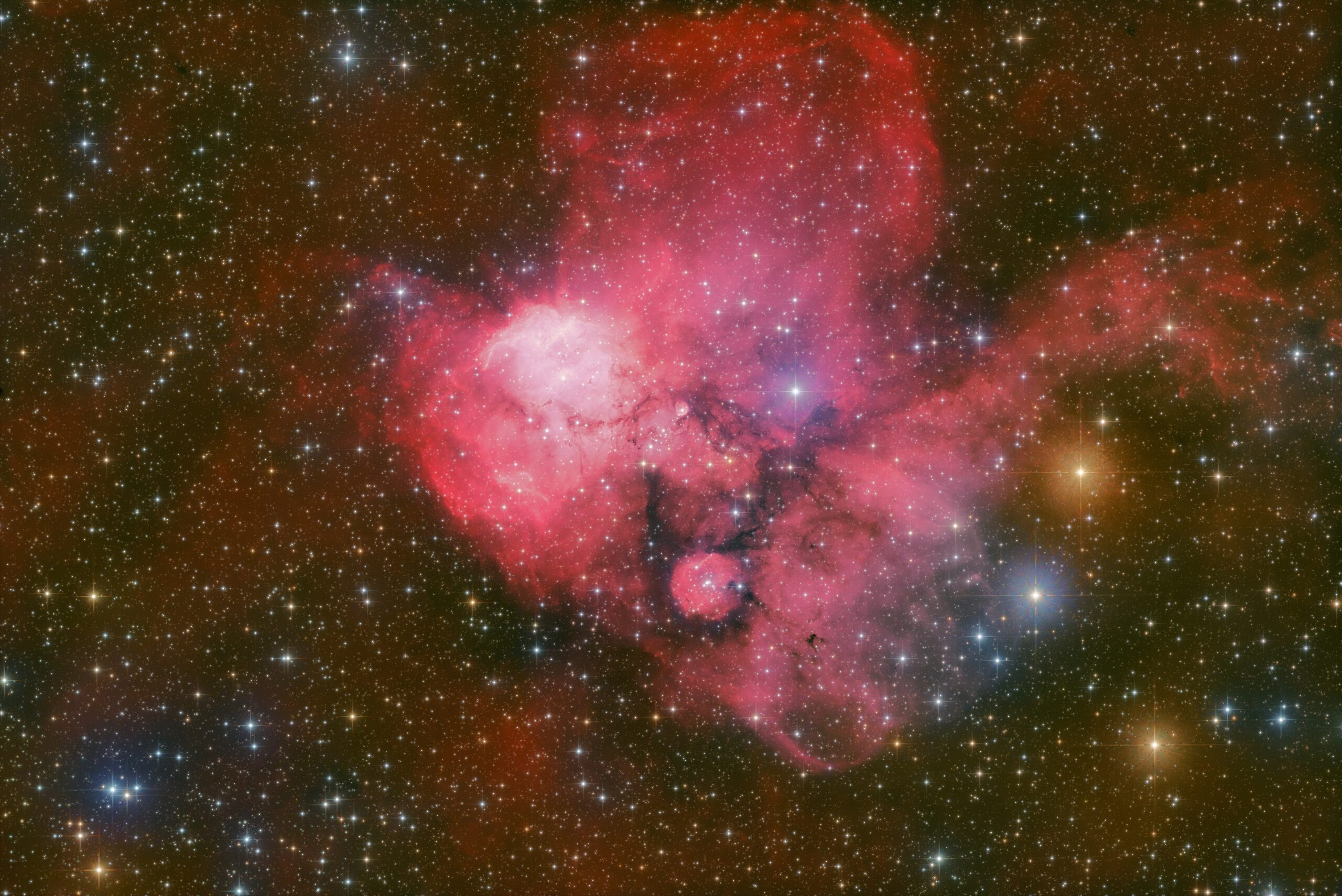
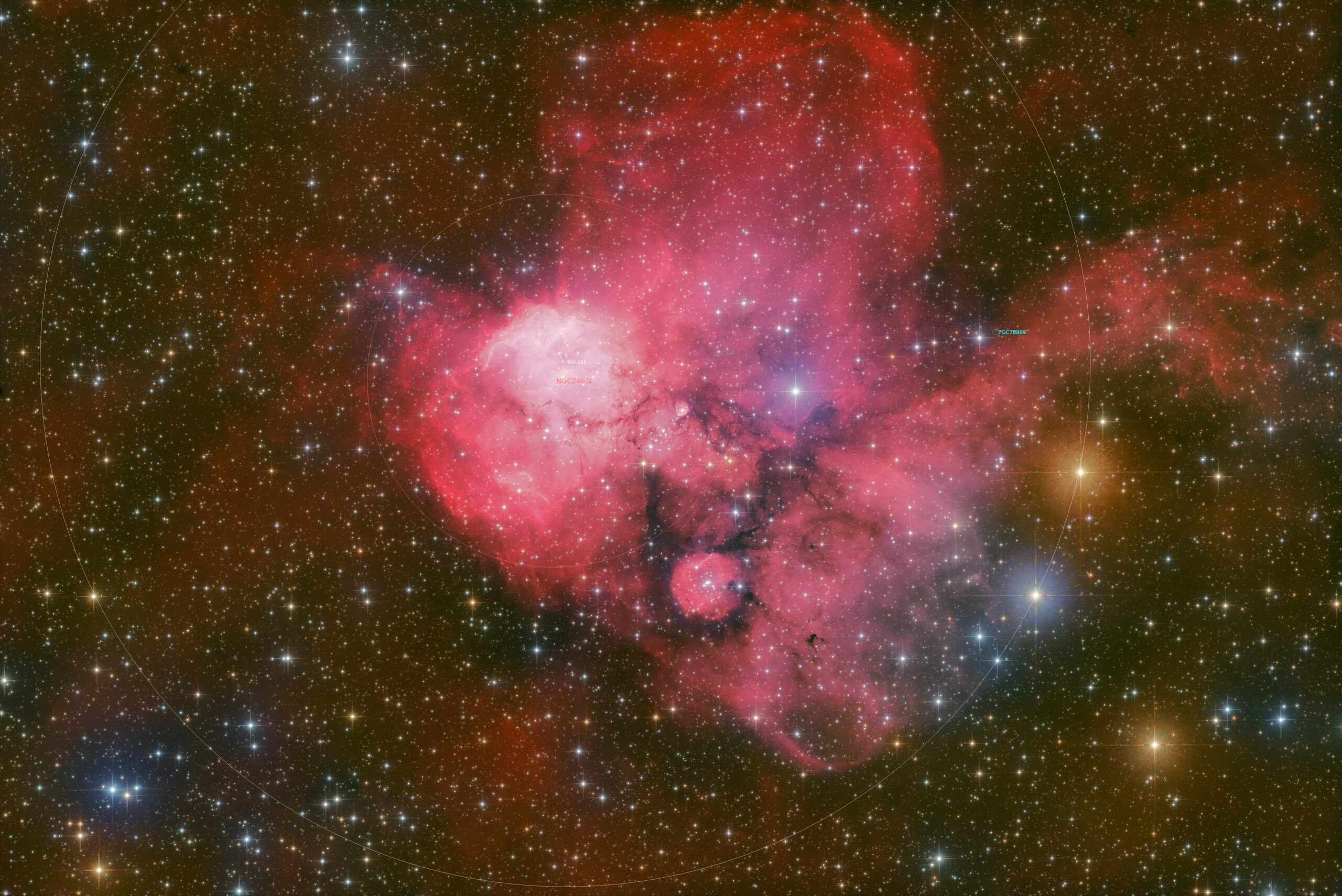
The images were taken with the following equipment:
- Date: 2026
- Location: Hakos, Namibia
- Telescope/Lens: TS 12“ Newton-Astrograph
- Focal length [mm]: 1391
- Focal ratio: 4.56
- Mount: 10Micron GM3000
- Camera: Lacerta DeepSkyPro2600 (mono)
- Filter: LRGBHα
- Exposure time [min]:190:115:100:100:90
- Resolution: 0.56″/px
For the 2025 data the calibration, registration, and final processing were performed in PixInsight.
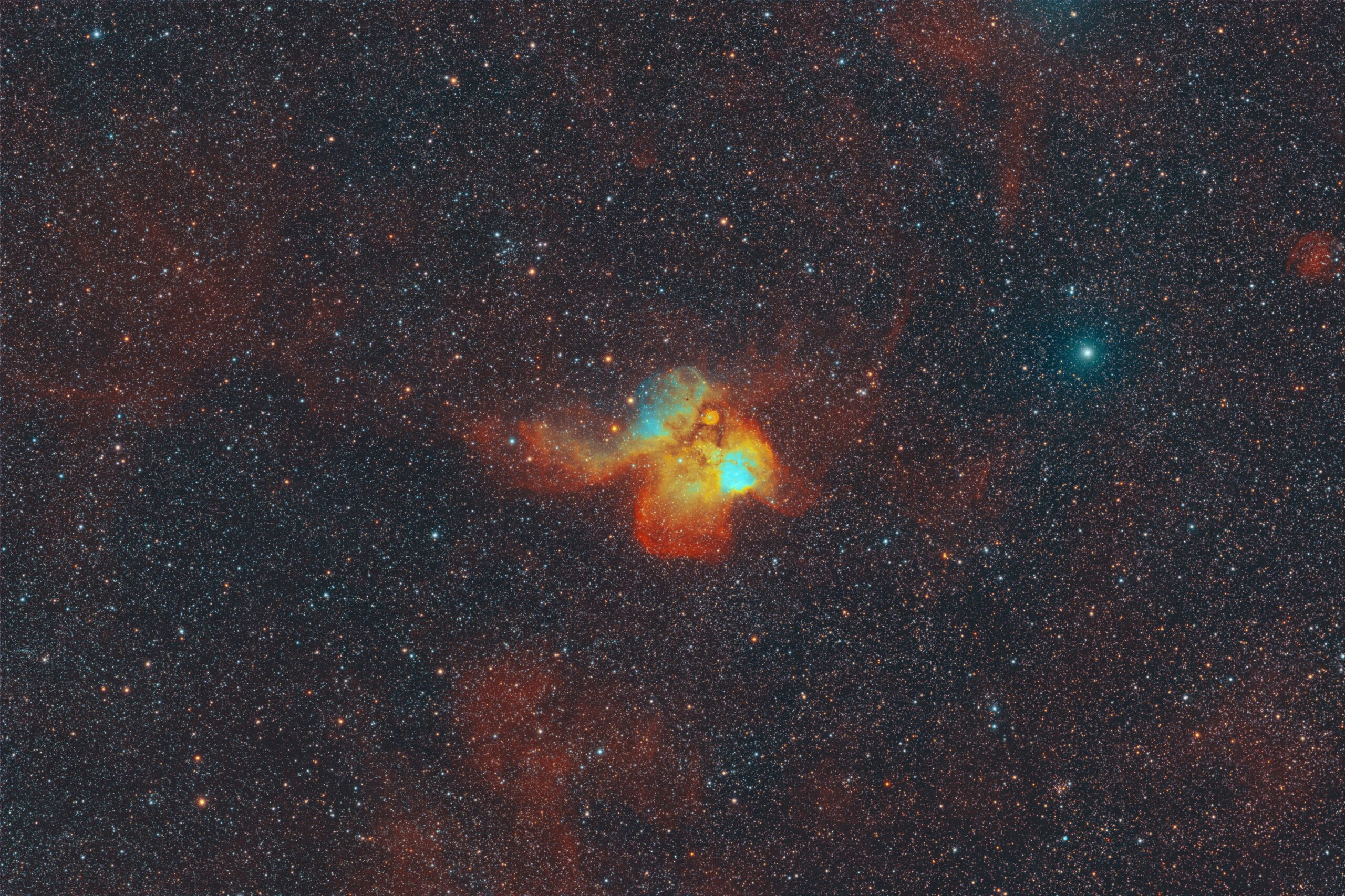
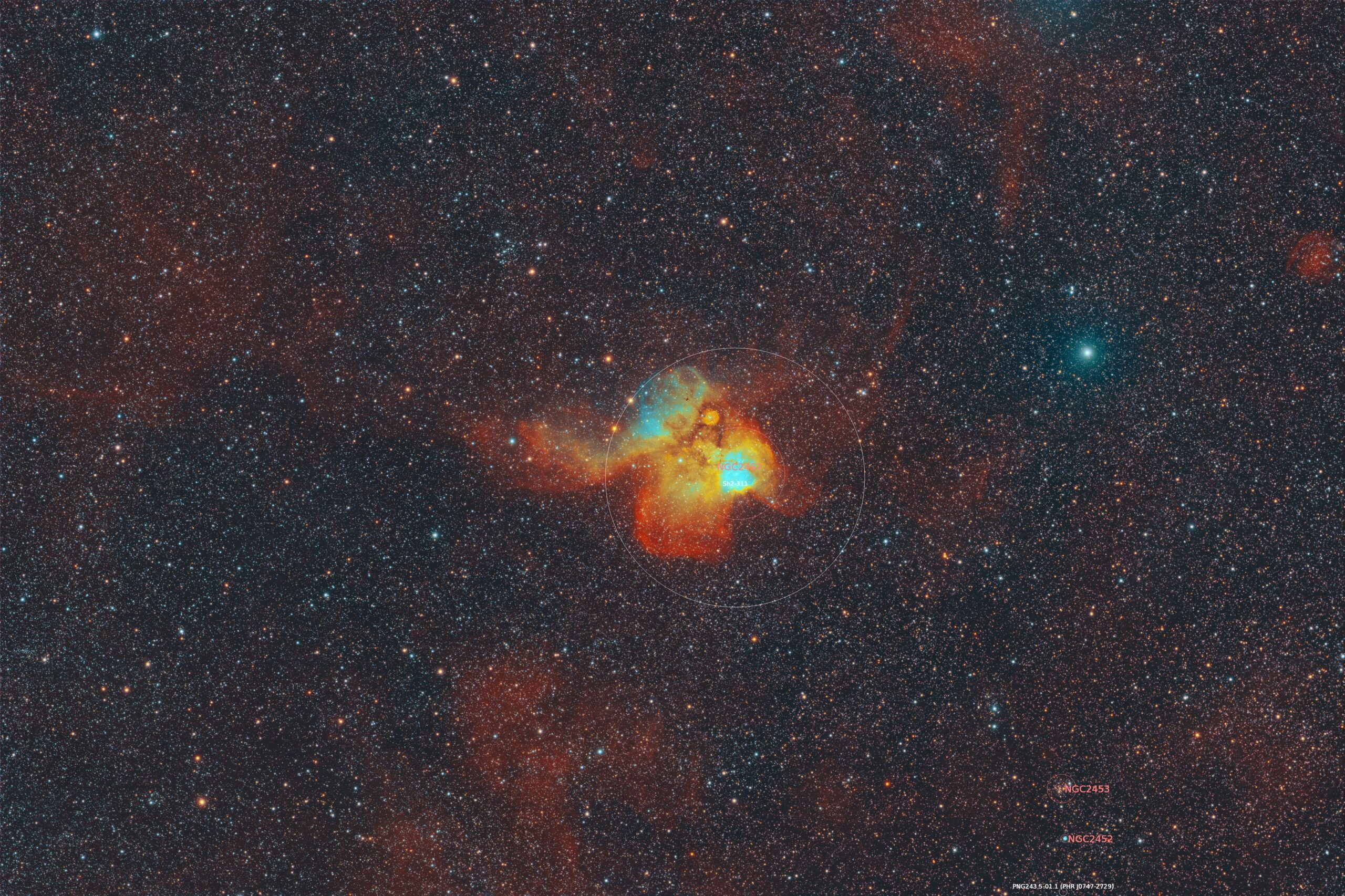
The images were taken with the following equipment:
- Date: 2025
- Location: Australia
- Telescope/Lens: FSQ 106
- Focal length [mm]: 530
- Focal ratio: 3.6
- Mount: Paramount MX+
- Camera: QHY 600M Pro
- Filter: HOS
- Exposure time [min]: 145:135:115
- Resolution: 1.45″/px
For the 2023 data the calibration, registration, and final processing were performed in PixInsight.
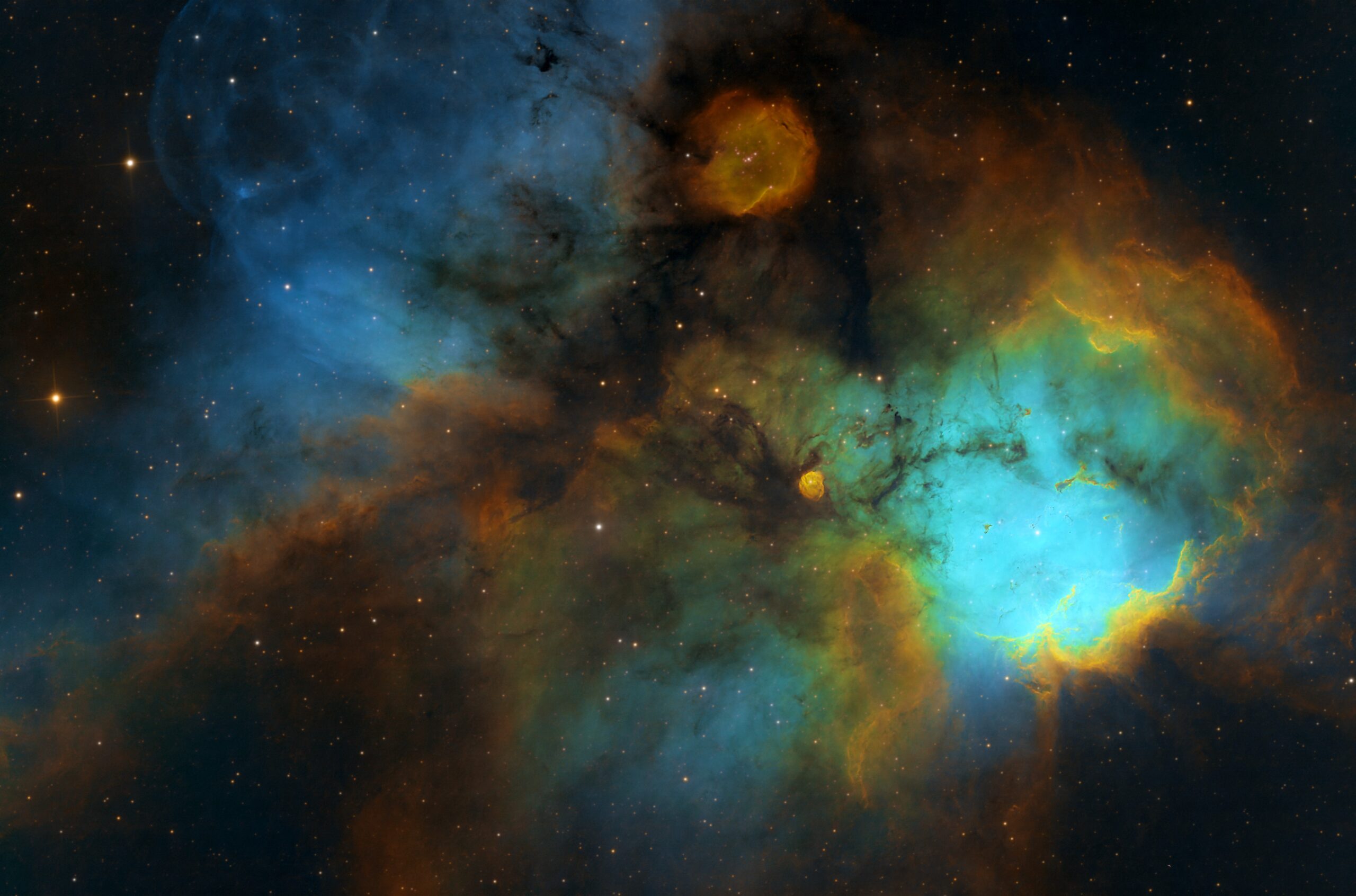
The images were taken with the following equipment:
- Date: 2023
- Location: El Sauce Obsertaory, Chile
- Telescope/Lens: Planwave CDK24
- Focal length [mm]: 3962
- Focal ratio: 6.5
- Mount: Mathis MI-1000/1250
- Camera: QHY 600M Pro
- Filter: HOS
- Exposure time [min]: 250:250:225
- Resolution: 1.45″/px



Leave a reply