

RCW 181 (PN YM-16) – VdS Remote Hakos
In 2025, together with my astrophotography companion Karsten Möller, I imaged the planetary nebula RCW 181 using both telescopes of the VdS Remote Observatory at Hakos, Namibia. By combining data from the two observatory systems, we were able to obtain a deep, high-quality dataset that revealed the nebula’s delicate structure and the rich stellar background of the southern Milky Way. The outstanding observing conditions at Hakos, with its exceptionally dark skies and excellent seeing, provided ideal conditions for imaging this faint southern planetary nebula.
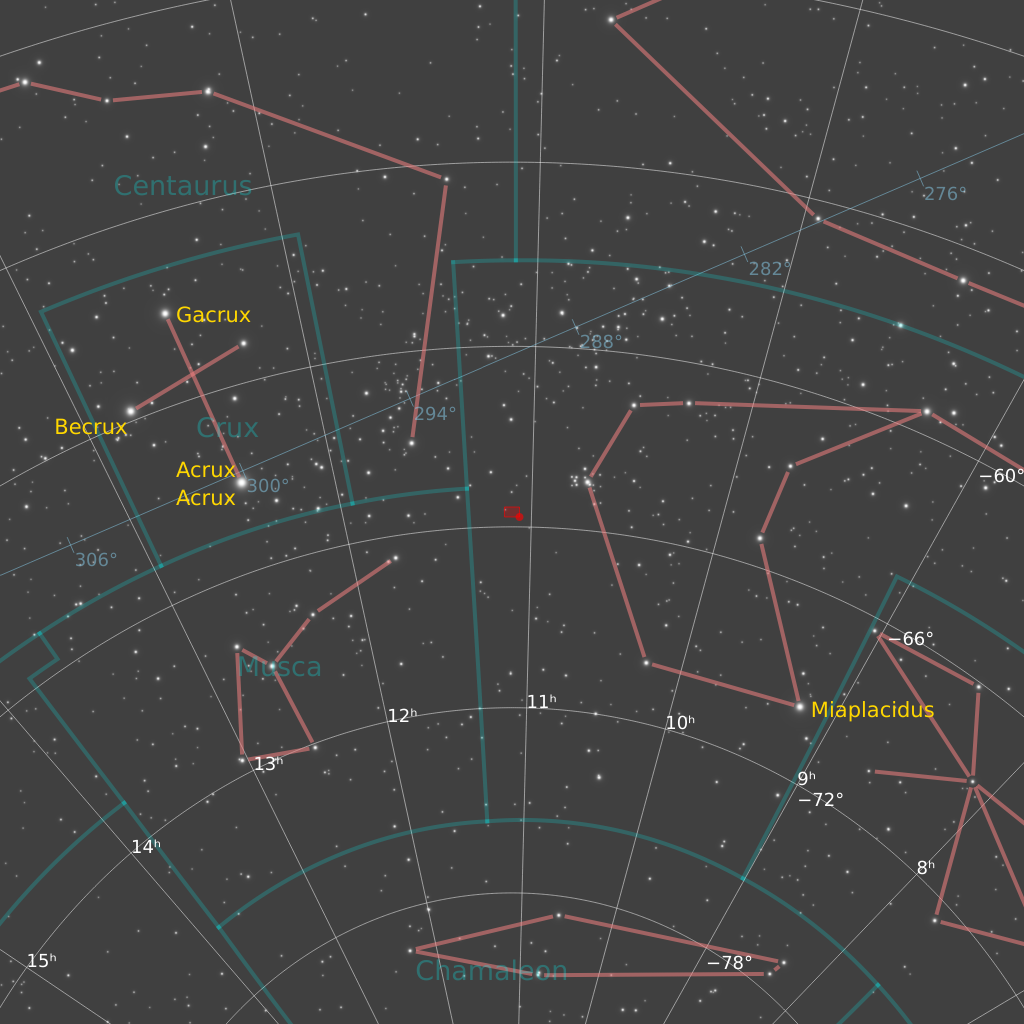
RCW 181, also catalogued as YM-16, is located in the constellation Norma. It is a relatively faint planetary nebula, formed when a Sun-like star reached the end of its life and expelled its outer layers into the surrounding interstellar medium. The exposed stellar core has evolved into a white dwarf, whose intense ultraviolet radiation ionizes the expanding shell of gas, causing it to glow brightly in characteristic emission lines such as Hα, [O III], and [N II].
Although less well known than famous planetary nebulae such as the Helix or Ring Nebula, RCW 181 is scientifically interesting because of its delicate shell structure and relatively low surface brightness. Deep imaging reveals subtle variations in brightness, faint outer extensions, and intricate filamentary details that provide clues to the mass-loss history of its progenitor star. As the nebula continues to expand at several tens of kilometers per second, it will gradually disperse into the interstellar medium, enriching it with heavy elements that will eventually become part of future generations of stars and planets.
The surrounding field is densely populated with stars of the southern Milky Way, making the nebula stand out as a colorful bubble of ionized gas against a spectacular stellar backdrop. Numerous faint background galaxies can also be identified in deep images, adding another level of depth to the field.
This project also demonstrates the advantages of collaborative astrophotography. Using both telescopes of the VdS Remote Observatory significantly increased the total amount of data available, resulting in a higher signal-to-noise ratio and allowing the faint outer structures of the nebula to be recorded more clearly. The final image is another excellent example of the capabilities of the VdS Remote Observatory at Hakos and of the benefits of teamwork in producing deep, high-quality astronomical images.
All data calibration, registration, and final processing were performed in PixInsight.
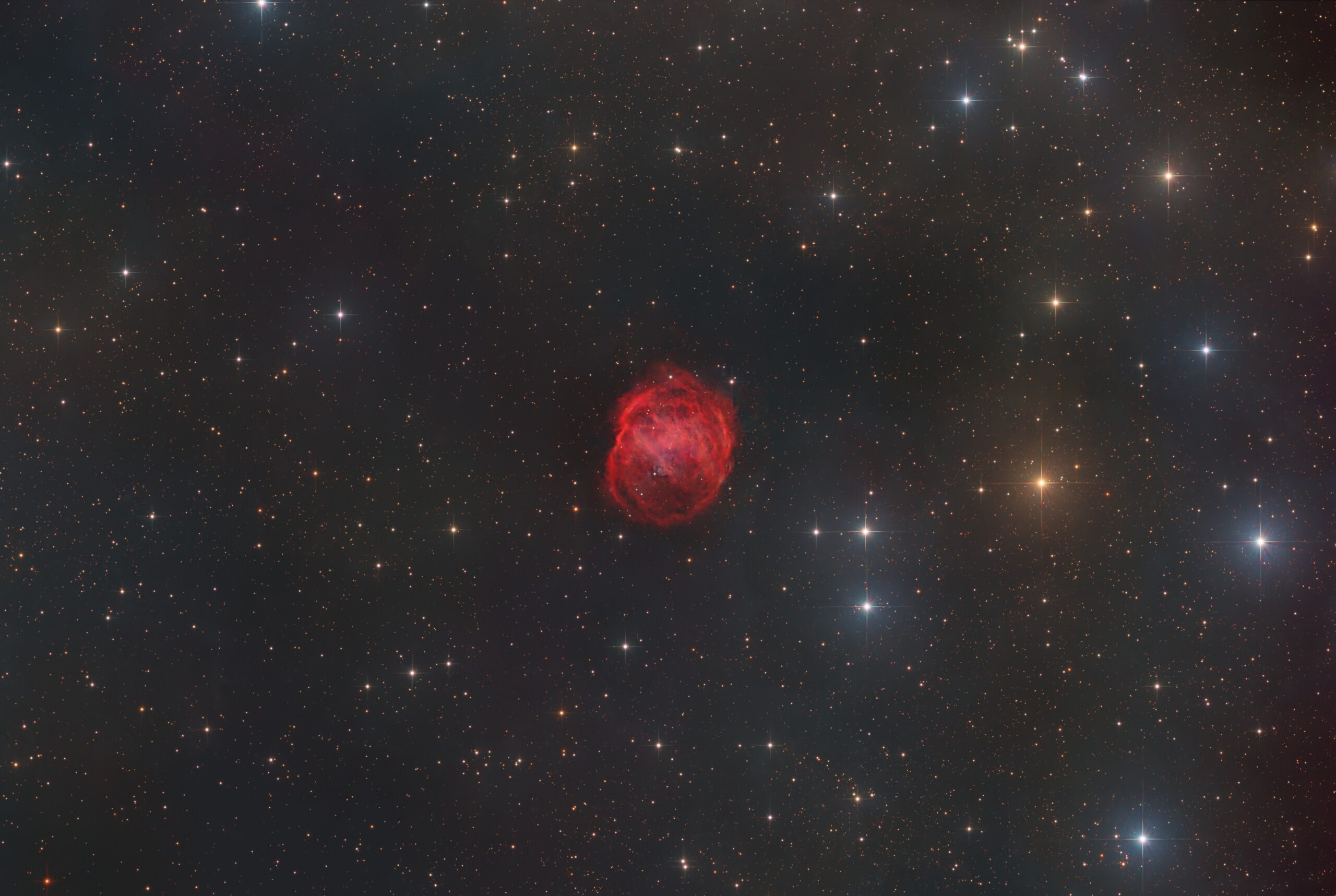
The images were taken with the following equipment:
- Date: 2025
- Location: Hakos, Namibia
- Telescope/Lens: TS 12“ Newton-Astrograph
- Focal length [mm]: 1391
- Focal ratio: 4.56
- Mount: 10Micron GM3000
- Camera: Lacerta DeepSkyPro2600 (mono)
- Filter: LRGBHα
- Exposure time [min]: 42:36:36:505
- Resolution: 0.56″/px
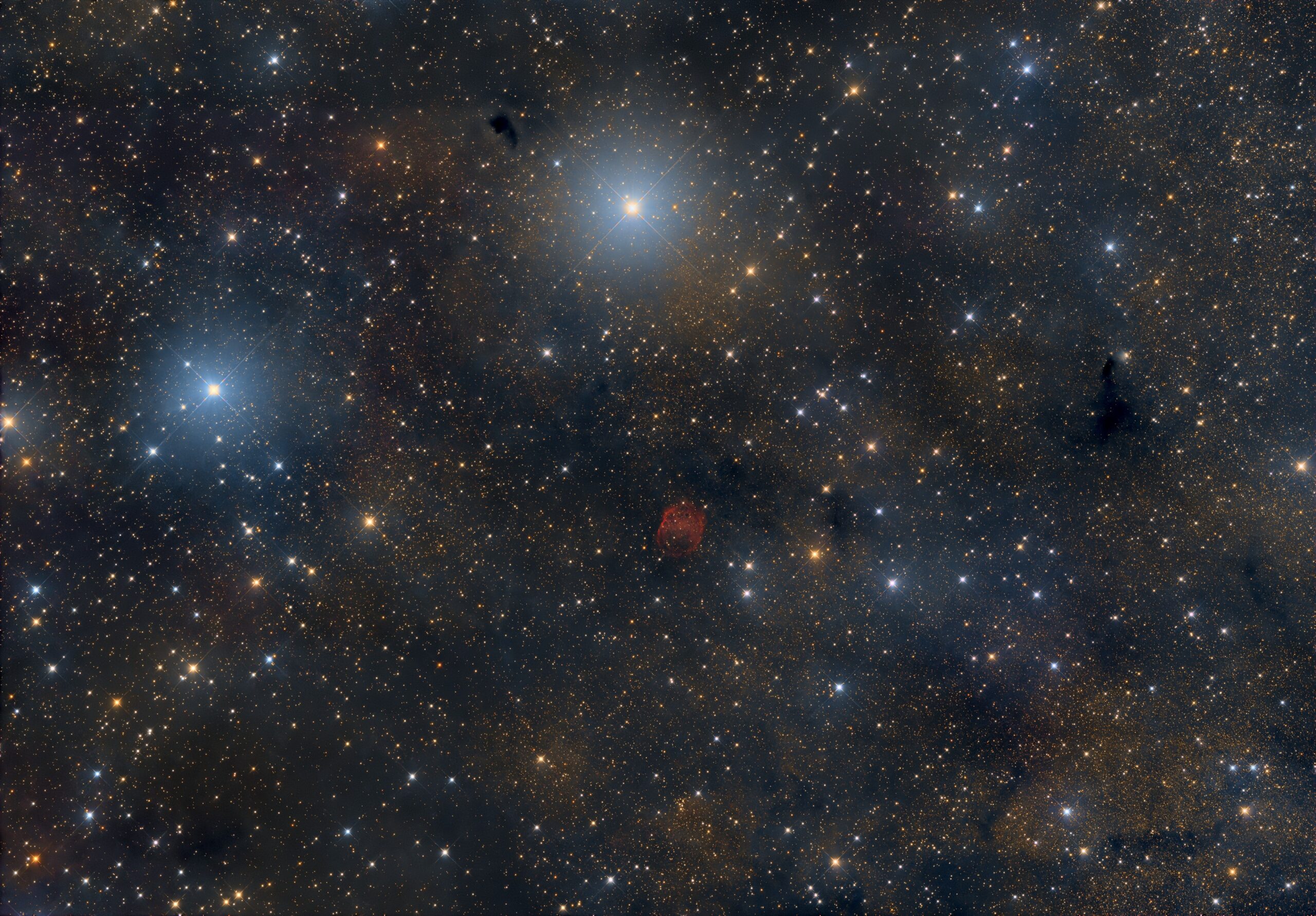
The images were taken with the following equipment:
- Date: 2025
- Location: Hakos, Namibia
- Telescope/Lens: Takahashi Epsilon-160ED
- Focal length [mm]: 535
- Focal ratio: 3.3
- Mount: 10Micron GM3000
- Camera: Lacerta DeepSkyPro2600 C
- Filter: Clear, DB
- Exposure time [min]: 535
- Resolution: 1.45″/px



Leave a reply