

NGC 6164 / 6165
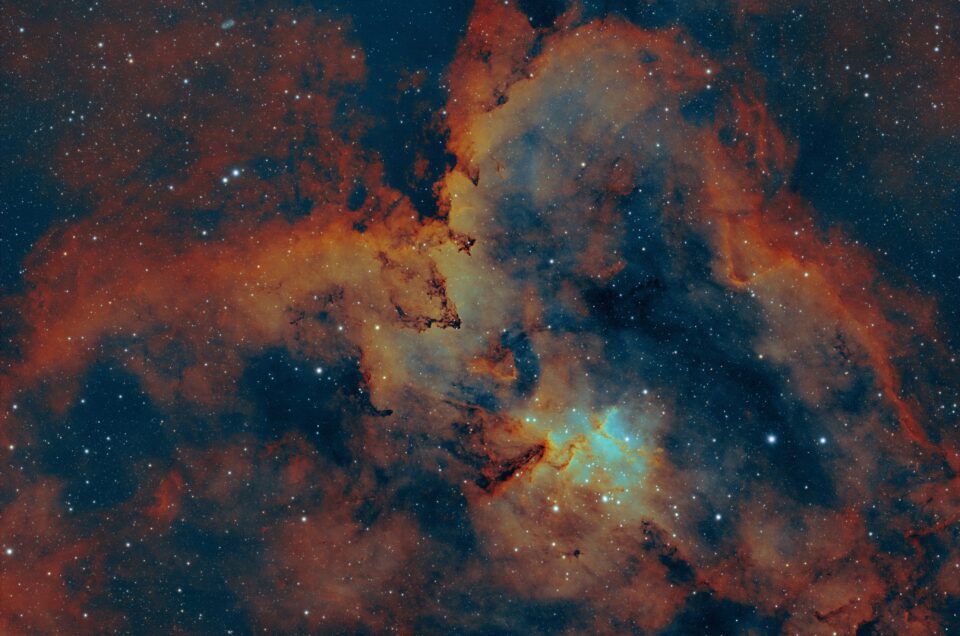
I imaged the remarkable emission nebula NGC 6164 twice over the years using two very different approaches. My first image was acquired in 2013 during a stay at the astrofarm Tivoli in Namibia, where the exceptionally dark southern skies provided ideal conditions for imaging this challenging object. Several years later, in 2022, I received a high-quality HSO narrowband dataset from Telescope Live, acquired with professional equipment in Chile. The narrowband data revealed the nebula’s intricate filamentary structure with outstanding contrast, highlighting details that are difficult to capture in broadband imaging.
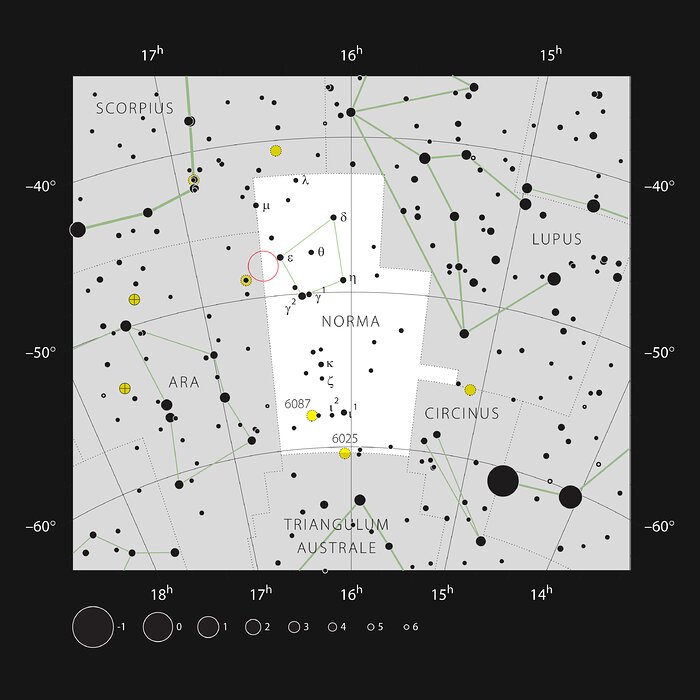
NGC 6164 is located in the constellation Norma at a distance of approximately 4,000 light-years. Although often referred to as a planetary nebula because of its appearance, it is in fact not a planetary nebula. Instead, it is a rare emission nebula created by the powerful stellar winds of the extremely massive O-type star HD 148937, which lies at its center.
HD 148937 belongs to the rare class of O6f?p stars, a group of hot, massive stars characterized by strong magnetic fields and highly variable stellar winds. Unlike planetary nebulae, which are produced by dying Sun-like stars, NGC 6164 was formed when this massive star expelled large quantities of gas during violent episodes of mass loss. The energetic ultraviolet radiation from the star ionizes the surrounding material, causing the nebula to glow brightly in emission lines such as Hα, [S II], and [O III].
The nebula displays a striking bipolar morphology, with two opposing lobes connected by complex arcs and filaments surrounding the central star. This unusual shape is thought to result from the interaction between the stellar wind and the star’s strong magnetic field, which channels the outflow into preferred directions. The resulting structure makes NGC 6164 one of the most unusual stellar ejecta nebulae in the Milky Way.
From a scientific perspective, NGC 6164 provides a rare opportunity to study the late evolutionary stages of very massive stars before they eventually explode as core-collapse supernovae. Such stars enrich the interstellar medium with heavy elements and play a crucial role in the chemical evolution of galaxies. Observations of NGC 6164 therefore contribute to our understanding of stellar winds, magnetic fields, and the mass-loss processes that shape the lives of the most massive stars.
The two datasets complement each other perfectly. The image obtained from Namibia in 2013 captures the nebula under pristine southern skies, while the 2022 Telescope Live HSO data reveal the intricate emission structures with exceptional clarity. Together, they showcase one of the most spectacular and scientifically interesting emission nebulae in the southern Milky Way.
For the Telescope Live data the calibration and registration, as well as the final image processing, were all done with PixInsight.
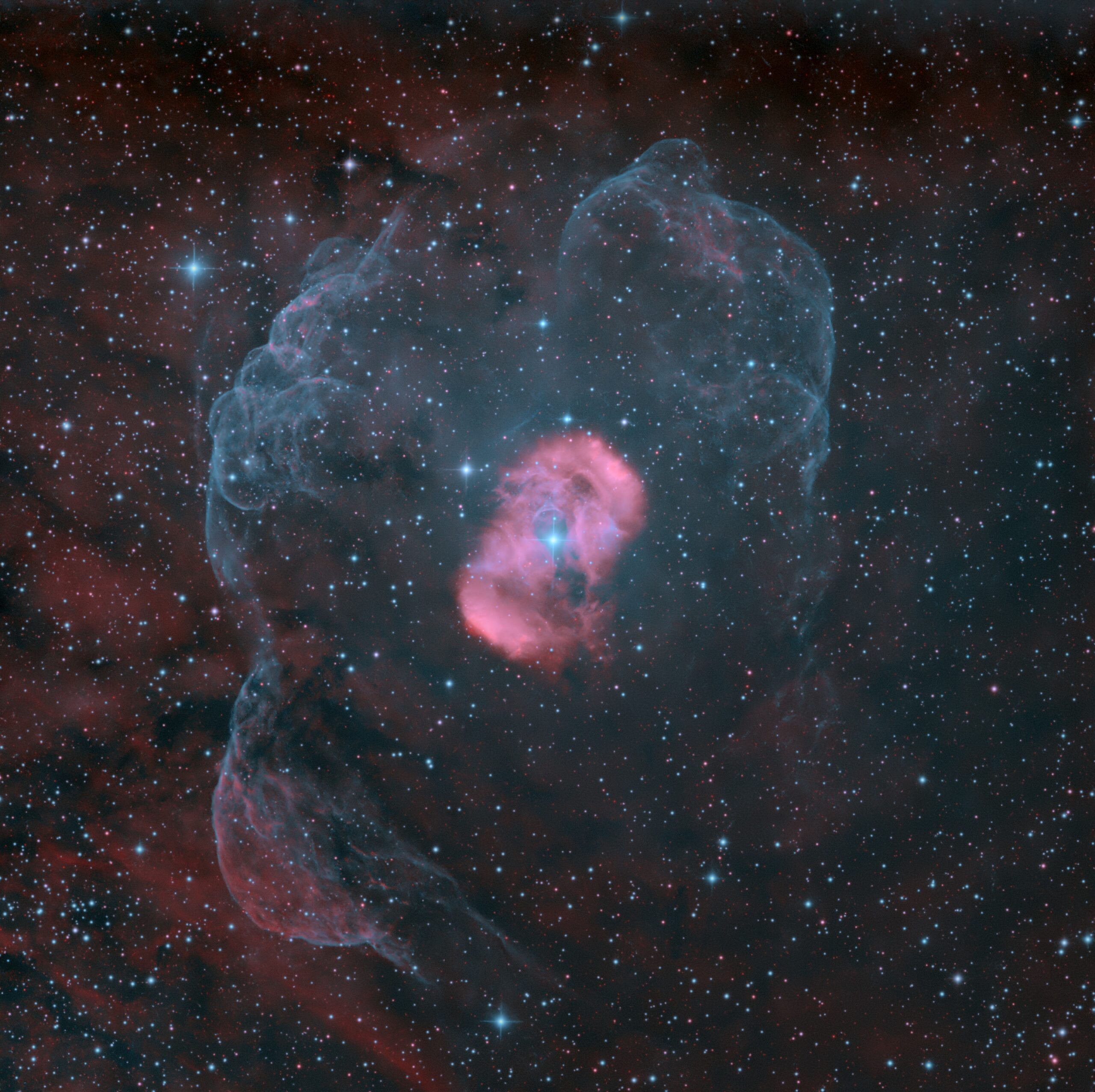
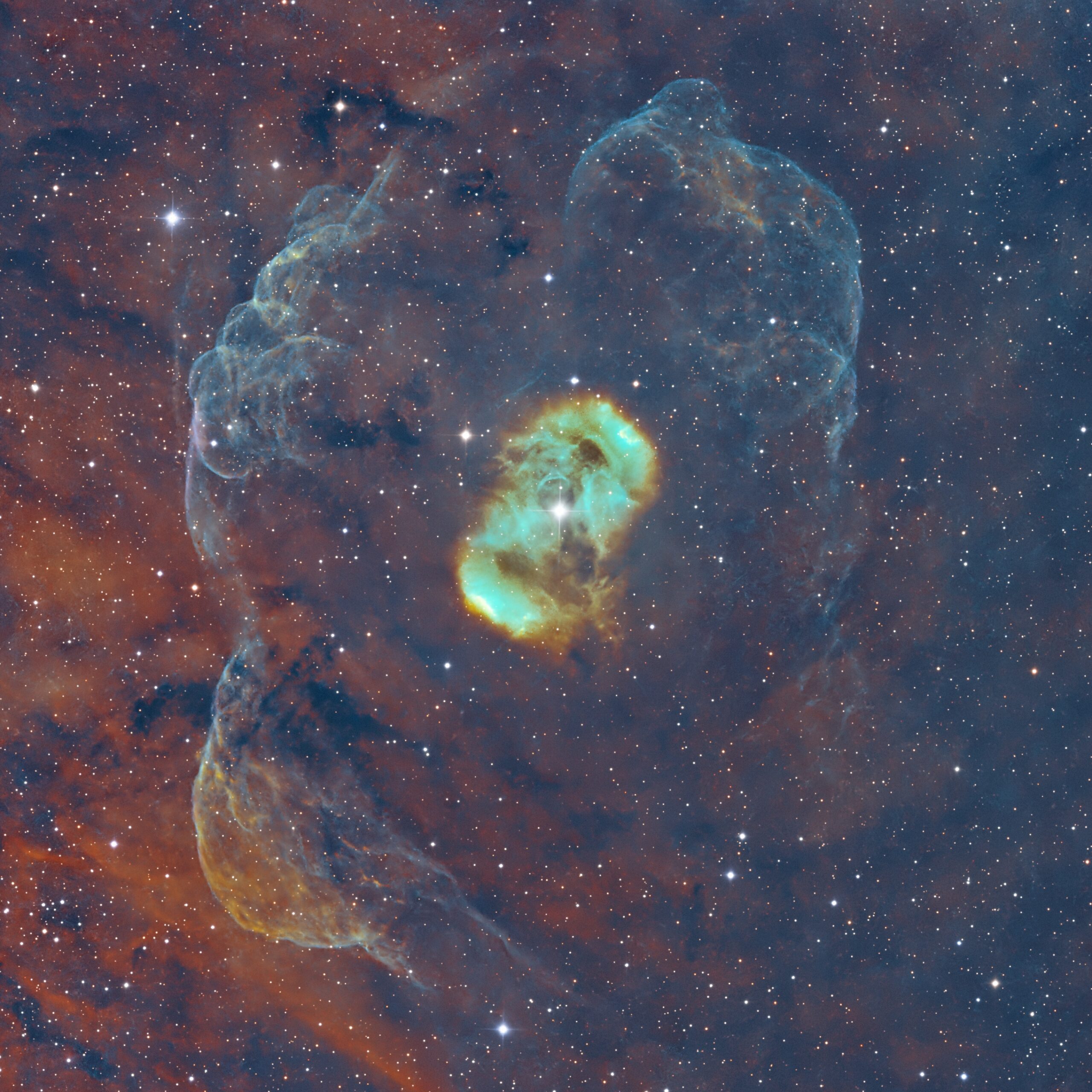
The images were taken with the following equipment:
- Date: 2022
- Location: Chile
- Telescope: Planwave CDK24
- Focal length [mm]: 3962
- Focal ratio: 6.5
- Mount: Mathis MI-1000/1250
- Camera: FLI PL 9000
- Filter: Hα:[OIII]:[SII]
- Exposure time [min]: 500:500:500
- Resolution: 0.62″/px
For the 2013 data the calibration and registration was done with DeepSkyStacker, the final image processing, was done with PixInsight.
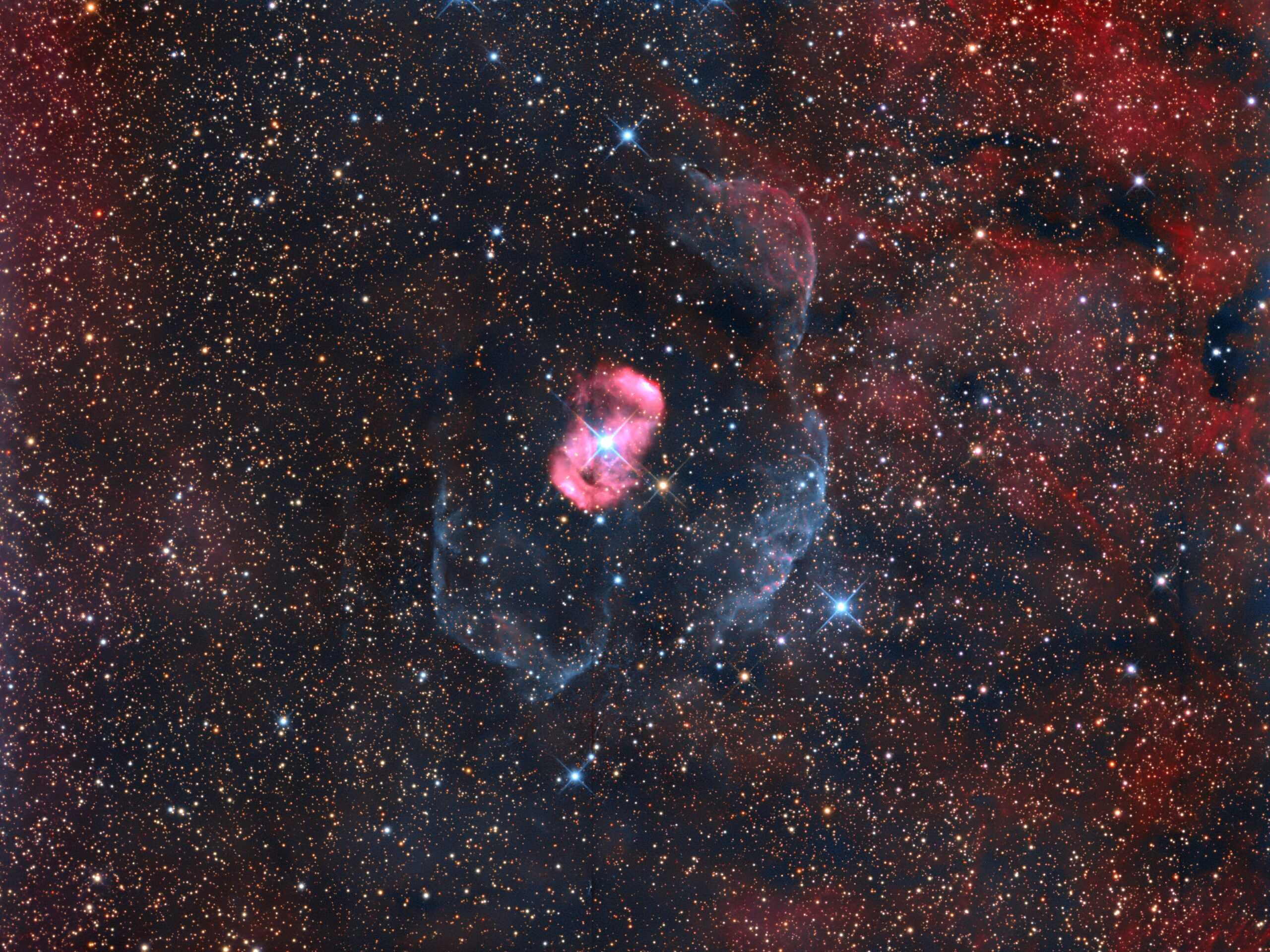
The images were taken with the following equipment:
- Date: 2013
- Location: Tivoli, Namibia
- Telescope: 12″ ASA Astrograph
- Focal length [mm]: 1076
- Focal ratio: 3.6
- Mount: ASA DDM85
- Camera: FLI Microline ML8300
- Filter:R:G:B:Hα:[OIII]
- Exposure time [min]: 50:50:55:120:60
- Resolution: 1.04″/px



Leave a reply