

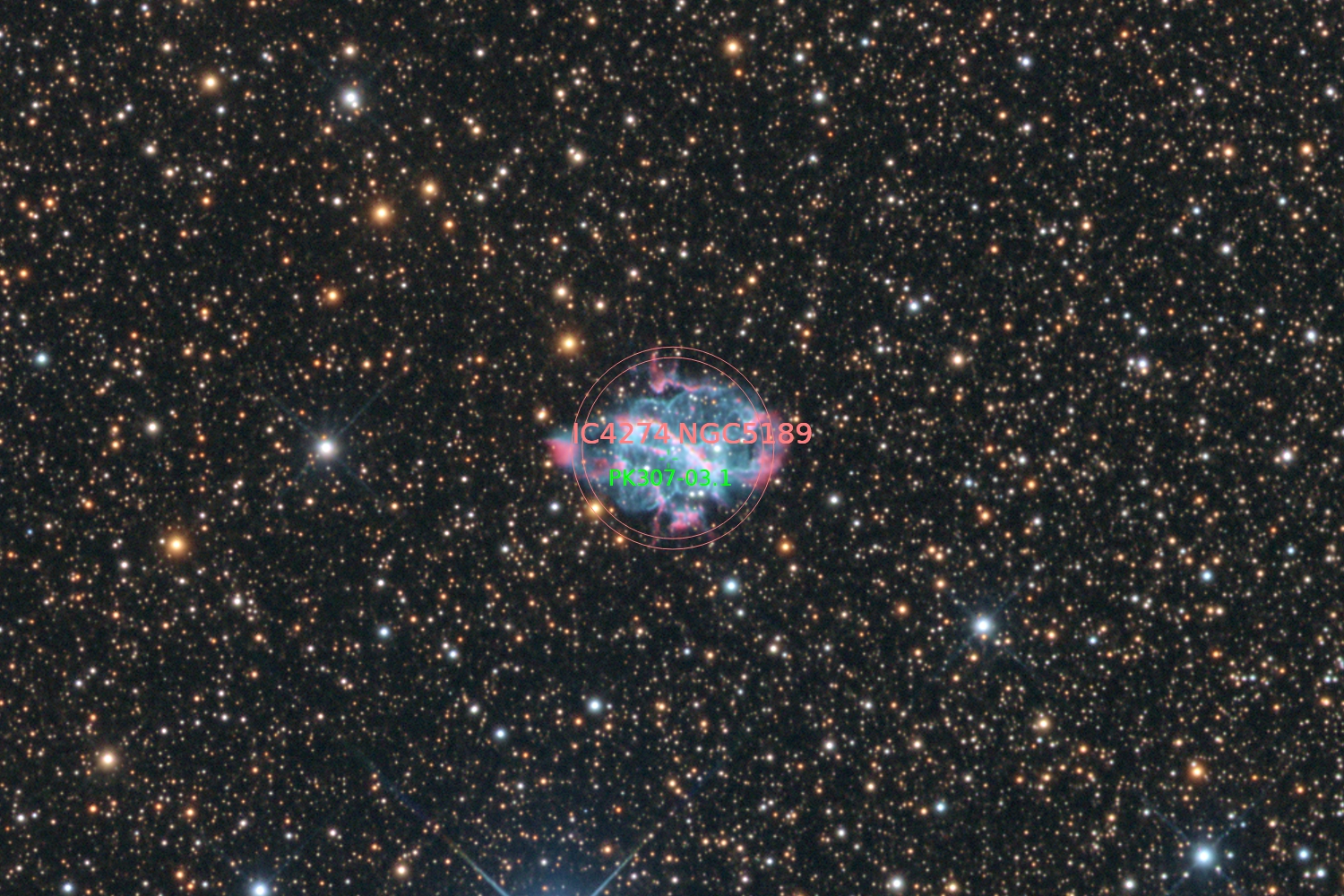
NGC 5189
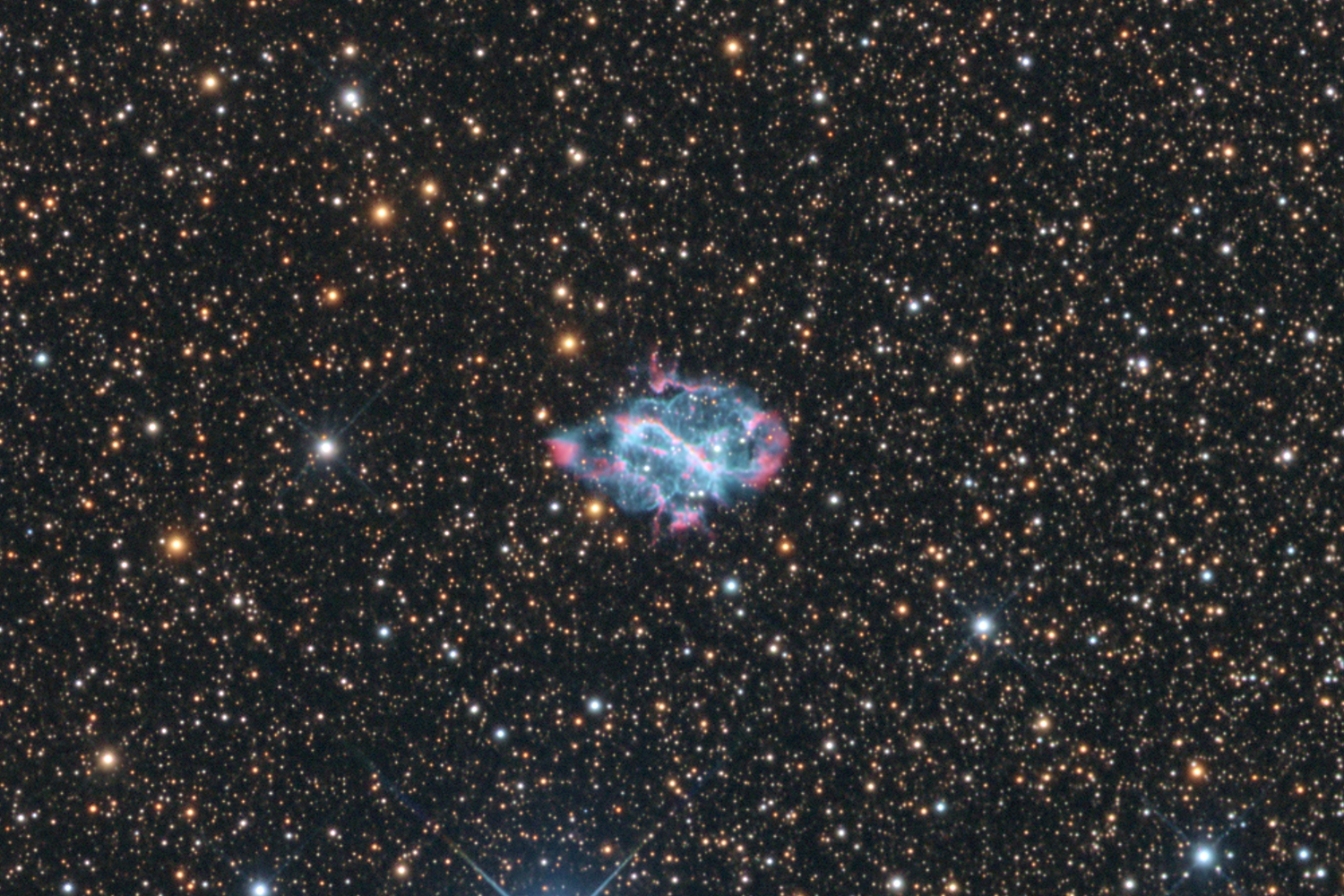
In 2015, during a stay at the astrofarm Tivoli in Namibia, I imaged the remarkable planetary nebula NGC 5189. The exceptional observing conditions of the Namibian desert, combined with the southern location of the object, provided an excellent opportunity to capture one of the most unusual planetary nebulae in the sky. Deep exposures revealed its intricate network of glowing filaments, knots, and twisted gaseous structures, making it one of the most rewarding planetary nebulae to image from the southern hemisphere.
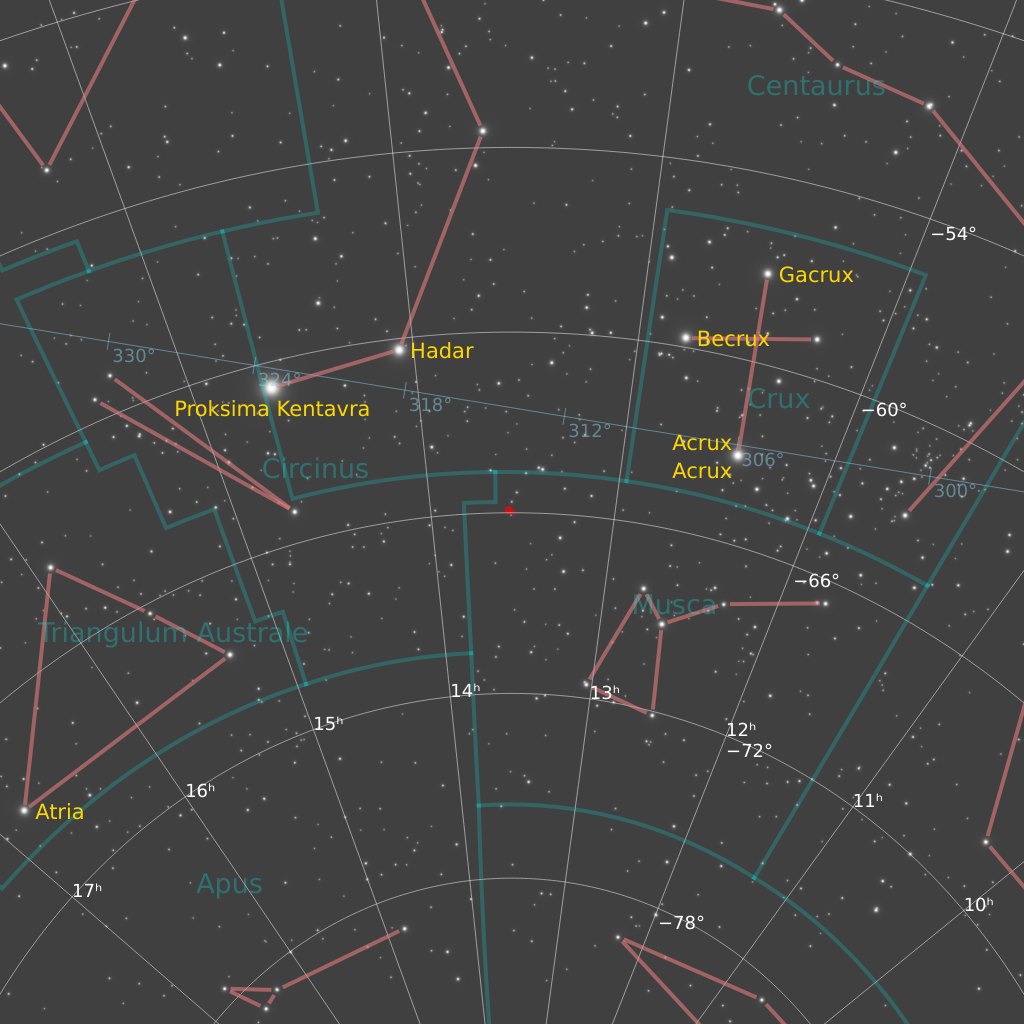
NGC 5189 is located in the constellation Musca at a distance of approximately 3,000 light-years. Unlike the more familiar ring-shaped or spherical planetary nebulae, NGC 5189 exhibits a highly complex and chaotic appearance. Its structure consists of multiple intertwined lobes, arcs, and filamentary clouds that give the impression of a giant cosmic „S“ shape. This unusual morphology has made it a favorite target for both professional astronomers and astrophotographers.
A planetary nebula forms when a star similar in mass to the Sun reaches the end of its life and expels its outer layers into space. The exposed stellar core remains extremely hot and emits intense ultraviolet radiation, causing the surrounding gas to glow. In the case of NGC 5189, the ejected material has been shaped into an exceptionally complex structure, likely through interactions involving a close binary companion to the central star.
Indeed, modern observations have shown that the central star of NGC 5189 is part of a binary system. The gravitational influence of the companion star is thought to have played a major role in sculpting the nebula’s extraordinary appearance. The interaction between the two stars may have produced precessing outflows and multiple episodes of mass loss, resulting in the intricate filaments and overlapping shells visible today.
The nebula shines primarily through emission from ionized oxygen and hydrogen, producing striking color contrasts in narrowband images. Particularly prominent are the bright oxygen-rich filaments that trace the turbulent motions of the expanding gas. These structures provide astronomers with valuable information about the final stages of stellar evolution and the mechanisms that shape planetary nebulae.
From a scientific perspective, NGC 5189 is considered one of the best examples of a planetary nebula whose morphology has been strongly influenced by binary interactions. It serves as an important laboratory for studying how dying stars return enriched material to the interstellar medium, contributing elements that will eventually become part of future generations of stars and planetary systems.
The image obtained from Tivoli captures the extraordinary complexity of this object and highlights why NGC 5189 is regarded as one of the most fascinating planetary nebulae in the southern sky. Its tangled filaments, bright emission regions, and unusual shape provide a spectacular example of the dynamic processes that occur during the final stages of stellar evolution.
Data calibration and registration and the final processing was done with PixInsight. The result was as follows:
The images were taken with the following equipment:
- Date: 2015
- Location: Astrofarm, Tivoli, Namibia
- Telescope/Lens: ASA 12″ Astrograph
- Focal length [mm]: 1076
- Focal ratio: 3.6
- Mount: ASA DDM85
- Camera: FLI Microline ML 8300
- Filter: R:G:B
- Exposure time [min]: 75:75:75
- Resolution: 0.69″/px (150%)



Leave a reply