

NGC 3572
In 2024, I processed a dataset of the beautiful open cluster NGC 3572 that was acquired at the VdS Remote Observatory in Hakos, Namibia, by Peter Englmaier. While the original observations were obtained by Peter, all calibration, registration, and final image processing were performed by me. The exceptional sky quality at Hakos and the high-quality instrumentation of the VdS observatory provided an excellent foundation for a detailed image of this remarkable star cluster.
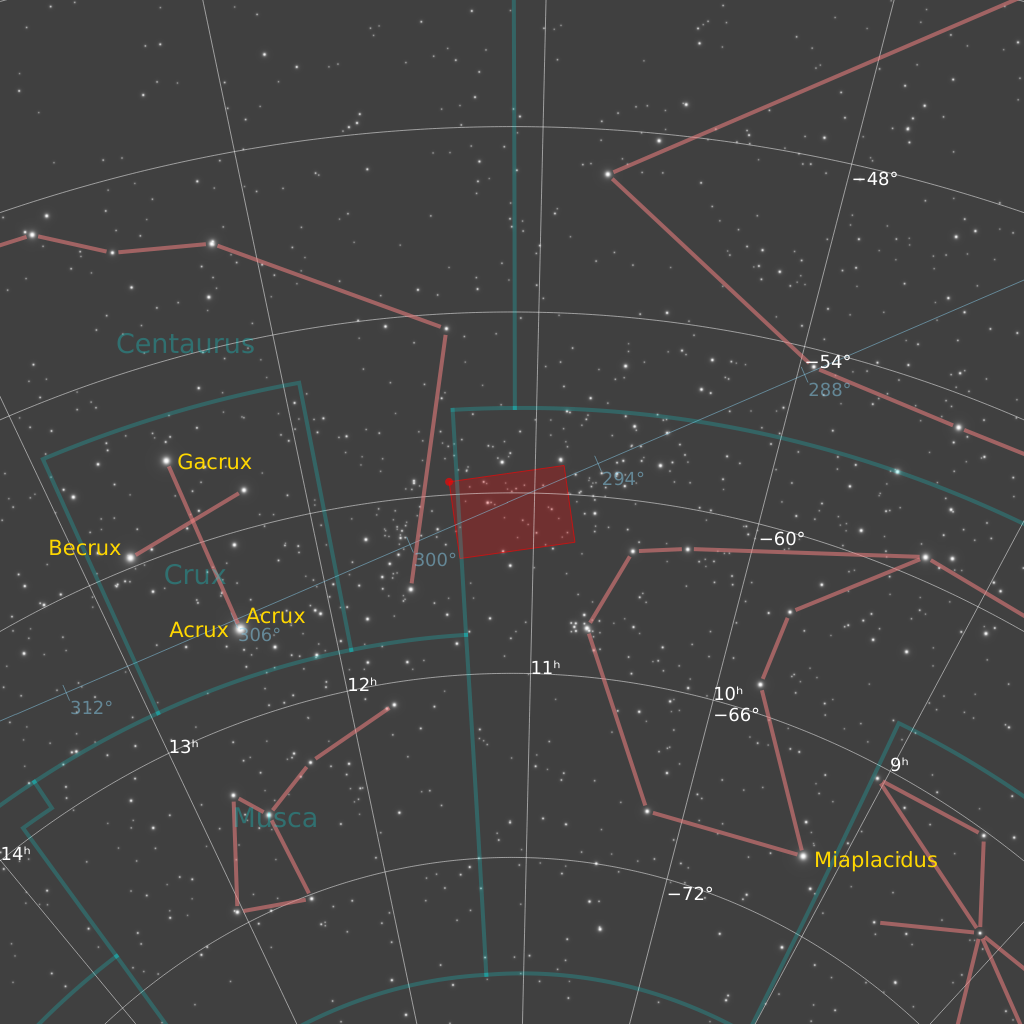
NGC 3572 is located in the constellation Carina, one of the richest and most active star-forming regions of the Milky Way. The cluster lies at a distance of approximately 6,000–7,000 light-years and is relatively young, with an estimated age of only a few million years. As a result, many of its stars are still in the early stages of their evolution and remain closely associated with the gas and dust from which they formed.
The cluster is embedded within a larger complex of emission nebulae, molecular clouds, and young stellar populations. Deep images often reveal faint hydrogen emission and dark dust structures surrounding the cluster, providing evidence of ongoing star formation in the region. The brightest members are hot, massive blue stars whose intense ultraviolet radiation ionizes the surrounding gas and helps sculpt the nearby interstellar medium.
From a scientific perspective, NGC 3572 is an excellent laboratory for studying the formation and early evolution of stars. Because the cluster is so young, it contains numerous massive stars that have not yet exhausted their nuclear fuel. These stars strongly influence their environment through powerful stellar winds and radiation, triggering or suppressing further star formation in neighboring clouds. Observations of such young clusters help astronomers understand how stellar feedback shapes the evolution of star-forming regions.
The field surrounding NGC 3572 is exceptionally rich. Located within the Carina spiral arm, it is projected against dense Milky Way star fields containing countless foreground and background stars. This creates a spectacular visual backdrop and adds considerable depth to deep images. Subtle color differences between hot blue stars, intermediate yellow stars, and cooler orange stars further enhance the appearance of the cluster.
The high-quality data obtained under the pristine skies of Hakos allowed the rich stellar population and delicate surrounding structures of NGC 3572 to be captured in remarkable detail. The resulting image highlights not only the beauty of this young southern star cluster but also the dynamic processes of stellar birth and evolution that continue to shape the Carina region today.
Data calibration and registration and the final processing was done with PixInsight. The result was as follows:
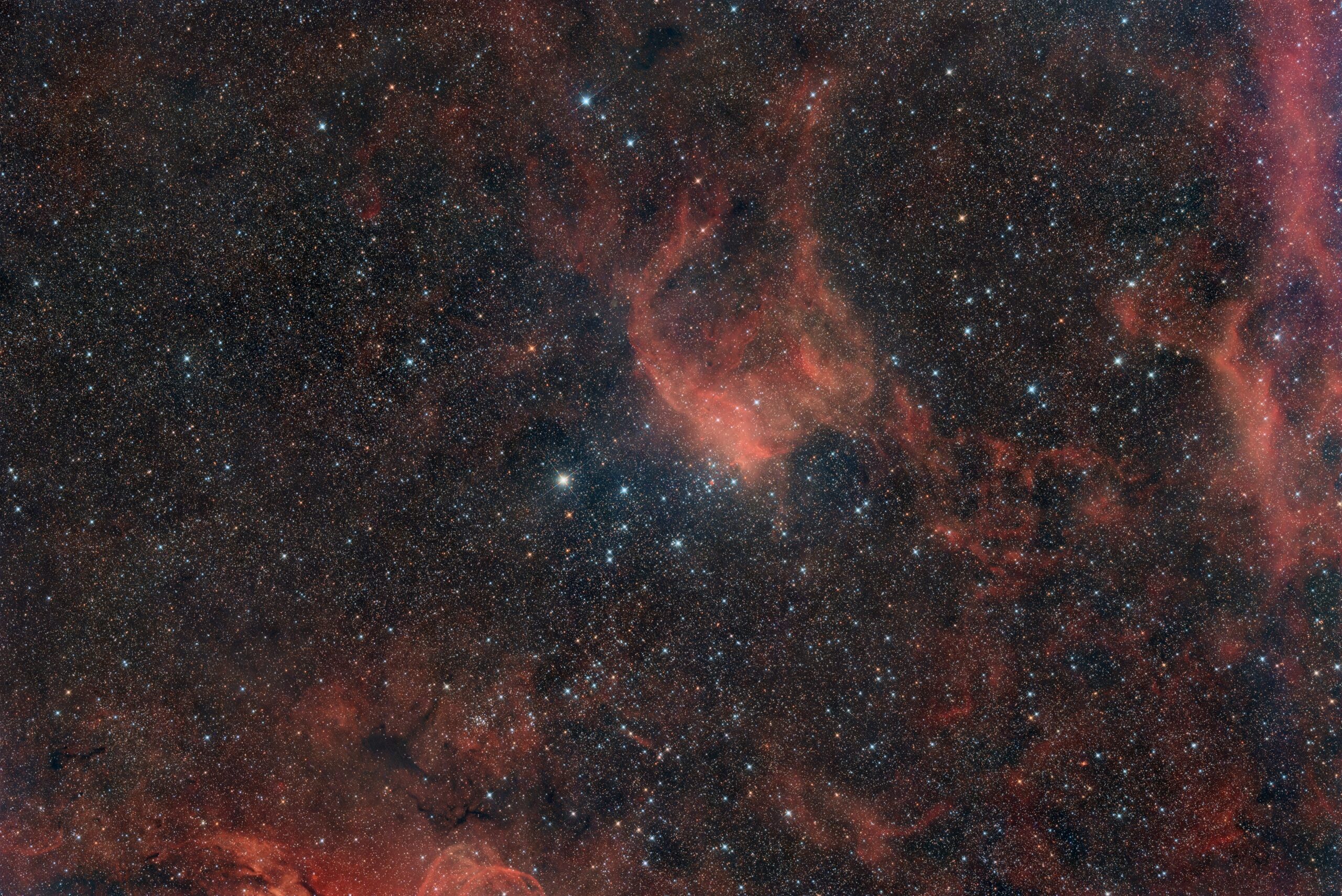
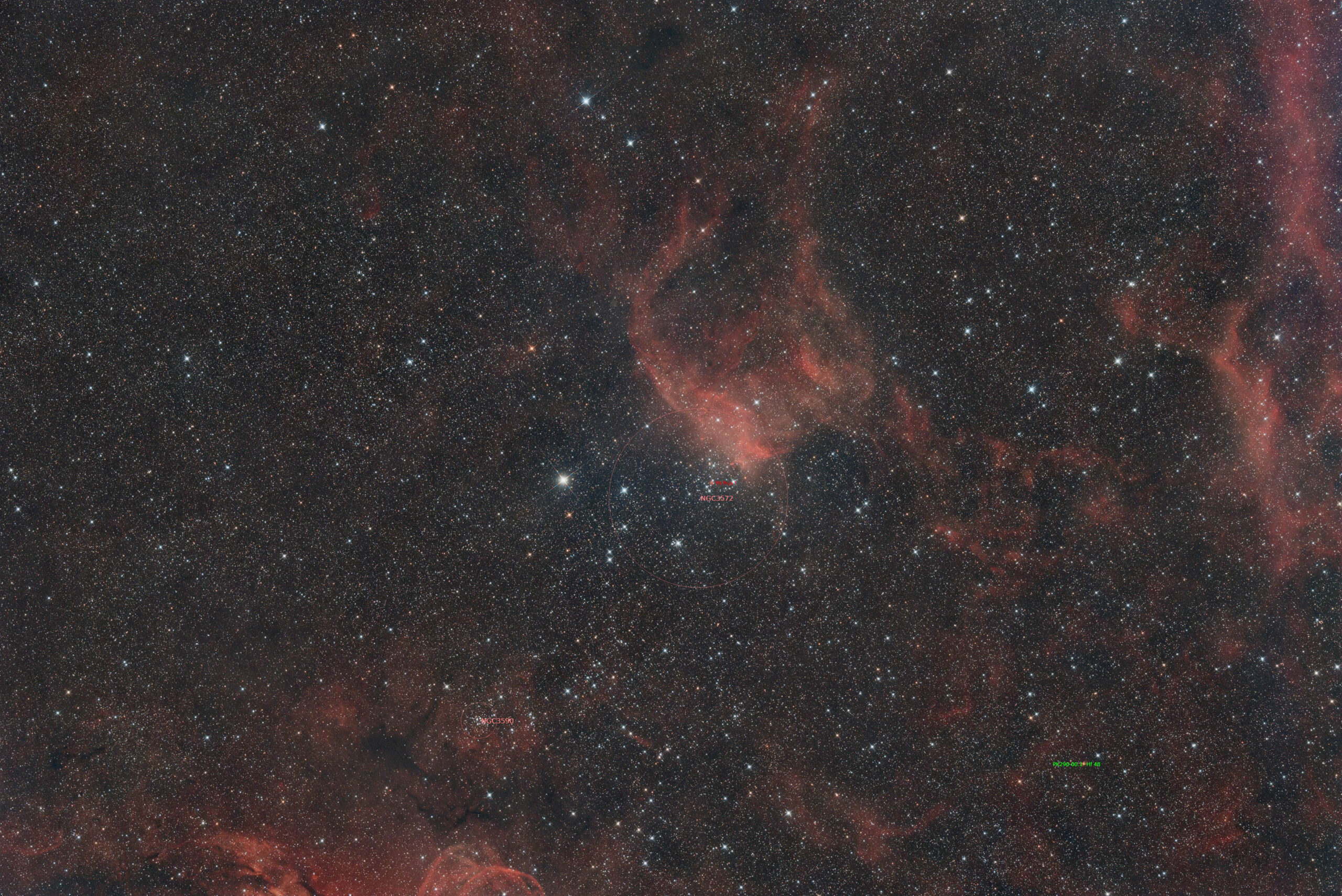
The images were taken with the following equipment:
- Date: 2024
- Location: Hakos, Namibia
- Telescope/Lens: Takahashi Epsilon 160D
- Focal length [mm]: 530
- Focal ratio: 3.3
- Mount: 10Micron GM 3000
- Camera: Lacerta 2600C
- Filter: OSC
- Exposure time [min]: 212
- Resolution: 1.45″/px



Leave a reply