

NGC 3166 – VdS Remote Hakos
As a member of the VdS remote observatory group, I have the opportunity to use the VdS remote observatory at Hakos in Namibia. Members are not only allowed to process their own observations but also the data acquired by other participants. This collaborative approach provides access to a wide variety of interesting targets and allows different processing techniques to be applied to the same dataset.
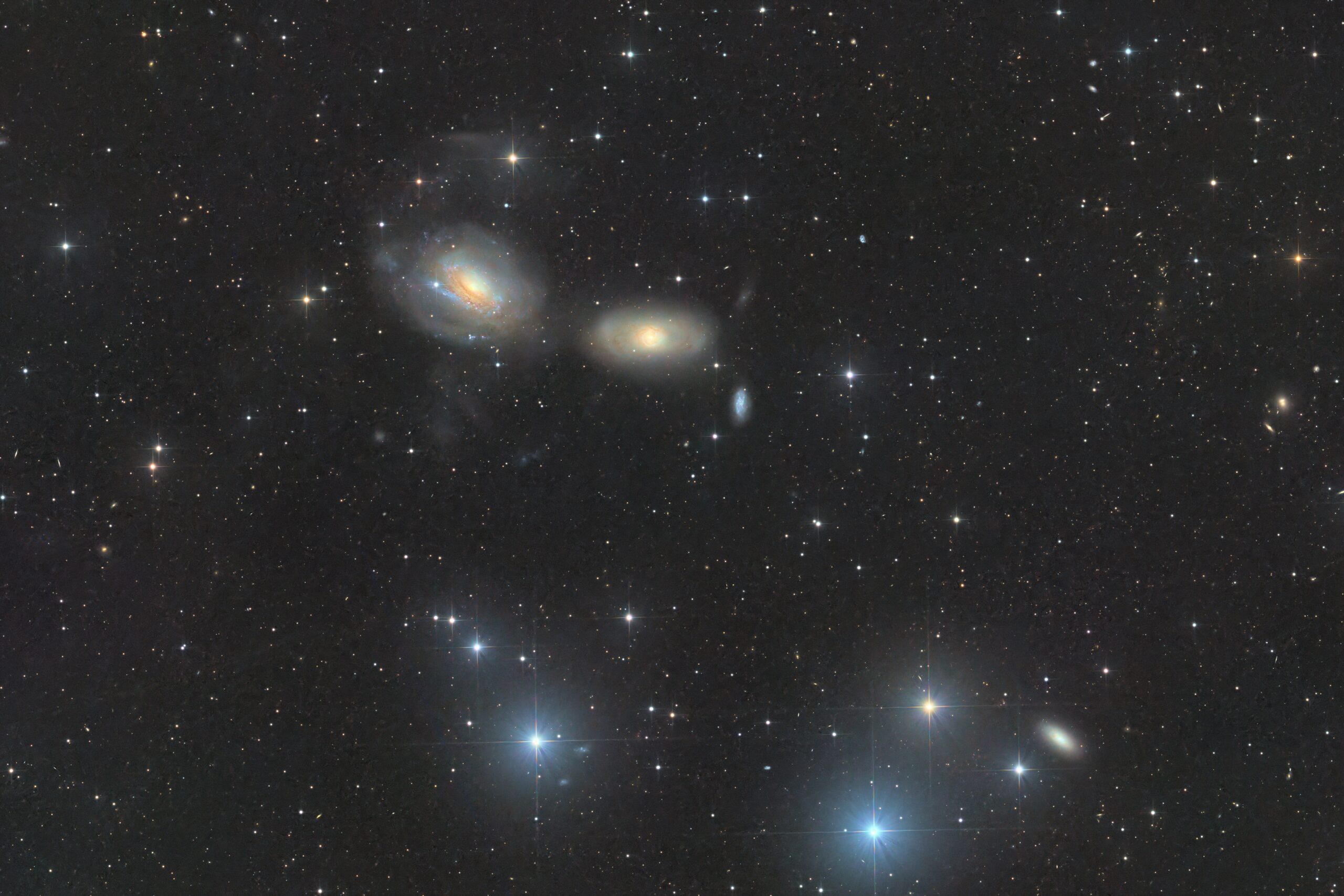
For the image presented here, I used data of the galaxy group centered on NGC 3166, acquired in 2024 by Sven Junge with the equipment of the VdS Remote Observatory. While the original data acquisition was carried out by Sven, all calibration, registration, and final image processing were performed by me.
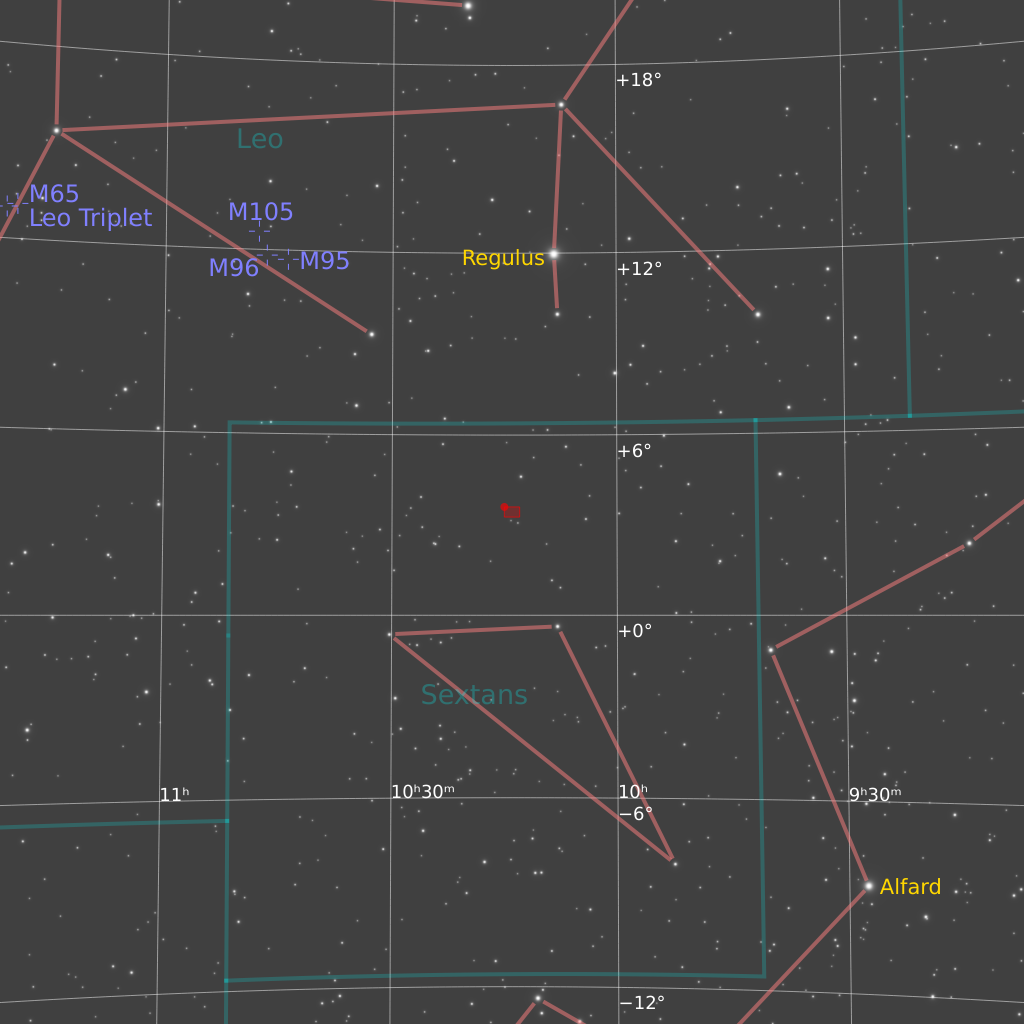
NGC 3166 is located in the constellation Sextans at a distance of approximately 70 million light-years. It forms an interacting galaxy pair with the neighboring NGC 3169, and together they dominate a small galaxy group that also contains several fainter members. Deep images reveal clear signs of gravitational interaction, including distorted outer structures, tidal features, and asymmetries within the disks of both galaxies.
NGC 3166 itself is classified as a lenticular or early-type spiral galaxy and exhibits a bright central bulge surrounded by a relatively smooth disk. In contrast, NGC 3169 shows prominent dust lanes and a more disturbed appearance, likely caused by the ongoing gravitational interaction between the two systems. Radio observations have revealed large amounts of neutral hydrogen gas distributed throughout the group, including tidal streams extending far beyond the visible galaxies.
The interaction between NGC 3166 and NGC 3169 provides astronomers with an excellent opportunity to study how gravitational forces influence galaxy evolution. Such encounters can trigger star formation, redistribute gas and dust, and gradually alter the morphology of the galaxies involved. Deep imaging often reveals faint tidal structures that preserve evidence of these interactions for hundreds of millions of years.
The exceptionally dark skies at Hakos, combined with modern instrumentation and careful image processing, allowed the fine details of this fascinating galaxy group to be revealed. The result highlights not only the beauty of the interacting galaxies themselves but also the dynamic processes that continue to shape them over cosmic timescales.
Data calibration and registration and the final processing was done with PixInsight.
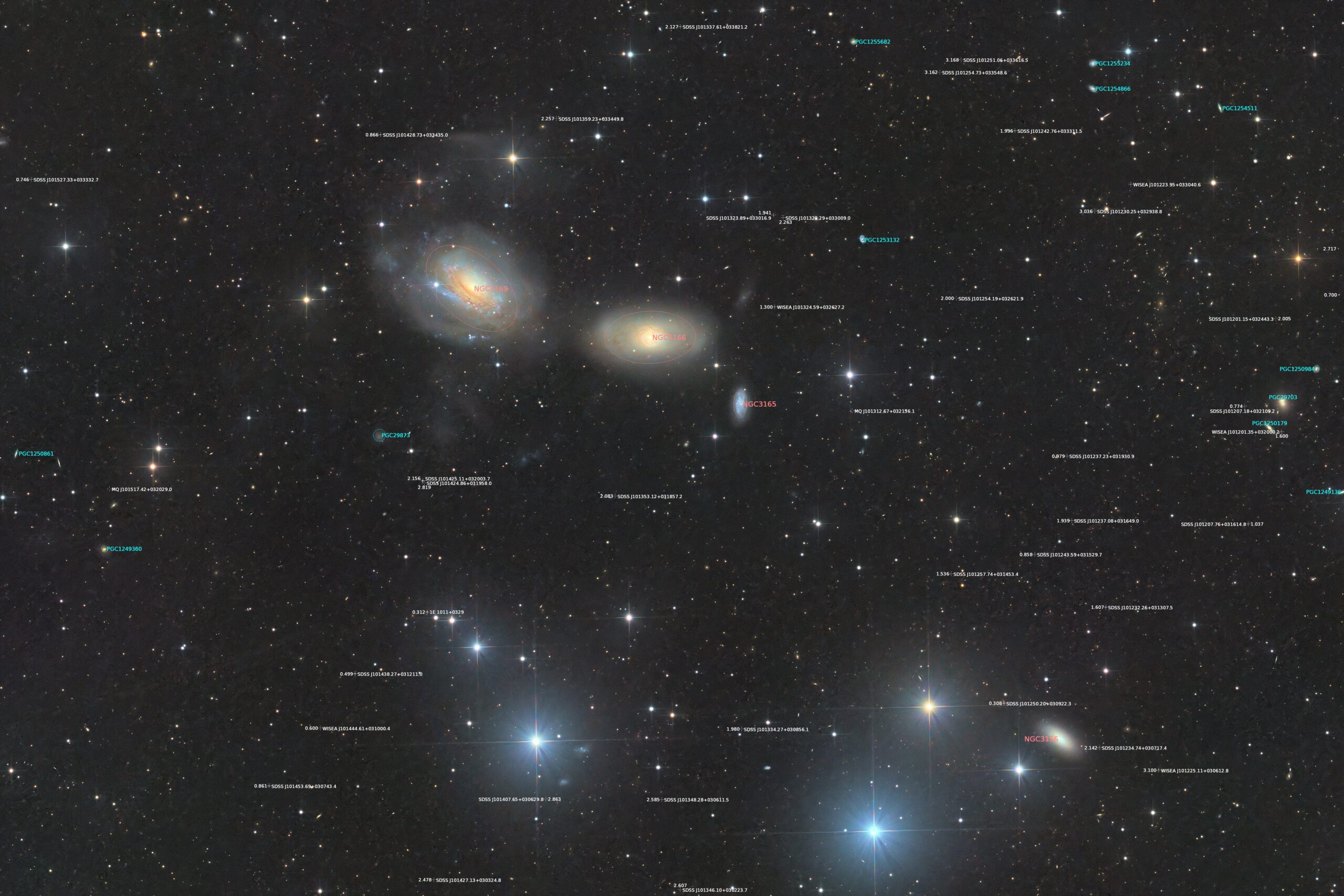
This image shows a lot of galaxies and quasars. The most distant of them is:
SDSS J101251.06+033616.5 with a redshift of 3.168 an apparent magv of 21.8 (SDSS DR17).
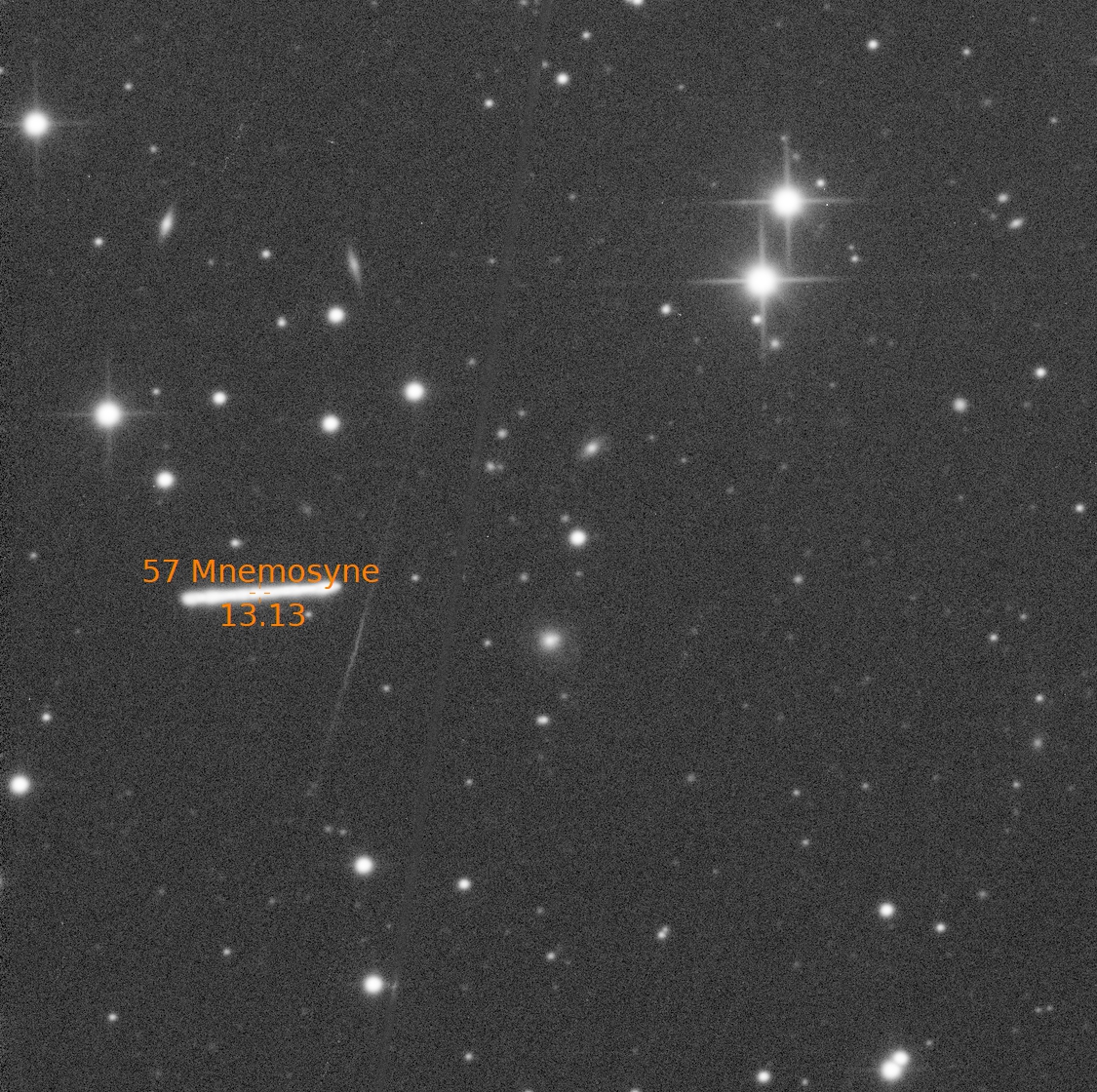
In the image you can also find the asteorid m57 Mnemosyne.
The images were taken with the following equipment:
- Date: 2024
- Location: Hakos, Namibia
- Telescope/Lens: TS 12“ Newton-Astrograph
- Focal length [mm]: 1391
- Focal ratio: 4.56
- Mount: 10Micron GM3000
- Camera: Lacerta DeepSkyPro2600 (mono)
- Filter: L:R:G:B
- Exposure time [min]: 36:24:36:27
- Resolution: 0.56″/px



Leave a reply