

IC 1805 (Heart Nebula)
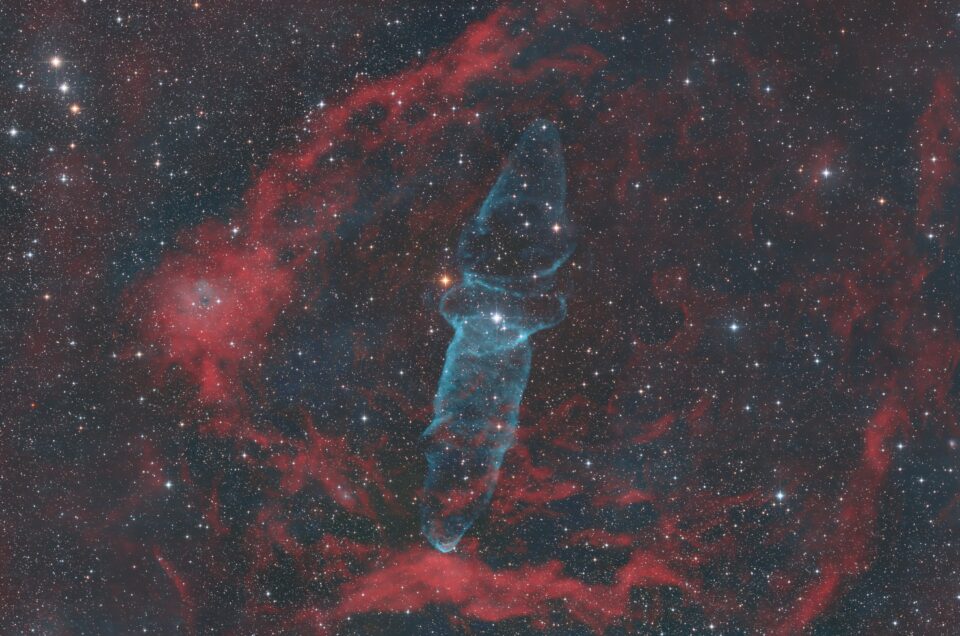
In 2026 I imaged this nebula with my Smart Telescope and in 2024 I received a high-quality dataset from Astrophotomarket.com showing the central region of the Heart Nebula (IC 1805) and the planetary nebula WeBo1.
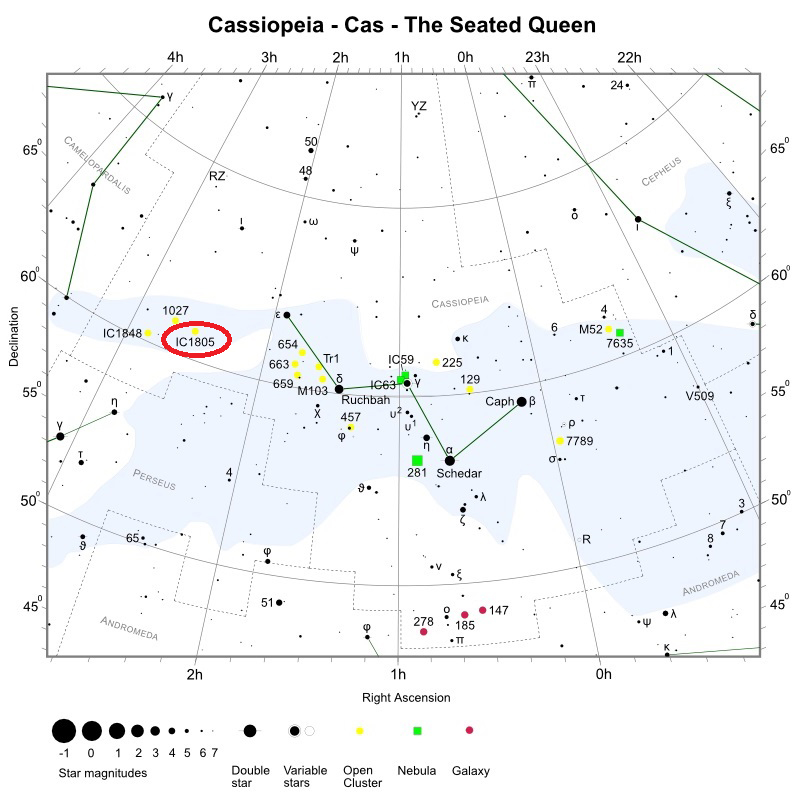
IC 1805, also cataloged as Sharpless 2-190, is an H II region about 7,500 light-years away in Cassiopeia. It spans roughly 1.5–2 degrees on the sky, which at that distance means a physical size of about 150–200 light-years. The nebula’s heart-like shape comes from a large central cavity carved out by the intense radiation and stellar winds from a cluster of hot O and B stars.
The main ionizing cluster is Melotte 15 (also Collinder 26), a very young open cluster only about 2–3 million years old. It contains a few extremely massive stars, some nearly 50 times the mass of the Sun, whose ultraviolet light strips electrons from hydrogen and makes the surrounding gas glow red in H-alpha. Dark dust lanes and dense clouds in front of the ionized gas add contrast and help define the heart outline.
IC 1805 is part of a larger complex that includes IC 1795 (the Fish Head Nebula) and NGC 896, all connected by the same giant H II region. It is a classic target for wide-field imaging because the structure is large, faint, and best seen in hydrogen-alpha or narrowband filters.
WeBo 1, or PN G135.6+01.0, is a faint, ring-like planetary nebula discovered in 1996 by Howard Bond and Ron Webbink while they were checking coordinates near the X-ray source LS I +61 303. It lies only about 1 arcminute across on the sky and is roughly 5,000–5,400 light-years away, so its physical diameter is about 1.5 light-years.
What makes WeBo 1 unusual is its central star and its morphology. The visible star is a late-type K giant with strong overabundances of carbon and s-process elements, making it a barium star. Barium stars are typically members of binary systems where a now-dead companion once dumped processed material onto the giant. In WeBo 1’s case, ultraviolet observations with Swift show a hot compact companion, likely a young pre-white dwarf with a temperature of at least 40,000 K, which is the true ionizing source of the nebula.
The nebula itself appears as a thin, almost circular ring seen nearly edge-on, giving it an elliptical outline. Its estimated age is around 12,000 years, and the system’s rotation period is about 4.7 days, suggesting that binary interaction helped shape the ejected gas into a ring rather than a sphere.
In a single wide field, IC 1805 and WeBo 1 show the full life cycle of stars: a giant, active star-forming region full of newborn massive stars, and a tiny, evolved planetary nebula marking the end of a low- to intermediate-mass star’s life. IC 1805 is about birth, WeBo 1 about death; one is huge and diffuse, the other small and compact. That contrast makes the region especially rewarding for astrophotographers and a neat visual summary of stellar evolution in Cassiopeia.
For the 2026 data the calibration, registration and the final processing was done with PixInsight. The result was as follows:
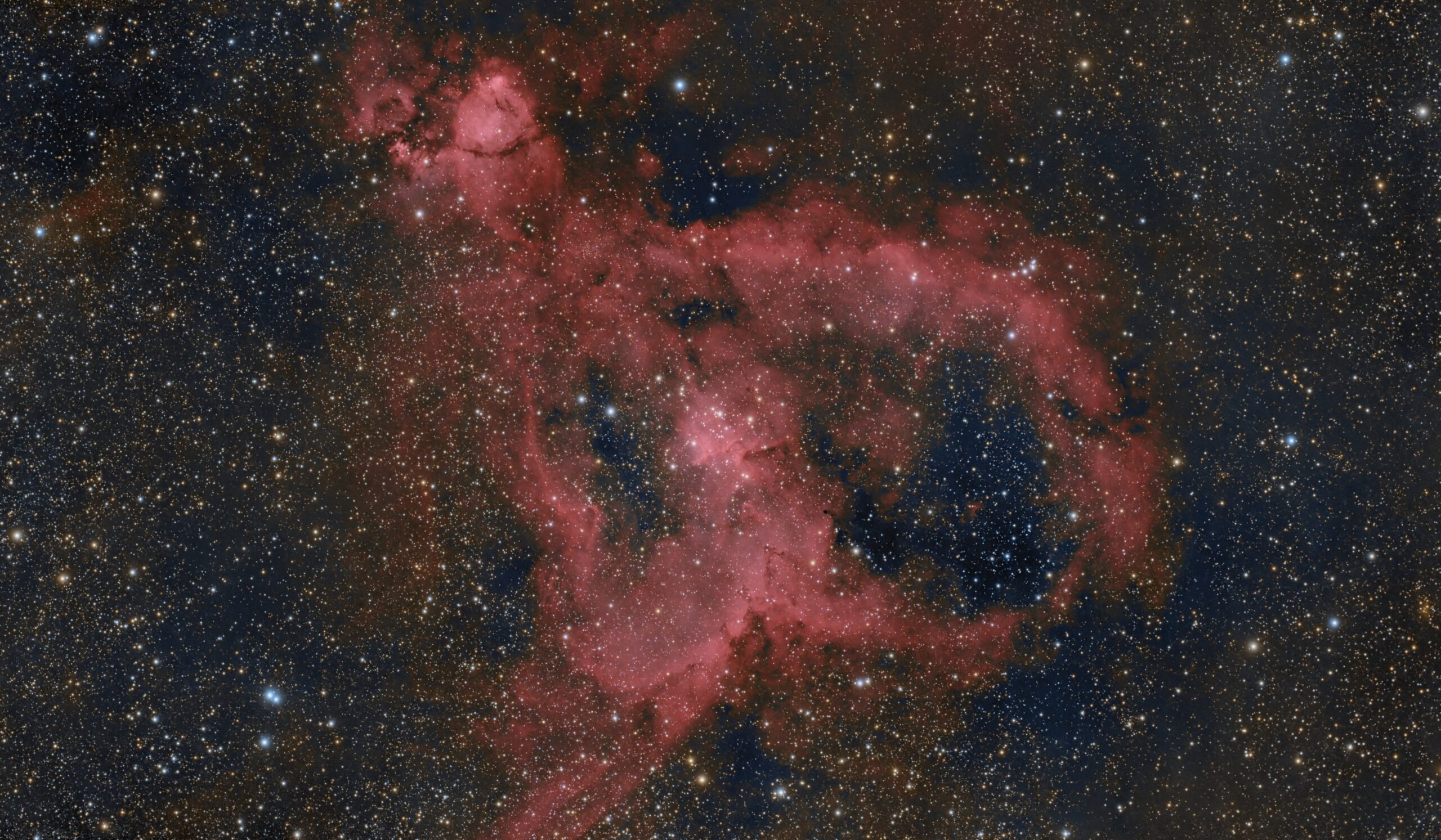
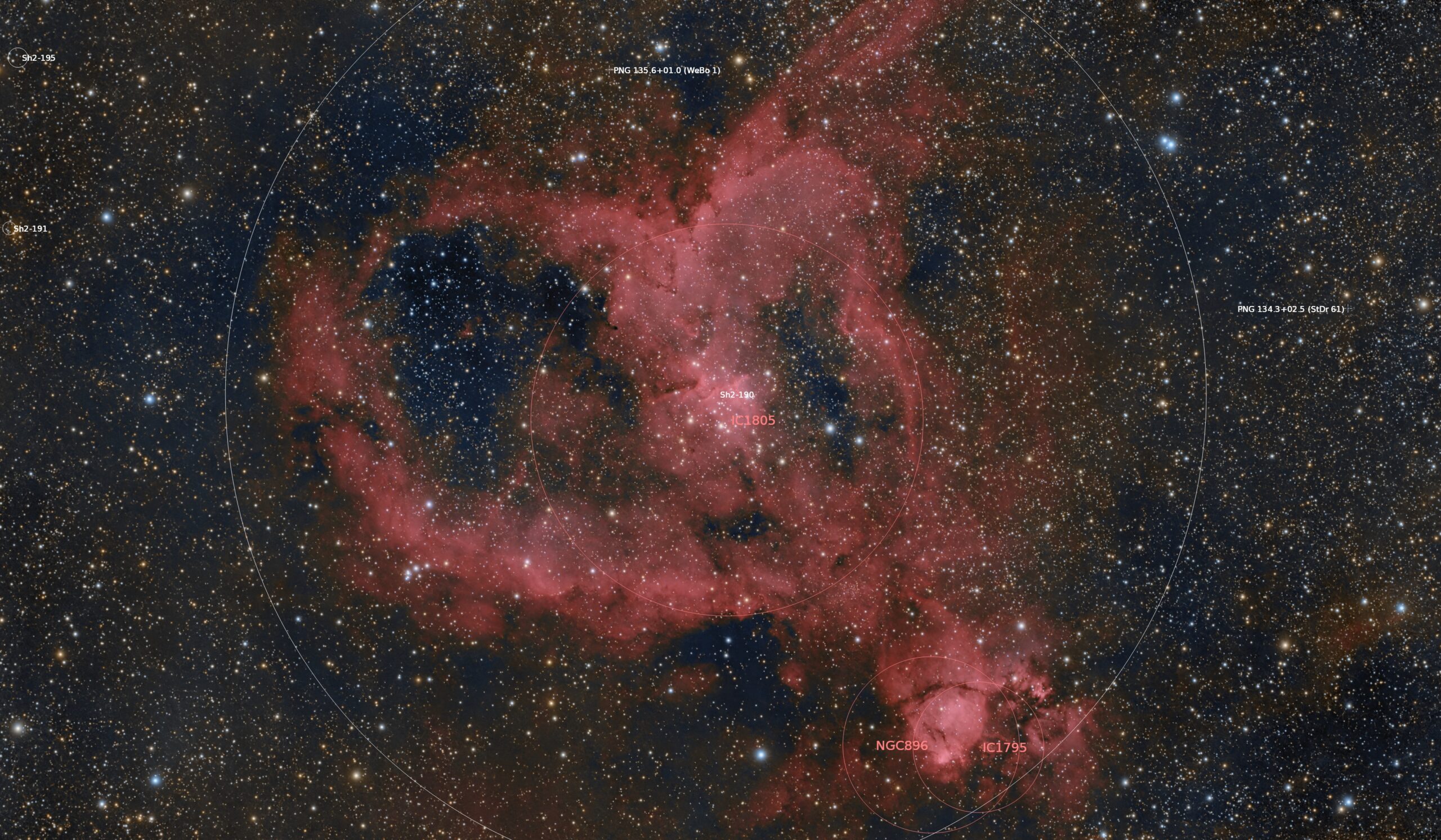
The images were taken with the following equipment:
- Date: 2026
- Location: Varel, Germany
- Telescope: Seestar S30 Pro
- Focal length [mm]: 160
- Focal ratio: 5.3
- Mount: EQ mode
- Camera: Seestar Tele
- Filter: OSC (LP)
- Exposure time [min]: 191
- Resolution: 3.67″/px
For the Astrophotomarket data the calibration, registration and the final processing was done with PixInsight. The result was as follows:

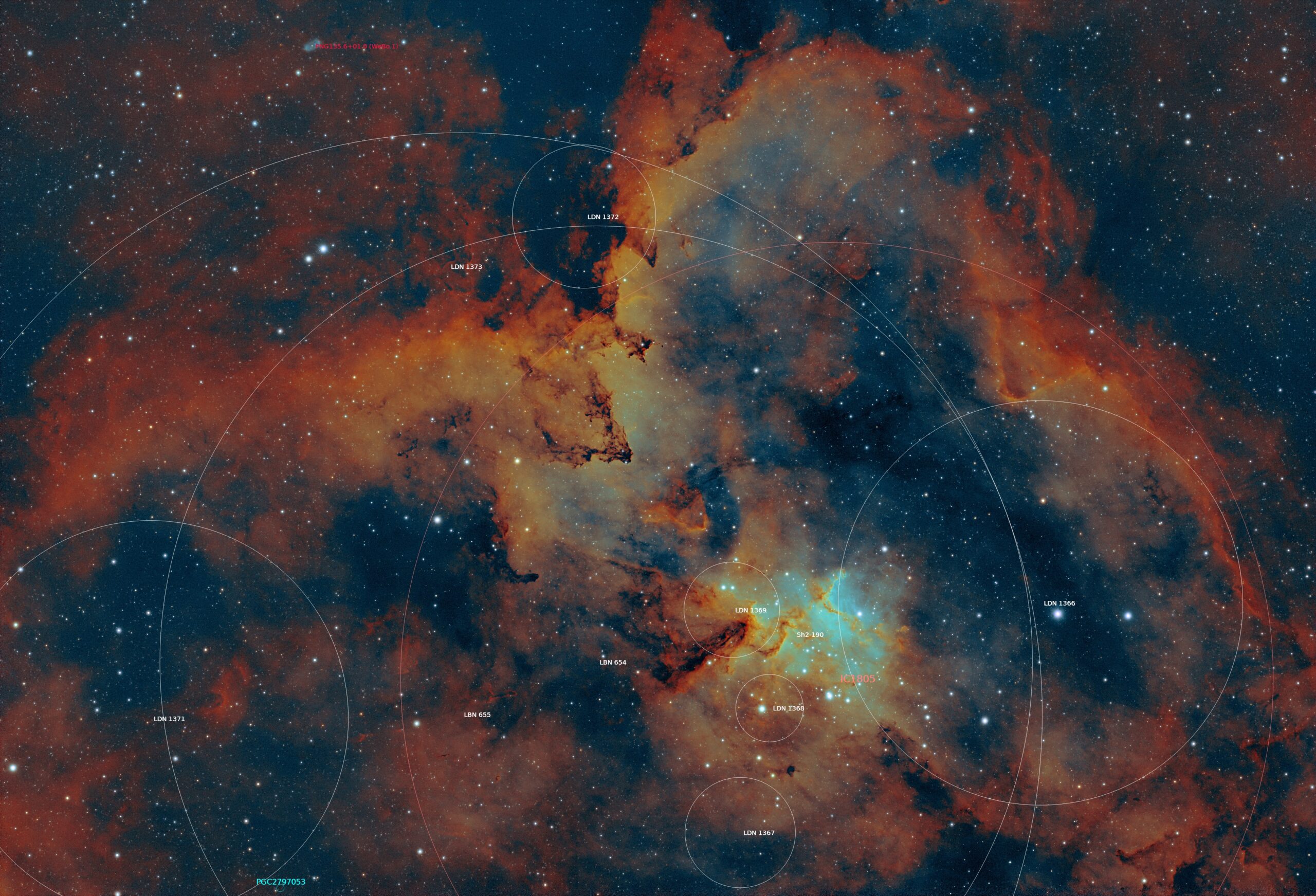
The images were taken with the following equipment:
- Date: 2024, 2025
- Location: Astrophtomarket, Spain
- Telescope: TS 130 APO Refractor
- Focal length [mm]: 910
- Focal ratio: 7
- Mount: ZWO AM5
- Camera: ZWO ASI 294MM Pro
- Filter: Hα:[OIII]:[SII]
- Exposure time [min]: 510:520:245
- Resolution: 1.31″/px
The first attempt with the Heart Nebula I started in 2009 from my own backyard.
Data calibration and registration was done with DeepSkyStacker, the final processing was done with PixInsight. The result was as follows:
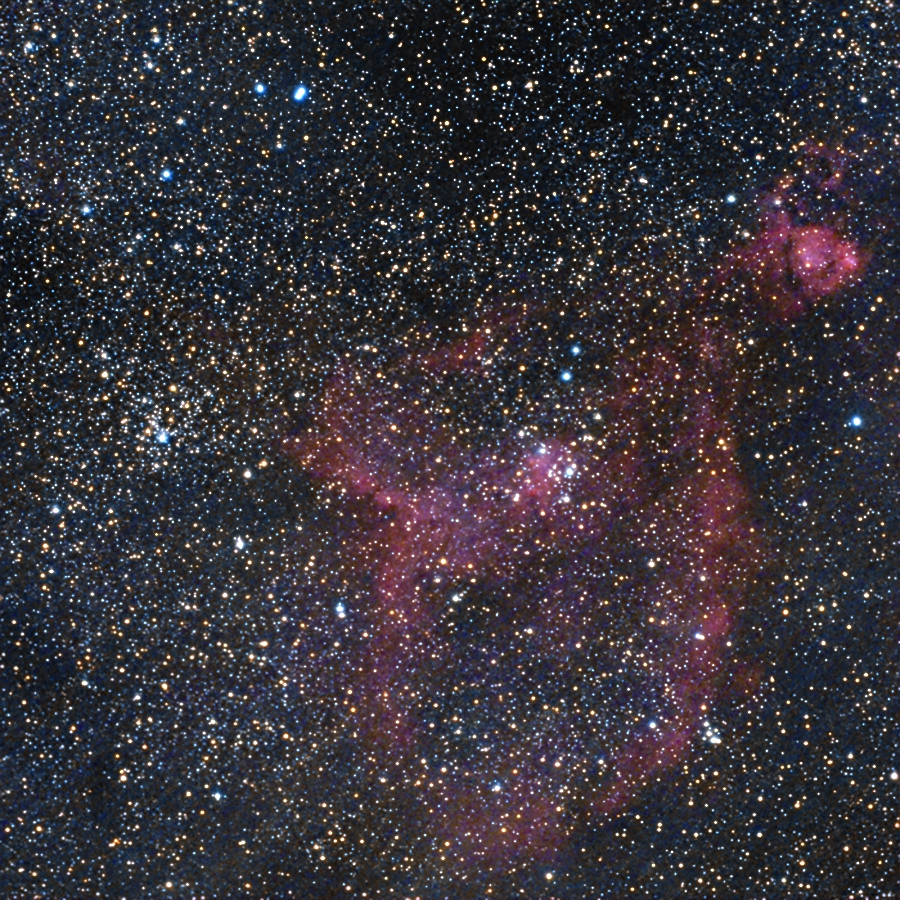
The images were taken with the following equipment:
- Date: 2009
- Location: Krefeld, Germany
- Telescope: Pentacon 200mm lens
- Focal length [mm]: 146
- Focal ratio: 4
- Mount: Skywatcher NEQ6
- Camera: Canon 300Da
- Filter: OSC
- Exposure time [min]: 187
- Resolution: 10.44″/px
I also imaged the Heart nebula with the Soul nebula in 2019 during my holiday in Banon, France with my mobile equipment.
Data calibration and registration and the final processing was done with PixInsight. The result was as follows:
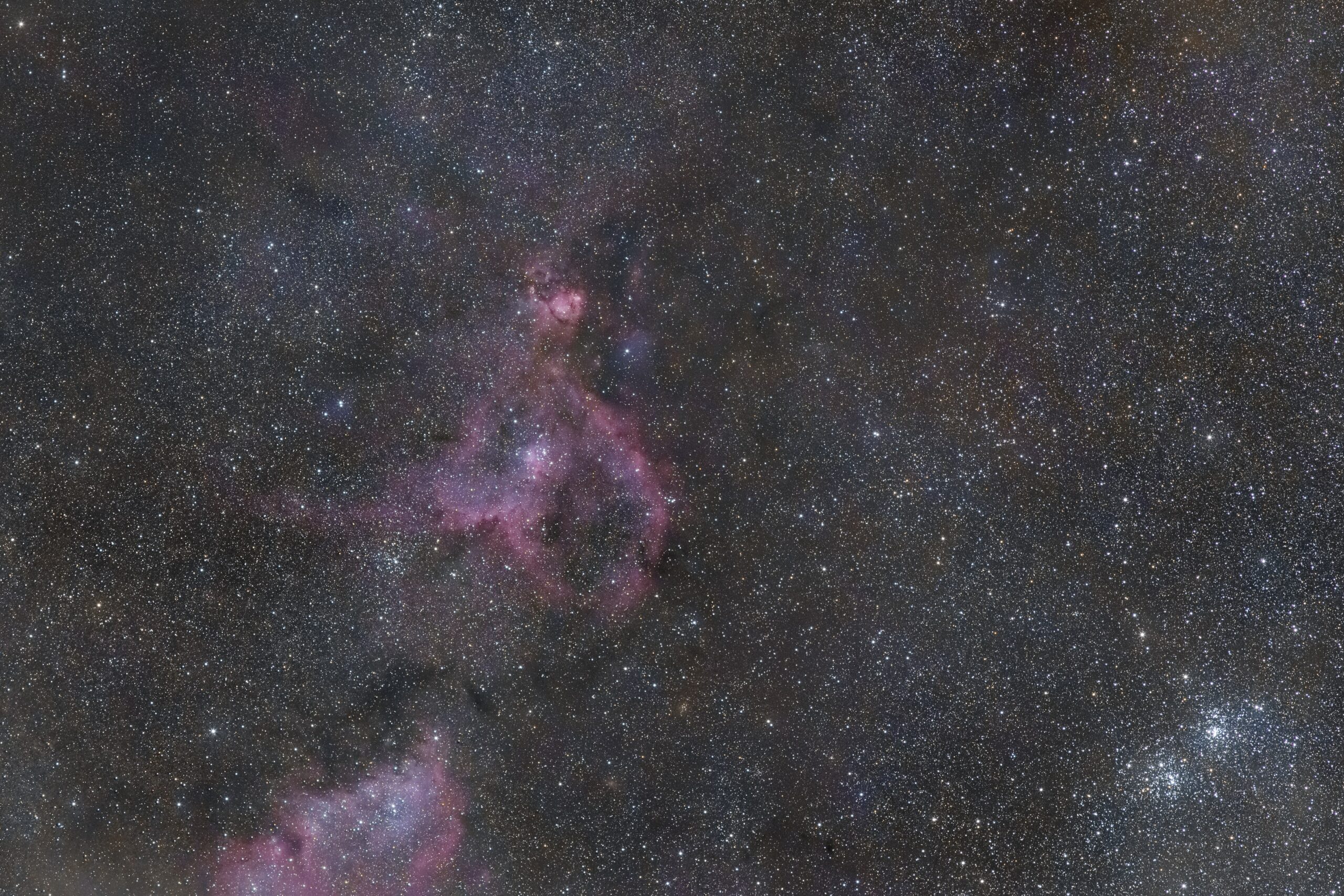
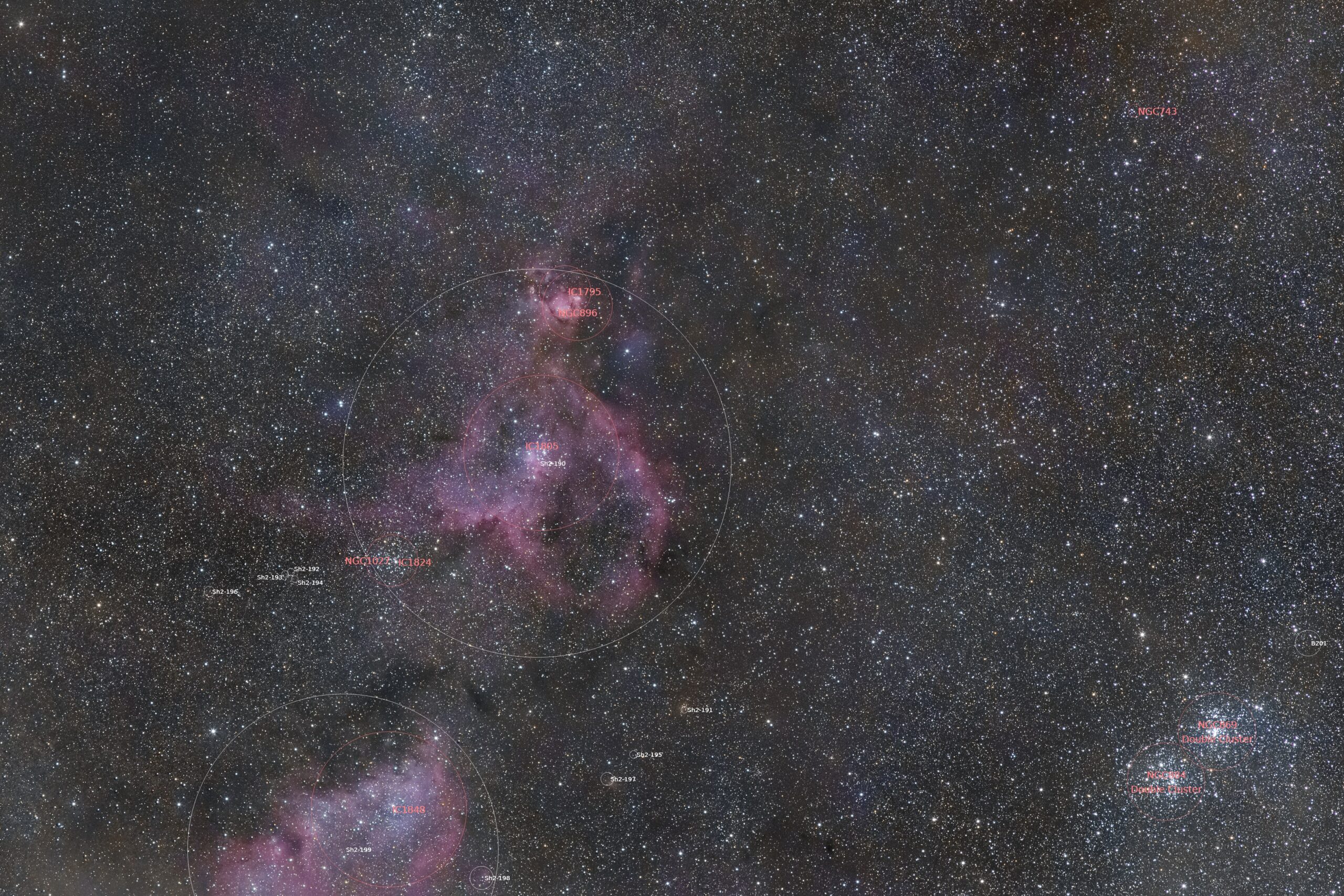
The images were taken with the following equipment:
- Date: 2019
- Location: Banon, France
- Telescope: Canon 200mm lens
- Focal length [mm]: 195
- Focal ratio: 4
- Mount: Skywatcher NEQ6
- Camera: Canon 6D
- Filter: OSC
- Exposure time [min]: 177
- Resolution: 6.92″/px
Five years ago, in 2014, I also imaged IC 1805 and IC 1848 during my holiday in Banon, France with my mobile equipment.
Data calibration and registration and the final processing was done with PixInsight. The result was as follows:
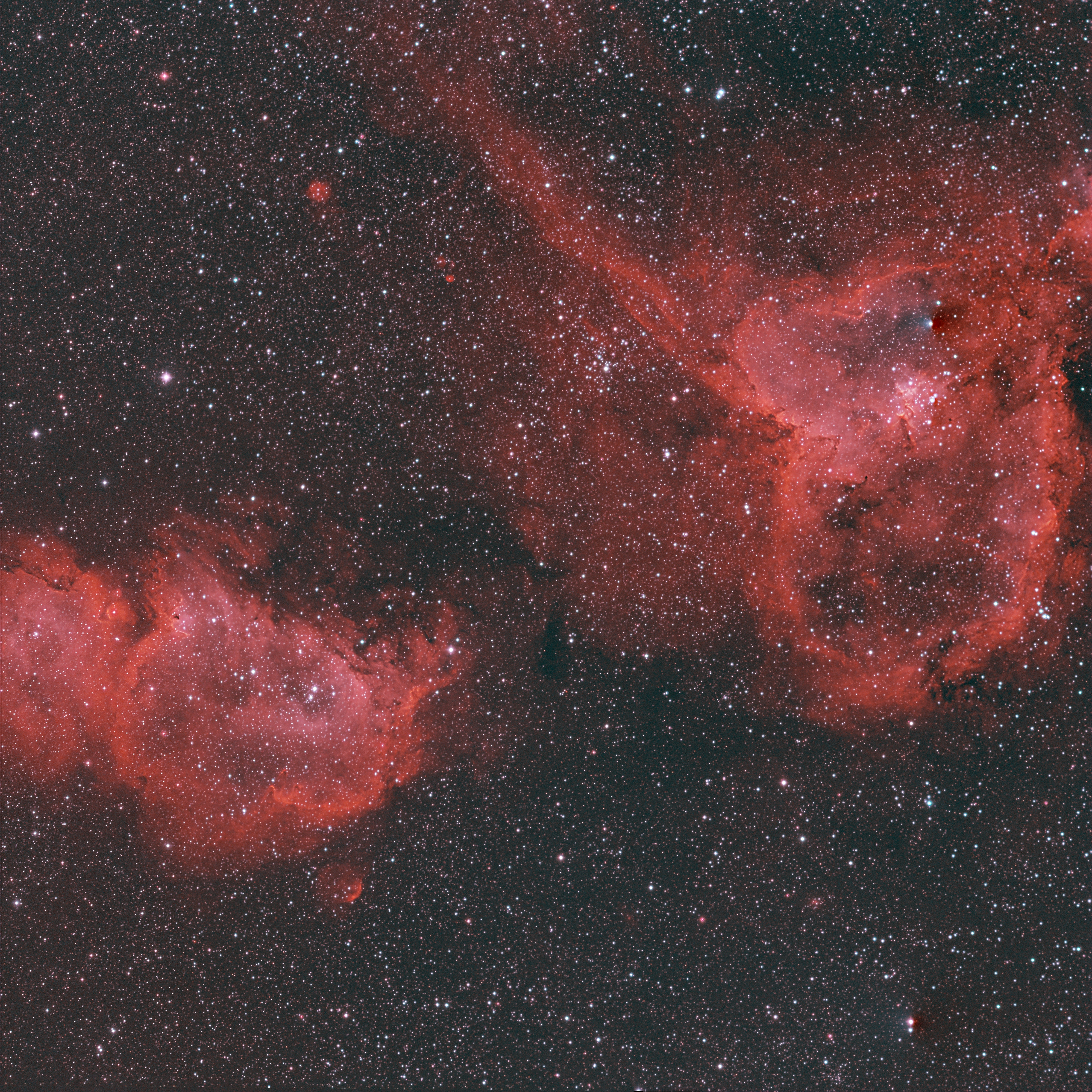
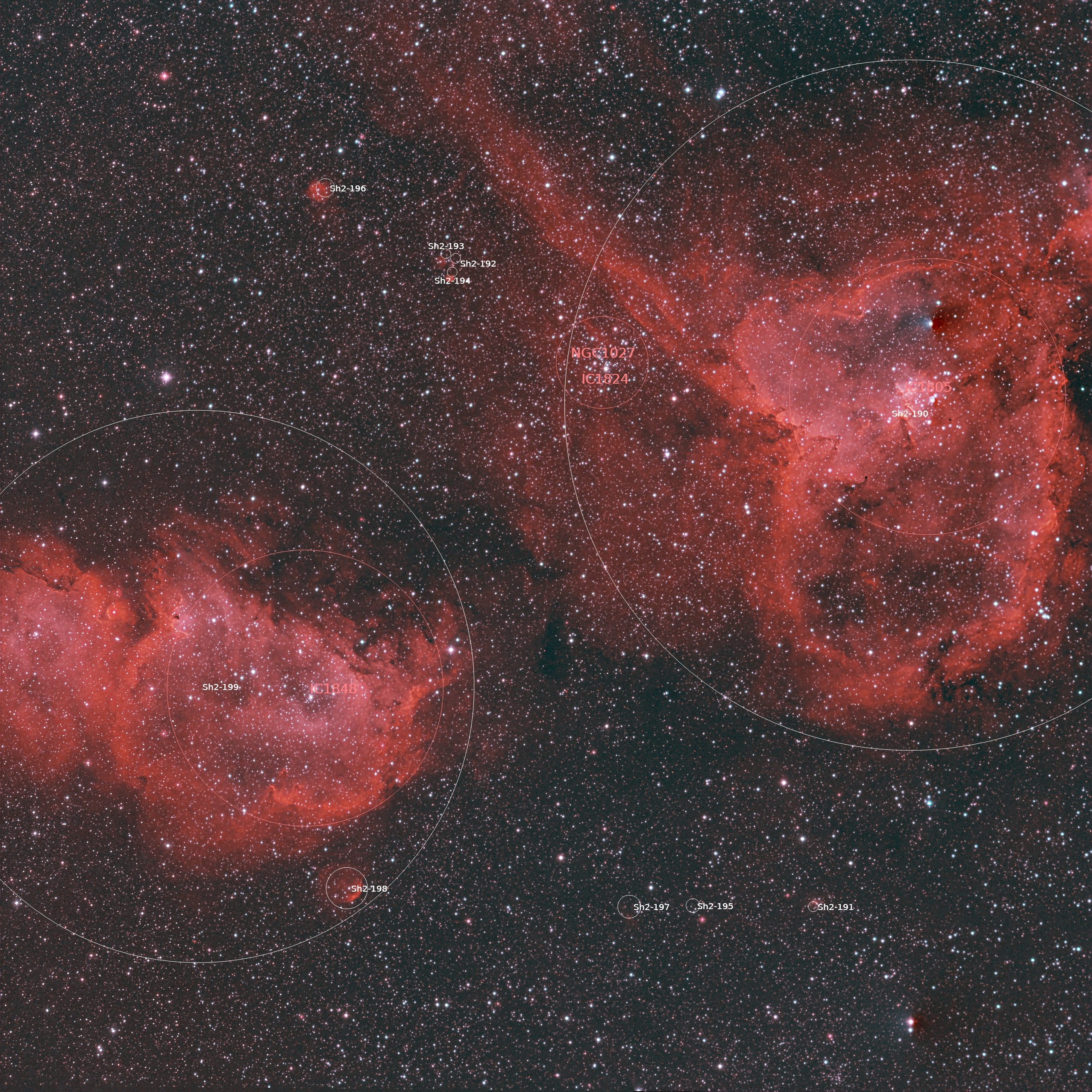
The images were taken with the following equipment:
- Date: 2014
- Location: Banon, France
- Telescope: Canon 200mm lens
- Focal length [mm]: 200
- Focal ratio: 4
- Mount: Skywatcher NEQ6
- Camera: Moravian FW8300 and Canon 500Da
- Filter: OSC:Hα:[OIII]
- Exposure time [min]: 234:200:200
- Resolution: 5.57″/px


Leave a reply