

Messier 81 and Messier 82 from my backyard, my observatory and remote
I have imaged the galaxy pair Messier 81 and Messier 82 several times over the years, documenting both my evolving equipment and my progress in astrophotography. My first attempt dates back to 2005, using my very first setup—simple but sufficient to capture the basic shapes of both galaxies and ignite my enthusiasm for deep-sky imaging. In 2010, I returned to the target with a better telescope and longer total exposure, which revealed considerably more structure in M81’s spiral arms and the complex dust lanes of the starburst galaxy M82. My next major dataset followed in 2018, this time using a CCD camera paired with a somewhat smaller telescope. Despite the reduced aperture, the improved sensitivity and stability of the CCD system resulted in noticeably deeper and cleaner data. The wider field of view of the 2018 image also included NGC 3077, the third major member of the M81 Group. This irregular galaxy shows clear signs of gravitational interaction with M81 and M82, including disturbed gas structures and enhanced star formation.
Most recently, in 2026, I imaged the M81 group once again using my new Seestar Smart Telescope. Although much more compact and automated than my earlier setups, the modern smart telescope was still able to capture impressive detail in both galaxies, demonstrating how accessible deep-sky astrophotography has become with current technology.
In addition to my own imaging, I also processed Telescope Live datasets of the Messier 81 group recorded from a telescope in Spain in 2023 and 2024. These deep, professional-grade exposures complement my earlier results and reveal subtle tidal structures between M81, M82, and NGC 3077 that are normally visible only in long-integration datasets.
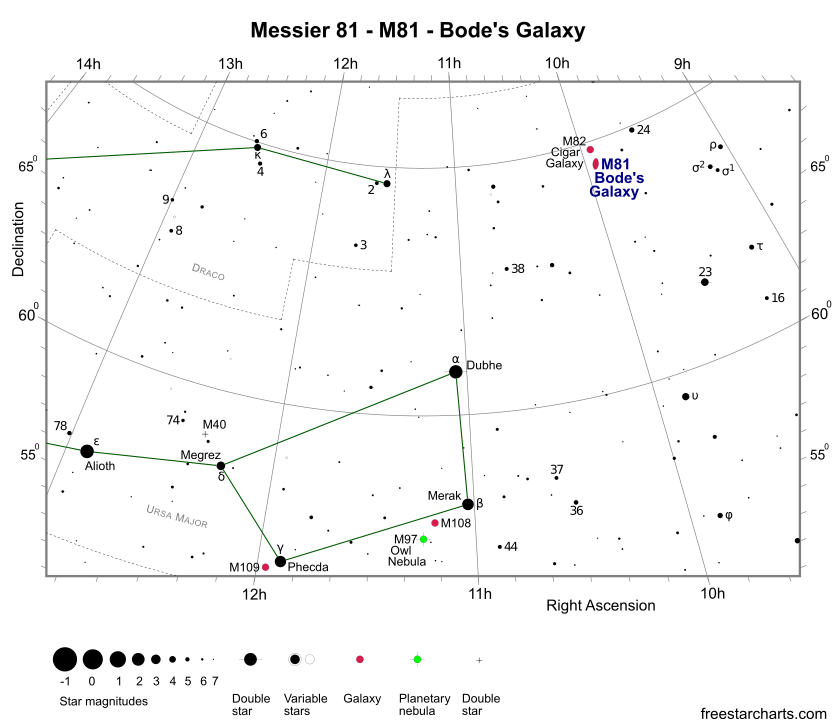
The M81–M82–NGC 3077 trio forms the core of the nearby M81 galaxy group, located roughly 12 million light-years away in the constellation Ursa Major. M81 (Bode’s Galaxy) is a classic grand-design spiral, while M82 (the Cigar Galaxy) is a starburst galaxy undergoing intense star formation triggered by past encounters with M81. These interactions have pulled out vast tidal streams of hydrogen connecting the galaxies—structures that become visible only in extremely deep exposures. NGC 3077, although smaller and less structured, shows clear signs of tidal distortion, with displaced gas clouds and star-forming knots resulting from the same gravitational encounters.
Imaging this group repeatedly over more than a decade not only showcases their dynamic astrophysical relationships but also reflects how improvements in equipment, exposure time, and processing techniques can dramatically enhance the scientific content of one’s images.
The registration and integration of the 2026 data was performed with PixInsight, the result was as follows:
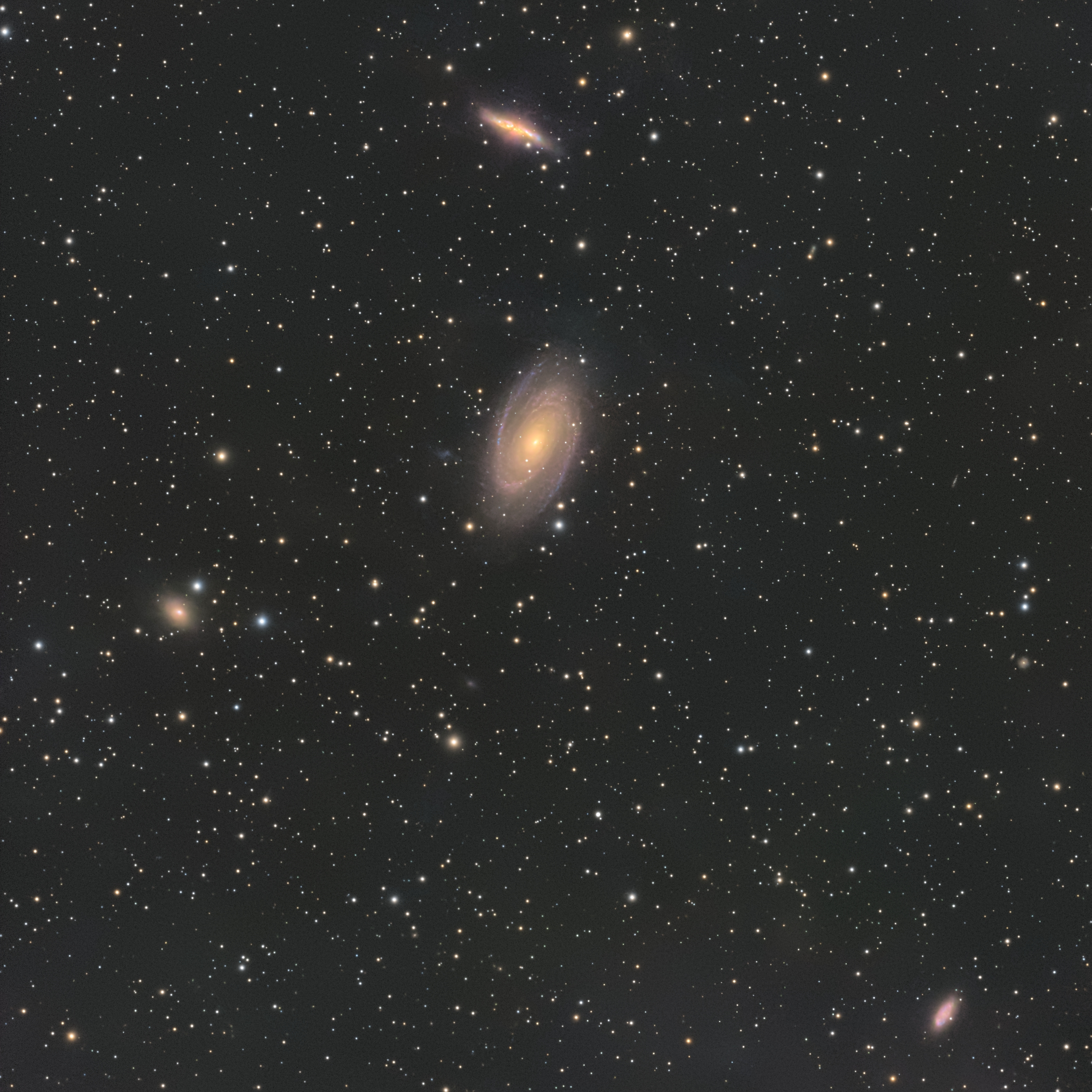
The images were taken with the following equipment:
- Date: 2026
- Seestar S30 Pro
- Focal length [mm]: 160
- Focal ratio: 5.3
- Mount: Seestar, EQ Mode
- Camera: Seestar Tele
- Filter: OSC
- Exposure time [min]: 250
- Resolution: 3.68″/px
The Telescope Live data calibration, registration and the final processing was done with PixInsight. The result was as follows:
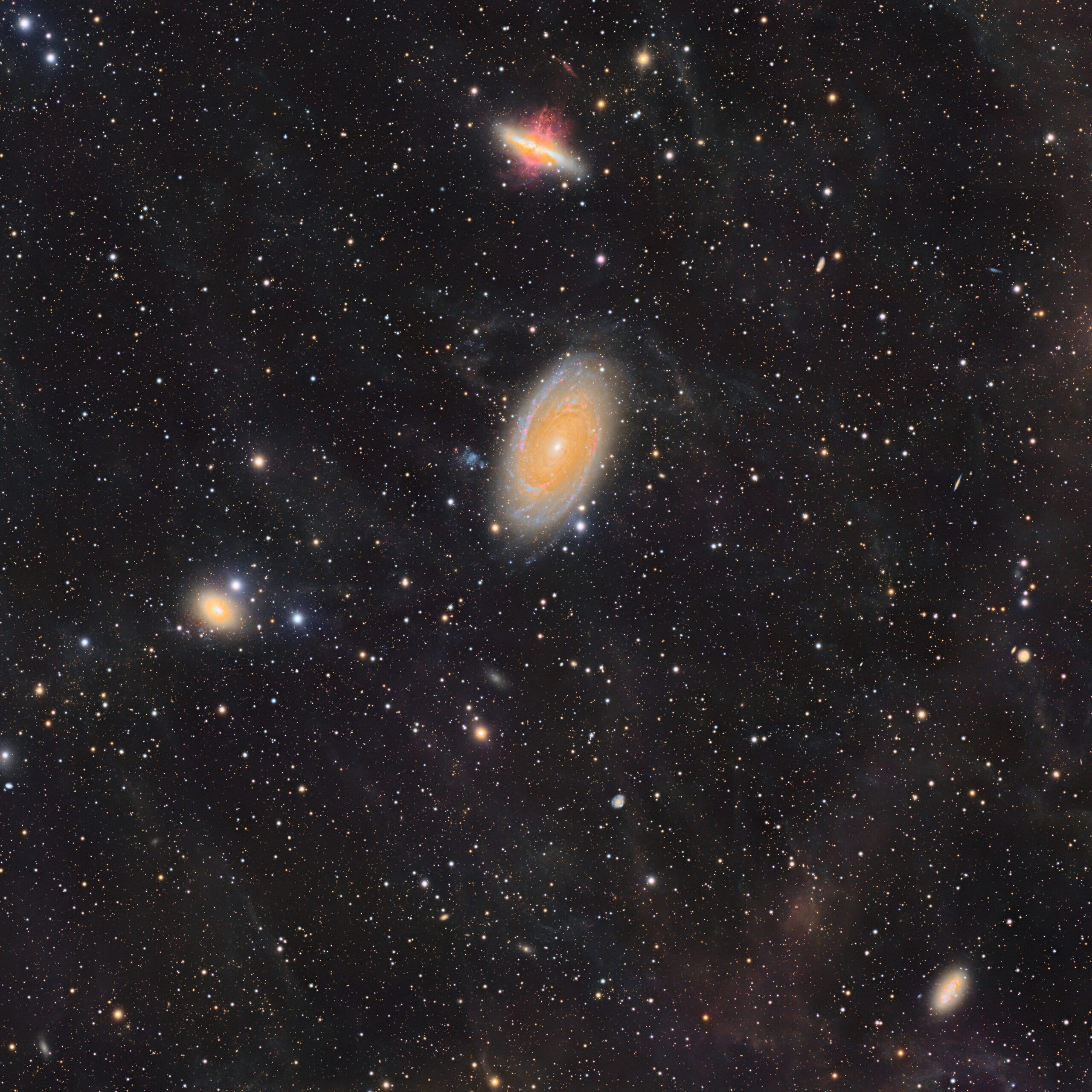
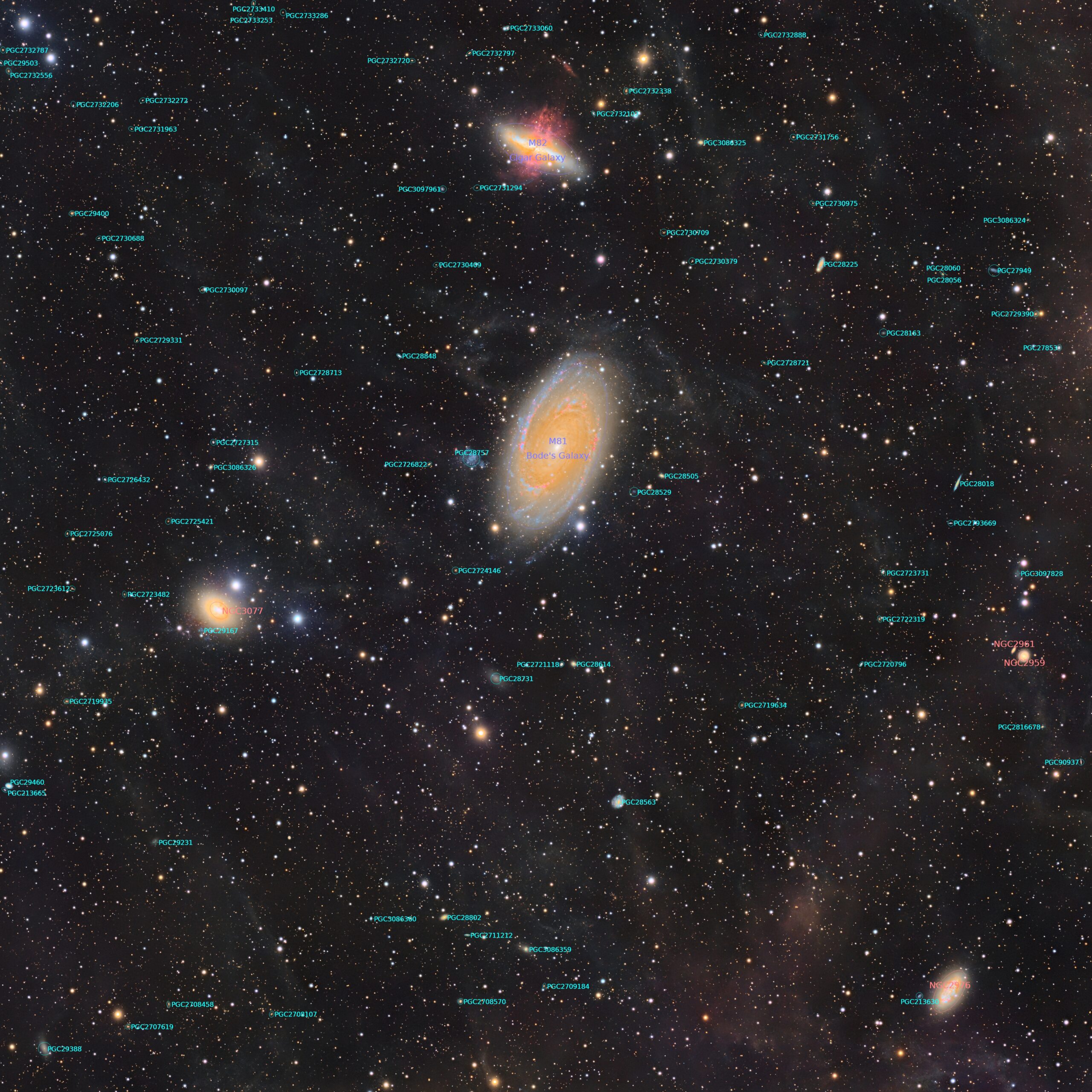
The images were taken with the following equipment:
- Date: 2023, 2024
- Location: IC Observatory Spain
- Telescope: Takahashi FSQ 106
- Focal length [mm]: 390
- Focal ratio: 3.6
- Mount: Paramount MX+
- Camera: QHY 600M Pro
- Filter: Hα:L:R:G:B
- Exposure time [min]: 290:345:345:335:355
- Resolution: 2.02″/px
The 2018 data calibration, registration and the final processing was done with PixInsight. The result was as follows:

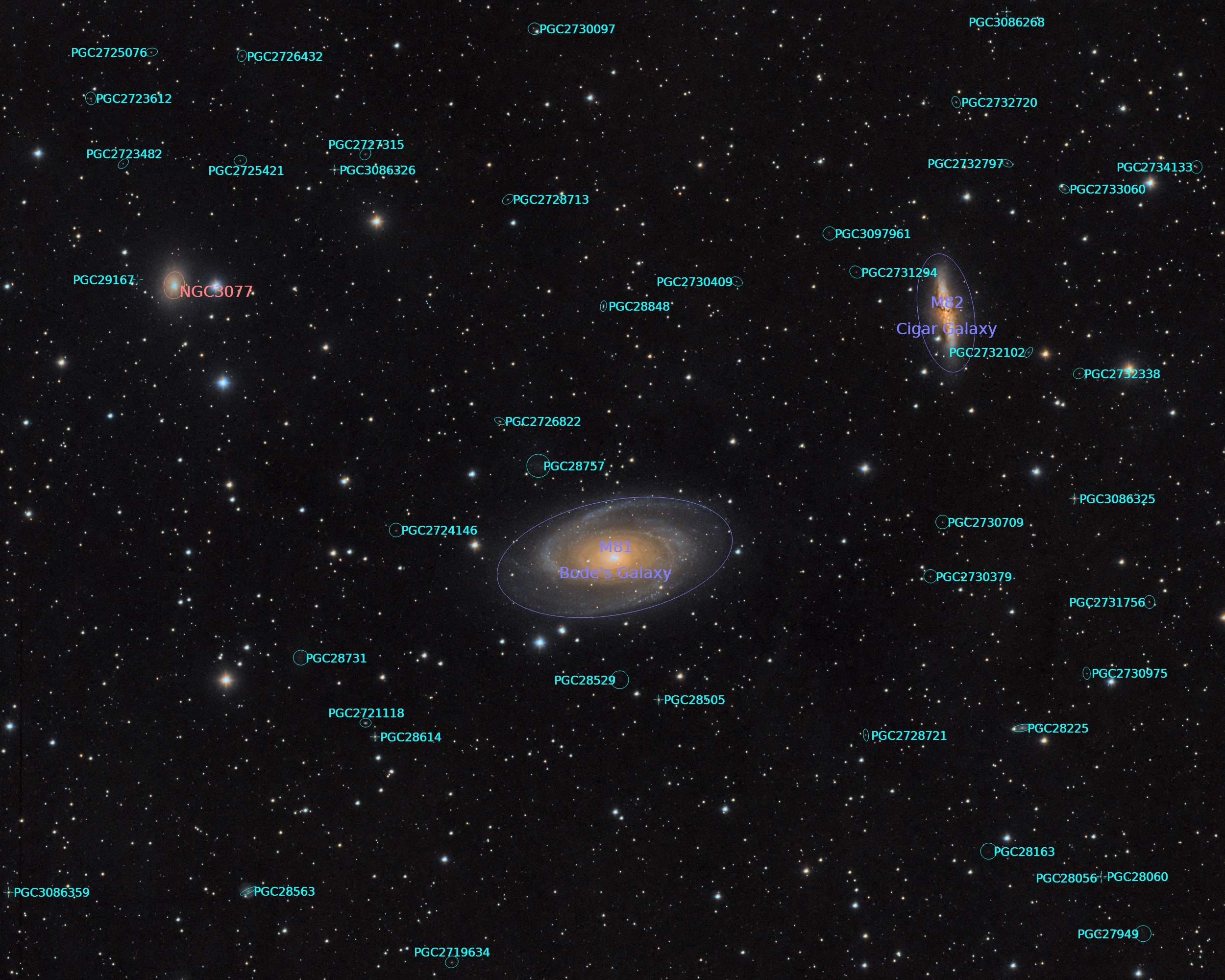
The images were taken with the following equipment:
- Date: 2018
- Location: Krefeld, Germany
- Telescope: TS IS 65
- Focal length [mm]: 420
- Focal ratio: 6.5
- Mount: Skywatcher EQ8
- Camera: QSI 583WS
- Filter: R:G:B
- Exposure time [min]: 165:190:165
- Resolution: 2.63″/px
The 2010 data calibration and registration was performed with DeepSkyStacker, the final processing was done with PixInsight. The result was as follows:
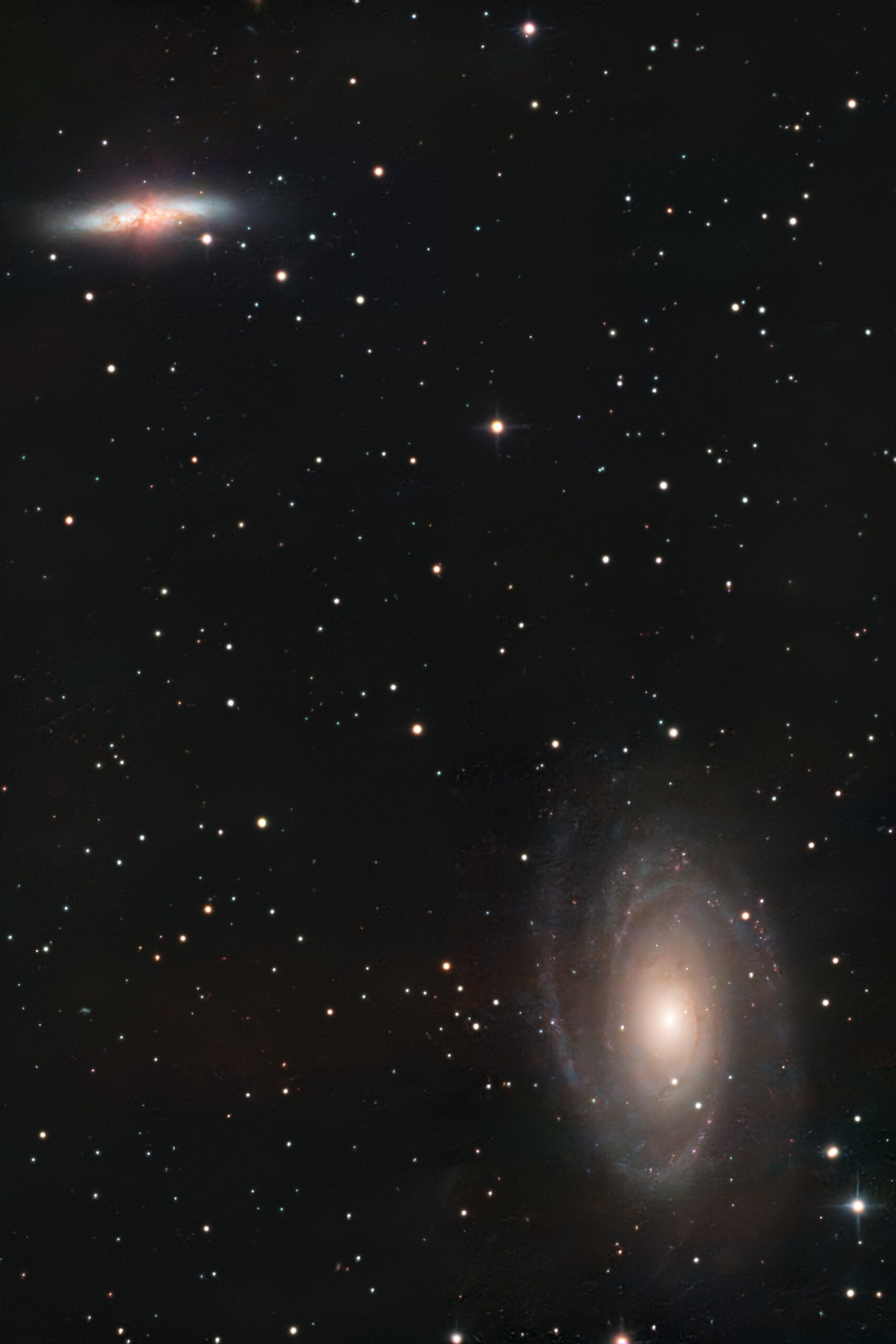
The images were taken with the following equipment:
- Date: 2010
- Location: Krefeld, Germany
- Telescope: 8″ GSO Newton
- Focal length [mm]: 800
- Focal ratio: 4.0
- Mount: Skywatcher NEQ6
- Camera: Canon 300Da
- Filter: OSC
- Exposure time [min]: 128
- Resolution: 0.94″/px (2* Drizzle)
The 2018 data calibration, registration and the final processing was done with PixInsight. The result was as follows:
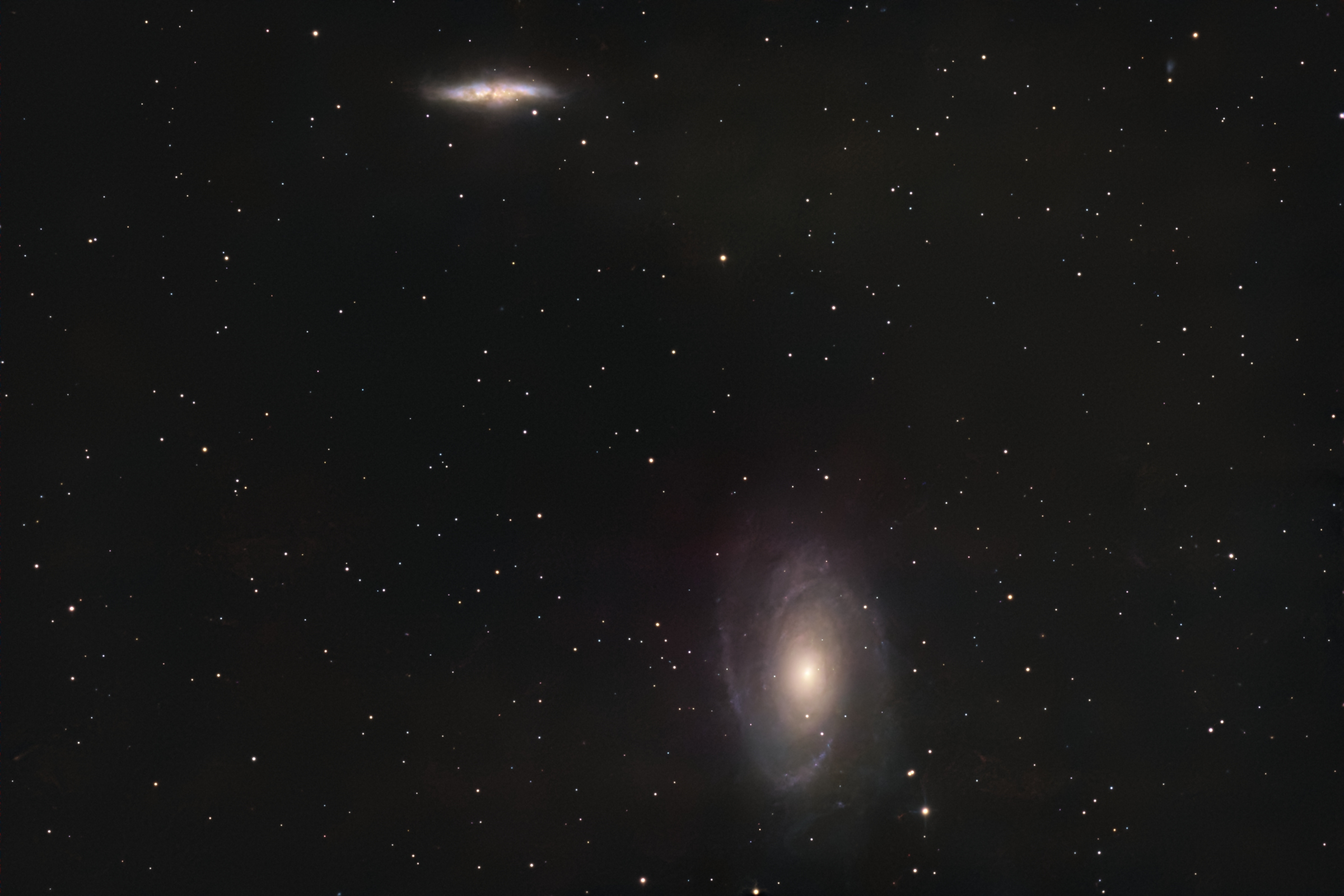
The images were taken with the following equipment:
- Date: 2005
- Location: Krefeld, Germany
- Telescope: 8″ GSO Newton
- Focal length [mm]: 800
- Focal ratio: 4.0
- Mount: Vixen GP-DX
- Camera: Canon 300 Da
- Filter: no
- Exposure time [min]: 9
- Resolution: 1.88″/px



Leave a reply