

NGC 4725 (and LoTr 5) from my „Sterntaucher“ and „Jade“ observatory
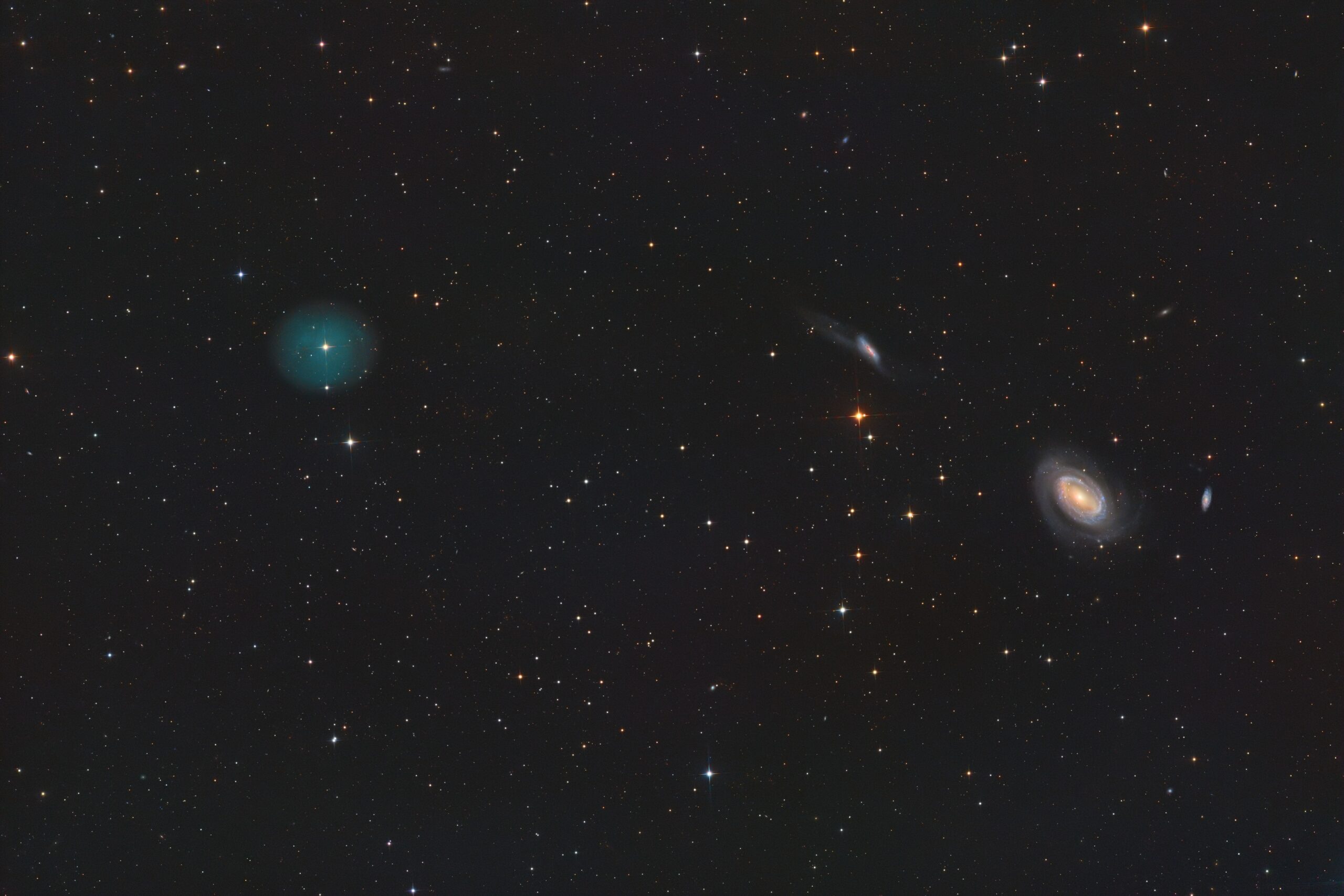
I imaged the spiral galaxy NGC 4725 several times over the years using different equipment and imaging techniques. My most recent image was acquired in 2025 using a short focal length setup, providing a wide field of view that not only captured NGC 4725 itself but also included the fascinating planetary nebula Longmore-Tritton 5. This wider perspective places the galaxy into a richer celestial context and highlights the diversity of deep-sky objects visible within the same field.
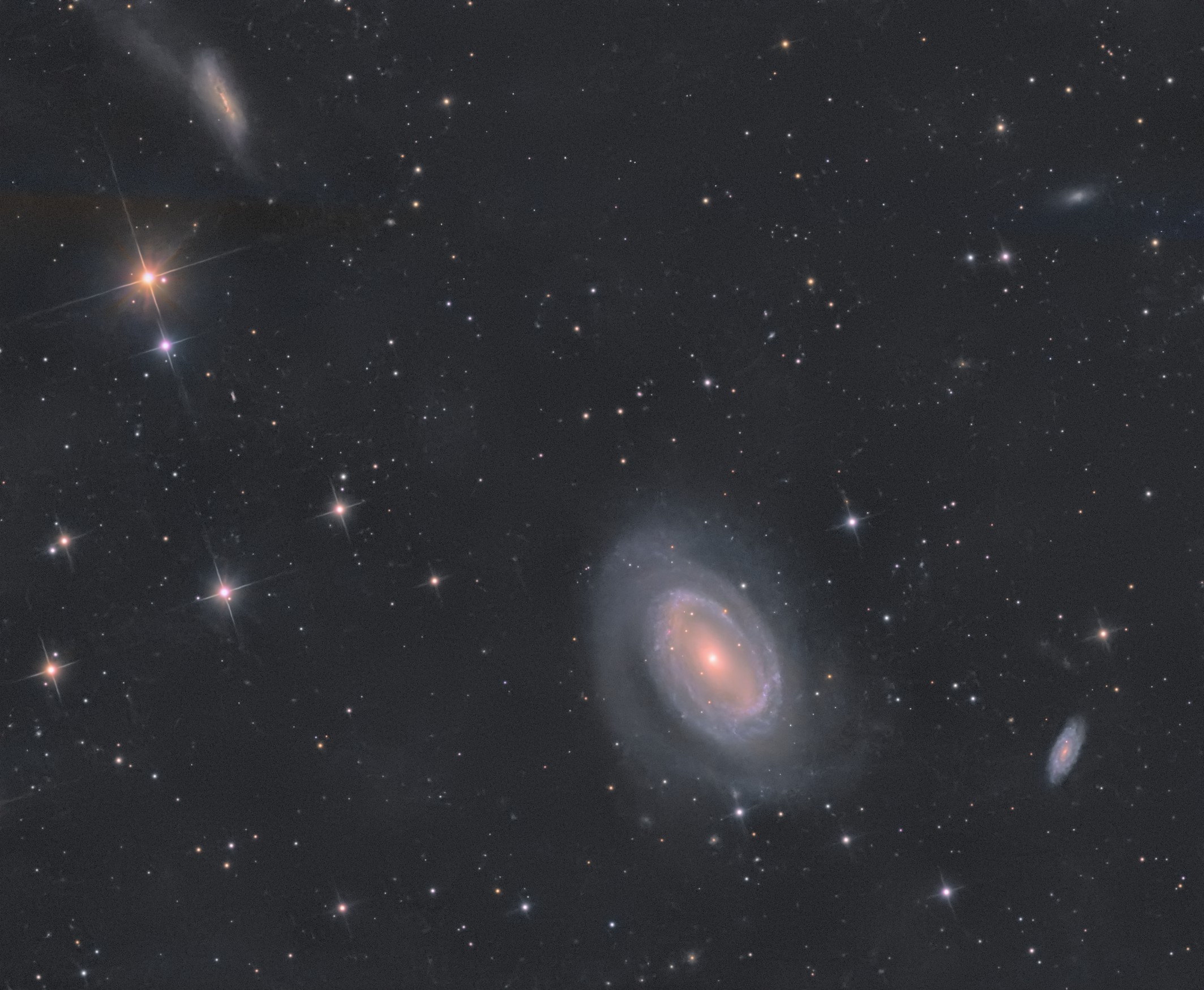
Prior to that, I imaged NGC 4725 in 2018 using my dual-rig setup, recording high-resolution luminance data with one telescope while simultaneously acquiring RGB color data with a second instrument. Even earlier, in 2014, I obtained dedicated Hα data of the galaxy. By combining the 2014 Hα exposures with the 2018 LRGB data, I created a second, deeper image that emphasizes both the galaxy’s stellar structure and its regions of active star formation. As a result, I ended up with two final images: the wide-field 2025 version and a combined high-resolution image based on the 2014 and 2018 datasets.
NGC 4725 is located in the constellation Coma Berenices at a distance of approximately 40 million light-years. It is classified as an intermediate barred spiral galaxy and is one of the most unusual spiral galaxies visible in the northern sky. Unlike typical spirals with multiple prominent arms, NGC 4725 is famous for possessing a single dominant spiral arm, giving it a highly asymmetric appearance. This rare morphology is thought to be the result of gravitational interactions and internal dynamical processes that have shaped the galaxy over time.
The galaxy contains a bright central bar surrounded by a ring-like structure rich in gas, dust, and star-forming regions. Deep images reveal numerous H II regions embedded within the disk, many of which become particularly prominent in Hα imaging. These glowing clouds mark areas where massive young stars are actively forming and illuminating the surrounding hydrogen gas.
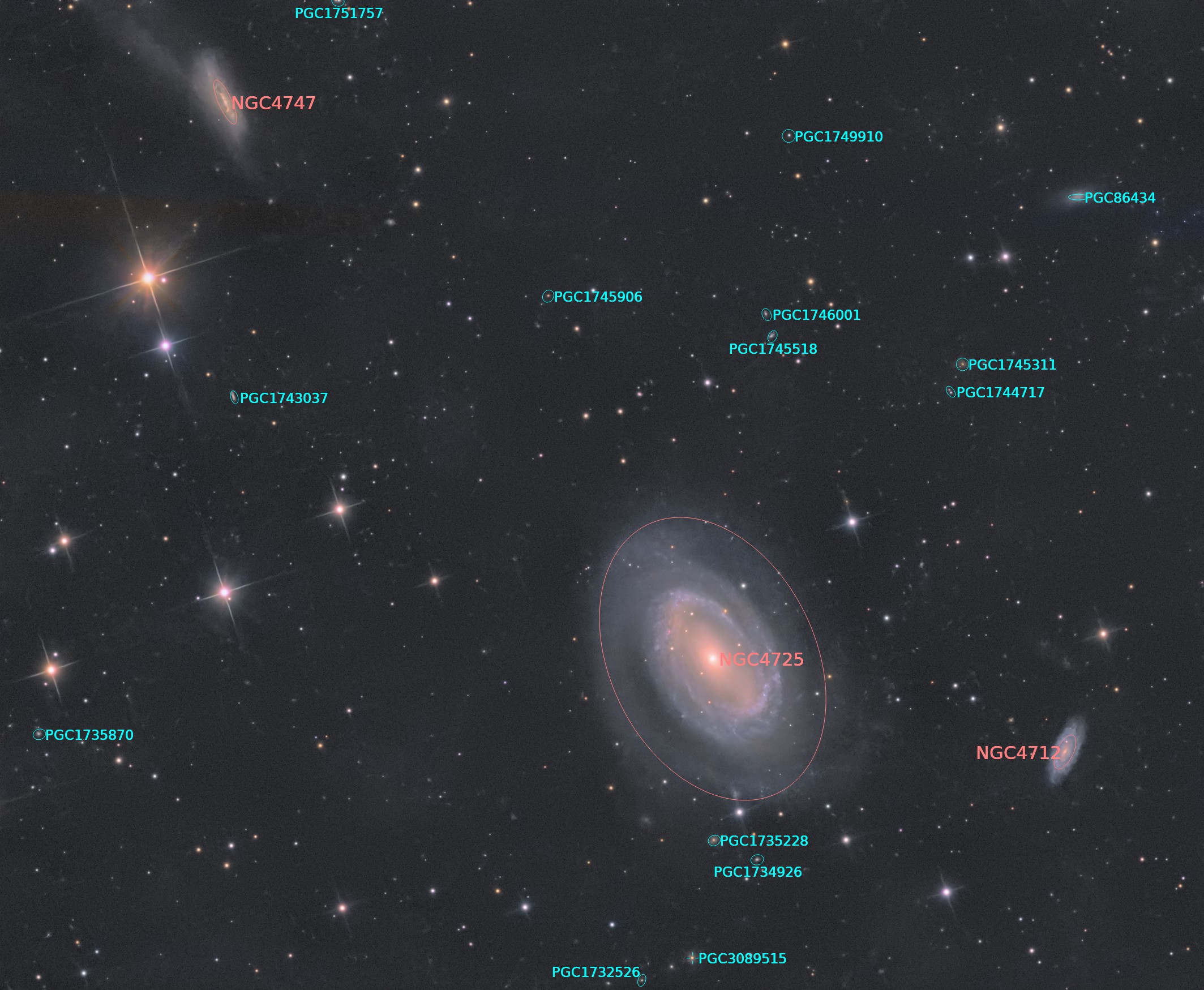
NGC 4725 is also physically associated with the nearby spiral galaxy NGC 4747. Observations suggest that past interactions between the two galaxies may have contributed to NGC 4725’s unusual one-armed structure and triggered episodes of enhanced star formation. Such interactions provide valuable insight into how gravitational encounters influence galactic evolution.
The inclusion of LoTr 5 in the 2025 image adds an additional scientific and visual highlight. This unusual planetary nebula surrounds a binary star system and is notable for its large apparent size and faint shell. The presence of both a nearby planetary nebula within our own galaxy and a distant spiral galaxy tens of millions of light-years away beautifully illustrates the enormous range of scales encountered in deep-sky astrophotography.
Together, the datasets from 2014, 2018, and 2025 document both the evolution of my imaging techniques and the many facets of this fascinating region of the sky, from active star formation within NGC 4725 to the delicate gaseous shell of LoTr 5.
For the 2025 data the calibration, registration and the final processing was done with PixInsight. The result was as follows:
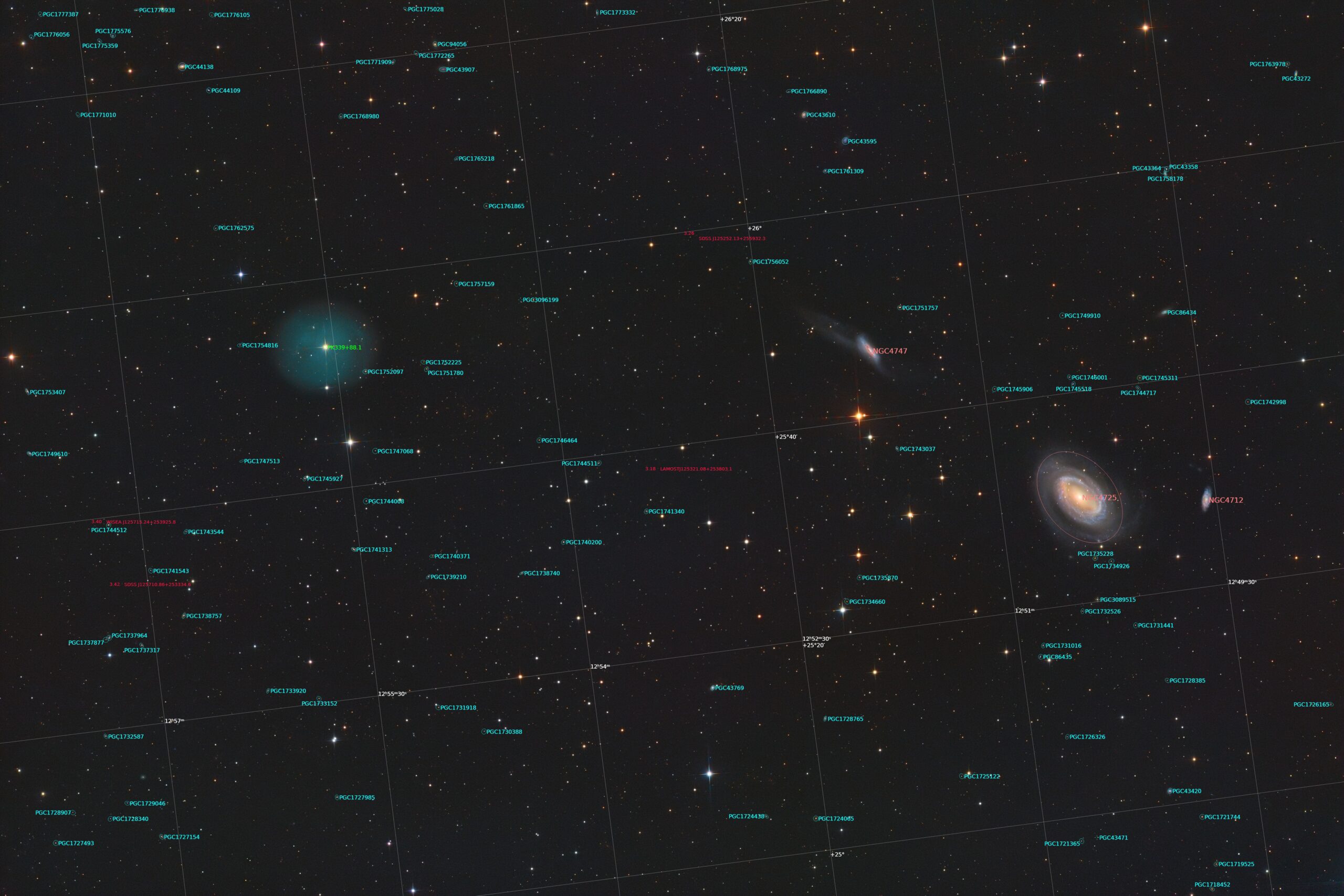
There are so many quasars in this image that I can only show those with a redshift greater than 3.
The most distant of them is:
SDSS J125710.86+253334.6.9 with a redshift of 3.42 and an apparent magv of 20.16 (SDSS DR17).
Here is an overview of the used equipment and the exposure times:
- Date: April 2025
- Location: Varel
- Telescope/Lense: 6″ Lacerta Newton
- Focal length [mm]: 600
- Focal ratio: 4
- Mount: Skywatcher EQ 8
- Camera: Lacerta Deepsky 2600 M
- Autoguiding: Off-Axis with ZWO Asi 120 MM Mini
- Filter: L:R:G:B:[OIII]
- Exposure time [min]: 120:55:60:60:240
- Resolution: 1.31/px
For the 2014 and 2018 data the calibration, registration and the final processing was done with PixInsight. The result was as follows:
Here is an overview of the used equipment and the exposure times:
- Date: 2014 and 2018
- Location: Krefeld
- Telescope/Lense: 10″ Newton ohne Namen – TS IS 65 Apo
- Focal length [mm]: 1000 – 420
- Focal ratio: 3.9 – 6.5
- Mount: Losmandy G11 and Skywatcher EQ 8
- Camera: Moravian 8300 FW – QSI 583 WS
- Filter: Ha:L – R:G:B
- Exposure time [min]: 60:405 – 135:135:135
- Resolution: 1.11/px



Leave a reply