

Barnard 228
In May 2015, I spent several unforgettable nights at the Tivoli Astrofarm in Namibia, one of the finest locations in the world for deep-sky imaging. The southern sky stretched above me in breathtaking clarity — a river of starlight from horizon to horizon. The combination of high altitude, dry air, and minimal light pollution made it the perfect place to explore the hidden beauty of the Milky Way.
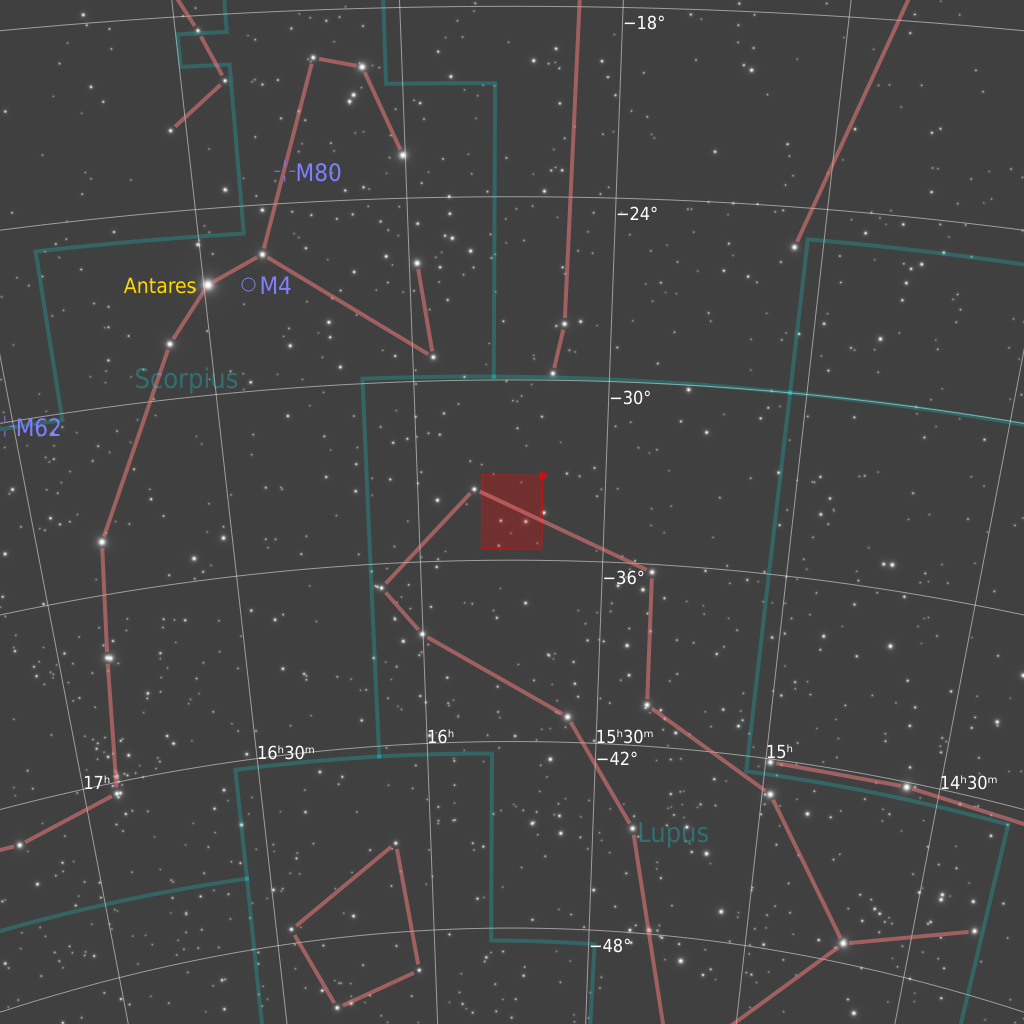
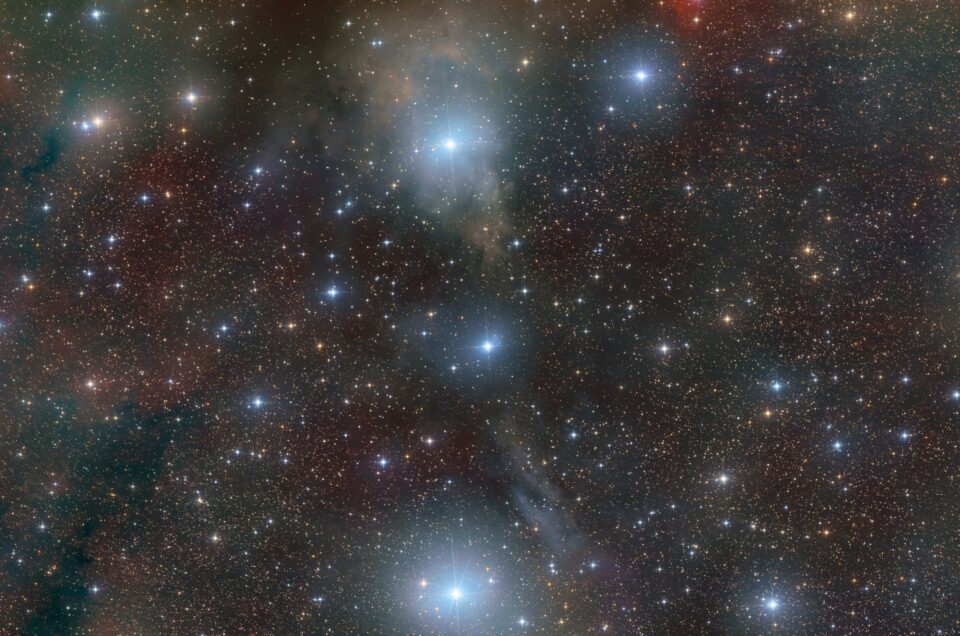
Among the many targets I captured with my mobile equipment during that stay was the dark nebula Barnard 228, a striking and somewhat mysterious object located in the constellation Lupus. This region of the sky, lying between the grandeur of Scorpius and the elegance of Centaurus, is rich with complex dust clouds and glowing star fields. It’s an area often overlooked in favor of brighter emission nebulae, but its quiet darkness and intricate textures reveal a more subtle, haunting kind of beauty.
Barnard 228 is part of the extensive Lupus Molecular Cloud Complex, a region dense with cold dust and molecular hydrogen — the raw material for new stars. These dark nebulae are the nurseries of the cosmos, where gravity slowly pulls gas and dust together until new suns ignite. To the eye of the observer, however, they appear as voids, silhouettes carved into the luminous backdrop of the Milky Way. But through a sensitive camera and long exposure, their soft, smoky outlines and delicate gradients become visible, revealing the fine structure of the interstellar medium.
During my sessions at Tivoli, I was struck by how prominent the Milky Way appeared from this southern vantage point. The core of the galaxy climbed high above the horizon, glowing in shades of yellow, pink, and deep violet. Against this rich backdrop, Barnard 228 stood out as a patch of darkness so deep it seemed to absorb the light around it. The challenge was to capture both the faint glow of the surrounding starlight and the intricate contours of the nebula itself — an exercise in balancing exposure and contrast.
The data calibration and registration, as well as the final image processing, were all done with PixInsight. As always, processing a dark nebula required a delicate touch. These objects are defined not by what they emit, but by what they obscure. Too much contrast or noise reduction, and the subtle texture of the dust disappears; too little, and the nebula blends into the star field. Through careful use of background modeling, multiscale processing, and star-masking techniques, I aimed to bring out the fine wisps of interstellar dust without losing the sense of depth and quietness that defines this region.
The final image shows a landscape of cosmic shadow, with Barnard 228 meandering through a dense field of stars like a cloud of smoke drifting across the Milky Way. The colors of the surrounding stars — cool blues, warm yellows, and deep ambers — create a soft contrast with the dark nebula, emphasizing its three-dimensional depth. It’s a view that invites contemplation: the calm, silent interplay between light and darkness on a galactic scale.
Capturing Barnard 228 was not just a technical project but a deeply atmospheric experience. Standing under the Namibian sky, surrounded by silence and the faint hum of the desert night, I felt a powerful sense of connection to the wider universe. Each exposure revealed a little more of the hidden structure of our galaxy — a reminder that even in the darkest regions, creation is quietly underway.
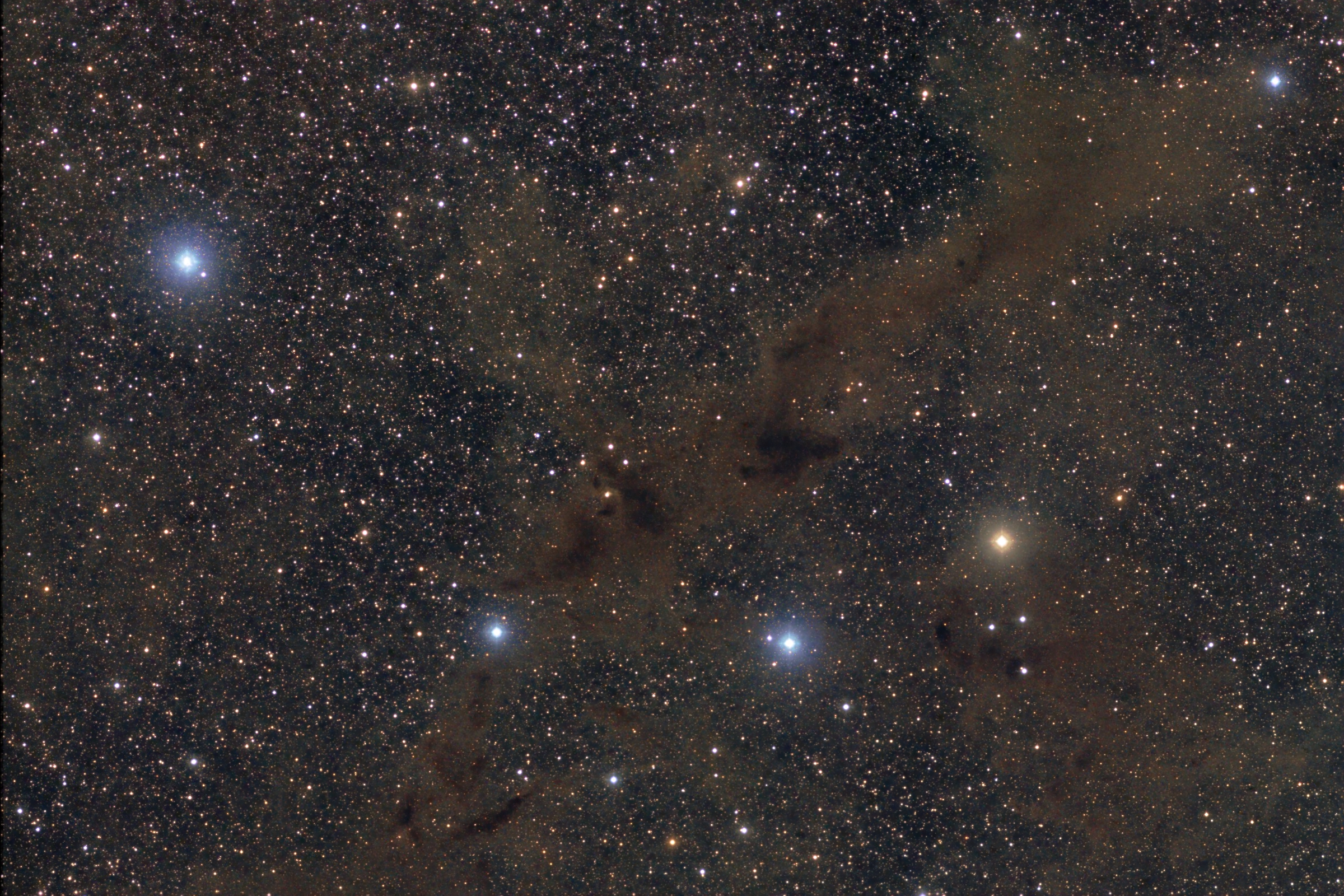
The images were taken with the following equipment:
- Location: Tivoli, Namibia
- Telescope: Canon 200mm lens
- Focal length [mm]: 200
- Focal ratio: 4
- Mount: Losmandy G11
- Camera: Moravian FW8300
- Filter: R:G:B
- Exposure time [min]: 120:120:120
- Resolution: 5.72″/px

Leave a reply