

Messier 69 (NGC 6637) – VdS Remote Hakos
As a member of the VdS remote observatory group, I have the opportunity to use the VdS remote observatory in Hakos, Namibia. Members are permitted to process both their own data as well as datasets acquired by other users. For this result, I worked with data recorded by Kai-Oliver Detken.
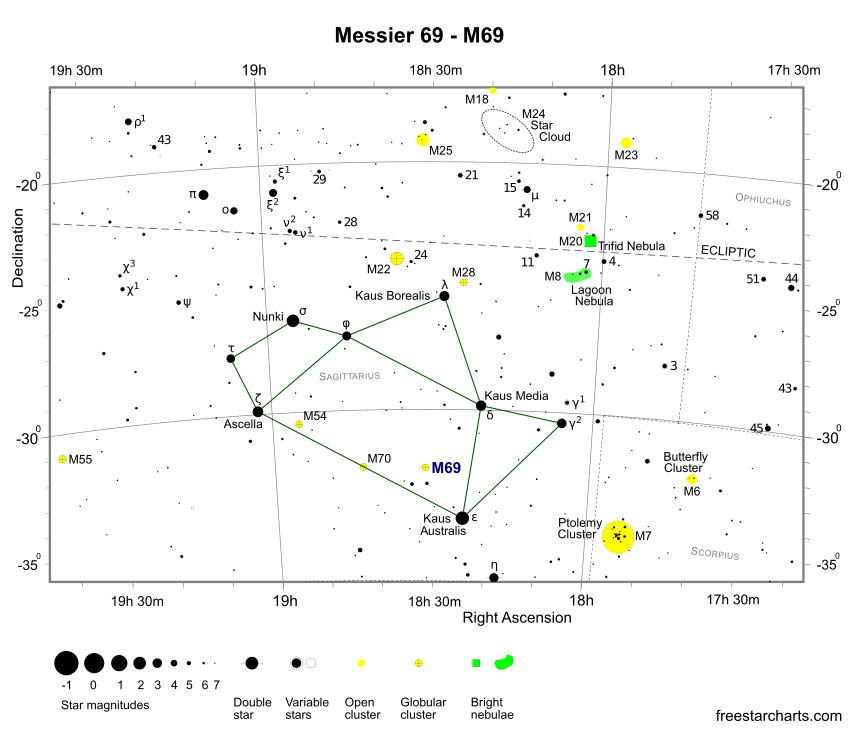
The image shows the globular star cluster Messier 69 (M69), located in the constellation Sagittarius near the dense central regions of the Milky Way. M69 is one of the more metal-rich globular clusters, with a metallicity around [Fe/H] ≈ –0.6, making it unusually enriched compared to typical halo globular clusters. This higher metal content suggests that M69 formed in a chemically evolved environment, possibly within the early bulge or inner disk of the Galaxy. The cluster lies roughly 29,000 light-years from Earth and belongs to the group of globular clusters associated with the Galactic bulge, characterized by strong stellar crowding and intense interstellar extinction in the surrounding regions.
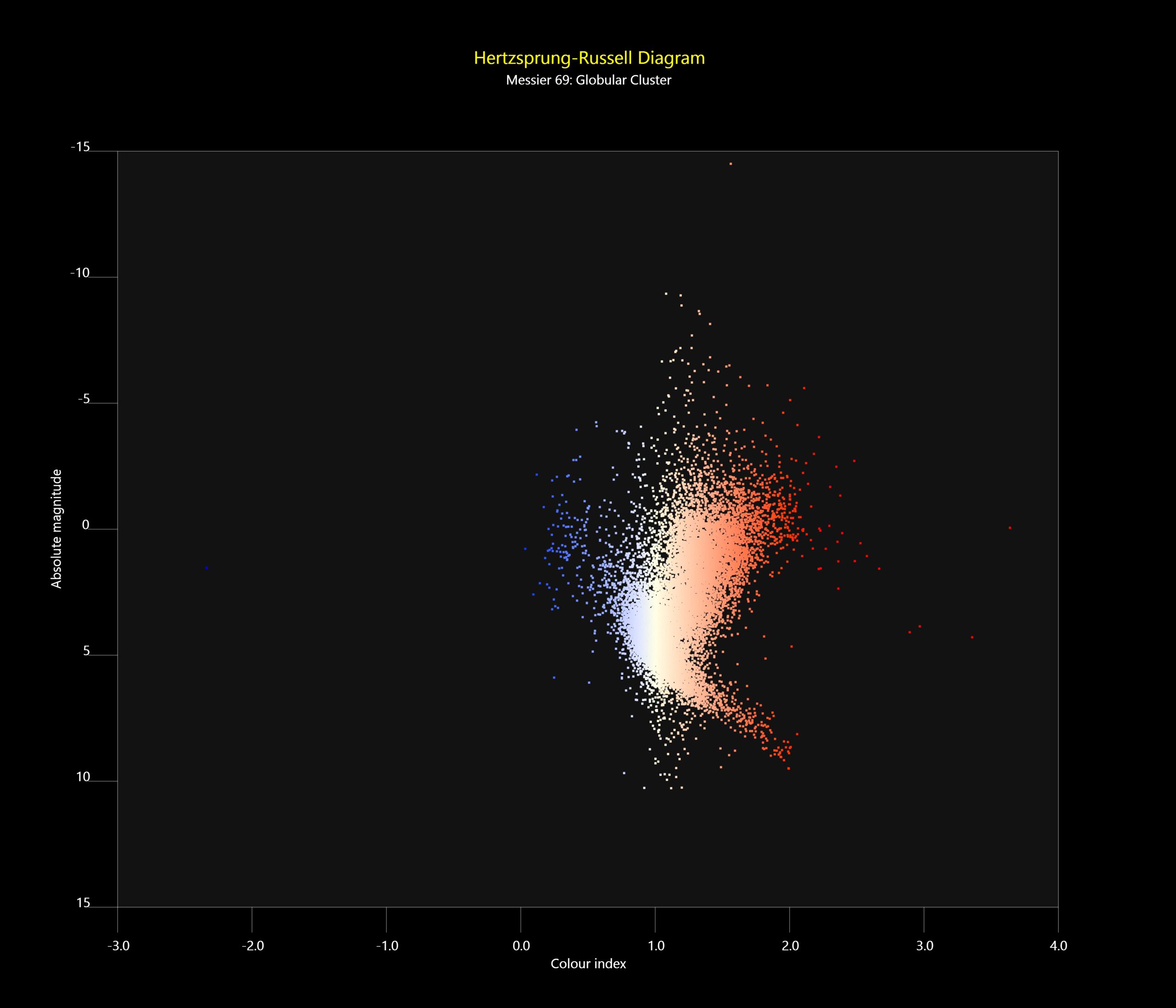
M69 contains a dense stellar population dominated by older, evolved stars, including red giants, horizontal-branch stars, and various variables that help refine its age—estimated at about 12 billion years. Its compact structure and relatively high central concentration make it an interesting target for studying dynamical evolution in dense stellar systems.
All data calibration, registration, and final image processing were completed using PixInsight.
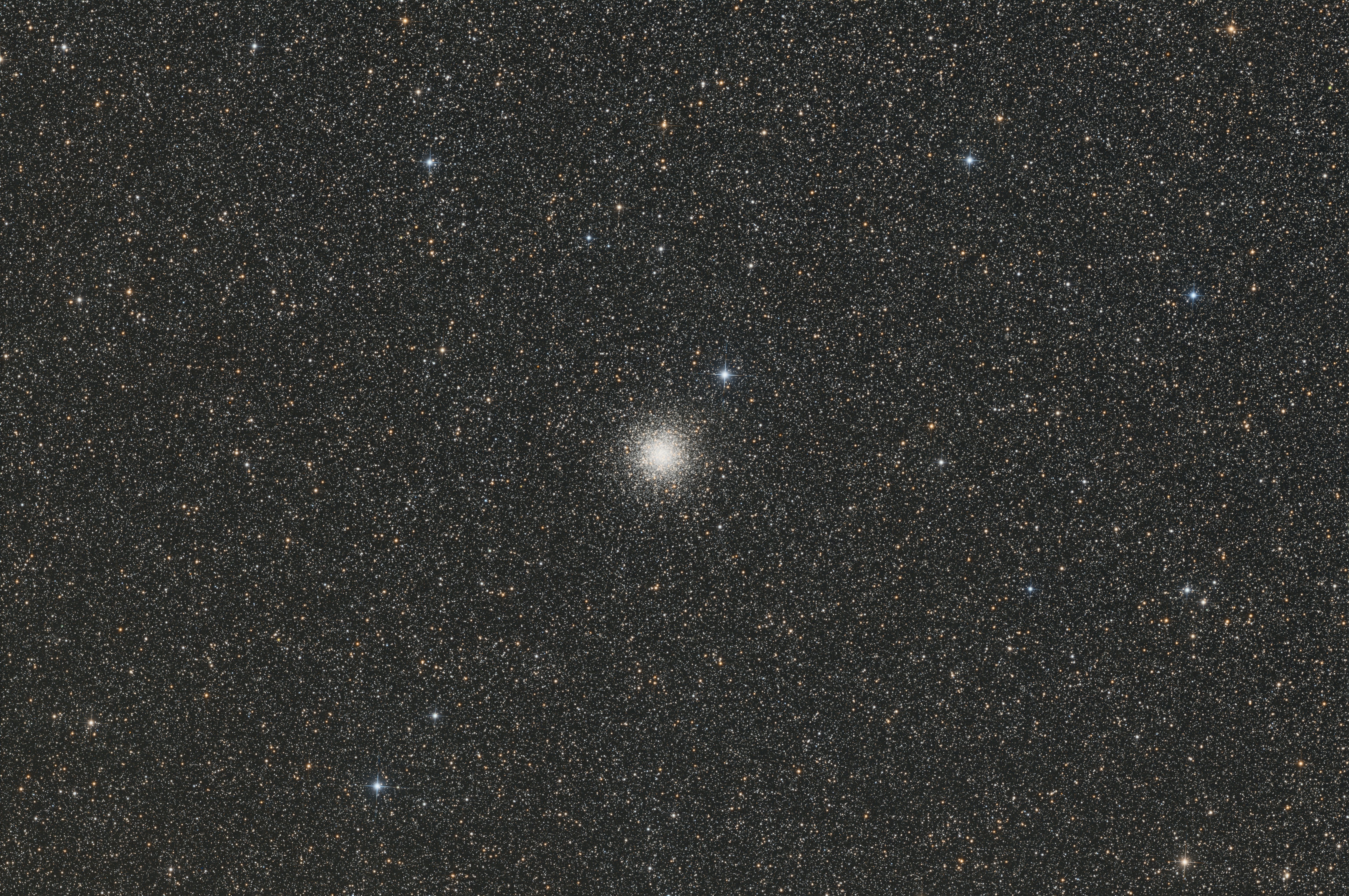
The images were taken with the following equipment:
- Date: 2023
- Location: Hakos, Namibia
- Telescope/Lens: TS 12“ Newton-Astrograph
- Focal length [mm]: 1391
- Focal ratio: 4.56
- Mount: 10Micron GM3000
- Camera: Lacerta DeepSkyPro2600 (mono)
- Filter: LRGB
- Exposure time [min]: 60:60:65:60
- Resolution: 0.56″/px



Leave a reply