

Messier 68 (NGC 4590) – VdS Remote Hakos
As a member of the VdS remote observatory group, I have the privilege of using the VdS remote observatory in Hakos, Namibia. Members may process both their own data and the datasets acquired by other users. In this instance, the final result is based entirely on my own observations from the site.
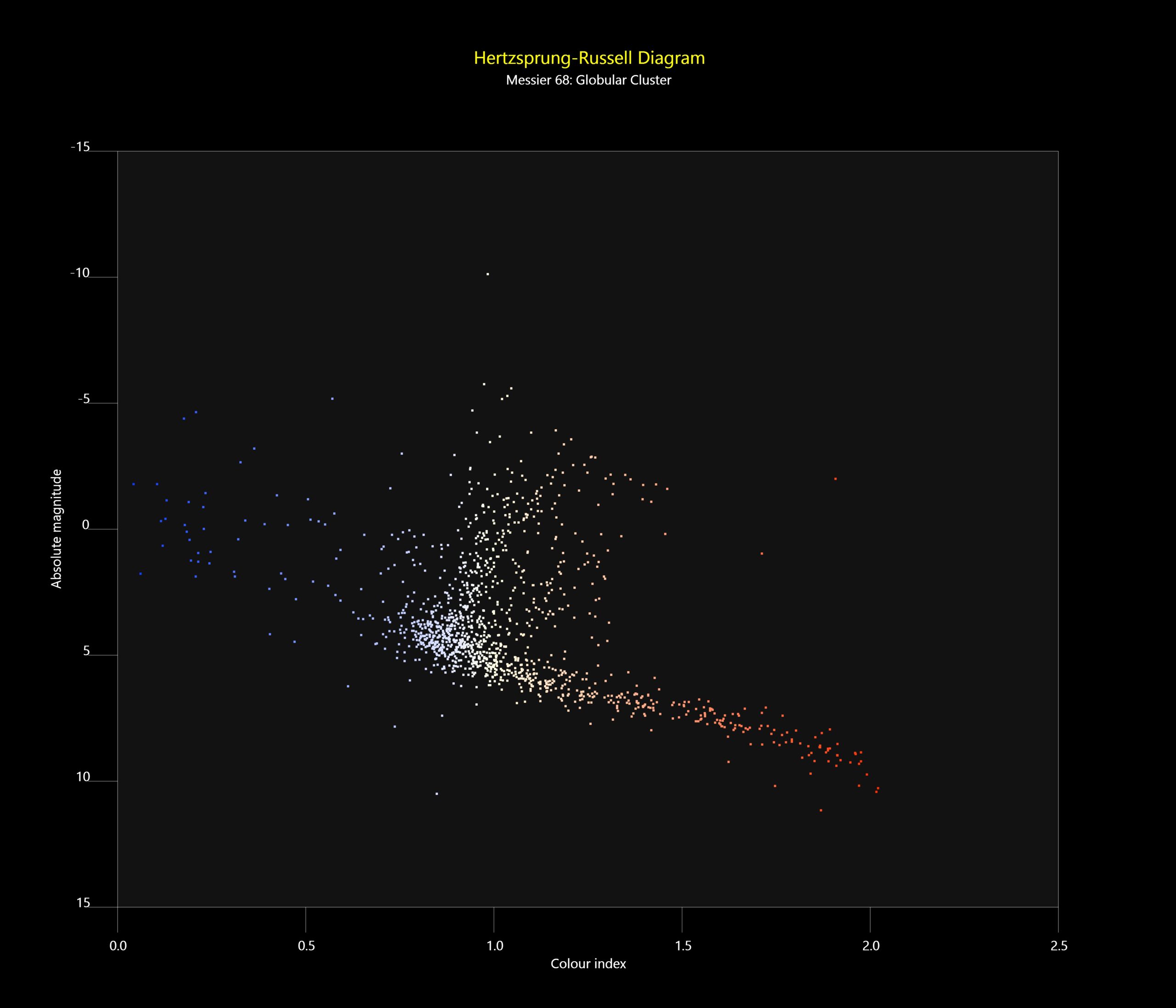
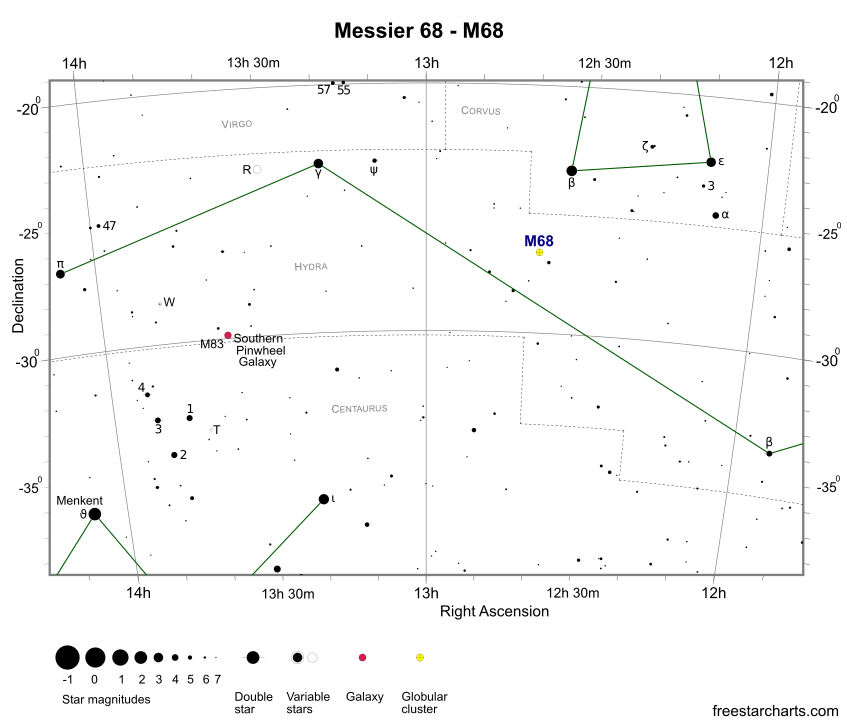
The dataset shows the globular cluster Messier 68 (M68), an ancient and metal-poor stellar system located in the constellation Hydra at a distance of roughly 33,000 light-years from Earth. M68 is classified as a Shapley–Sawyer concentration class X cluster, placing it among the more loosely concentrated globular clusters. With a metallicity of approximately [Fe/H] ≈ –2.2, M68 contains some of the most chemically primitive stars in the Milky Way’s halo. These low metal abundances indicate that the cluster formed very early in the history of the Galaxy, making it a valuable laboratory for studying stellar evolution in the early universe.
M68 also contains a significant population of blue horizontal branch stars, RR Lyrae variables, and blue stragglers, each of which contributes to understanding age, mass transfer processes, and internal dynamics within globular clusters. The cluster’s diffuse structure and relatively low central density also make its outer regions particularly transparent, allowing many background galaxies and quasars to be clearly visible in deep exposures.
The field was imaged simultaneously using a 12″ astrograph and a Takahashi Epsilon 160D, combining high-resolution detail with a wider field of view. Both datasets reveal an impressive number of distant galaxies and quasars. The most distant identified object is the quasar MQ J123849.37–263640.1, with a redshift of z = 4.2, corresponding to light that has traveled for more than 12 billion years.
All data calibration, registration, and final processing were performed in PixInsight.
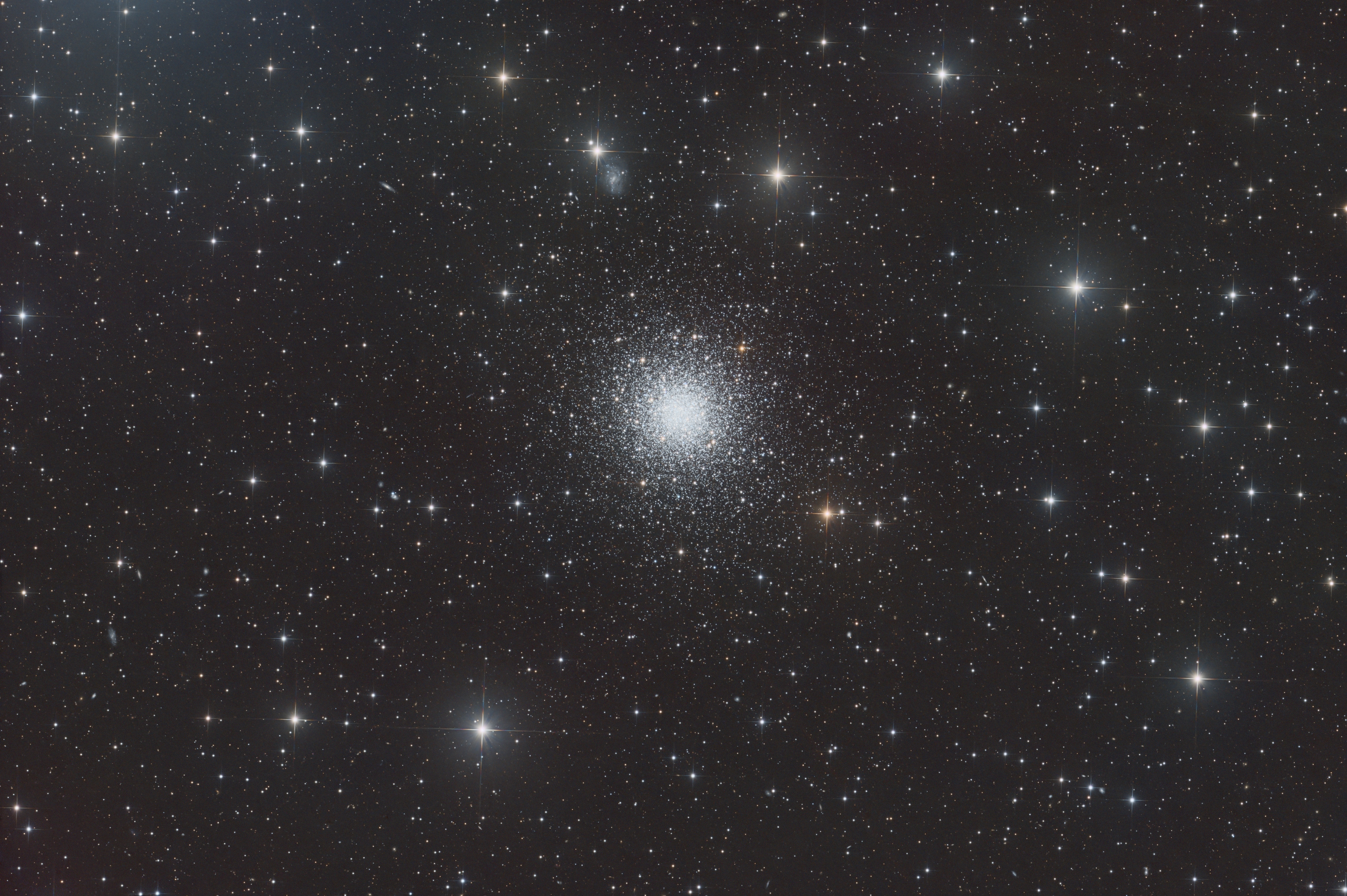
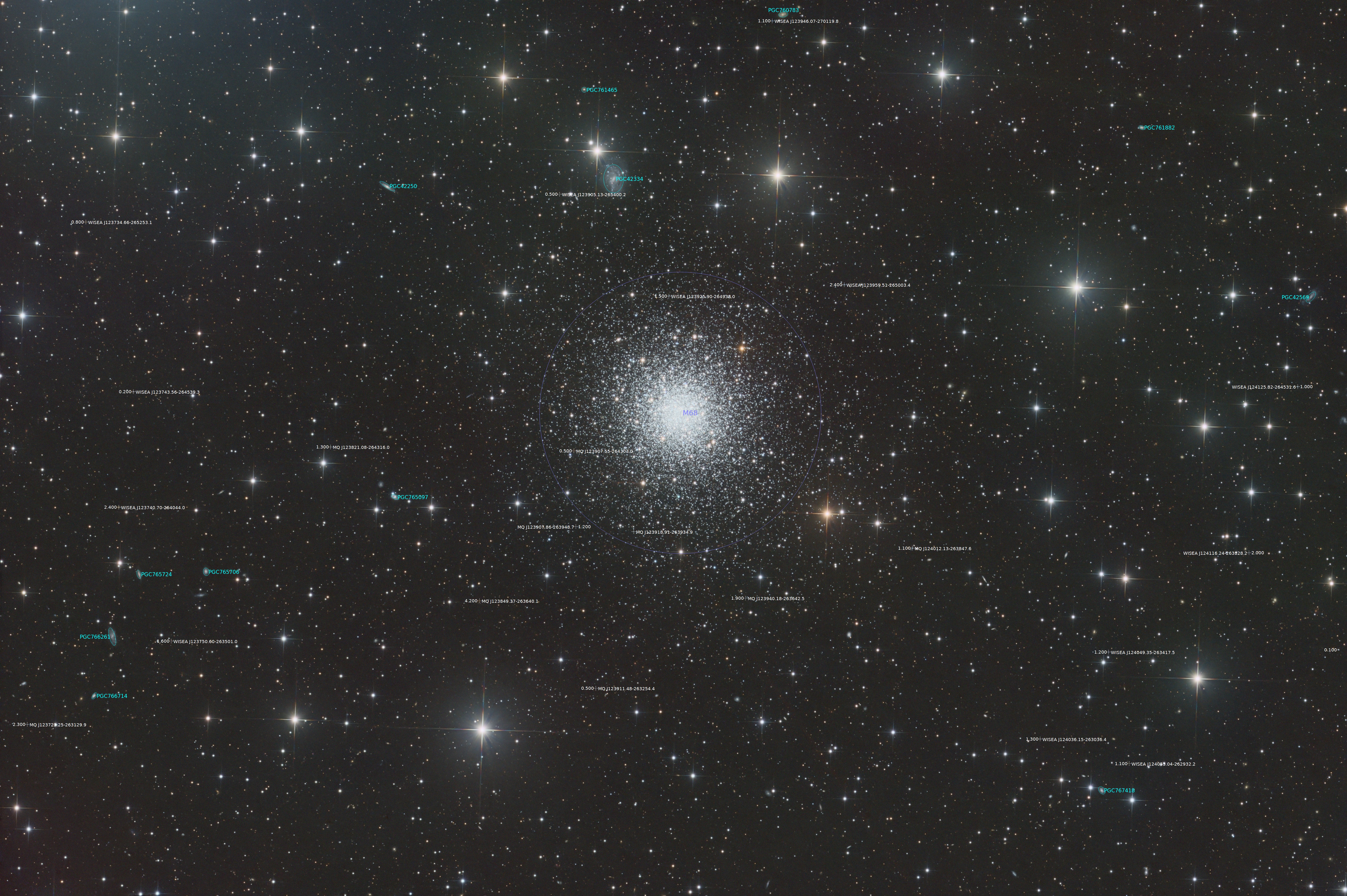
In the image you can find many quasars. The most distant of them is:
MQ J123849.37-263640.1 with a redshift of 4.2 and an apparent magv of 20.25 (SDSS DR17).
The images were taken with the following equipment:
- Date: 2024
- Location: Hakos, Namibia
- Telescope/Lens: TS 12“ Newton-Astrograph
- Focal length [mm]: 1391
- Focal ratio: 4.56
- Mount: 10Micron GM3000
- Camera: Lacerta DeepSkyPro2600 (mono)
- Filter: RGB
- Exposure time [min]: 55:60:60
- Resolution: 0.56″/px

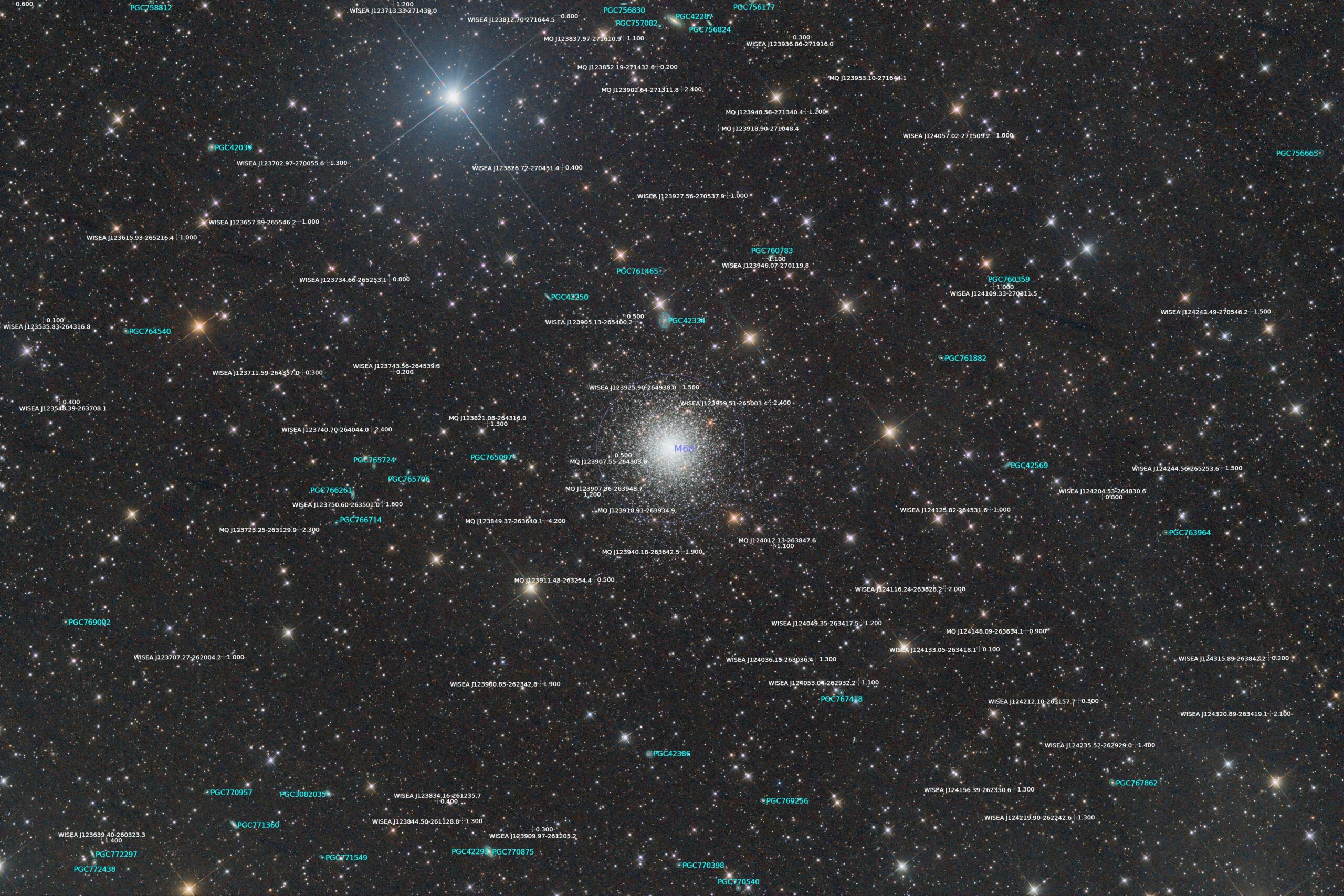
The images were taken with the following equipment:
- Date: 2024
- Location: Hakos, Namibia
- Telescope/Lens: Takahashi Epsilon-160ED
- Focal length [mm]: 535
- Focal ratio: 3.3
- Mount: 10Micron GM3000
- Camera: Lacerta DeepSkyPro2600 C
- Filter: OSC
- Exposure time [min]: 156
- Resolution: 1.45″/px

You might also like


Leave a reply