

Messier 63
I first imaged the Sunflower Galaxy (Messier 63, M63) in 2011 using a DSLR camera from my backyard. Although the dataset was limited by local sky conditions and the inherent constraints of DSLR technology, it captured the basic structure of this impressive flocculent spiral galaxy, known for its patchy, loosely wound spiral arms rather than the grand, well-defined structure seen in classical spirals. To increase structural detail and depth, I later enhanced the image with remote luminance data from the former LightBuckets remote observatory in southern France. The addition of high-quality luminance exposures significantly improved the visibility of M63’s characteristic star-forming knots and its bright, active disk.
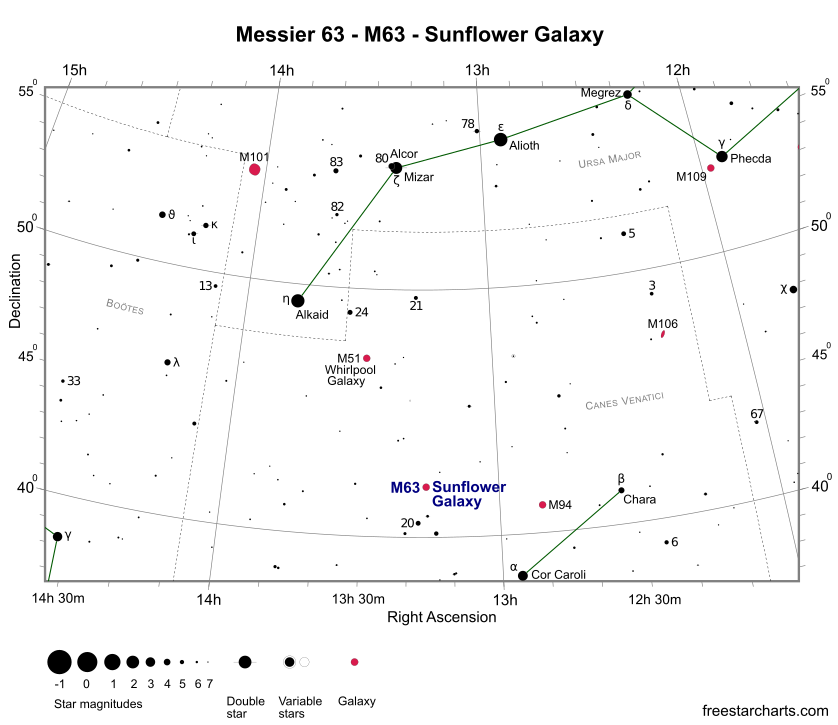
Messier 63 is a particularly intriguing target: located in the constellation Canes Venatici, it is a member of the M51 Group, sharing its cosmic neighborhood with the Whirlpool Galaxy (M51). M63 is also known for its faint, extended stellar halo and tidal features—evidence of past galactic interactions—which require deep imaging to reveal.
In 2018, I obtained a second dataset from Deep Sky West (DSW). These professional-grade exposures, taken under exceptionally dark and stable skies, made it possible to explore more subtle structures, including hints of the faint halo and the outer asymmetries that are difficult to capture with amateur equipment alone.
Taken together, these datasets reflect the evolution of my imaging capabilities—from early DSLR experimentation to hybrid data techniques and finally to the clarity of high-quality remote observatory imaging—while highlighting the scientific richness of Messier 63 as a deep-sky target.
The 2018 DSW data was completely processed with PixInsight. The result was as follows:
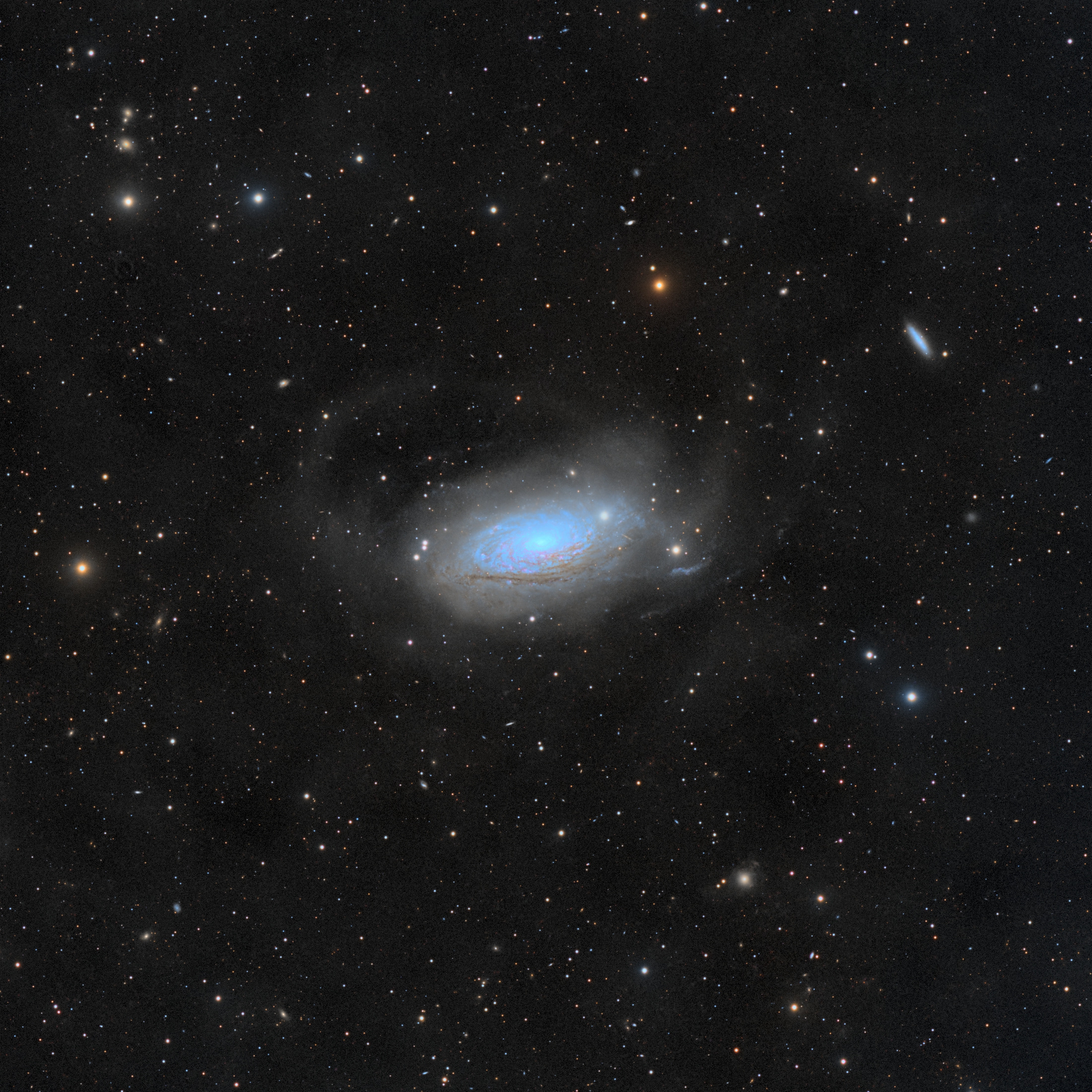

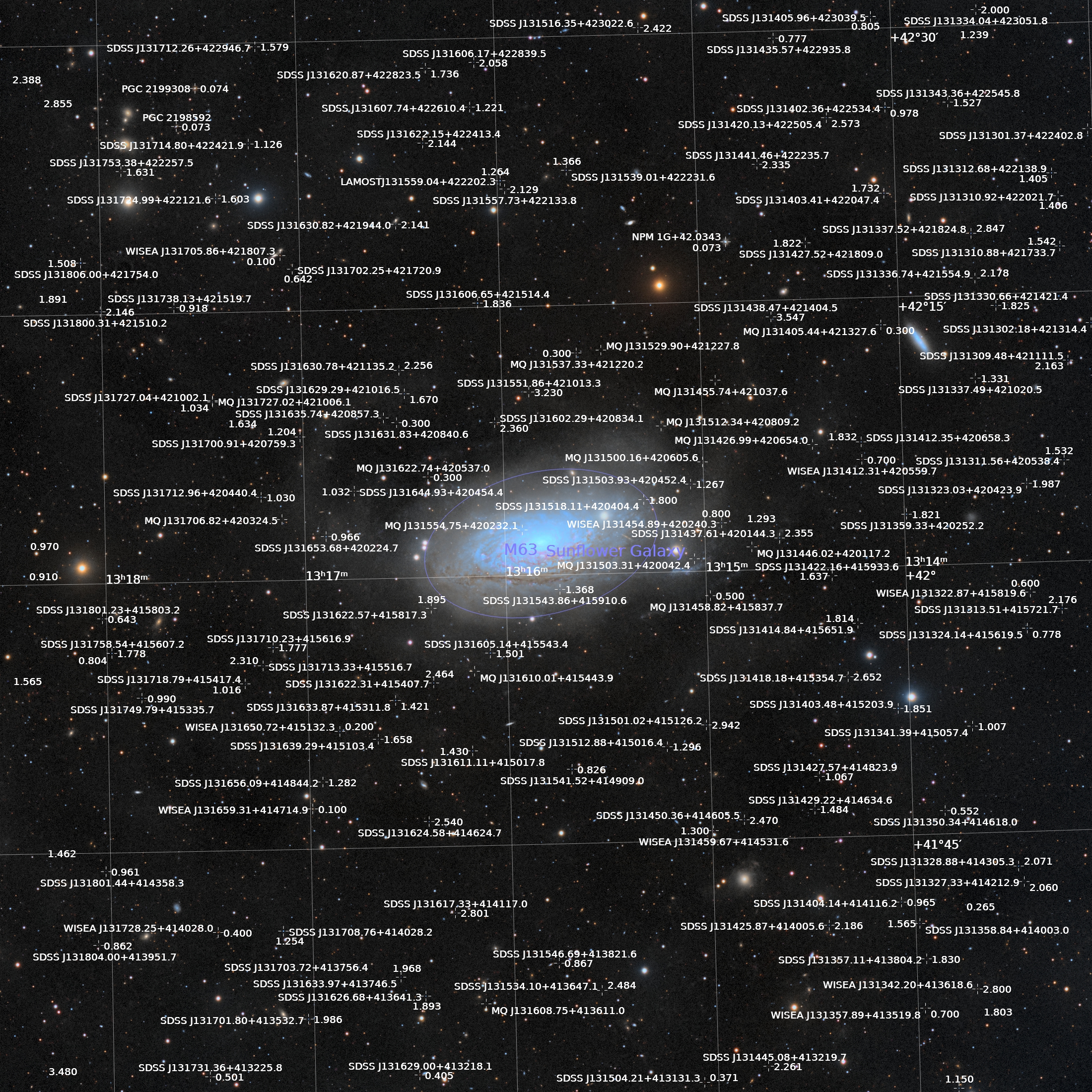
In the image are a lot of quasars. The most distant of them are:
- SDSS J131720.33+412009.3 with a redshift of z=3.99 and mG=22.23 mag [SDSS DR 14]
- SDSS J131438.47+421404.5 with a redshift of z=3.55 and mG=21.82 mag [SDSS DR 16]
- SDSS J131821.04+413254.2 with a redshift of z=3.48 and mG=20.60 mag [SDSS DR 16]
The images were taken with the following equipment:
- Date: 2018
- Location: Rowe, New Mexico
- Telescope: Astrophysics RH 305
- Focal length [mm]: 1159
- Focal ratio: 3.8
- Mount: Paramount ME
- Camera: SBIG STX 16803
- Filter: L:R:G:B
- Exposure time [min]: 380:170:180:170
- Resolution: 1.66″/px
The 2014 luminace data, combined with the 2011 OSC data was calibrated and registered in DeepSkyStacker and finally processed in PixInsight. The result was as follows:
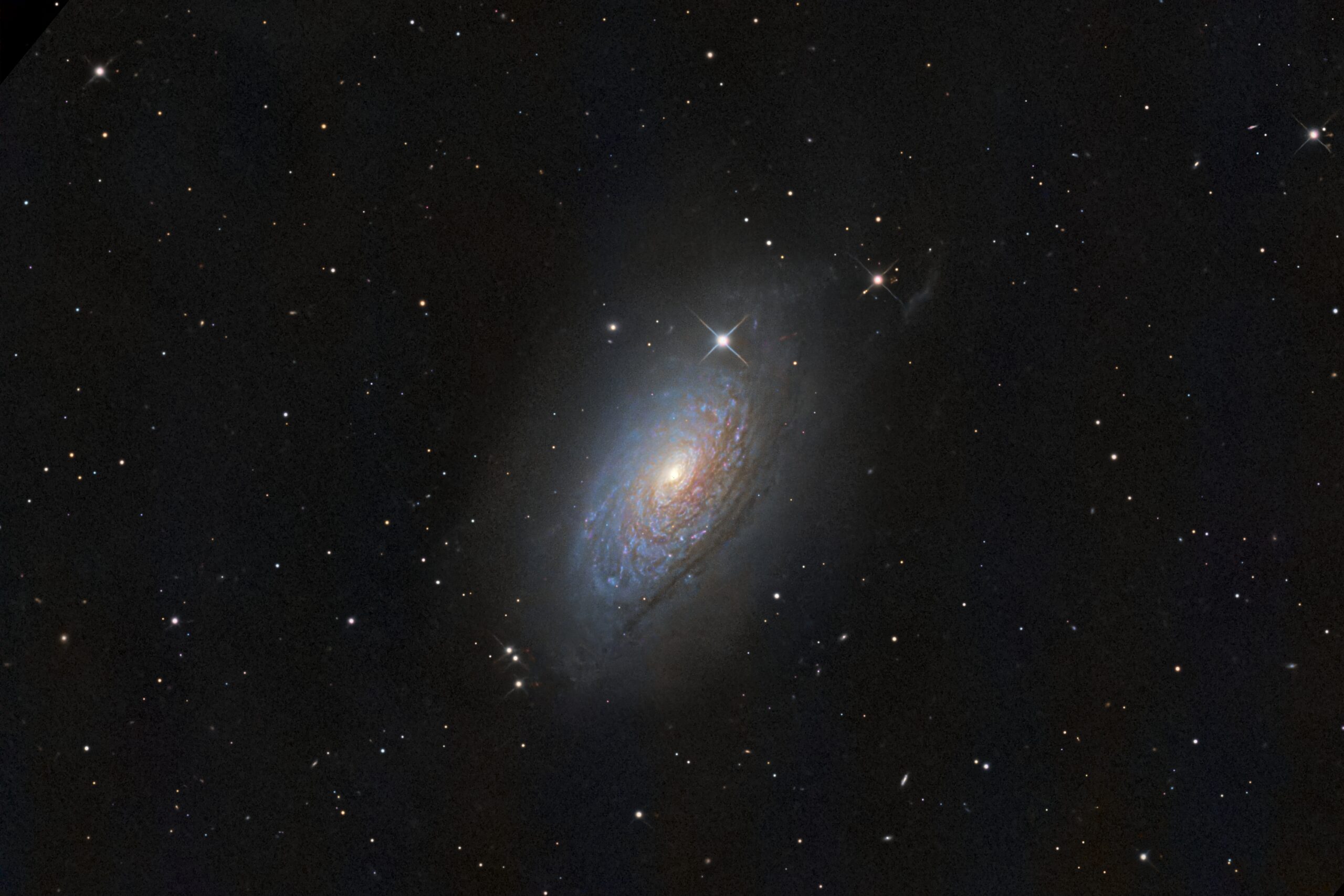
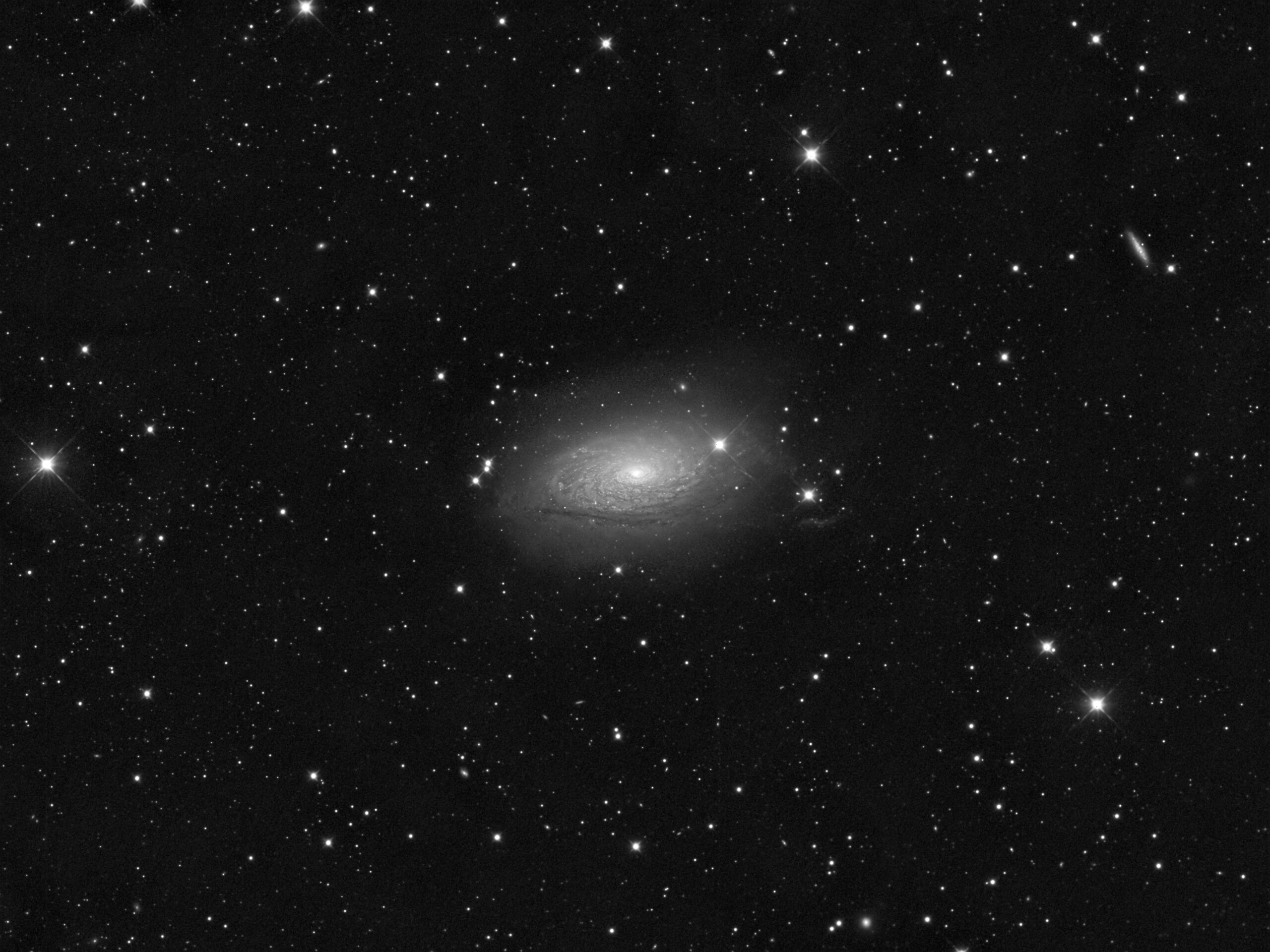
The images were taken with the following equipment:
- Date: 2014
- Location: Provence, France
- Telescope: 12″ ASA Astrograph
- Focal length [mm]: 1076
- Focal ratio: 3.6
- Mount: ASA DDM85
- Camera: FLI Microline ML8300
- Filter: L
- Exposure time [min]: 300
- Resolution: 1.03″/px
The data from 2011 was as follows:

The images were taken with the following equipment:
- Date: 2011
- Location: Krefeld
- Telescope: 10″ Orion Newton
- Focal length [mm]: 1200
- Focal ratio: 4.8
- Mount: Skywatcher NEQ6
- Camera: Canon 500Da
- Filter: OSC
- Exposure time [min]: 519
- Resolution: 0.72″/px

Leave a reply