

Messier 34 (NGC 1039) from my own backyard
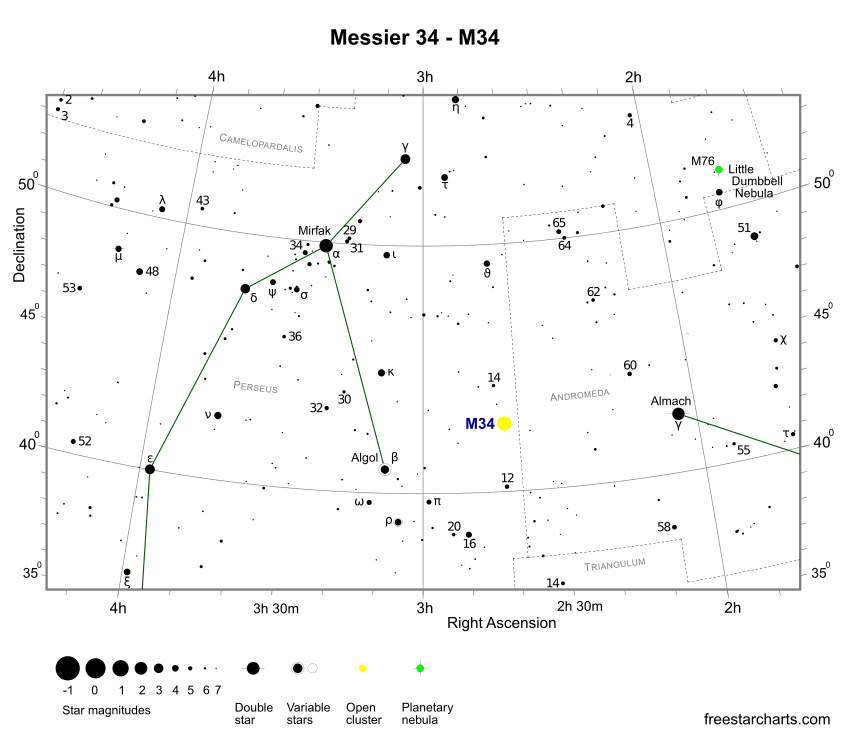
The open cluster Messier 34 (M34), nestled in the constellation Perseus, is a bright and loosely bound collection of young stars scattered across the northern autumn sky. Over the years, I have imaged this attractive cluster twice, documenting both my early and more recent approaches to deep-sky imaging.
My first dataset was acquired in 2008 from my own backyard, using DSLR equipment and modest optics typical of my early astrophotography period. Despite the limitations in sky quality and exposure depth, the resulting image successfully revealed the cluster’s main stellar members and the subtle color contrast between its hotter blue-white and cooler yellow-orange stars.
A second imaging session took place in autumn 2025 from my Varel Observatory. Observing conditions were poor, with unstable seeing and intermittent clouds, yet the dataset was sufficient to produce a meaningful comparison with the earlier work. The 2025 data were fully processed in PixInsight, while the 2008 data were calibrated and registered in DeepSkyStacker and then reprocessed in PixInsight for consistency.
The final result highlights the visual evolution in both technique and equipment over time, demonstrating how improvements in calibration, noise reduction, and color management enhance even a familiar and relatively simple target such as M34.
The 2025 result was as follows:
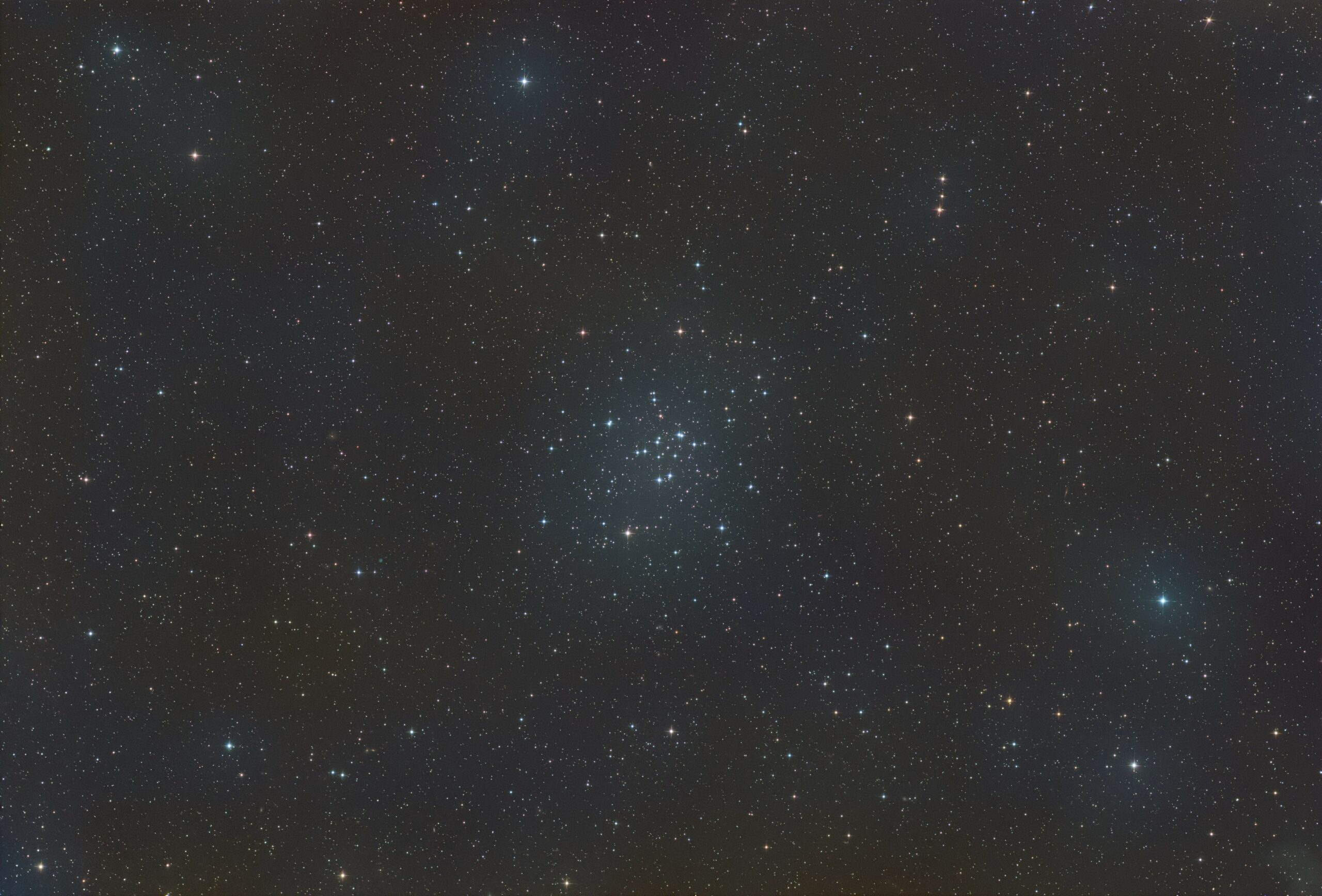
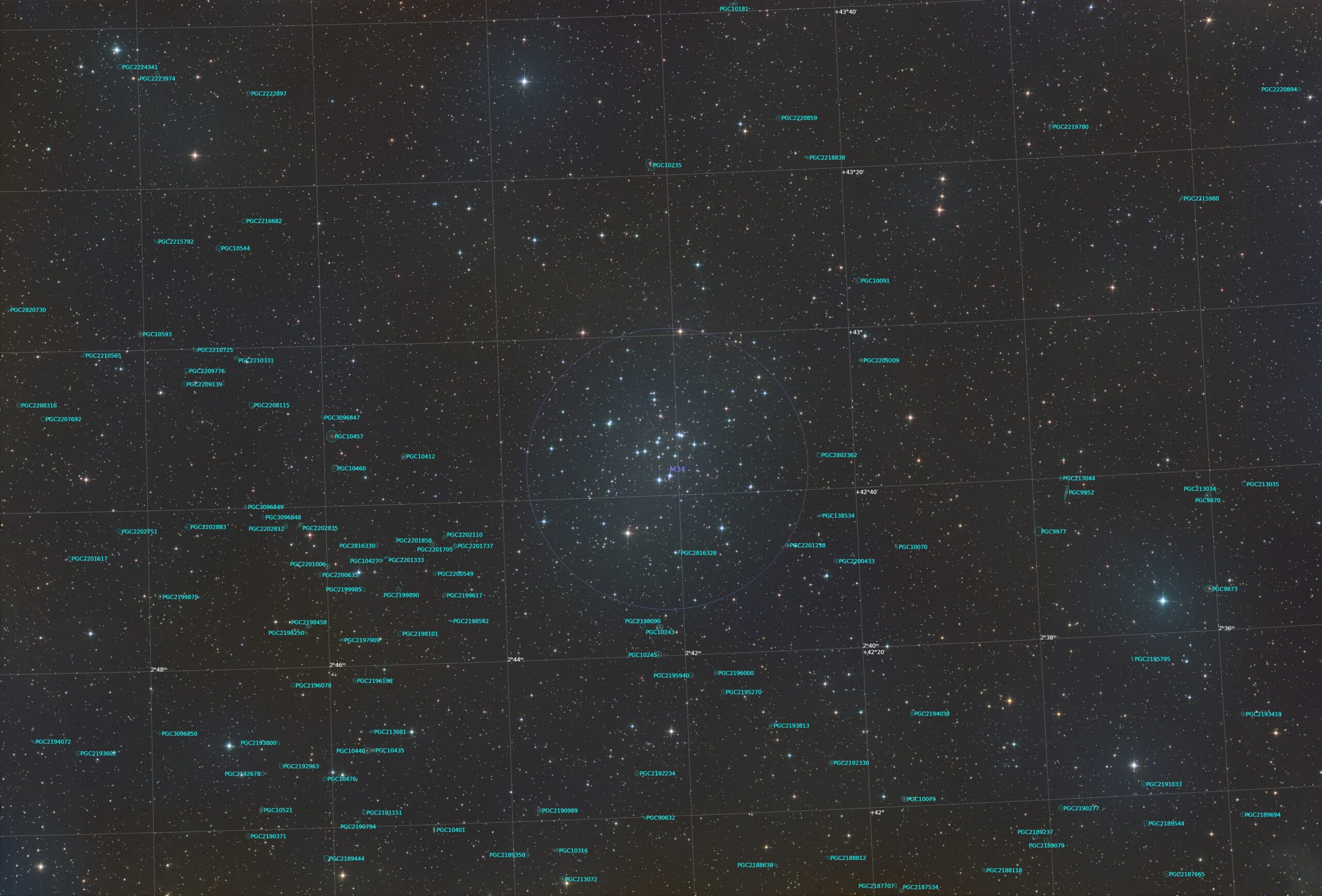
The images were taken with the following equipment:
- Date: 2025
- Location: Krefeld, Germany
- Telescope: 6″ Lacerta Newton
- Focal length [mm]: 450
- Focal ratio: 3
- Mount: Skywatcher EQ8
- Camera: Lacerta 2600 DeepSkyPro M
- Filter: R:G:B
- Exposure time [min]: 60:55:40
- Resolution: 1.72″/px
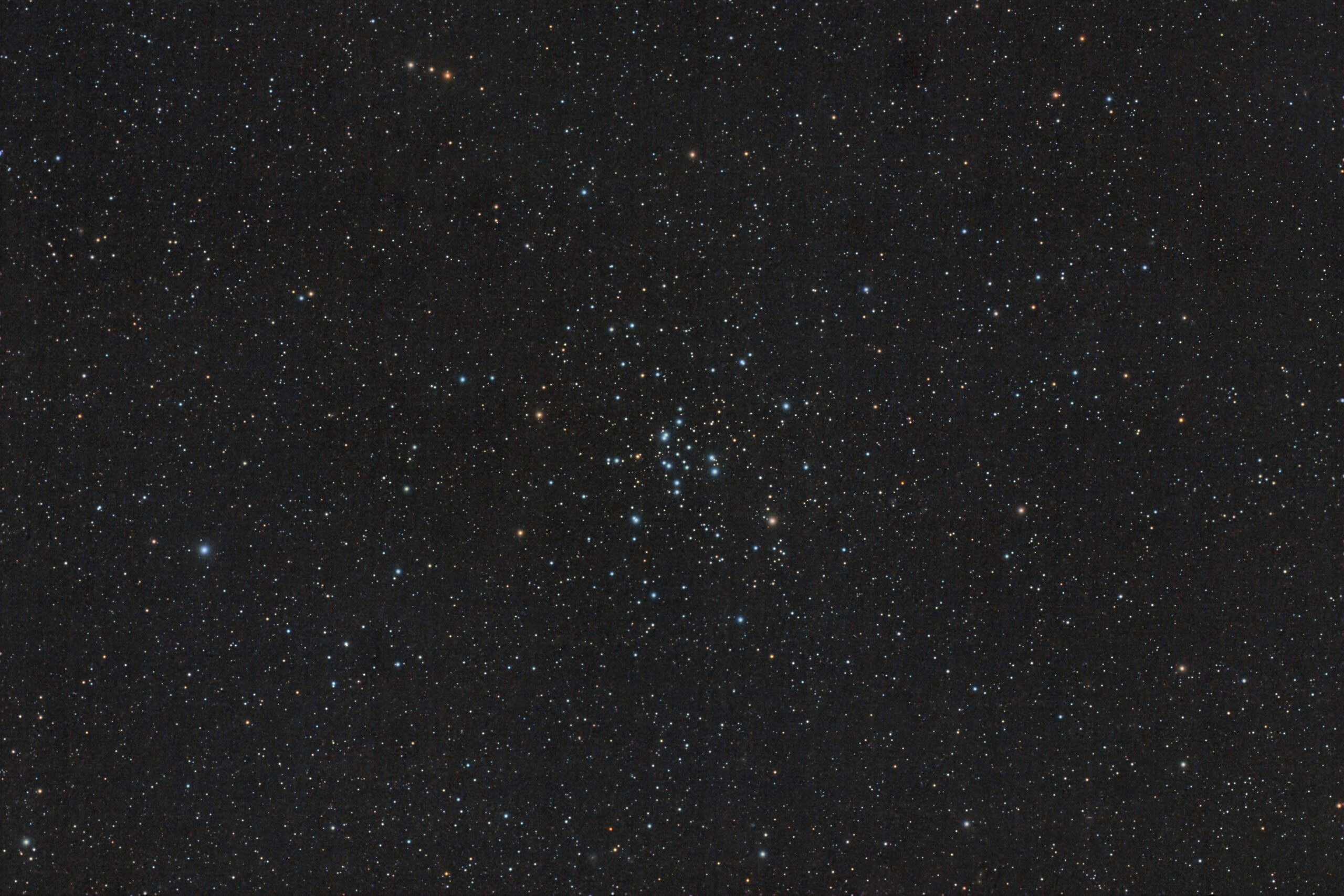
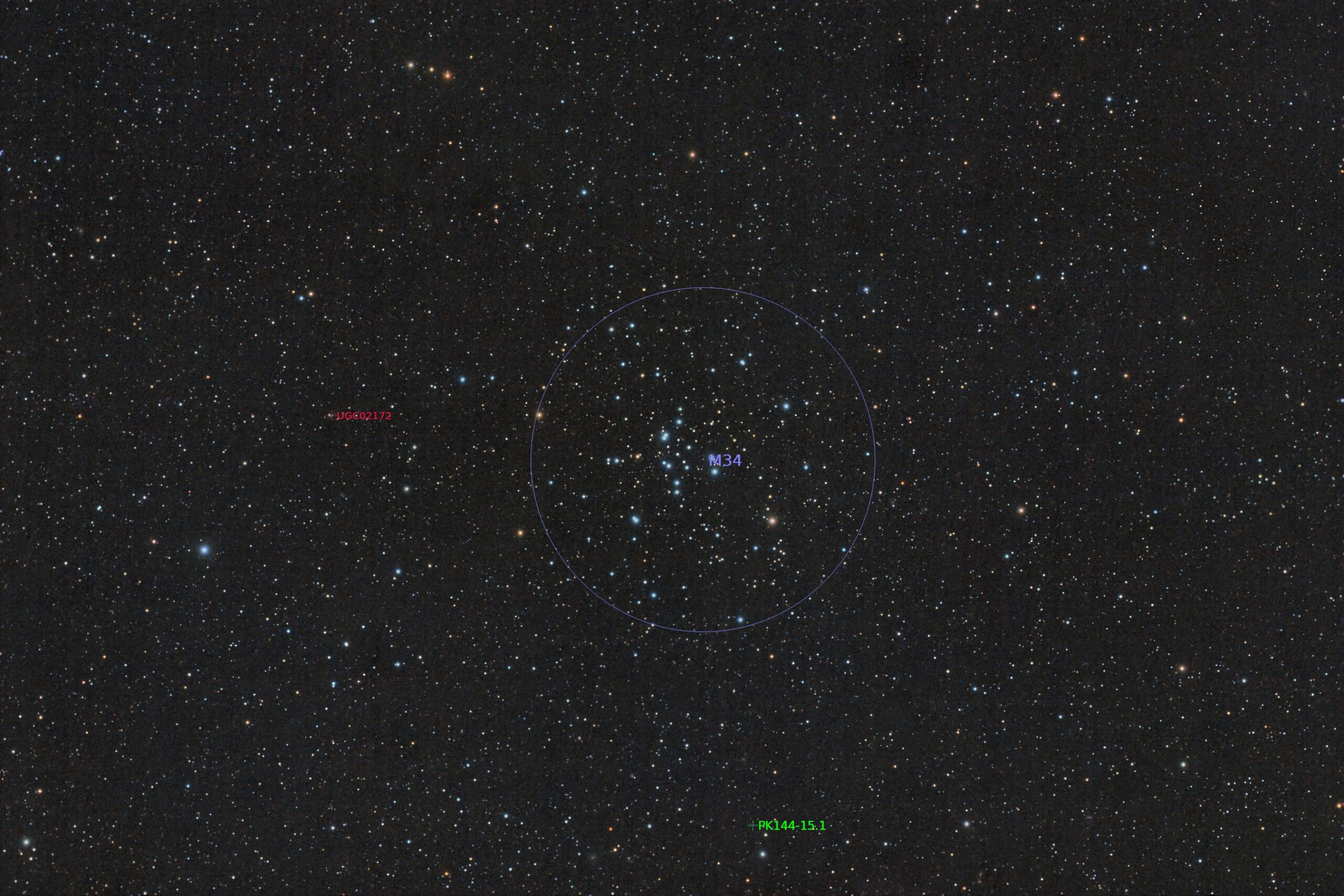
The images were taken with the following equipment:
- Date: 2008
- Location: Krefeld, Germany
- Telescope: Pentax 75
- Focal length [mm]: 500
- Focal ratio: 6.7
- Mount: Vixen GP-DX
- Camera: Canon 300Da
- Filter: OSC
- Exposure time [min]: 30
- Resolution: 3.04″/px

You might also like


Leave a reply