

Messier 72 (NGC 6981)
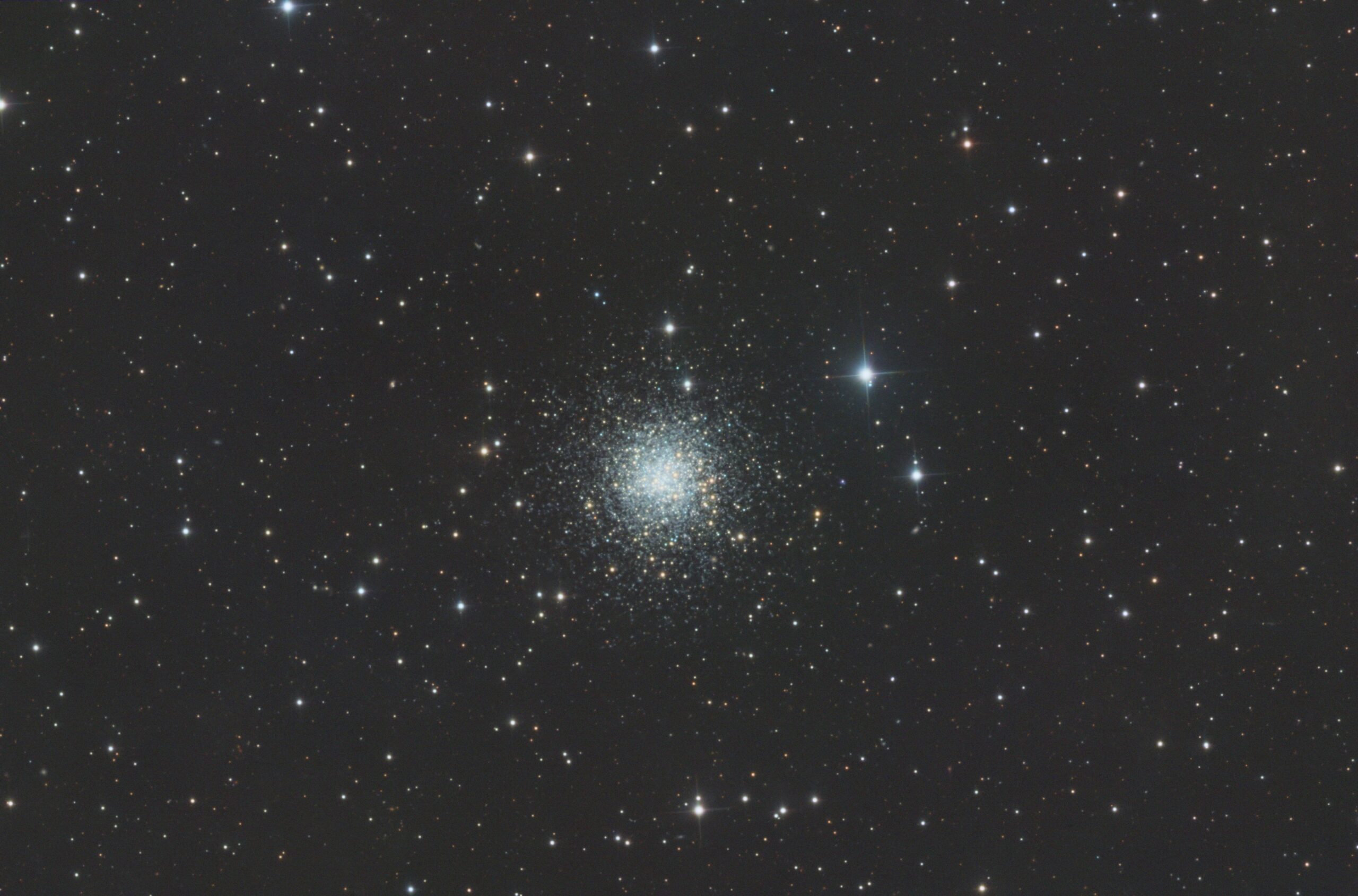
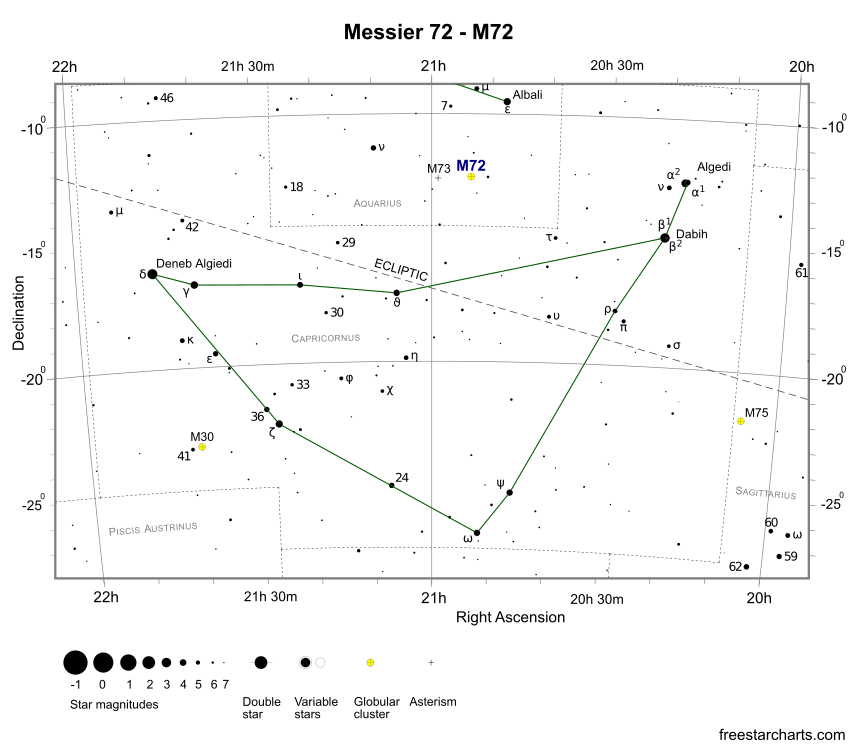
rom time to time, I obtain datasets from remote observatories. One of my favorite providers is Telescope Live, which operates a network of telescopes in locations such as Chile, Australia, and Spain, offering consistently high-quality deep-sky imaging data. Among the datasets I received was an observation of the globular cluster Messier 72 (M72), located in the constellation Aquarius.
M72 is one of the more distant and loosely concentrated globular clusters in the Milky Way, situated roughly 55,000 light-years from Earth and classified as a Shapley–Sawyer class IX cluster. Its sparse structure and relatively low surface brightness make it a challenging target for smaller backyard telescopes, but remote imaging from high-quality dark sites reveals its rich population of old, metal-poor stars and its faint outer halo. The dataset provided by Telescope Live allowed these subtle features to emerge clearly, offering a detailed view of this often-overlooked cluster.
Data calibration and registration and the final processing was done with PixInsight. The result was as follows:
The images were taken with the following equipment (Telescope Live, CHI-1):
- Date: 2023
- Location: El Sauce Observatory, Chile
- Telescope/Lens: Planwave CDK 24
- Focal length [mm]: 3962
- Focal ratio: 6.5
- Mount: Mathis MI-1000/1250
- Camera: QHY 600M Pro
- Filter: L:R:G:B
- Exposure time [min]: 30:30:30:30
- Resolution: 0.39″/px



Leave a reply